
Why Remove a Mileage Blocker Before a Car Service
Why is it important to remove a mileage blocker before service or warranty work? Understand how recorded mileage affects maintenance and warranty assessments.
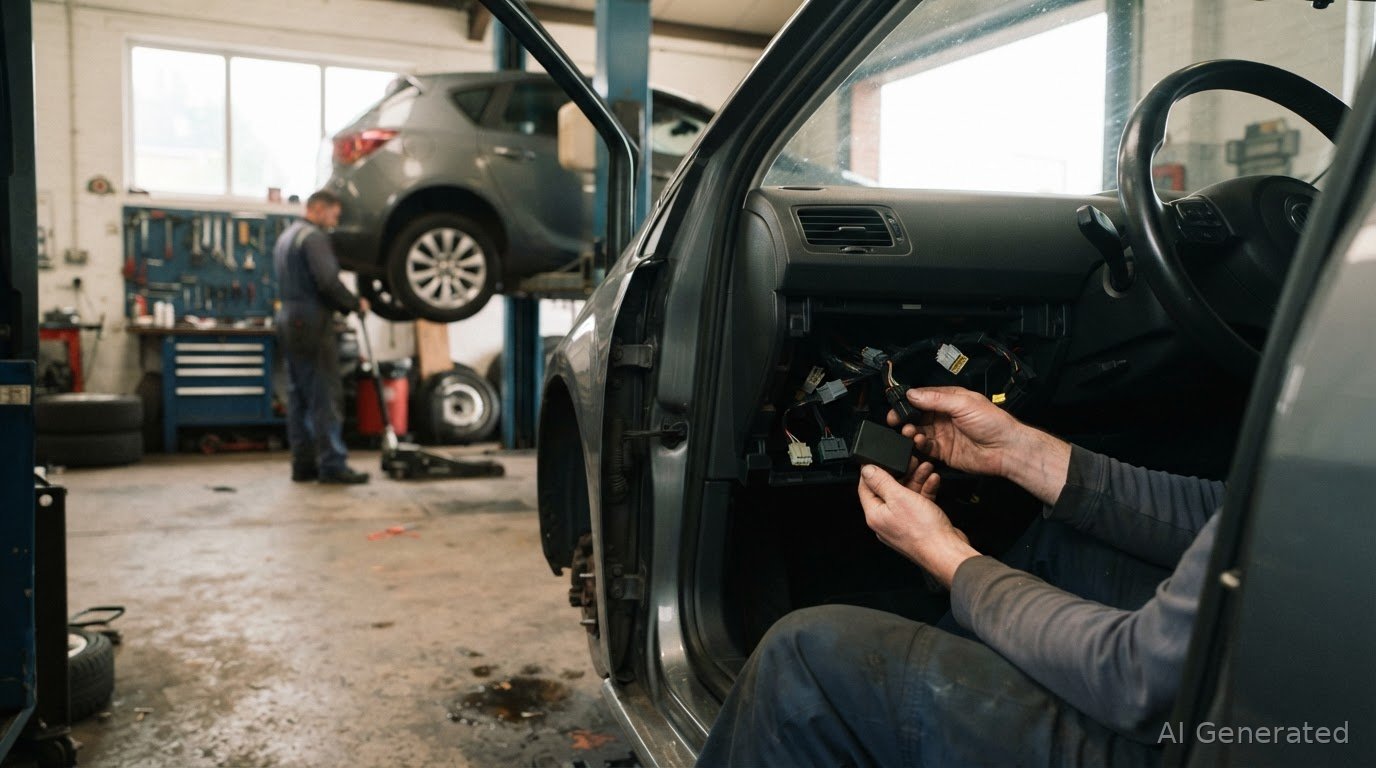
A mileage blocker may affect how mileage is recorded, but the effect depends on the specific vehicle and product. Before a workshop assesses servicing or warranty work, check the product’s operating information so you understand what the vehicle’s records show while it is in use.
Mileage can affect maintenance schedules and warranty limits. If a device’s verified operating information says that mileage recording is paused while it is active, follow the product guidance before an appointment. Do not assume that switching off or removing a device will restore or update records; this also depends on the specific vehicle and product. This article explains why accurate mileage matters for scheduled maintenance and what mileage-based warranty limits mean in practice. A mileage blocker does not itself determine warranty coverage, but incomplete mileage records may complicate the assessment of work that depends on actual vehicle use.
Key Takeaways
- Understand how a mileage blocker can affect recorded distance and why service records may need context.
- Learn why mileage information across vehicle systems can matter when a workshop assesses a vehicle’s history.
- See how accurate usage records help maintenance decisions and the assessment of mileage-based warranty terms.
- Recognise why a mileage blocker should not be used to conceal vehicle use or misrepresent a car’s history.
How a mileage blocker affects odometer and control-unit recording
Recording behaviour depends on the vehicle and the specific mileage blocker. When a supported product is active, it may pause mileage recording in the odometer and certain control units. If the display showed 50,000 miles when the device was activated, the displayed figure may remain unchanged while it is active. The device doesn’t wind back mileage already recorded. What happens to recording when the device is switched off or removed also depends on the vehicle and product; do not assume that recording automatically resumes from the same figure. The vehicle may still be driven, but the displayed mileage may not account for distance travelled during that period. This distinction matters when workshop records are compared.
Before a garage visit, follow the verified, vehicle-specific instructions for the product. Procedures differ by vehicle, so do not assume one method suits every car or that switching off or removing the device restores normal mileage recording. If the correct procedure is unclear, arrange for a competent automotive electronics technician to handle it. Avoid improvising around the instrument cluster or vehicle wiring.
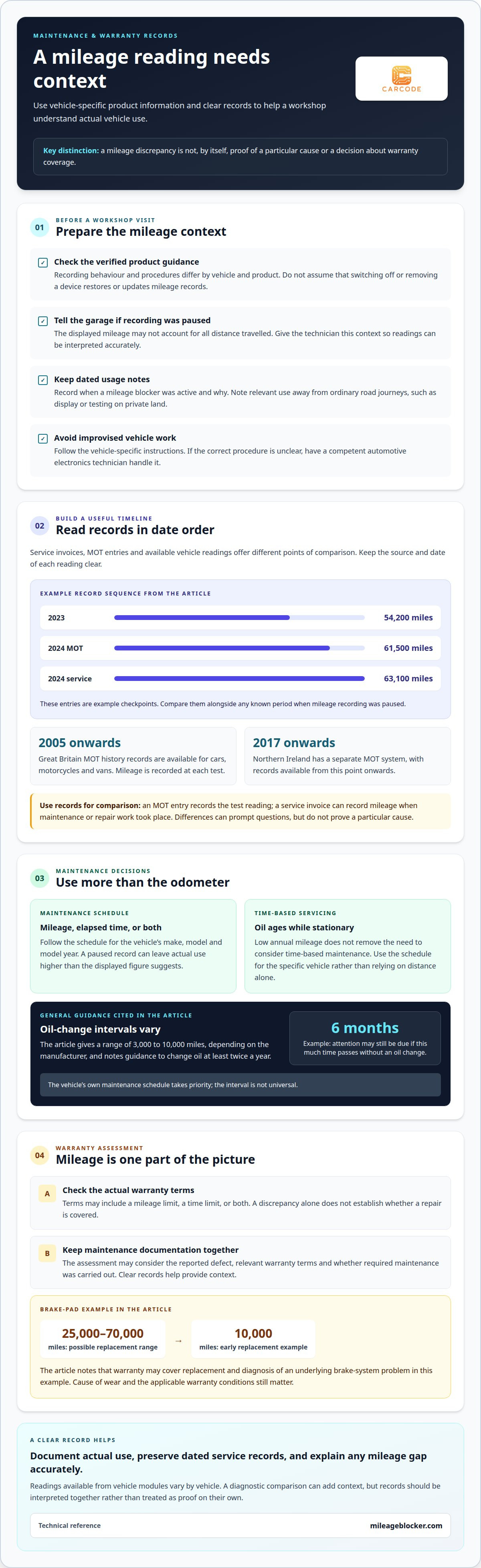
Service and repair paperwork can create a useful mileage timeline. A garage invoice may record the odometer reading when work is completed, giving owners another point to compare with service records and MOT entries. For example, a service record might show 54,200 miles in 2023, followed by 61,500 miles at a 2024 MOT and 63,100 miles at a 2024 service. Each entry should be read in date order, alongside any known period when mileage recording was paused.
In Great Britain, the GOV.UK MOT history service provides records for cars, motorcycles and vans from 2005 onwards. The mileage is recorded at each test, and it would normally rise between tests. Northern Ireland has a separate MOT system, with records available from 2017 onwards. These records are useful for comparison, but they don’t replace service invoices: an MOT entry records the test reading, while an invoice can show mileage when a repair or maintenance job took place.
Be clear with the garage: if a blocker was active, the odometer reading may not account for all distance travelled. This context helps the technician interpret earlier readings and document the current mileage accurately.
Mileage information stored across vehicle modules
A vehicle’s mileage information may be held in the odometer and control units that record distance. While a mileage blocker is active, mileage recording in those systems is paused. The modules involved and the information they retain vary by vehicle, so there is no single layout for every make and model. A diagnostic inspection may compare available readings with service records and the displayed mileage.
What records and modules may reveal mileage discrepancies? Differences between the odometer, available control-unit readings, repair invoices and MOT history can raise questions about the vehicle’s mileage timeline. The readings available depend on the vehicle’s electronic architecture. Explain discrepancies accurately, rather than treating them as proof of a particular cause.
Show cars and vehicles used on private land may have periods of use that don’t match ordinary road mileage. A vehicle displayed at an event, or tested on private land, can accumulate use without the same journey pattern as a daily-driven car. Keep a dated record of when a mileage blocker was active and why. That context helps distinguish actual use from the mileage shown on the odometer, especially when the car later enters a workshop or changes ownership.
Low annual mileage doesn’t remove the need for time-based maintenance. Oil can age while a car is stationary, so distance alone may not determine when an oil change is due. General guidance gives oil-change intervals of 3,000 to 10,000 miles, depending on the manufacturer, and recommends changing oil at least twice a year. A vehicle that hasn’t reached a 3,000-mile threshold may still need attention after six months without an oil change. Follow the schedule for the specific vehicle rather than relying on the odometer alone.
For a vehicle-specific explanation of device operation, consult the mileage blocker frequently asked questions. Accurate records, including private-land use and time-based servicing, give the vehicle’s mileage history useful context.
Scheduled maintenance and warranty coverage
Scheduled maintenance may depend on mileage, elapsed time, or both. Follow the schedule for the vehicle’s make, model and model year. A paused mileage record can leave a gap between the displayed figure and actual use. As a result, the odometer reading alone may not show when maintenance is due, particularly if service records indicate a different usage pattern.
Warranty terms can include a mileage limit, a time limit, or both. Mileage limits should reflect real vehicle use, and mileage can affect warranty considerations. A mileage discrepancy does not by itself establish whether a repair is covered. The assessment may also consider the reported defect, the relevant warranty terms and whether the required maintenance was carried out. Clear service documentation helps put those details in context.
Brake wear shows why the distinction matters. Brake pads may need replacement after 25,000 to 70,000 miles, depending on the car model. If pads need replacing after only 10,000 miles, the warranty may cover the replacement and diagnosis of an underlying brake-system problem. The mileage figure is part of the assessment, but the cause of the wear and the applicable warranty conditions also matter.
Some routine maintenance concerns components whose condition depends on use, not just the odometer. A vehicle used on a track, for example, may experience different demands from one used mainly for steady road journeys. This does not establish a specific service requirement; it shows why a technician needs accurate context alongside the recorded mileage. The vehicle’s maintenance schedule and component condition remain relevant.
For a warranty visit, give the garage an accurate account of any period when mileage recording was paused, along with available service records. This lets the workshop consider the service history, model year and actual vehicle use together. It also prevents the displayed mileage from being treated as a complete measure of use when it may not represent every mile travelled.
Mileage blockers and warranty limits
A mileage blocker does not automatically invalidate every vehicle service plan or insurance policy. The relevant contract terms, declared use and mileage information matter when a claim or service is assessed. If a plan sets a mileage limit, it must reflect actual vehicle use. The odometer reading alone may not show the distance travelled while mileage recording was paused.
Warranty coverage varies by manufacturer and model. Terms may distinguish between defects, maintenance items, time limits and mileage limits. For a mileage-related claim, a reliable account of how far the vehicle has actually been used can matter. A gap in recorded mileage can make an assessment less straightforward, particularly when a service interval or eligibility threshold depends on distance.
Insurance is separate from a manufacturer’s warranty. Policy terms determine what use must be declared, including track use where the policy requires it. Premium calculations should reflect miles actually driven, not only the odometer figure. Keep an accurate usage log and give the insurer truthful information required by the policy. A mileage blocker must not be used to conceal use when accurate mileage is required.
There is also a distinction between fitting a device and misrepresenting a car’s history. According to the Competition and Markets Authority, false vehicle mileage may be a misleading commercial practice under the Digital Markets, Competition and Consumers Act 2024. When selling a vehicle, disclose unrecorded miles and explain the relevant history; an incomplete record should not be presented as proof of lower use.
For a service or warranty appointment, tell the garage that mileage recording was paused and provide the dates and purpose where available. This gives the technician a clearer basis for interpreting mileage-dependent maintenance or a claim. For questions about device operation and responsible use, consult the mileage blocker FAQs.
MileageBlocker.com: Mileage Blocker Fitting Service
Contact MileageBlocker.com to confirm whether fitting support is currently available for your vehicle-specific device. Mileage blockers are intended for vehicle testing or off-road track use, not for concealing mileage during servicing, warranty claims or a sale.
Vehicle applications can differ, so any fitting must follow the requirements for the specific car rather than an assumed universal method. For authorised testing, keep accurate records of device use to explain any gap between displayed mileage and actual distance travelled. Before a garage appointment, check the instructions for your specific vehicle and device to establish how mileage recording can be resumed, and give the workshop relevant context about the vehicle’s use.
For information about a vehicle-specific Mileage Blocker Device or fitting support, contact MileageBlocker.com.
Make your next service visit easier to document
Understanding why it is important to remove a mileage blocker before service or warranty work also highlights a practical step for future controlled testing: identify the vehicle’s exact model and generation before choosing an application. Vehicle-specific electronics can differ across generations, so base your plans on the correct application.
For questions about device use or fitting, contact MileageBlocker.com for help. A clear understanding of the vehicle application can help you decide how to proceed.
Frequently Asked Questions
What is a mileage blocker and how does it affect a vehicle’s odometer?
A mileage blocker is a device that affects how a vehicle records mileage. When interpreting a vehicle’s history, distinguish the odometer reading from evidence of its use, such as dated test documentation or records of work completed.
Can a mileage blocker affect a manufacturer’s warranty in the UK?
A mileage blocker does not automatically cancel every manufacturer’s warranty. The relevant warranty terms and circumstances of a claim matter, including whether coverage depends on mileage and whether maintenance requirements were met. An incomplete distance record may complicate the assessment of a claim concerning a mileage-sensitive component. Provide accurate information about the vehicle’s use and review the warranty terms for the specific model.
Why should a mileage blocker be removed before a service or warranty inspection?
Removing the device restores normal mileage recording for the appointment. Before arranging work, identify the exact vehicle generation and device application, since procedures vary between vehicles. Do not guess at access or disconnection steps around vehicle electronics. This preparation helps ensure the car is ready for inspection and avoids improvised work.
About the author
MileageBlocker TeamThe MileageBlocker Technical Team covers vehicle electronics, CAN and CAN-FD systems, mileage blocker compatibility, installation and product developments.
View author profile →