
Why Dyno & Tuning Pros Rely on Mileage Blockers
Learn why dyno and tuning shops use mileage blockers during testing to pause distance recording on the dynamometer and keep vehicle test records precise.
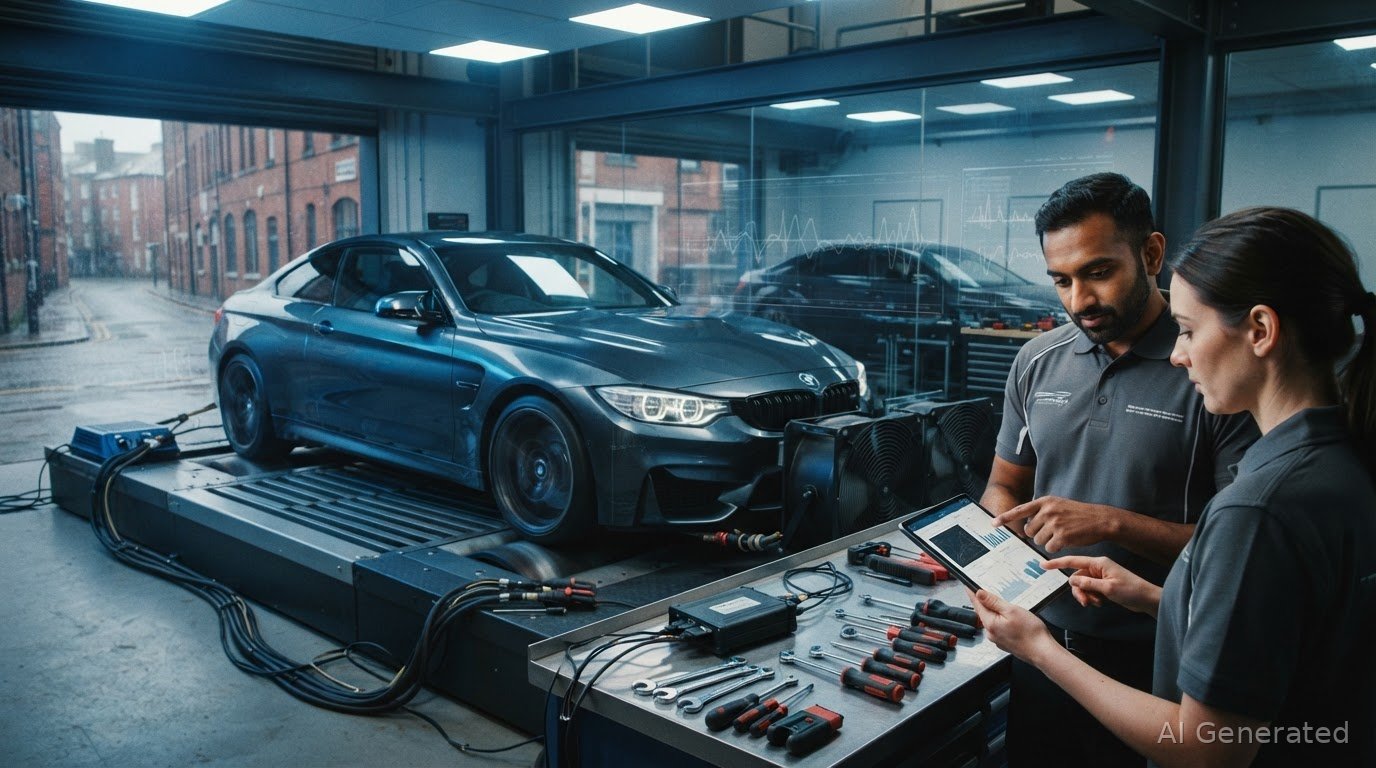
A dyno run measures a vehicle’s performance, but it can also add mileage to the recorded total. Why dyno and tuning shops use mileage blockers is simple: during controlled testing, the module pauses mileage recording so the test does not add distance to the vehicle’s recorded mileage. This can be useful when a session is for testing rather than ordinary travel.
A mileage blocker is designed for off-road, testing, tuning and R&D use, including dyno work and diagnostics. It is technical testing hardware, not a way to rewrite a vehicle’s history. Pausing mileage recording during a test is distinct from changing an odometer reading after the event.
This article explains the device’s role during dyno runs and what to consider before use. It also looks at how vehicle-specific electronics affect compatibility, why public-road use raises concerns, and what diagnostic or dealer checks may mean in practice. The aim is to help workshop professionals and vehicle enthusiasts make an informed decision, while keeping the vehicle’s use and records transparent.
Key Takeaways
- Vehicle compatibility depends on the specific make, model, year, dashboard and platform, so identify the exact vehicle application before selecting a device.
- Operating modes and activation methods vary by vehicle; don’t assume a setting used on one car will behave the same on another.
- Keep clear records of controlled testing and off-road use so mileage history can be understood later.
- Consider both the intended use and the possibility of diagnostic detection; a mileage blocker does not guarantee that vehicle or dealership systems cannot detect it.
What is a mileage blocker?
A mileage blocker is a plug-and-play CAN-bus module that pauses a vehicle’s mileage recording during controlled testing. While active, it prevents test activity from being added to the recorded mileage. This differs from odometer correction: a blocker pauses recording, while a correction tool changes an existing reading.
For a workshop, this distinction matters when documenting a customer vehicle’s testing history. A dyno session, track test or off-road test has a specific purpose and setting. A mileage blocker is intended for controlled testing, not to disguise distance travelled or misrepresent a vehicle’s history.
For context on mileage blockers and misuse, watch this video from George J Saliba:
Shops that want test mileage reflected in a vehicle’s history can use a dedicated test vehicle or record the customer vehicle’s mileage before and after the work. These approaches document added distance; they do not pause the odometer during testing.
Workshop diagnostics may involve checking the dashboard, electronic modules or CAN-bus communication. Compatibility depends on the vehicle’s make, model, year and electronic architecture. A system can vary between generations, so do not assume a device suited to one model will fit another.
A mileage blocker can affect how mileage appears in records relevant to warranty, insurance or resale. The implications depend on the vehicle’s terms and documented history. MOT and service records can show mileage over time, so keep test notes and disclose relevant discrepancies clearly. It should not be used to alter the recorded mileage of any vehicle being offered for sale.
How mileage blockers pause odometer recording during dyno runs
During a dyno session, the operator’s priority is to control the test conditions and assess the vehicle’s response. The blocker’s operation determines how mileage is recorded during the session. Since applications vary by vehicle, do not assume a setting described for one model applies to another.
Some devices offer settings that record a proportion of mileage, including 10% or 20%. These are examples, not a standard mode list for every vehicle. Depending on the device, a mode may be changed while the vehicle is stationary or moving. Some modules also retain the selected setting after restart, so the operator should understand the specific device’s operation before a test.
What are the risks of using a mileage blocker on a dyno? A device intended for a different vehicle application may not behave as expected, and diagnostic checks may identify it. A difference between test records and the vehicle’s mileage history can also prompt questions later. Treat compatibility, operation and record keeping as parts of one test procedure.
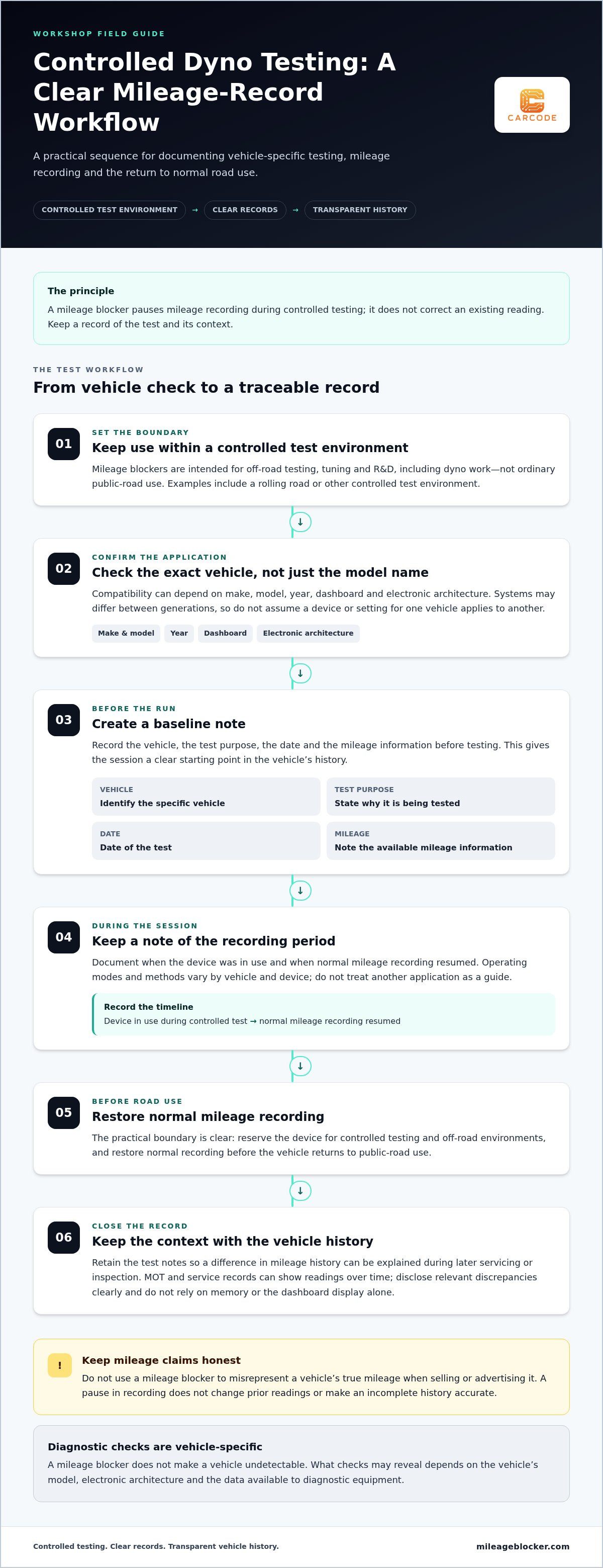
Before a run, document the vehicle, test purpose, date and device use. After testing, note when the blocker was active and when normal mileage recording resumed. Clear records can help explain discrepancies during later servicing or inspection. Do not rely on memory or the dashboard display alone.
For further operational guidance, review the mileage blocker FAQs.
Users can switch mileage-blocker modes while the vehicle is moving or stationary, so either condition allows a mode change during the vehicle’s operation.
Public-road use and legal caution
Mileage blockers are designed for off-road, testing, tuning and R&D use, not ordinary public-road use. They are intended for private property, rolling roads and controlled test environments only. It is illegal to use a mileage blocker to misrepresent a vehicle’s true mileage when selling or advertising it. Carcode Ltd accepts no liability for misuse.
What UK rules require accurate mileage records for vehicles? MOT and service records can show mileage readings over time, and inconsistent, missing or inaccurate readings can create problems with resale, servicing, warranty, finance or buyer confidence. Keep a record of each controlled test, including its purpose and the vehicle’s mileage information, so any difference can be explained transparently.
Track-day or off-road use still calls for careful documentation. For example, a Porsche used for a circuit test or a Mercedes tested away from public roads may have mileage readings that need context in its service history. Technicians should record when the vehicle was used for testing and avoid presenting an incomplete record as ordinary road mileage. Clear notes help a future owner or dealer understand the vehicle’s history.
Do not assume that a custom device setting makes public-road use acceptable. A dashboard display or unchanged odometer reading does not establish what the vehicle has actually been used for. Finance or lease terms may also address modifications affecting mileage recording, vehicle data or usage records, so read the relevant agreement before fitting a device. Keep the original records and disclose relevant discrepancies rather than relying on an explanation after a sale.
For workshops, the practical boundary is clear: reserve mileage blockers for controlled testing and off-road environments, record each use, and restore normal recording before road use. If a vehicle’s mileage history is already inconsistent, treat that as a separate record-keeping matter. A blocker pauses recording; it does not correct past readings or make inaccurate claims about a vehicle’s mileage legitimate.
Detectability by dealer systems and diagnostic tools
A mileage blocker does not make a vehicle undetectable. What diagnostic checks can reveal depends on the vehicle’s electronic architecture, model and the data available to the equipment. Results can differ between vehicles and even between generations of the same model.
A correctly fitted module should not cause warning lights or faults to appear on the dashboard. That does not prove the device cannot be detected. A clear dashboard is only one observation, while dealer diagnostics may assess vehicle systems and recorded data. There is no universal result to apply across all models, so claims that a device is always invisible or always detected are not reliable.
Warranty considerations are separate from dashboard behaviour. Vehicle terms may address modifications, mileage recording or usage records. If a dealer investigates a later fault, the service history and electronic data may be relevant. Keep records of controlled testing, including dates, purpose and mileage information, rather than relying on the display alone.
For a clear picture, distinguish between dashboard warnings, information available through diagnostics, and mileage records in service or MOT history. One does not automatically establish what another will show. Assess each vehicle as a specific electronic system rather than assuming results from one model apply to another.
Do not use a mileage blocker to conceal mileage or mislead a future buyer, dealer or insurer. If a vehicle has a discrepancy, retain relevant test records and explain it transparently. For practical information about device operation and responsible use, review the mileage blocker FAQs.
MileageBlocker.com by Carcode: Mileage Blocker Device
MileageBlocker.com by Carcode offers a vehicle-specific Mileage Blocker Device for controlled testing and off-road use. It pauses mileage recording during testing; it is not an odometer correction tool. It should not be used to alter the recorded mileage of any vehicle being offered for sale.
Compatibility depends on the vehicle’s make, model, year and electronic architecture. Choose the correct application for the vehicle being tested instead of assuming devices are interchangeable across model generations. Carcode also offers a Mileage Blocker Fitting Service for customers who prefer professional installation.
Keep testing records and use the device only for its intended controlled purpose. Visit MileageBlocker.com or contact MileageBlocker.com by Carcode to explore the available options.
Make the Next Decision With Confidence
Before planning a test, define the vehicle, setting and purpose of the mileage-recording pause. This gives the workshop a clear basis for selecting a vehicle-specific solution and keeping its records consistent. It also distinguishes controlled testing from ordinary road use.
Understanding why dyno and tuning shops use mileage blockers is only useful when it informs a responsible process. Treat compatibility, use and vehicle history as connected parts of the decision, not as separate details to resolve later. If you’re assessing a device for a workshop or a personal test vehicle, review the operational guidance before proceeding.
Explore the mileage blocker FAQs for further information, then decide on the approach that fits your vehicle and intended use. A clear plan makes the next step more straightforward.
Frequently Asked Questions
Are mileage blockers detectable?
A mileage blocker may be detectable, and there is no guarantee that a vehicle or dealer system will not identify it. Detection depends on the vehicle and the checks performed; a clear dashboard alone does not establish what diagnostics may reveal. A workshop scan and a review of service history are different sources of information. Do not treat a mileage blocker as undetectable.
What is a mileage blocker and how does it work?
A mileage blocker is an electronic module designed to pause mileage recording during controlled testing. The correct application depends on the vehicle’s make, model, year and electronics. Unlike an odometer correction tool, which changes a displayed reading, a blocker is technical testing hardware for testing, tuning and diagnostics, not for misrepresenting a vehicle.
Why do dyno and tuning shops use mileage blockers during testing?
Shops may use a mileage blocker when a rolling-road session or controlled test would otherwise add distance to a customer vehicle’s recorded mileage. Repeated tuning runs, for example, can operate the vehicle on a dyno without ordinary road travel. The device is for testing, not for improving performance or removing existing mileage. Workshops should document its use and keep vehicle records clear.
Are mileage blockers legal to use in the UK?
Carcode mileage blockers are sold strictly for legitimate automotive testing, tuning and diagnostic purposes. They are intended for use on private property, rolling roads and controlled test environments only. It is illegal to use a mileage blocker to misrepresent a vehicle’s true mileage when selling or advertising a vehicle. Carcode Ltd accepts no liability for misuse. By purchasing, customers confirm they will use the product lawfully and responsibly.
About the author
MileageBlocker TeamThe MileageBlocker Technical Team covers vehicle electronics, CAN and CAN-FD systems, mileage blocker compatibility, installation and product developments.
View author profile →