Mileage Blocker vs Rollback: The Difference In Addressing All Modules
Wondering how are mileage blocker totally undetectable? Discover the reality of vehicle CAN bus systems, electronic modules, and what diagnostic scans reveal.
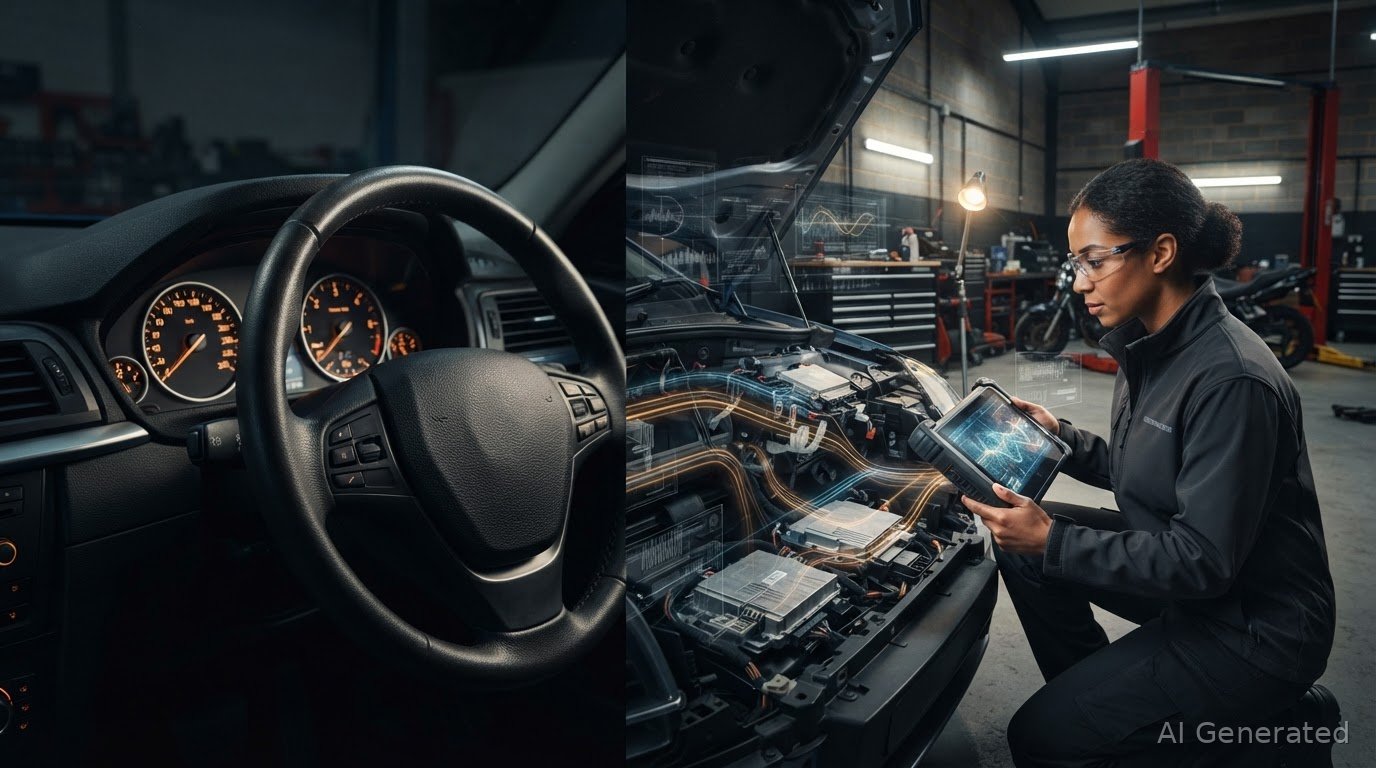
A mileage blocker doesn’t make unrecorded distance reappear when it’s removed. Once normal recording resumes, the odometer continues from its existing reading; it doesn’t automatically add the distance that wasn’t recorded. However, no mileage blocker should be described as completely undetectable. What a diagnostic scan can reveal depends on the vehicle’s electronic systems, the data available to the scanner and the checks being carried out.
It’s reasonable to ask whether another module stores a different reading or whether a mileage discrepancy can be identified after removal. The key distinction is between mileage recording while a device is active and evidence that may remain in a vehicle’s records. This article explains how CAN bus communication relates to vehicle electronics and why diagnostic scans and physical inspections may reveal different information. Mileage blockers are designed for off-road, testing, tuning and R&D use, not to alter the recorded mileage of a vehicle being offered for sale. Details vary between vehicle models and generations, so a general claim about every car cannot replace an assessment of its systems and history.
Key Takeaways
- Consider how mileage information may differ across a vehicle’s electronic modules, rather than relying on the dashboard reading alone.
- CAN bus communication follows the ISO 11898 international standards, according to the International Organization for Standardization; this describes the communication standard, not a guarantee that a device will or won’t be detected.
- A diagnostic scan and a physical inspection can reveal different clues, so assess the vehicle’s records and condition alongside electronic data.
- Mileage blockers are intended for testing and off-road use; choose a vehicle-specific solution that fits the vehicle’s generation and intended application.
Does removing a blocker leave a trace?
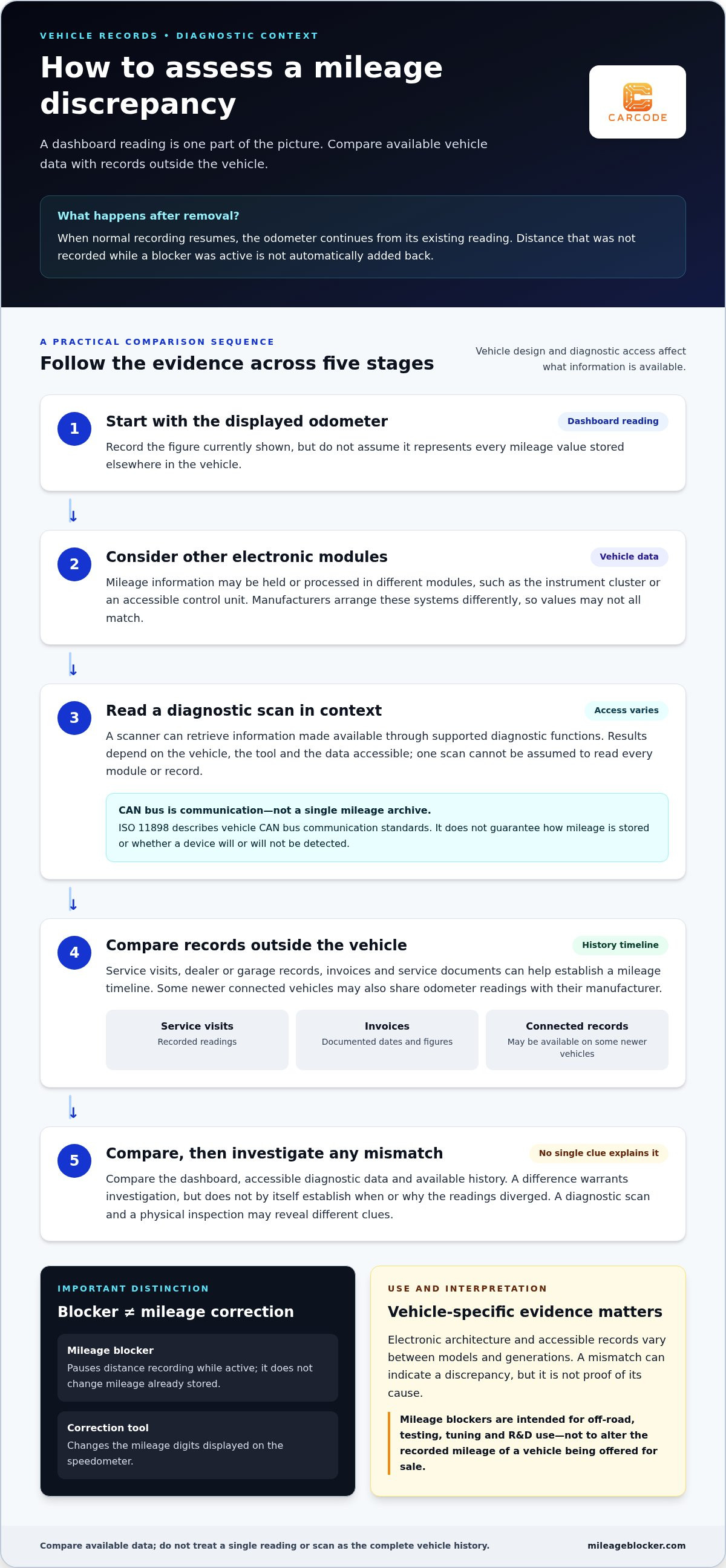
Removing a mileage blocker doesn’t make the distance it withheld appear on the odometer. When normal recording resumes, the displayed reading continues from its existing value. Mileage tracking can involve wheel sensors, the engine control unit (ECU) and other electronic modules. Manufacturers arrange these systems differently, so the dashboard figure may not match every value stored elsewhere in a vehicle.
Removal and detection are separate questions. A blocker affects mileage recording while active, but a difference between the odometer and another module’s data may remain. For example, a diagnostic check might show different mileage values in the instrument cluster and an accessible control unit. What can be retrieved depends on the vehicle’s design and diagnostic access; one scan cannot be assumed to read every module or record.
Records outside the vehicle can provide another point of comparison. Dealers and garages log mileage during service visits, while invoices and service records can establish a timeline. Some newer connected vehicles may share odometer readings with their manufacturer. Archived readings can therefore be compared with the present display and available diagnostic data. A difference warrants investigation, but it does not by itself explain when or why the readings diverged.
Mileage correction tools differ from blockers. Correction tools change the mileage digits displayed on the speedometer; a blocker pauses recording while active and doesn’t change mileage already stored. After repairs, these are distinct functions: a blocker pauses recording during operation, while correction changes the displayed figure. Keep repair documents and mileage records together so the vehicle’s history is clear.
Because mileage-tracking sensors and methods vary between vehicle manufacturers, the records available for comparison can differ from one vehicle to another. A UK forum contributor said that a mileage blocker may affect only the odometer, while other vehicle modules may retain separate mileage data that can be checked. Modern vehicles may store mileage information in multiple electronic control units, where diagnostic checks can find traces of odometer changes.
Mismatches between mileage data synchronized across vehicle systems can indicate possible tampering, though they do not alone establish its cause. Mileage correction tools are software installed into a vehicle’s computer. Archived mileage data may be available to service centres and law enforcement agencies for comparison with current readings.
CAN bus communication
CAN bus is a communication network that allows electronic control units in a vehicle to exchange messages. According to the International Organization for Standardization, vehicle CAN bus is supported by international standards under ISO 11898. The standard describes communication, not a universal method for storing or checking mileage. Each manufacturer designs vehicle systems differently, so the meaning and availability of mileage-related data depend on the model.
During normal operation, messages from vehicle systems help control units coordinate functions. A speedometer display, for example, presents information supplied by the vehicle’s electronics. Mileage recording relates to vehicle data, but the CAN bus itself should not be mistaken for one central odometer archive. Information may be processed or retained by different modules according to the vehicle’s design.
A diagnostic scanner communicates with a vehicle through supported diagnostic functions. It can retrieve information made available by relevant modules, but that does not mean every scanner searches every control unit or reads every message travelling across CAN. Results depend on the tool, vehicle model and data accessible through its diagnostic system. A clean basic scan therefore cannot establish that all mileage records match.
For a vehicle undergoing testing, the distinction between communication and recording matters. A device interacting with mileage-related signals may affect what the odometer records while active. It does not follow that every module stores identical distance data or that removing a device synchronises those records. A rollback, which changes a displayed mileage figure, is different from interrupting distance recording.
CAN bus communication can support vehicle functions without making mileage data uniform across every module. For a practical overview of vehicle-specific operation and common questions, consult the mileage blocker FAQ. The vehicle’s model, electronic design and diagnostic access determine what a scan can actually show.
Mileage blocker features and intended use
A mileage blocker is designed to pause distance recording while active, rather than rewrite mileage already stored in a vehicle. It is designed for off-road, testing, tuning and R&D use. For example, a test vehicle may cover distance during a controlled rolling-road session without that distance being added to the displayed odometer reading while the device is operating. It should not be used to alter the recorded mileage of any vehicle being offered for sale.
That function differs from rollback. A rollback changes a mileage figure already recorded; a blocker affects recording while active. Neither description tells you, by itself, what every electronic module in a particular vehicle retains. Manufacturers use different architectures, so an operating mode on one model must not be assumed to work identically on another.
Some devices offer modes that record a fraction of travelled distance. Examples include 10% or 20% recording, but these figures are not a universal mode list. Options, activation methods and behaviour depend on the vehicle-specific device and application. Treat compatibility as a match between the device, vehicle model and generation, not simply the badge on the bonnet.
Use the intended application as your first filter when choosing a device. Identify the vehicle’s exact model and generation, and confirm that the use is controlled testing, tuning or off-road activity. Keep a clear record of any distance not recorded while the device is active. It should not be used to alter the recorded mileage of any vehicle being offered for sale.
Warnings and dashboard behaviour depend on the vehicle and device combination. A general claim that every blocker behaves identically across manufacturers is not technically reliable. MileageBlocker.com mileage blockers are sold strictly for legitimate automotive testing, tuning and diagnostic purposes. They are intended for use on private property, rolling roads and controlled test environments only. MileageBlocker.com accepts no liability for misuse.
A mileage blocker is a vehicle-specific, plug-and-play CAN-bus module that pauses odometer recording while active. MileageBlocker.com units use OEM-style connectors and do not require cutting factory wiring.
Are mileage blockers truly undetectable by diagnostic tools or vehicle inspections?
No. A mileage blocker cannot be described as totally undetectable across every vehicle. Detection depends on the vehicle and the checks performed. A basic diagnostic scan may not identify an aftermarket device, since diagnostic tools primarily diagnose vehicle faults. A scan can still reveal differences between mileage values available from separate modules.
For example, a technician may compare odometer information with data accessible from the engine ECU or transmission module. Manufacturers use different electronic architectures, and diagnostic equipment varies in what it can read. There is no universal answer to whether a mileage blocker could be totally undetectable: a clean basic scan doesn’t prove that all mileage records agree, while a mismatch needs context before its cause can be identified.
Physical inspection can reveal evidence that an electronic scan misses. An aftermarket module may be visible during inspection of vehicle components, and the vehicle’s condition can be compared with its stated mileage. UK regulatory authorities, such as Trading Standards and the Driver and Vehicle Standards Agency (DVSA), identify vehicle condition and detailed history reports as useful clues when assessing possible odometer fraud. Worn pedals, seats, steering wheel, tyres or brakes may prompt closer examination, but wear alone doesn’t establish mileage manipulation.
In the UK, the GOV.UK MOT history service shows mileage recorded at MOT tests. Compare those entries with service invoices, logbook records and the current odometer. A gap or reversal in the sequence is a reason to investigate, not a standalone diagnosis. Vehicles without an MOT history still require assessment using other available records and inspection.
For a sound assessment, consider diagnostic readings, MOT history, service documents and visible condition together. No single scanner result or inspection detail answers every question. If you’re assessing a used car, use its GOV.UK record alongside its paperwork and a physical inspection; this can expose inconsistencies that one method alone may miss, highlighting why understanding how are mileage blockers totally undetectable requires a multi-layered approach.
MileageBlocker.com: Mileage Blocker Device
MileageBlocker.com offers a vehicle-specific Mileage Blocker Device for testing and off-road use. It pauses mileage recording while active; it does not correct or rewrite mileage already stored. Since vehicle electronics differ between models and generations, matching the device to the exact vehicle application matters.
Choose this type of device for its intended use, not as a way to conceal distance from a buyer, insurer or finance company. Carcode also offers a fitting service for its mileage blockers. Before selecting a device, review the vehicle-specific application and product information.
Visit MileageBlocker.com to explore the vehicle-specific options or contact the team with your enquiry.
Make your next decision with the vehicle in mind
There is no universal answer to whether a mileage blocker can be totally undetectable. Detection depends on the vehicle’s electronic design and the checks performed, so no single scan or inspection can establish the full picture in every case.
If you’re considering a device for a defined testing or off-road application, focus on the exact vehicle and its generation. That is the practical basis for choosing a compatible solution and understanding its intended operation. Keep clear records of any distance that isn’t recorded, especially if the vehicle’s use or ownership changes. It should not be used to alter the recorded mileage of any vehicle being offered for sale.
For further information on vehicle-specific applications and operation, explore the MileageBlocker.com FAQ. A careful, transparent approach helps you make an informed decision and use the right equipment for its intended purpose.
Frequently Asked Questions
What is a mileage blocker and how does it work?
A mileage blocker is a vehicle-specific electronic module intended to pause odometer recording during controlled testing, tuning or research and development. For example, a dyno operator may use one during a rolling-road session. It isn’t a mileage correction tool and should not be used to alter the recorded mileage of a vehicle being offered for sale. Compatibility and operation depend on the vehicle’s model and generation.
Can mileage blockers affect a vehicle's safety systems, warranty, or insurance?
Effects on vehicle systems, warranty and insurance cannot be stated universally, because vehicle electronics and policy terms differ. The product is designed to preserve driver-assistance functions, but the exact vehicle application matters. Its 1-year warranty is separate from the vehicle manufacturer’s warranty. Before use, assess the product’s compatibility and installation details, and review the relevant insurance policy terms for any notification requirements.
About the author
MileageBlocker TeamThe MileageBlocker Technical Team covers vehicle electronics, CAN and CAN-FD systems, mileage blocker compatibility, installation and product developments.
View author profile →