
Mileage Blocker vs Odometer Correction: Key Challenges Into 2027
Mileage Blocker vs Odometer Correction: The Difference explained: learn how each affects mileage records, MOT history and honest vehicle sales in practice.
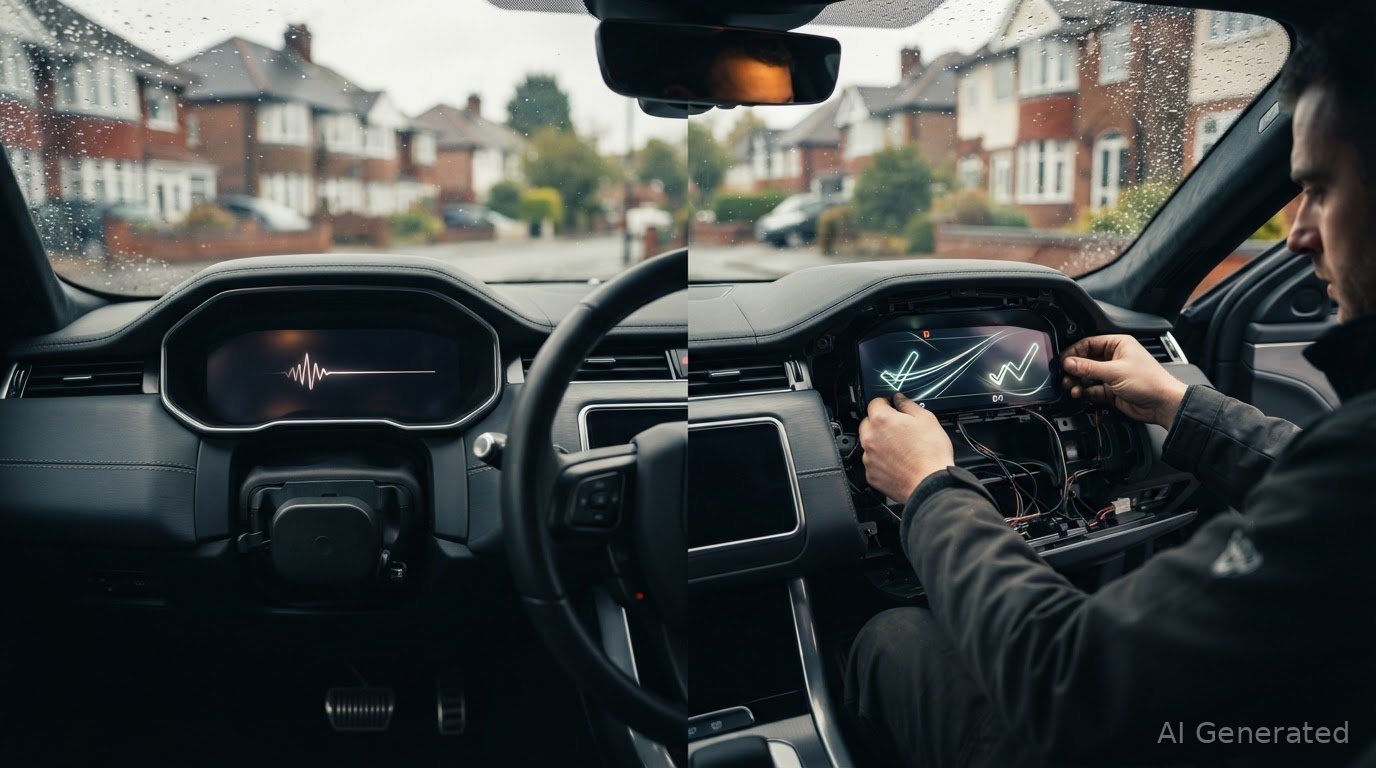
A mileage blocker pauses new distance recording while active; odometer correction changes a mileage value already stored in the vehicle. That is the key difference in Mileage Blocker vs Odometer Correction: The Difference. One affects what is recorded during use, while the other changes an existing figure. Using correction to roll back mileage is deceptive, not another name for a mileage blocker.
The terms are easy to confuse because both relate to the mileage shown on a dashboard, but their purposes and effects differ. An inaccurate reading can affect a vehicle’s history, servicing and sale. This guide explains how each function works, why a replacement instrument cluster may need an accurate reading, and how to assess mileage records in the UK. It also clarifies the difference between controlled testing and misleading a buyer, and why a vehicle’s true distance travelled must remain clear.
Key Takeaways
- A mileage blocker pauses new mileage recording while active; mileage correction changes a value already stored in the vehicle.
- Correction can help a replacement instrument cluster display the vehicle’s true mileage, but it should reflect the actual mileage history.
- Odometer rollback is a deceptive alteration, not the same as using a blocker for controlled testing or off-road applications.
- Compare the odometer reading with service and MOT records, and make sure any known mileage discrepancy is disclosed when selling.
Why accurate mileage matters to buyers and vehicle owners
Accurate mileage helps buyers assess a vehicle’s history and owners plan maintenance. Electronic distance records may be held in several vehicle systems, not just displayed on the dashboard.
Mileage Discrepancies When Buying
A mileage discrepancy is a mismatch between the displayed reading and vehicle records. It matters because recorded distance helps buyers assess wear, service needs and vehicle history. In Great Britain, compare a used car’s free GOV.UK MOT history with its service records. Check that the readings progress consistently, and ask the seller to explain any gap or mismatch.
Manufacturers use different methods to calculate and store distance. Wheel sensors and engine control data can contribute to recording, while other vehicle modules may also hold mileage information. CAN bus networks carry electronic data between vehicle systems; according to the International Organization for Standardization (ISO), ISO 11898 is a standard supporting CAN bus. After an instrument cluster or control unit replacement, the display may show zero or another vehicle’s reading until set to the car’s true mileage.
Mileage Legality and Risks
A mileage blocker is designed for controlled testing, dyno work and off-road use. It should not be used to alter the recorded mileage of any vehicle being offered for sale. Odometer correction may be appropriate after a repair if it restores the vehicle’s true, documented mileage. An unexplained or undisclosed difference can leave buyers, owners and service professionals with an incomplete history when assessing maintenance needs.
The Competition and Markets Authority identifies false vehicle mileage information as potentially misleading under the Digital Markets, Competition and Consumers Act 2024. When selling, disclose a known discrepancy and retain records explaining it. Buyers can compare MOT entries with service documents and ask how any difference arose. Clear documentation helps the next owner understand what the dashboard shows and what the vehicle’s records establish.
Can a Mileage Blocker Permanently Change Mileage?
A mileage blocker controls new mileage recording while the device is active; it doesn’t rewrite mileage already stored in the vehicle. When unplugged, the vehicle resumes recording from the same displayed figure. For example, a car showing 50,000 miles may continue travelling while that reading remains unchanged during operation. The display therefore cannot, by itself, represent the vehicle’s true mileage for that period.
The distinction matters after dyno testing or other controlled use. A blocker may pause mileage recording during a test, but owners must keep an accurate account of the distance actually travelled. Any distance not shown on the odometer should be clearly disclosed when a vehicle is sold, so the displayed figure is not mistaken for the vehicle’s complete travel history.
Tyre-size changes are a separate matter. Vehicles calculate distance using electronic signals, and a different tyre rolling circumference can affect the relationship between wheel rotations and distance. The effect depends on the vehicle’s systems and calibration; it is not a permanent mileage correction. Consider any reading change after a tyre-size change separately from distance that a blocker prevented from being recorded.
Vehicle records can help reveal a gap. In one example, MOT history rises from 82,000 miles in 2022 to 86,500 miles in 2023, then falls to 61,000 miles in 2024. That drop signals a discrepancy requiring explanation, not proof of a particular cause. Compare MOT entries, service records and the current cluster reading, then document any distance omitted during controlled use. A clear timeline helps distinguish a recording interruption from a changed odometer value and supports accurate vehicle history.
How Does a Mileage Blocker Differ From Mileage Correction?
A mileage blocker and an odometer correction tool act at different stages of mileage recording. Understanding Mileage Blocker vs Odometer Correction: The Difference starts with timing: a blocker pauses new distance recording while active, while correction changes an existing stored or displayed value. This distinction matters during testing, repairs and later sales because each function addresses a different task.
A mileage blocker is vehicle-specific technical testing hardware. On supported vehicles, it interfaces with vehicle systems to pause new mileage recording during controlled use. Once deactivated or removed, normal recording resumes. It does not correct mileage already recorded. The hardware and operation depend on the vehicle’s make, model generation and electronic architecture.
Odometer correction changes an existing mileage value. One repair example is setting a replacement instrument cluster to show the vehicle’s documented mileage rather than zero or a reading from another vehicle. The change should reflect the genuine mileage history. Reducing a reading to conceal distance or make a vehicle appear less used is deceptive clocking, not responsible repair.
The practical distinction in Mileage Blocker vs Odometer Correction: The Difference is whether the task concerns future recording or an existing value. A controlled dyno test may require pausing new distance recording. A replacement cluster may need its display aligned with the vehicle’s documented history. The vehicle’s manufacturer, generation and electronic system determine the technical approach.
In the UK, costs depend on the vehicle and work involved. A blocker’s cost reflects its vehicle-specific hardware, while correction costs depend on the electronic system and repair required. Vehicle generation and scope of work are key factors because these are different functions, not interchangeable services.
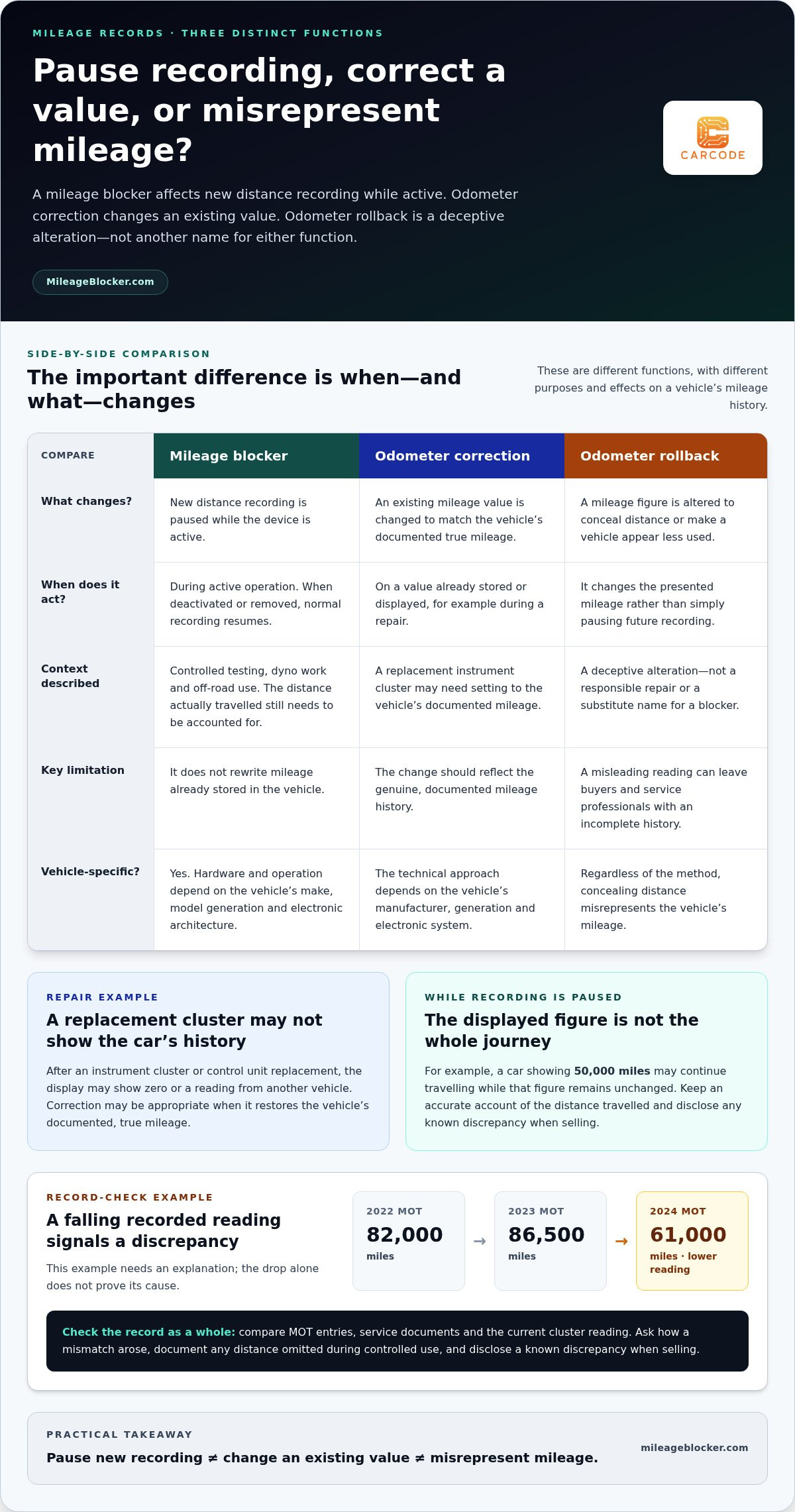
Mileage blockers compared with mileage correction and odometer rollback
A mileage blocker temporarily pauses new distance recording; correction changes an existing stored value. Odometer rollback means reducing or altering the displayed mileage so it no longer represents the vehicle’s complete distance history. These terms describe different technical effects. The purpose of a change and the records surrounding it matter when interpreting a vehicle’s mileage.
Correction may be needed after an instrument cluster replacement if the new unit’s display does not match the vehicle’s documented history. The corrected reading should correspond to genuine records, such as maintenance invoices and previous MOT entries. Keep the repair paperwork with those records to explain the change and give future owners a clearer account of the vehicle’s mileage.
Compatibility depends on the individual vehicle. Mileage blockers are designed for certain performance, luxury and modified vehicles, including some Ford models; compatibility with one model or generation doesn’t establish compatibility with another. Manufacturers can use different electronic architectures across model years and facelifts. For testing or diagnostics, the vehicle’s exact application and intended controlled environment determine whether a blocker is relevant.
When reviewing a vehicle, compare the odometer display with its service records and MOT history. A difference is a reason to examine the timeline, repair documents and readings together. A replacement cluster, for example, may explain a changed display, while a sequence of records can help establish the mileage history. Clear documentation helps buyers assess the available evidence without relying on the dashboard figure alone.
MileageBlocker.com: Mileage Blocker Device
MileageBlocker.com offers a Mileage Blocker Device as technical testing hardware, designed for off-road, motorsport, dyno testing and vehicle development use. It should not be used to alter the recorded mileage of any vehicle being offered for sale.
The device is designed, manufactured and supported by Carcode Ltd - no middlemen, no white-labelling, no compromises. A Mileage Blocker Fitting Service is available for customers who need installation assistance.
Carcode Ltd accepts no liability for misuse. Visit MileageBlocker.com to explore the device and fitting service.
Make the Next Mileage Decision With Care
The difference between a mileage blocker and odometer correction matters when deciding what a vehicle actually needs. Before arranging work, identify its purpose, the vehicle’s electronic system and the records that will explain any change to the displayed mileage. This helps separate technical decisions from the responsibility to represent a vehicle’s history accurately.
For controlled testing or off-road use, a Mileage Blocker Device pauses new mileage recording while active. A Mileage Blocker Fitting Service is also available. Choose the device for the vehicle and intended use, and keep clear records of any distance not shown. This gives future owners a more complete account to consider.
If you have a vehicle-specific question, explore the MileageBlocker.com FAQ and contact the team with your question. A clear next step can help you make an informed decision with confidence.
Frequently Asked Questions
Are mileage blockers detectable?
Detection depends on whether the device is fitted and on the vehicle’s specific electronic systems. MileageBlocker.com states that the device is not detectable through diagnostics once removed. This does not make the mileage history complete: MOT entries, service records and other documents may still show gaps or discrepancies. Keep an accurate record of any distance not recorded during controlled testing.
Can Mileage Information Exist in Multiple Vehicle Modules?
Yes. Depending on the manufacturer and system design, a modern vehicle may hold mileage information in more than one electronic control module. The instrument cluster is only one possible source. For example, a replacement cluster may show a value that differs from the vehicle’s previous records. Compare readings with maintenance documents to help establish the recorded history.
What is a mileage blocker and how does it work?
A mileage blocker is vehicle-specific technical testing hardware designed to pause mileage recording during controlled testing, dyno work or vehicle development. It interfaces with vehicle electronics, but the exact hardware and operation depend on the make, model and generation. It should not be used to alter the recorded mileage of any vehicle being offered for sale. Follow the application-specific operating guidance.
What is odometer correction and how does it work?
Odometer correction changes a mileage value stored or displayed by a vehicle’s electronic system. One valid repair example is replacing a faulty instrument cluster and setting its display to reflect the vehicle’s documented mileage history. The procedure depends on the manufacturer and vehicle electronics. Keep the repair documentation and previous reading so the change has a clear, traceable explanation.
What is the difference between a mileage blocker and an odometer correction tool?
A blocker pauses new mileage recording during controlled vehicle use; a correction tool changes an existing stored or displayed value. They address different technical tasks and are not interchangeable. A dyno session, for instance, concerns new distance recording, while a replacement cluster may need to display the vehicle’s documented history. The right approach depends on the testing or repair purpose.
How can a vehicle's odometer be corrected after a legitimate repair or instrument-cluster replacement?
Follow the vehicle manufacturer’s approved repair procedure and have a qualified automotive professional set the replacement cluster to the vehicle’s documented true mileage. Retain the old reading, repair invoice and supporting service history. These records explain the display change and help maintain a consistent vehicle history for future servicing, MOT checks and ownership transfers.
About the author
MileageBlocker TeamThe MileageBlocker Technical Team covers vehicle electronics, CAN and CAN-FD systems, mileage blocker compatibility, installation and product developments.
View author profile →