
Ghost vs CAN-Phantom: Best Match for Mileage Blockers
Ghost immobilizer, CAN Phantom or traditional method: what works best with a mileage blocker? Learn how compatibility and correct installation matter.
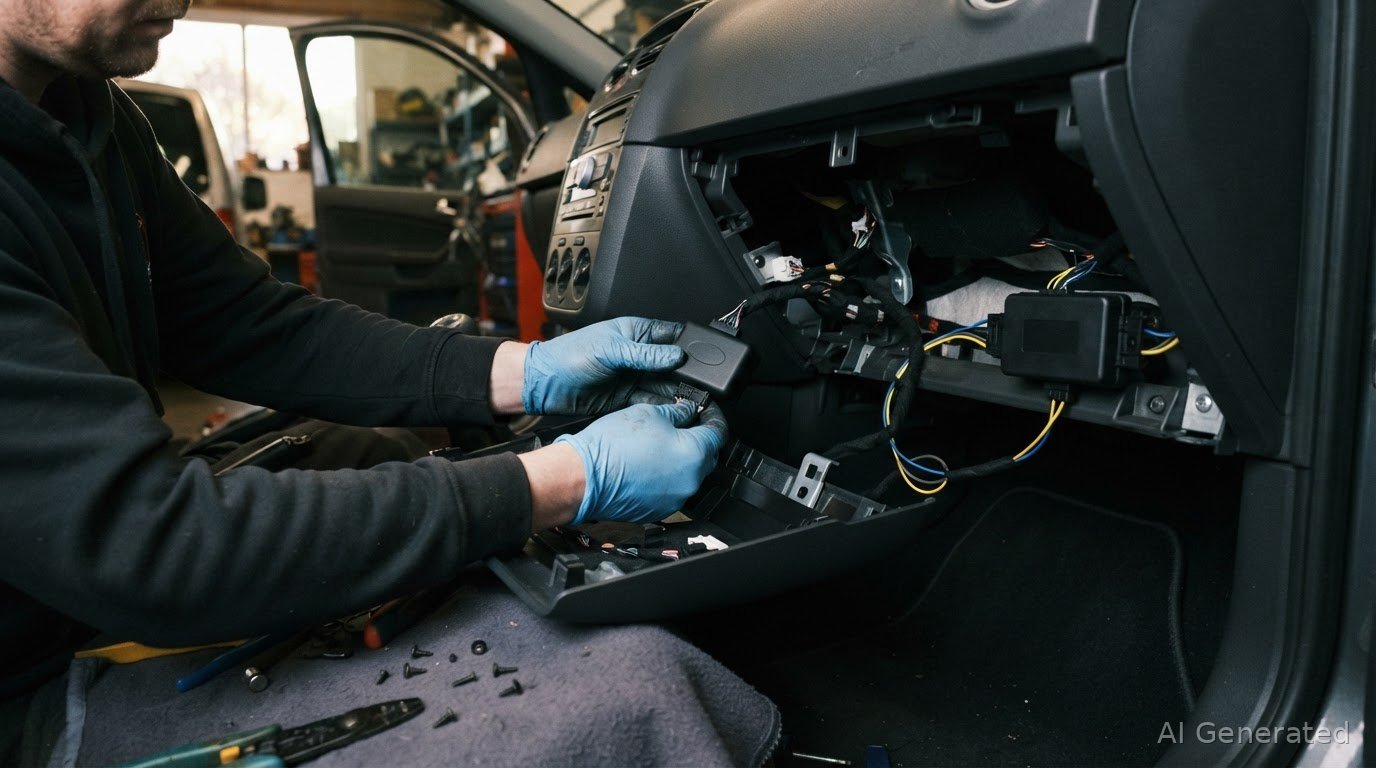
The immobiliser you choose does not determine whether a mileage blocker works. Vehicle-specific compatibility and correct installation do. CAN Phantom and Ghost are CAN-based immobilisers, not mileage blockers. For authorised vehicle testing or off-road use, the practical question behind choosing a Ghost immobiliser, CAN Phantom or traditional method with a mileage blocker is whether the blocker suits the exact vehicle and is installed correctly.
These devices are easy to group together because they interact with vehicle electronics, but they serve different purposes. An immobiliser restricts unauthorised starting; a mileage blocker is designed to stop the odometer recording mileage during its intended use. This article explains how CAN Phantom and Ghost immobilisers differ, what their shared CAN connection means, and why it does not establish compatibility with a mileage blocker.
You’ll also see how to compare a traditional method, which installation details matter, and how to choose a suitable vehicle-specific solution without assuming one setup applies to every model.
Key Takeaways
- Compare CAN Phantom and Ghost by their security functions and the vehicle they’re fitted to, rather than assuming one is automatically the better match.
- Understand how a Ghost immobiliser uses a vehicle-specific PIN entered through designated in-car buttons.
- Use the installation guide for the exact vehicle and test the system before reassembling trim; installation details can vary by model.
- For authorised vehicle testing or off-road use, focus on a vehicle-specific mileage blocker and its correct fitment.
Importance of correct installation and configuration
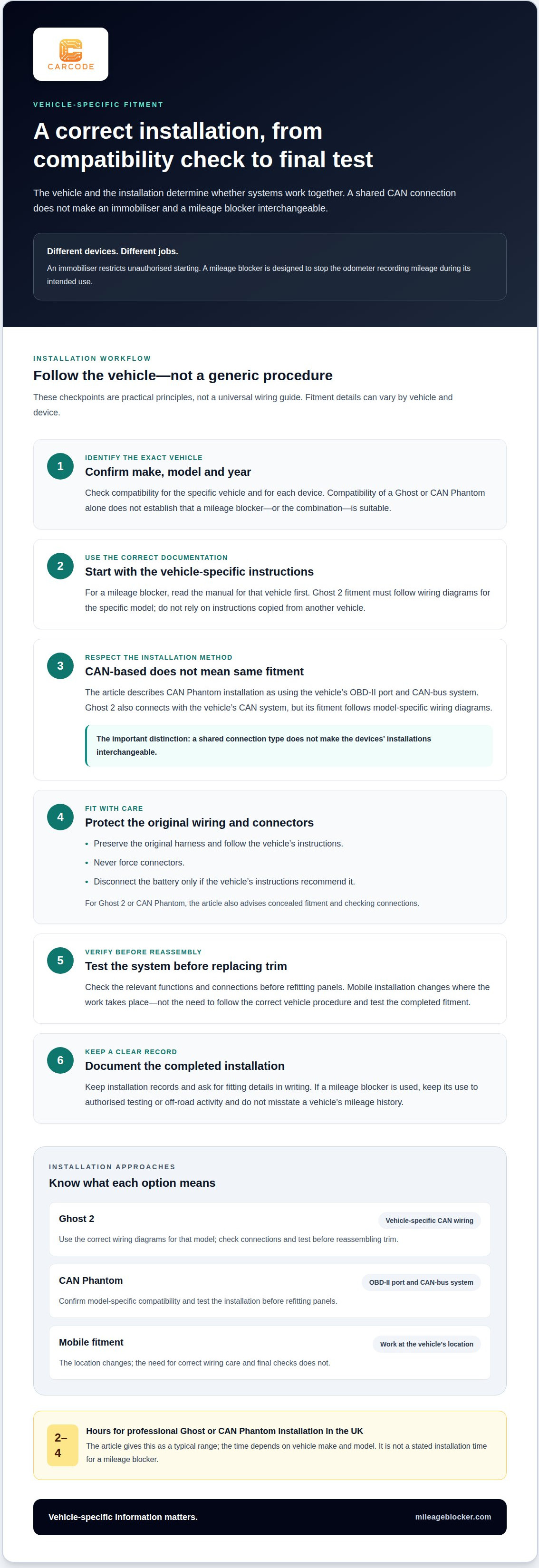
Installation must follow the exact vehicle’s wiring layout, not a generic procedure. Correct fitting also means preserving the original harness and testing the system before replacing trim.
Ghost 2 and CAN Phantom Methods
CAN Phantom installation is described as using the vehicle’s OBD-II port and CAN-bus system. Ghost 2 also connects with the vehicle’s CAN system, but its fitment must follow wiring diagrams for that specific model. In both cases, an installer should conceal the device, check connections and test security functions before reassembling panels.
For a mileage blocker, read the vehicle-specific manual first. Never force connectors; disconnect the battery only if the vehicle’s instructions recommend it. Mobile installation changes the location, not the need to follow the correct vehicle procedure and test the system before refitting trim.
Installation Costs and Warranties
Professional Ghost Immobiliser or CAN Phantom installation in the UK typically takes between 2 and 4 hours, depending on vehicle make and model. Costs therefore depend on the vehicle and installation scope; no single figure applies across models. A mobile appointment also involves work at the vehicle’s location, rather than a different fitting method.
A CAN Phantom or Ghost 2 installation should not void a vehicle warranty when a qualified professional uses the correct wiring diagrams and does not cut or modify the original harness. Warranty terms still matter. Keep installation records and ask for the fitting details in writing.
| Option | Installation approach | Key consideration |
|---|---|---|
| Ghost 2 | Vehicle-specific CAN wiring | Correct diagrams and concealed fitment |
| CAN Phantom | OBD-II port and CAN-bus system | Model-specific compatibility and testing |
| Mobile fitment | Work carried out at the vehicle’s location | Same wiring care and final checks |
Choose based on confirmed vehicle compatibility, the installation method and the installer’s ability to test the completed fitment.
In the UK, a device’s presence alone does not establish how it was used; intended use and any later mileage representation matter. Using a blocker to conceal or misstate mileage risks misleading a buyer, so keep its use to authorised testing or off-road activity.
When checking a used car, ask the seller directly, compare mileage records and arrange an inspection by a qualified professional. A dashboard check alone cannot establish whether a device was previously fitted.
Comparison of CAN Phantom and Ghost Immobiliser
CAN Phantom and Autowatch Ghost are immobiliser systems designed to prevent unauthorised starting. Their purpose differs from that of a GPS tracker: an immobiliser restricts starting, while a tracker helps locate a vehicle. Neither name alone determines which system suits a particular vehicle; compatibility depends on its make, model and year.
For drivers, the access method can affect everyday convenience. A Ghost immobiliser PIN is entered using designated vehicle buttons, which may include controls on the steering wheel, dashboard, door panel or centre console. Some Ghost systems also allow smartphone disarming. These options depend on the system, so do not assume every installation includes an app.
Compare CAN Phantom and Autowatch Ghost by confirmed compatibility and operation, not by assuming one is universally stronger. Both are intended to prevent unauthorised starts, including attempts involving cloned or stolen keys. CAN Phantom installation uses the vehicle’s OBD-II port and CAN-bus system; Ghost systems also connect to the vehicle’s CAN network. Their shared connection type does not make their fitments interchangeable.
A GPS tracker and an immobiliser address different security needs. A tracker helps locate a vehicle, while an immobiliser restricts starting. Owners may value location information, prevention of an unauthorised start, or both. Choosing one does not automatically provide the other function, so match the system to the risk you want to address.
CAN Phantom or a Ghost immobiliser may share a vehicle with a mileage blocker only when each device is compatible with that exact vehicle. Compatibility of either device alone does not establish that the combination is suitable. The make, model and year, as well as the specific devices and installation, determine compatibility.
Choosing a Ghost immobiliser, CAN Phantom or traditional method to use with a mileage blocker depends on the vehicle and the functions required. First identify the exact vehicle, then compare compatible systems’ entry methods and functions. Choose a tracker for location support, an immobiliser to restrict starting, or both if you need both functions.
How a Ghost immobiliser works
A Ghost immobiliser adds an authorisation step to a vehicle’s normal starting process. The owner must complete the configured input before the vehicle accepts an authorised start. The exact setup depends on the vehicle, so instructions copied from another model are not a reliable guide.
This model-specific setup has an everyday consequence: the owner needs to understand the procedure before relying on the vehicle. During handover, learn the correct input, how to enter it consistently and what to do if an authorised driver cannot complete it. Keep the code private and do not store it somewhere obvious in the car.
Consider access arrangements before lending the vehicle. A family member or colleague who drives it regularly needs clear instructions, while an occasional driver should not receive the security code casually. Keep system documentation with other vehicle records, not sensitive access details in the cabin.
Plan for changes to the vehicle’s electronics, too. Tell a technician that an aftermarket immobiliser is installed before diagnostic work or electrical repairs begin. If the vehicle is sold or the system is no longer needed, a qualified installer familiar with the fitment can remove it. Keep records of installation and any later removal.
Technically, an immobiliser’s operation depends on correct configuration for the vehicle, not merely on the device being present. A handover should leave the owner able to use the system reliably and explain access to other authorised drivers. These practical details support everyday use, while the immobiliser’s security function remains separate from vehicle mileage recording.
Which immobiliser works best alongside a mileage blocker?
There is no universal winner. Ghost and CAN Phantom have different installation and operating details, while a mileage blocker serves a separate purpose. The right combination depends on compatibility with the exact vehicle and its model year, as well as the intended use. Choose based on vehicle-specific fitment, not the assumption that two CAN-connected devices will work together automatically.
Make the decision in this order:
- Identify the vehicle: record its make, model, year and generation. A facelift or new generation can use different electronics, even when the model name remains the same.
- Confirm each device separately: check that the immobiliser and mileage blocker each match that exact vehicle. Compatibility for one does not prove compatibility for the other.
- Define the security requirement: compare the immobiliser’s entry method and operation with the driver’s needs. Ghost uses a PIN entered through designated vehicle buttons; CAN Phantom uses the vehicle’s OBD-II port and CAN-bus system.
- Plan the installation: give the installer details of both devices and the vehicle. They can assess the specific combination and follow the correct model-specific instructions.
For a vehicle used in authorised testing or on an off-road track, start by confirming the mileage blocker’s vehicle fitment. Choose an immobiliser separately to meet the owner’s vehicle-security needs. Neither device replaces the other. A mileage blocker must not be used to misrepresent a vehicle’s true mileage when selling or advertising it.
In practice, Ghost may suit a driver who prefers PIN entry using existing vehicle buttons. CAN Phantom may suit a compatible vehicle where its installation approach fits the requirement. These are selection factors, not proof that either option suits every car or mileage-blocker combination.
Before proceeding, establish the exact vehicle generation, confirm compatibility for both devices, and have the combined fitment assessed professionally. For practical information about vehicle-specific products and installation, review the mileage blocker FAQs.
MileageBlocker.com: Mileage Blocker Device
MileageBlocker.com offers a Mileage Blocker Device as technical testing hardware. It is designed for off-road, motorsport, dyno testing and vehicle development use. It should not be used to alter the recorded mileage of any vehicle being offered for sale.
The device is designed, manufactured and supported by Carcode Ltd - no middlemen, no white-labelling, no compromises. A Mileage Blocker Fitting Service is also available for customers who need installation support.
For information about a vehicle-specific device or fitting, contact MileageBlocker.com or visit mileageblocker.com.
Make the next step vehicle-specific
Choosing whether a Ghost immobiliser, CAN Phantom or traditional method works best with a mileage blocker starts with the vehicle, not the device label. Note the exact model, generation and intended use before deciding. These details provide a practical basis for assessing fitment and avoiding assumptions drawn from another vehicle’s setup.
Keep the purpose clear, too. Vehicle security and authorised mileage-related testing are separate requirements. Decide which function you need, then assess each system against it. Keep accurate records of mileage and vehicle history, and never misrepresent a vehicle’s true mileage when selling or advertising it.
Use the MileageBlocker.com FAQs as your next step, or contact MileageBlocker.com to discuss the relevant vehicle-specific questions. A considered choice begins with the right vehicle details, and you can take that step with confidence.
Frequently Asked Questions
What is a CAN Phantom?
CAN Phantom is the name of an aftermarket vehicle immobiliser system. The name alone does not show whether a particular version suits a car. For a useful compatibility assessment, note the vehicle’s make, model and year, including its generation where known. This avoids relying on a broad manufacturer-level claim that may not apply to the exact vehicle.
Can Thieves Bypass It?
No vehicle security system should be described as impossible to defeat. CAN Phantom is intended to make unauthorised starting more difficult, but the outcome depends on the system’s compatibility and installation in that vehicle. Treat it as one security measure, not a guarantee against theft, and continue to protect the keys and vehicle access details.
Can it be removed later?
A qualified installer can remove a Ghost immobiliser later. Keep installation or removal paperwork with the vehicle’s service records. This gives a future owner or technician useful information about aftermarket electronics and clarifies the vehicle’s equipment history. If the car changes hands, be transparent about security systems fitted or removed.
What is a Ghost immobiliser and how does it work?
A Ghost immobiliser is an aftermarket system that adds a separate authorisation requirement when starting the vehicle. PIN length and input sequence can vary, so there is no universal code format or button routine. After fitting, the owner should learn the configured procedure and ensure authorised drivers know how to use it correctly.
What is CAN Phantom and how does it differ from a traditional Ghost immobiliser?
CAN Phantom and Autowatch Ghost are separate named immobiliser systems, not two names for the same product. The word “traditional” does not define a technical specification or make either system a universal match. Compare the exact vehicle application and the system’s documented operation. A sound choice depends on those details, not the label alone.
About the author
MileageBlocker TeamThe MileageBlocker Technical Team covers vehicle electronics, CAN and CAN-FD systems, mileage blocker compatibility, installation and product developments.
View author profile →