Odometer Stopper for Dyno Testing: Ensuring Data Integrity in Performance Tuning
Stop dyno sessions from adding false miles. An odometer stopper for dyno testing protects your car's value and service history. See how it works for tuners.
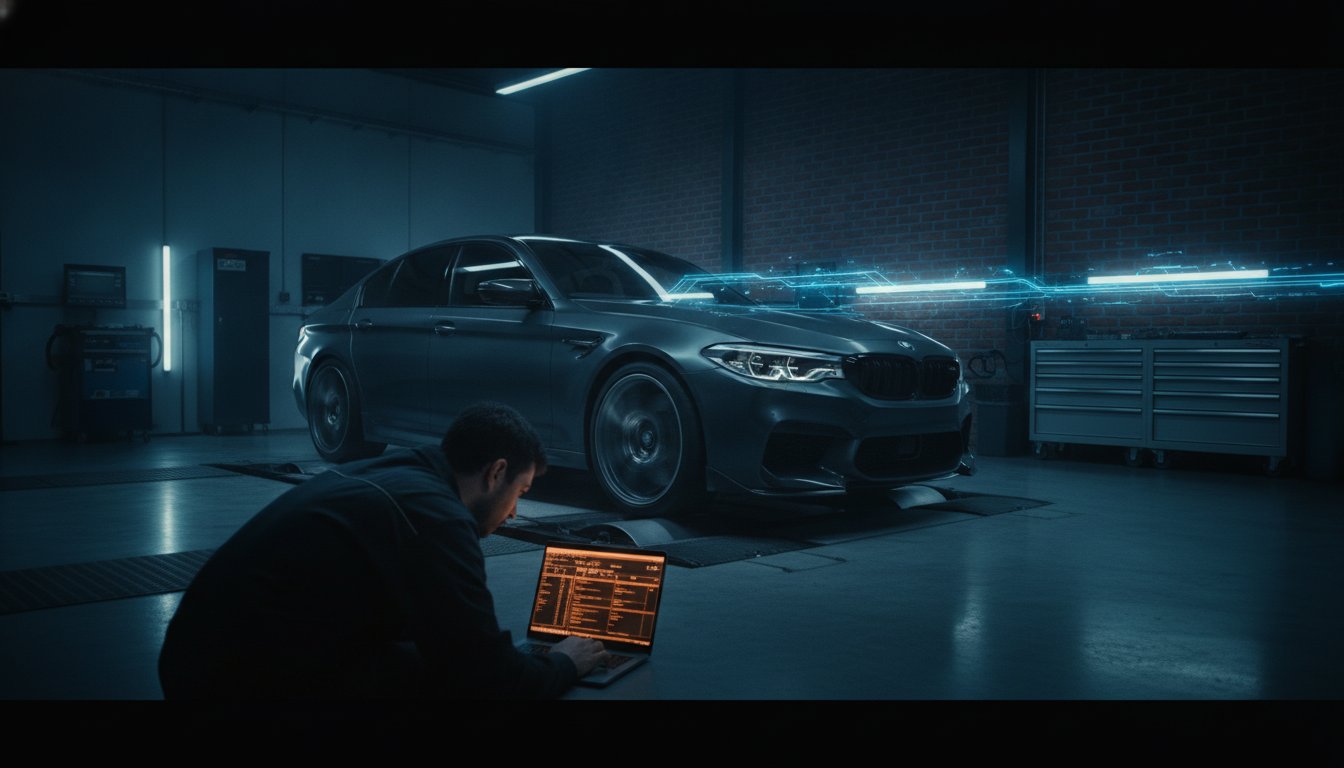
A single afternoon on a high-speed rolling road can "clock" your performance car by hundreds of miles without the vehicle ever leaving the workshop. It’s a frustrating reality for tuners who watch meticulous service schedules and resale values evaporate during a routine mapping session, which is why a dedicated odometer stopper for dyno testing has become a standard tool in professional workshops. We’ve seen owners of Audi R8 and BMW M5 models hesitate to push for that final 50 horsepower simply because they don't want the odometer to reflect miles that weren't actually driven on the road. You’ve likely felt that same hesitation when watching the needle climb while the car sits stationary.
By using these professional-grade mileage blockers, you can finally isolate powertrain evaluation from the vehicle’s long-term data logs, ensuring that your workshop time doesn't impact your road records. This article explains how these hardware modules protect your service intervals and ensure that intensive tuning doesn't trigger premature maintenance alerts. We will also examine how they maintain the electronic harmony of modern CAN bus systems to prevent the "ghost" mileage that would otherwise compromise your vehicle’s documented history and future market value.
Key Takeaways
- Prevent artificial mileage accumulation during high-speed rolling road sessions to protect the integrity of your vehicle's documented history.
- Discover how sophisticated CAN-filter technology intercepts distance data telegrams before they reach the permanent memory modules of your car.
- Understand why a professional odometer stopper for dyno testing is a critical tool for maintaining accurate service schedules and protecting resale value.
- Explore real-world applications for prototype evaluation and component stress testing on high-performance assets like the 2026 BMW M5.
- Compare the reliability of German-engineered plug-and-play modules against generic hardwired solutions for modern automotive electronics.
Why Performance Tuning Demands Precise Odometer Management During Dyno Testing
The Discrepancy Between Wheel Speed and GPS Data
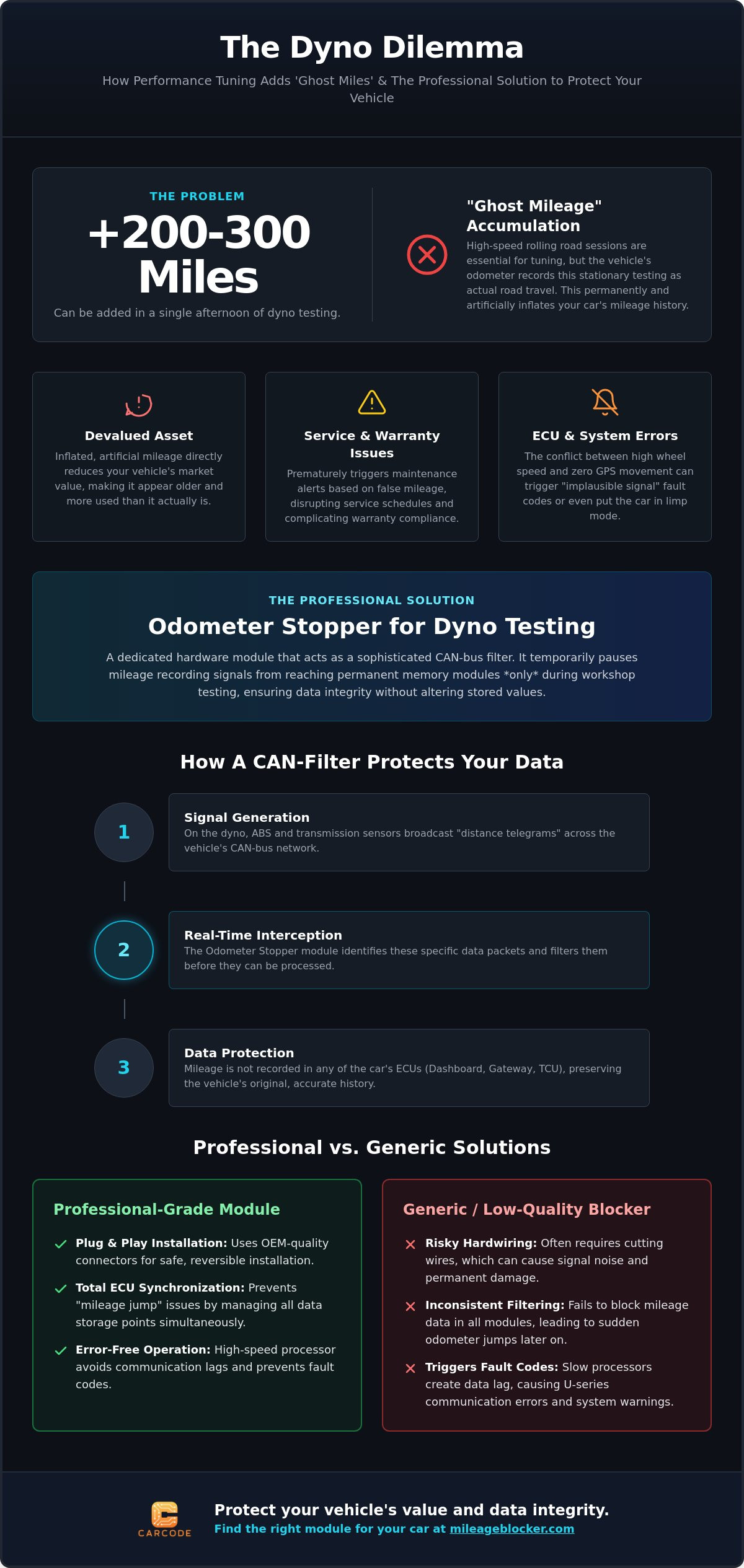
Modern vehicles rely on a complex web of sensors to determine movement. The Controller Area Network (CAN bus) broadcasts data from ABS sensors and transmission output shafts to calculate distance. When a car is on a dyno, the wheels might spin at 150 mph while the internal GPS and accelerometers report zero movement. In our workshop, we’ve seen cars trigger "implausible signal" errors without a blocker because the ECU detects this physical impossibility. This can put the car into a limp mode or restricted performance state, which is the last thing you want during a power run. You can check if your specific model is prone to these errors by visiting our vehicle compatibility list to see how different modules handle stationary high-speed rotation.
Protecting Service Intervals and Warranty Integrity
Precision tuning often happens during the most sensitive periods of a vehicle’s life. If you're calibrating a 2026 BMW M5, the car might demand a critical running-in service mid-session if the odometer hits a specific threshold on the rollers. This prematurely triggers maintenance alerts and disrupts the delicate time-versus-distance balance required for warranty compliance. Professional R&D teams use these blockers to isolate testing data from long-term wear records. It's about maintaining data integrity. By preventing the odometer from ticking up during static testing, you ensure that the car’s service schedule remains based on real-world engine load and road distance rather than stationary laboratory cycles.
Technical Mechanics: How a Mileage Blocker Synchronises CAN-bus Modules
Modern vehicle electronics operate as a continuous stream of data packets. When you're following official dynamometer test procedures, the transmission and ABS modules generate distance telegrams that are broadcast across the entire network. A high-quality odometer stopper for dyno testing doesn't just "turn off" a display. It acts as a real-time gateway that identifies these specific distance packets and filters them before they reach the permanent memory of the car's various control units. Unlike basic correction tools which attempt to rewrite history after the fact, a blocker maintains the original state of the system during live testing. Using OEM-quality connectors is vital here. Cheap pins can cause voltage drops or signal noise that corrupts the "handshake" between modules, leading to communication failures. We've seen generic hardware fail under the heat and vibration of a dyno cell, causing the entire dash to go dark mid-pull.
Managing Multiple ECU Storage Points
Mileage data is rarely stored in just one place. In a 2026 Audi RS6, the distance is logged in the Virtual Cockpit, the central gateway, the transmission control unit, and even the lighting modules. If these modules don't see a consistent figure, they stop "trusting" each other. High-end filters manage this by synchronising the signal across all relevant nodes simultaneously. This prevents "mileage jump" issues where the dashboard suddenly updates to a higher figure stored in a secondary module once the device is removed. It is a sophisticated game of digital mimicry. The blocker tells the gateway that the car is moving for performance purposes but tells the odometer that the distance travelled is zero.
Preventing Dashboard Error Codes and Limp Mode
Poor-quality blockers often trigger U-series fault codes, which indicate a loss of communication between modules. During high-load pulls, the ECU expects rapid data updates. If the blocker's processor is too slow, it creates a lag that the car interprets as a hardware failure. Specialized vehicles like the McLaren Artura require bespoke software to handle their unique hybrid-electric powertrain signals where engine and motor speeds are calculated differently, making a dedicated odometer stopper for dyno testing the only safe way to evaluate these cars. If you're unsure about the setup, you can review our installation guides for specific wiring diagrams and module locations. Technical Tip: After a dyno session, always perform a full system scan with a diagnostic tool like ODIS or ISTA to clear any "ghost" codes triggered by the stationary front wheels. These codes are usually harmless but can prevent certain driver assistance systems from engaging until they are cleared.
Real-World Scenarios: Dyno Testing Prototype and Performance Vehicles
We recently worked with a client evaluating a 2026 BMW M5 fitted with an experimental aftermarket exhaust system. The goal was to measure backpressure across the rev range, which required dozens of high-load pulls on a four-wheel-drive rolling road. Without an odometer stopper for dyno testing, the vehicle would have recorded nearly 400 miles of travel while bolted to the shop floor. This would have prematurely triggered the car’s critical break-in service requirement. By using a blocker, we isolated the powertrain data, allowing the engineers to focus on the dynamometer testing intricacies like SAE J1349 correction factors without polluting the car's permanent history. This level of data management is standard practice for professional workshops handling high-value performance assets.
High-Performance ICE: The 2026 BMW M5 and Audi RS6
Four-wheel-drive systems like xDrive and Quattro present unique challenges during data logging. The car's torque distribution logic often fights the rollers if it detects even a slight speed mismatch between the front and rear axles. A professional blocker ensures that the trip computer remains functional for fuel consumption analysis while the odometer remains paused. One customer in our workshop saved two full service cycles during a single week of intensive remapping by preventing ghost miles from accumulating. If you want to check if your specific vehicle supports this level of integration, you can find your car in our compatibility database. It is the most efficient way to ensure your performance tuning doesn't result in a cluttered service history.
Electric Performance: Prototype Evaluation and EV Testing
Testing electric vehicles like the Porsche Taycan introduces even more complexity. These cars log engine hours and cycle data within the battery management system. Because the Taycan uses advanced energy recovery systems, the CAN-bus constantly calculates the relationship between wheel speed and state-of-charge. Using an odometer stopper for dyno testing in this context is about more than just numbers on a screen. It prevents the battery management system from logging thousands of simulated brake-regeneration cycles that never actually happened on the road. Prototype testing requires this level of isolation to ensure that component stress tests don't skew the vehicle's pre-release log. This ensures that the data used for final production remains clean and representative of real-world driving conditions.
Explore our professional range of mileage blocker devices to secure your vehicle's data integrity during your next tuning session.
Implementing Professional Grade Hardware for Your Testing Workshop
Selecting an odometer stopper for dyno testing requires looking beyond the initial purchase price. In a professional workshop, reliability is the only metric that matters. High-end German-engineered modules use automotive-grade processors capable of handling the high-frequency data bursts seen during a 7,000 RPM power pull. Generic clones often rely on consumer-grade chips that struggle with heat soak in the stagnant air of a dyno cell. When these cheaper units fail, they can drop the CAN signal entirely, potentially triggering emergency braking systems while the car is at full tilt on the rollers. We always recommend choosing hardware that utilizes genuine OEM housings for a secure, click-in fit that won't vibrate loose during high-load testing.
Distinguishing German-Engineered Components from Cheap Alternatives
Premium blockers are defined by their processor speed and thermal resistance. While an unbranded module might work for a five-minute drive, it often lacks the shielding required to resist electromagnetic interference from the dyno’s electric motors. We have found that professional-grade kits maintain a stable handshake with the vehicle's gateway even under extreme electrical noise. If you are unsure about the fitting process for a specific high-performance model, our installation services provide access to technicians who specialize in discreet, secure mounting. This ensures the device remains stable while providing a reliable platform for your performance evaluation.
Ensuring Safe Removal and Data Transparency
The ethical use of a mileage blocker centers on transparency and data integrity. These tools are strictly for off-road diagnostic environments, such as private circuits or rolling roads. When the testing phase concludes, removing a plug-and-play module should leave no physical or digital footprint on the vehicle's internal network. We suggest maintaining a separate logbook for dyno hours to document the engine's actual run-time independently of the odometer. This practice protects the resale value of the asset while providing a clear record of the tuning process. For the coming week, we advise you to check your vehicle's specific ECU architecture or gateway security level before booking your next dyno slot. Some 2025 and 2026 models require specific bypass protocols that must be confirmed before the hardware is integrated.
Maintaining Technical Accuracy Beyond the Workshop
Integrating a professional odometer stopper for dyno testing is a technical necessity for any serious tuning project. We've seen how easily ghost miles can disrupt service schedules and compromise the digital history of high-end assets like the 2026 Audi RS6. By using German-engineered hardware, you ensure that your vehicle's electronics remain stable and your data stays accurate. This isn't just about the dashboard; it's about maintaining the integrity of every control module in the car.
Secure your vehicle's data with a professional Mileage Blocker. We look forward to helping you protect your performance assets and ensure your records remain precise.
Frequently Asked Questions
Is using an odometer stopper for dyno testing legal in the UK?
Using an odometer stopper for dyno testing is legal in the UK when the vehicle is used for diagnostic, research, or testing purposes on private land. The law strictly prohibits using such devices to misrepresent a vehicle’s actual mileage during a sale or on public highways. We always advise clients to maintain a separate log of testing hours to ensure full transparency and compliance with UK odometer disclosure requirements.
Will a mileage blocker affect the horsepower or torque readings on the dyno?
No, a high-quality blocker does not interfere with engine performance parameters or torque delivery. It specifically targets distance-related telegrams on the CAN-bus without touching fuel maps, ignition timing, or boost pressure signals. You can conduct your power runs with full confidence that the data on your dyno screen reflects the true output of the engine and drivetrain.
Does the device stop the engine hours counter as well as the odometer?
Most devices are engineered to stop the odometer specifically, though the effect on engine hours varies by vehicle architecture. In many modern BMW and Mercedes-Benz models, the engine hour counter is a separate metric stored within the ECU that may continue to increment. This is actually beneficial for tuners as it provides an accurate record of mechanical wear while keeping the vehicle’s distance-based service history clean.
Can a mileage blocker be detected by dealer diagnostic tools after removal?
Professional-grade blockers are designed to be untraceable by standard dealer diagnostic tools once they are physically removed. Because the device intercepts data in real-time rather than rewriting existing memory, it doesn't leave the digital footprints associated with software-based mileage correction. We always recommend a full system clear-down after a session to remove any unrelated communication codes caused by stationary wheel rotation.
Do I need to recalibrate my speedometer after using a blocker on the rolling road?
Recalibration is not required because the blocker does not permanently alter the vehicle’s internal scaling factors. Once you deactivate or remove the module, the speedometer and odometer return to their factory-calibrated state immediately. The device simply acts as a temporary filter for the duration of your testing session, ensuring the car’s electronic systems remain in perfect harmony when it returns to the road.
Is it possible to install a mileage blocker myself before a tuning session?
Yes, most of our modules feature a plug-and-play design that allows for straightforward installation behind the instrument cluster or the central gateway. We provide detailed, model-specific guides that walk you through the process, which typically takes between 15 and 45 minutes depending on the vehicle. If your car has a particularly complex interior, you might prefer to use our professional fitting service for added peace of mind.
About the author
MileageBlocker TeamThe MileageBlocker Technical Team covers vehicle electronics, CAN and CAN-FD systems, mileage blocker compatibility, installation and product developments.
View author profile →