Odometer Freezer Device: What It Does and When It Is Used
Understand what an odometer freezer device does, how it differs from a mileage correction tool, and how to verify compatibility for controlled vehicle testing.
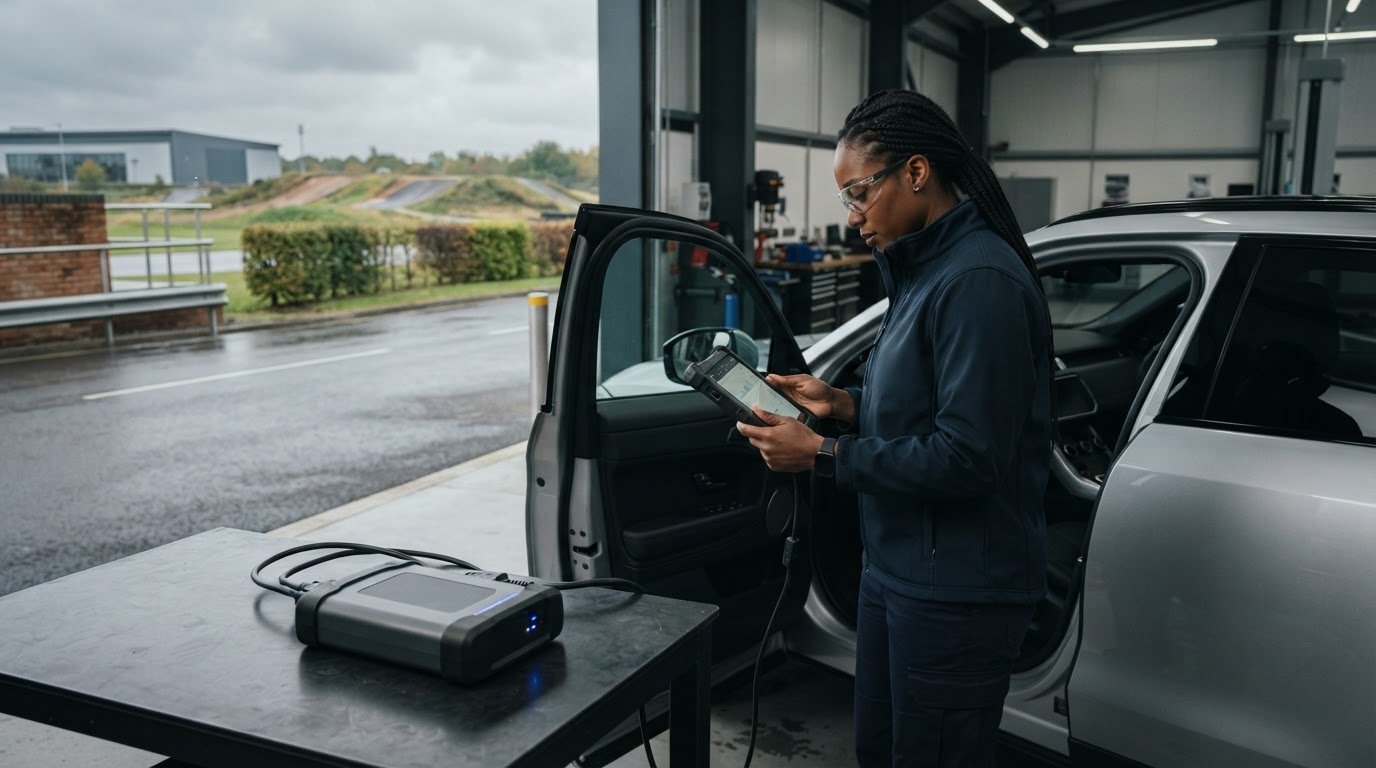
An odometer freezer device is not simply another name for a mileage correction tool. The terms are sometimes used loosely, so product descriptions can be difficult to compare and claims about what a device does need careful checking.
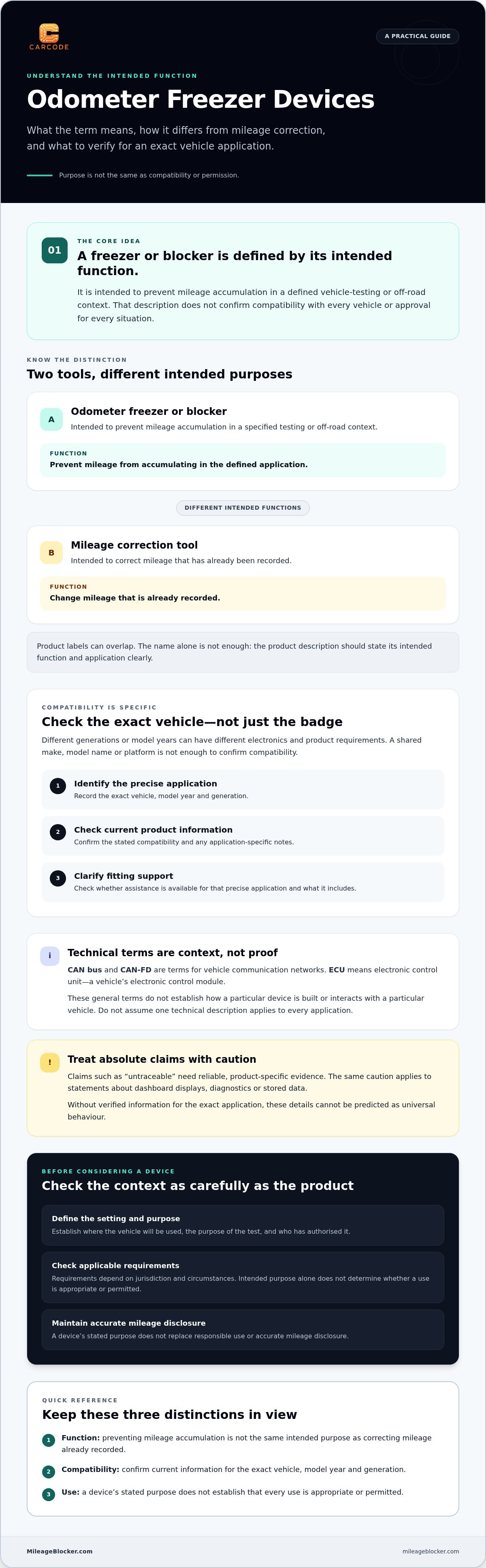
The main distinction is the intended function: a freezer or blocker is designed for controlled vehicle testing or off-road use where mileage should not accumulate. A correction tool is intended to change mileage that has already been recorded. This distinction does not confirm that a particular device suits a particular vehicle or that its use is permitted in your circumstances.
This article explains what the term means, how an odometer freezer differs from other mileage tools, and what to check before considering one for authorised testing. Compatibility needs to be confirmed for the exact vehicle, not assumed from its make or model name. Before deciding, request current product information for your application and check the requirements that apply to your intended use. A device’s stated purpose does not replace responsible use or accurate mileage disclosure.
Key Takeaways
- Check whether the device is intended for controlled testing or off-road use, and whether that purpose fits your circumstances.
- Understand the difference between an odometer freezer device and a mileage correction tool before assessing product claims.
- Identify the exact vehicle, including its generation, and confirm current compatibility rather than relying on the make or model alone.
- Request vehicle-specific product information before deciding. Fitting support may also be available upon request.
What Is an Odometer Freezer and Its Intended Use?
An odometer freezer device is vehicle-specific hardware intended to prevent mileage accumulation in defined vehicle-testing or off-road contexts. This describes its intended purpose, not compatibility with every vehicle or approval for every situation.
Context matters. The existence of a device does not establish that a particular use is appropriate or permitted. Before comparing products, define the test setting, who has authorised it and how mileage will be represented afterwards. For general background on dishonest mileage representation, see Odometer fraud.
Product descriptions may use overlapping terms, so look beyond the product label. A useful description should state the intended application clearly, without making unsupported promises about suitability for a specific vehicle.
Why Do People Search for an Odometer Freezer?
People may research an odometer freezer for vehicle testing or off-road track use where the test purpose means mileage accumulation is not wanted. These settings are not a blanket justification for using a device elsewhere. First establish a clear, controlled purpose, then check the applicable requirements and whether current product information covers the exact vehicle.
Is an Odometer Freezer the Same as a Mileage Correction Tool?
No. The terms describe different intended functions. A freezer or blocker is intended to prevent mileage accumulation in specified circumstances. A mileage correction tool is intended to correct mileage already recorded. This distinction does not explain how a specific vehicle stores or displays mileage. If a product description is unclear, ask the supplier to confirm its stated function and intended application.
How Does an Odometer Freezer Differ from Other Mileage Tools?
The difference is the intended function, not a universal technical design. An odometer freezer device is intended to prevent mileage accumulation in a defined application. A mileage correction tool is intended to change mileage that has already been recorded. A product description should make this distinction clear without implying that every vehicle or device behaves alike.
| Tool category | Intended purpose |
|---|---|
| Freezer or blocker | Prevent mileage accumulation in a specified testing or off-road context. |
| Mileage correction tool | Correct mileage that has already been recorded. |
CAN bus and CAN-FD are terms for vehicle communication networks. ECU means electronic control unit, a vehicle’s electronic control module. These terms offer general context, but they do not establish how a particular device is built or interacts with a particular vehicle. Do not assume that one technical description applies to every vehicle.
What Does Vehicle-Specific Compatibility Mean?
Vehicle-specific compatibility means checking the product against the exact application, not just the vehicle badge. Different generations or model years can have different electronics and product requirements. A shared manufacturer, model name or platform is not enough to confirm compatibility. Check current product information for the precise vehicle before making a decision.
Why Avoid Absolute Claims About Detection or Vehicle Behaviour?
Claims such as “untraceable” need reliable, product-specific evidence. Without it, treat them as unsubstantiated marketing, not a technical guarantee. Apply the same caution to statements about dashboard displays, diagnostics or stored data. These details cannot be predicted without verified information for the exact application. For background on mileage fraud, the US government’s NHTSA estimates on odometer fraud relate to the US context and should not be treated as UK-specific guidance.
If the application is unclear, ask the supplier to confirm compatibility and intended-use information for the exact vehicle.
What Should You Check Before Considering an Odometer Freezer Device?
Start with the application, not the product description. Write down where the vehicle will be used, the purpose of the test, who has authorised it and which exact vehicle is involved. Then check the relevant requirements for your jurisdiction and circumstances. A device’s intended use does not, by itself, determine whether a particular use is appropriate or permitted.
Which Questions Should You Ask About Compatibility?
Before deciding, check the details against current product information. Ask:
- Does the product cover the exact vehicle, model year and generation?
- Are there application-specific notes that affect the proposed use?
- Is fitting assistance available for this precise application, and what does it include?
A model name alone may not identify the correct application. Vehicle systems and product requirements can differ between generations, so do not rely on assumptions based on a similar vehicle. If you need fitting information, consult the supplied mileage blocker installation information. Use it as a reference, not as a substitute for checking the specific product details.
How Can You Keep the Intended Use Clear?
Keep use within an authorised testing or off-road context and consistent with applicable requirements. Do not use a device to misrepresent a vehicle’s mileage or history to another person. For background on US rules, the NHTSA information on odometer fraud is specific to the United States and is not UK legal guidance. Check the requirements that apply where the vehicle will be used, and seek appropriate advice if their application is unclear.
Once the purpose and vehicle are defined, ask MileageBlocker.com by Carcode for current product information for that exact application. Review the mileage blocker FAQs for further general product information.
How Can You Request Vehicle-Specific Odometer Freezer Information?
Follow a clear sequence: define the authorised testing or off-road purpose, identify the exact vehicle, then request current product information for that application. MileageBlocker.com sells vehicle-specific mileage blocker devices, so check compatibility against the relevant vehicle details rather than assuming it from a model name. Fitting is available upon request, subject to confirmation for the application.
What Information Helps a Product Enquiry?
Include the vehicle’s make, exact model, model year and generation, if known. Briefly describe the authorised testing context and state what you need confirmed, such as whether current product details cover that vehicle. You do not need to provide sensitive operational details. The aim is to establish whether there is a relevant application and what product-specific information is available.
For fitting-related guidance, refer to the supplied mileage blocker installation information. Read it alongside the current details for the exact vehicle, as application requirements can differ.
Where Can Readers Find Related Guidance?
For general product questions, consult the mileage blocker FAQs. Broader terminology can also be explored in a mileage blocker technology guide. Use a verified article link if one is provided, and do not assume general information applies to a specific vehicle.
An enquiry is most useful when it clearly states the vehicle and intended use. Contact MileageBlocker.com to discuss authorised testing requirements and request current, vehicle-specific information before deciding whether a product suits your circumstances.
Make the Next Step Vehicle-Specific
Separate intended function from suitability. An odometer freezer device is distinct from a mileage correction tool, but a general product description cannot confirm compatibility or whether use is permitted in your circumstances. Define the authorised testing purpose, identify the exact vehicle and generation, then check current application information before deciding.
MileageBlocker.com lists vehicle-specific applications across petrol, diesel, hybrid and electric vehicles. That range does not confirm a match for every vehicle, so check the exact application. Fitting is available upon request, and the business offers worldwide delivery. Confirm product details and fitting availability for your application rather than relying on assumptions.
If your use is for authorised testing, prepare the vehicle details and a brief description of the testing context. Then contact MileageBlocker.com about your testing application to request current vehicle-specific information. Check the requirements that apply to your circumstances and keep any mileage representation accurate. A clearly defined purpose and confirmed compatibility help you assess the options with care.
Frequently Asked Questions
What is an odometer freezer device?
An odometer freezer device is hardware intended to prevent mileage accumulation in specified vehicle-testing or off-road contexts. Its exact function depends on the vehicle-specific product information, so the term alone does not confirm what a particular device does. Check current details for the exact vehicle and intended application. Do not assume every vehicle is compatible or every proposed use is appropriate.
Can an odometer freezer device be used on any car?
No. Compatibility is vehicle-specific and can vary between generations of the same model. MileageBlocker.com lists applications for petrol, diesel, hybrid and electric vehicles, but that range does not mean every vehicle is supported. Before considering an odometer freezer device, check current product information against the exact vehicle, including its model and generation. Do not infer compatibility from the manufacturer or model name alone.
Is it legal to use an odometer freezer device?
There is no universal answer that applies to every situation. Rules can depend on the jurisdiction and circumstances, so distinguish between owning a device and how it is used. MileageBlocker.com describes its devices as intended for vehicle testing or off-road tracks. Check the current requirements relevant to your intended use, or seek qualified advice if their application is unclear.
Does an odometer freezer change a vehicle’s recorded mileage?
MileageBlocker.com describes its devices as intended to prevent mileage accumulation in specified contexts, rather than as mileage correction tools. That category distinction does not establish how a particular vehicle displays, stores or diagnoses mileage. Do not assume those details. Check verified product information for the exact vehicle application, and ensure any mileage or vehicle-history information is represented accurately to others.
About the author
MileageBlocker TeamThe MileageBlocker Technical Team covers vehicle electronics, CAN and CAN-FD systems, mileage blocker compatibility, installation and product developments.
View author profile →