
Mileage Blocker vs Correction Tool: Key Differences
Mileage Blocker vs Odometer Correction Tool: What's the Actual Difference? See how mileage records differ, what risks arise and how to use them responsibly.
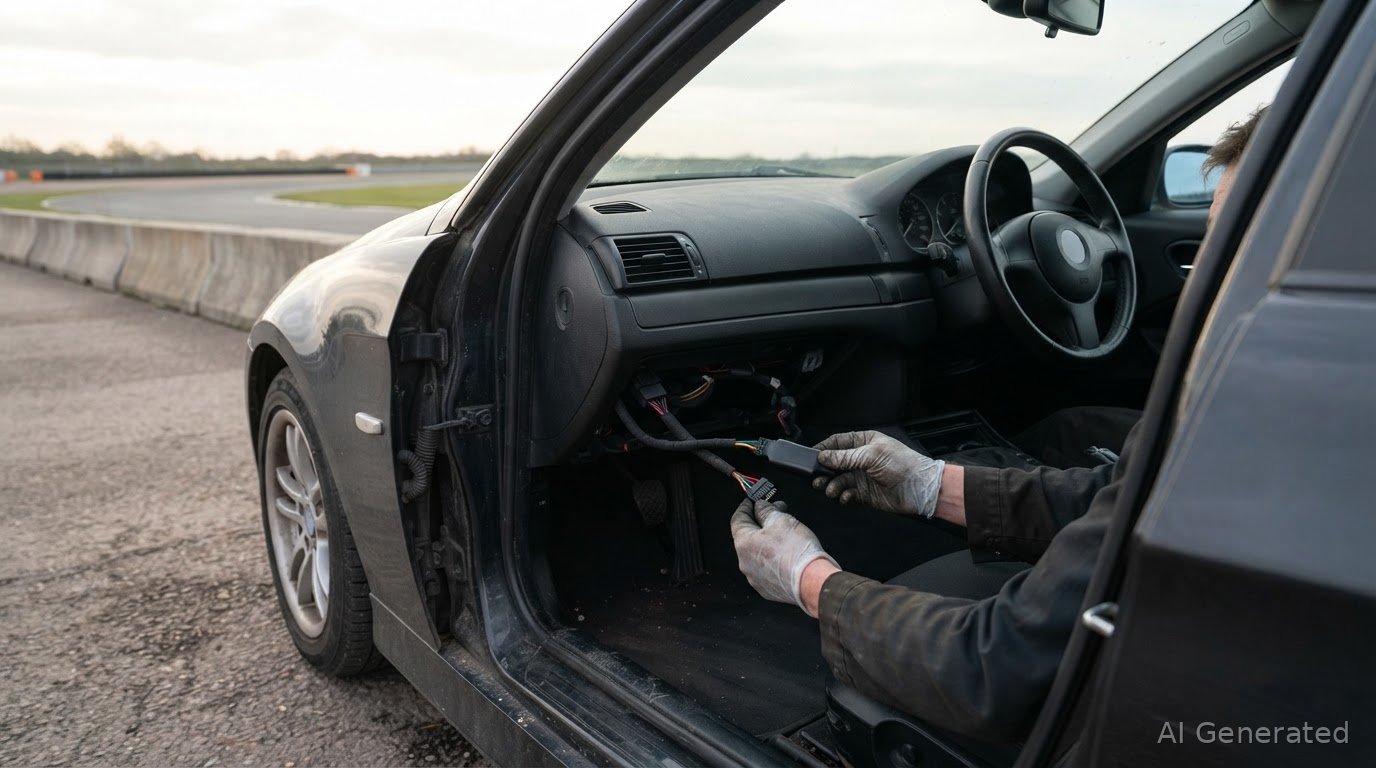
The actual difference between a mileage blocker and an odometer correction tool is what happens to the mileage record. A blocker prevents mileage from being recorded while it is active; it does not change mileage already stored. A correction tool changes a stored or displayed reading, which may be appropriate after a genuine discrepancy, such as an instrument-cluster replacement.
The distinction matters because distance travelled while a blocker is active may not appear in the recorded mileage. Using one to conceal vehicle use or misrepresent mileage when selling or advertising a vehicle is illegal. Keep accurate records and disclose relevant mileage information when a vehicle is sold or transferred.
For controlled testing and off-road use, MileageBlocker.com offers a Mileage Blocker Device and fitting service. The device is intended to stop mileage recording during those applications, not to correct an existing reading. The sections that follow explain how the two tools affect vehicle data, what can happen to stored readings and why mileage history matters.
Key Takeaways
- Understand why a mileage blocker pauses new recording, while a correction tool changes a stored or displayed reading.
- Learn why vehicle mileage may be held across different modules, and why correcting one reading can leave inconsistencies.
- See how undisclosed mileage discrepancies can affect buyers and create legal and consumer concerns in the UK.
- Find out where a Mileage Blocker Device and fitting service may suit controlled testing and off-road use.
How Does a Mileage Blocker Differ From Mileage Correction?
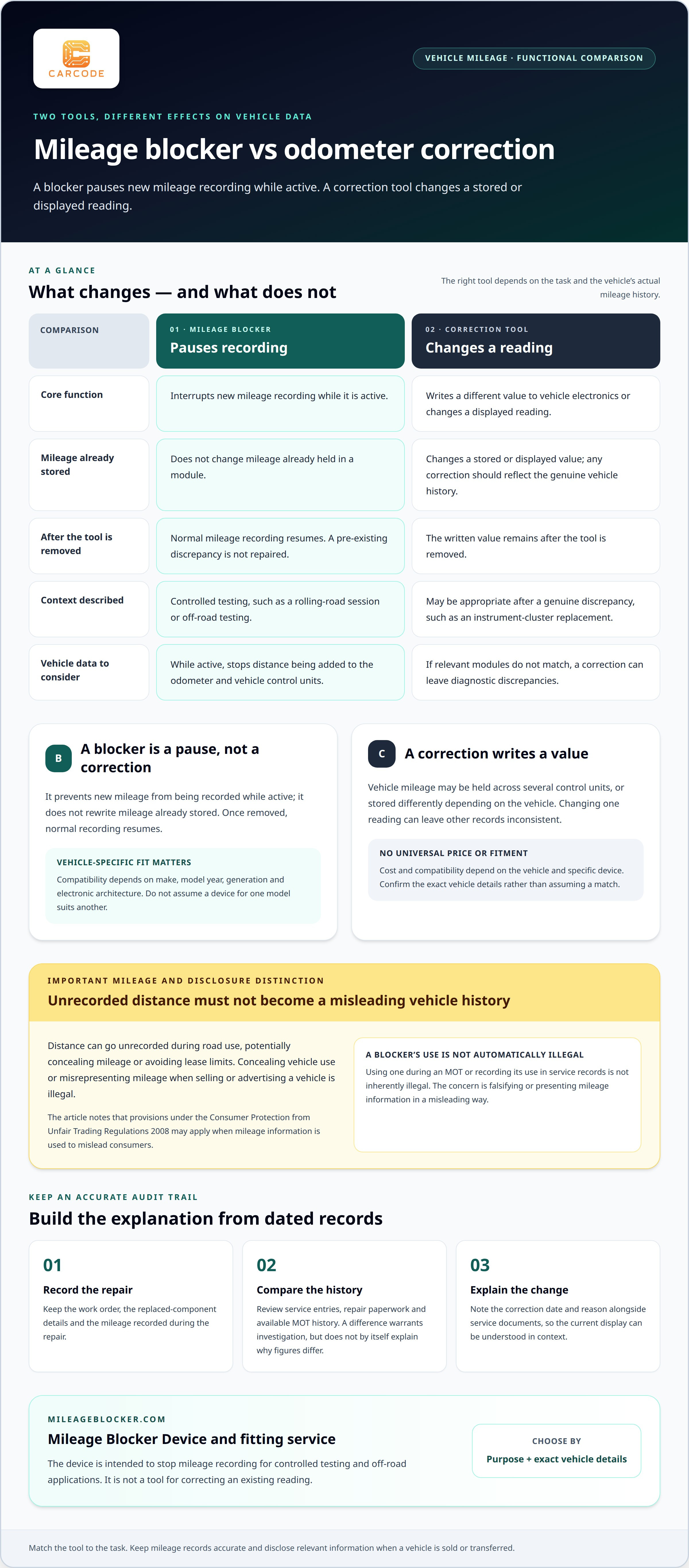
A mileage blocker pauses new mileage recording while active; an odometer correction tool changes a displayed or stored reading. This distinction helps identify whether a task involves preserving a reading during controlled testing or addressing a genuine discrepancy after a repair.
Core Differences in Function
A blocker interrupts mileage recording, while a correction tool writes a different value to vehicle electronics. During controlled testing, pausing recording avoids rewriting mileage already held in a module. A correction may be appropriate after an instrument-cluster replacement, when the replacement display needs to reflect the vehicle’s accurate history.
A correction tool can leave diagnostic discrepancies if the cluster reading and data in other modules do not match. Vehicle architecture determines where mileage is stored, so results vary between models. The difference is functional, not merely a matter of terminology.
Costs and Vehicle Compatibility
There is no single UK price for every blocker or correction tool. The vehicle and specific device determine the cost. Compatibility depends on the make, model year, generation and electronic architecture, so do not assume a device for one model suits another.
Start with the purpose and the vehicle’s exact details. A replacement cluster may require an accurate correction, while controlled testing may call for a blocker. Matching the tool to the vehicle helps avoid choosing equipment for a different system or generation.
Mileage Blocking Function
A mileage blocker stops distance being added to the odometer and vehicle control units while active. That can be useful during a rolling-road session or off-road test, when preserving the existing reading is relevant. Once the blocker is removed, normal mileage recording resumes; the device doesn’t repair a pre-existing discrepancy.
Distance can also go unrecorded during road use, potentially concealing mileage or avoiding lease limits. Buyers can compare the dashboard with service documentation and MOT entries. A difference warrants investigation, but does not by itself prove why the figures differ.
Odometer Correction Function
An odometer correction tool changes a displayed or stored mileage value. It may be used after a genuine cluster replacement so the replacement unit reflects the vehicle’s accurate mileage history. The written value remains after the tool is removed, unlike a blocker’s temporary pause in recording.
Neither tool has a universal UK price or vehicle fitment. Using either to mislead buyers or create false MOT or service records raises serious legal and consumer concerns. Any correction should reflect the vehicle’s genuine history, not a preferred dashboard figure.
How mileage correction changes stored readings
A correction writes a value into vehicle electronics, but storage layouts differ between manufacturers. Some vehicles hold mileage information in several control units, while others use a different arrangement. A replacement instrument cluster may therefore show a reading that needs to be reconciled with the vehicle’s established records. The key is the vehicle’s actual history, not simply the figure displayed after repair.
A correction can leave records inconsistent if relevant modules do not hold matching values. That makes the repair history important if the vehicle is later inspected or sold. Keep the work order, details of the replaced component and mileage recorded during the repair. These documents explain why a later display may differ from earlier entries without relying on memory.
For a clear audit trail, record the correction date and reason alongside the available service documentation. For example, a garage invoice can show that a replacement cluster was fitted, while earlier service records establish the mileage before replacement. Documents should describe the work accurately, not imply that the vehicle travelled a different distance.
Mode changes are separate from correcting stored readings. Some mileage-blocker systems allow modes to change while the vehicle is moving or stationary, but operation depends on the specific device and vehicle. Do not assume a mode can be changed while driving based only on the product category. Follow the relevant instructions for the vehicle-specific system.
When reviewing an apparent mileage change, build a timeline from dated records rather than relying on a single reading. Compare repair paperwork, service entries and available MOT history. A discrepancy may have a technical explanation, such as a replaced control unit, but the documents should support it. Clear records help a future owner or technician understand how the displayed figure relates to earlier information.
A correction does not remove the need for accurate disclosure. If stored values or records differ after a repair, keep an explanation with the vehicle’s service history. This gives anyone reviewing the vehicle a clear account of what changed, why the work was done and which records relate to the current reading.
Legal and consumer issues around misrepresenting mileage
Mileage is a material part of a used vehicle’s history because it can influence a buyer’s assessment and decision. A displayed figure that understates the distance actually travelled can affect expectations about condition, maintenance and value. Clocking means altering mileage to make a vehicle appear to have covered fewer miles. Concealing a gap caused by unrecorded travel can raise a similar concern during a sale.
The UK legislation register sets out provisions under the Consumer Protection from Unfair Trading Regulations 2008 that may apply when mileage information is used to mislead consumers. Using a mileage blocker during an MOT or recording its use in service records is not inherently illegal. The concern is whether mileage information is falsified or presented in a misleading way to someone relying on it.
The Digital Markets, Competition and Consumers Act 2024 is relevant to potentially misleading commercial practices involving false vehicle mileage in the UK, according to the UK legislation register. For a seller, that makes accurate descriptions and clear disclosure important when advertising or transferring a vehicle. A buyer should be able to understand whether the recorded figure represents all distance travelled.
Keep supporting documents for legitimate testing or repairs that affect mileage records. A dyno testing session, for example, may explain why the odometer did not record all distance, while repair documents can explain a corrected display after component replacement. Records should state the reason for the work and the relevant mileage information, rather than leaving a future buyer to guess what happened.
When assessing a vehicle, consider the full picture: its displayed reading, official MOT history, service records and any explanation for inconsistencies. No single discrepancy proves clocking, but an unexplained difference can affect a consumer’s decision. Sellers should clearly disclose known gaps or corrections. Accurate records help distinguish legitimate technical work from an attempt to misrepresent a vehicle’s history.
MileageBlocker.com
MileageBlocker.com sells a Mileage Blocker Device for legitimate vehicle testing, tuning and diagnostics in controlled environments. It is designed to prevent mileage recording while active, not to rewrite a stored reading. It may be relevant when the task is to preserve the displayed mileage during a defined test, not to correct a discrepancy after a repair.
The distinction is practical: a correction tool changes a reading, while a blocker pauses new recording. For suitable testing, pausing recording avoids changing stored mileage as part of the test. The device cannot make a vehicle’s history accurate after a cluster replacement and must not be used to conceal distance travelled.
Use must be limited to private property, rolling roads and controlled test environments. A mileage blocker must not be used to misrepresent a vehicle’s true mileage when selling or advertising it. Such use is illegal. Carcode Ltd accepts no liability for misuse. Accurate mileage disclosure remains essential.
Vehicle electronics vary by make, model year and generation, so the device must match the specific vehicle. MileageBlocker.com also offers a fitting service for its mileage blockers. The plug-and-play CAN-bus module is designed for controlled testing, tuning and diagnostics. Do not assume that one specification applies to every vehicle.
Before selecting a blocker, consider the intended test, the exact vehicle and how mileage records will be maintained. If the underlying problem is an incorrect reading after a genuine repair, a blocker is not a substitute for a documented correction. If testing requires mileage recording to pause, a vehicle-specific blocker may be suitable, provided it is used lawfully and transparently in a controlled environment.
For information about a controlled-use application, contact MileageBlocker.com.
Frequently Asked Questions
Are mileage blockers detectable?
A mileage blocker’s use may be suspected when the displayed reading conflicts with recorded mileage. In Great Britain, GOV.UK MOT history records for cars, motorcycles and vans are available from 2005 onwards; Northern Ireland’s separate system has records from 2017 onwards. Comparing those entries with service documents can reveal a discrepancy, but a record gap alone doesn’t establish its cause.
Can mileage information exist in multiple vehicle modules?
Yes, mileage information can be held in more than one vehicle module. Modern vehicle networks may synchronise data among the engine control unit, body control module, ABS and instrument cluster. The arrangement varies by manufacturer and vehicle architecture. For example, a dashboard reading that differs from a value stored elsewhere can prompt questions during diagnostics or when reviewing a vehicle’s history.
Can a mileage blocker permanently change mileage?
No. A MileageBlocker.com mileage blocker does not alter a stored odometer value; it intercepts CAN-bus signals to prevent mileage recording while active. Removing it restores normal recording. However, distance travelled while recording is paused will not appear in the mileage record. Keep accurate supporting documents and disclose any relevant discrepancy when the vehicle is sold or transferred.
How does an odometer blocker work?
An odometer blocker interrupts mileage data transmission so the vehicle does not record distance in the usual way while the device is active. In a CAN-bus system, vehicle modules exchange electronic data over a network. The effect depends on the vehicle-specific device and its application. A mileage blocker is technical testing hardware for controlled testing, tuning and diagnostics, not public-road use.
How does a mileage blocker affect recorded mileage in modern UK vehicles?
While active, a blocker can prevent additional distance from being added to the odometer and vehicle control units. Modern vehicles may store or synchronise mileage information across several modules, so the displayed figure may not tell the whole history. If a vehicle has been used with recording paused, disclose that fact rather than presenting the recorded reading as its total distance travelled.
How does an odometer correction tool change a vehicle’s displayed mileage?
An odometer correction tool writes a different mileage value to vehicle electronics, which can change the figure shown on the instrument cluster. Storage and processing methods vary by manufacturer, so changing one value may not update every module consistently. After a genuine repair, such as replacing a cluster, retain records of the work and corrected reading to explain the vehicle’s history.
Article by
Pav Tomaszevicz
Pav Tomaszevicz is Chief Editor at MileageBlocker.com and works closely with the Carcode technical team on content covering vehicle electronics, CAN and CAN-FD systems, mileage blocker compatibility, installation and product development. His articles draw on practical product development, technical support, installation experience and ongoing research into modern vehicle electronics. Content may use AI-assisted drafting and research, but technical information is reviewed against Carcode's product knowledge and real-world experience before publication
About the author
MileageBlocker TeamThe MileageBlocker Technical Team covers vehicle electronics, CAN and CAN-FD systems, mileage blocker compatibility, installation and product developments.
View author profile →