How Do Dealers Detect Mileage Blockers? A Technical Deep Dive
What if the secret to remaining untraceable at a main dealer isn''t about hiding data, but about maintaining digital harmony across every ECU in your vehicle?...
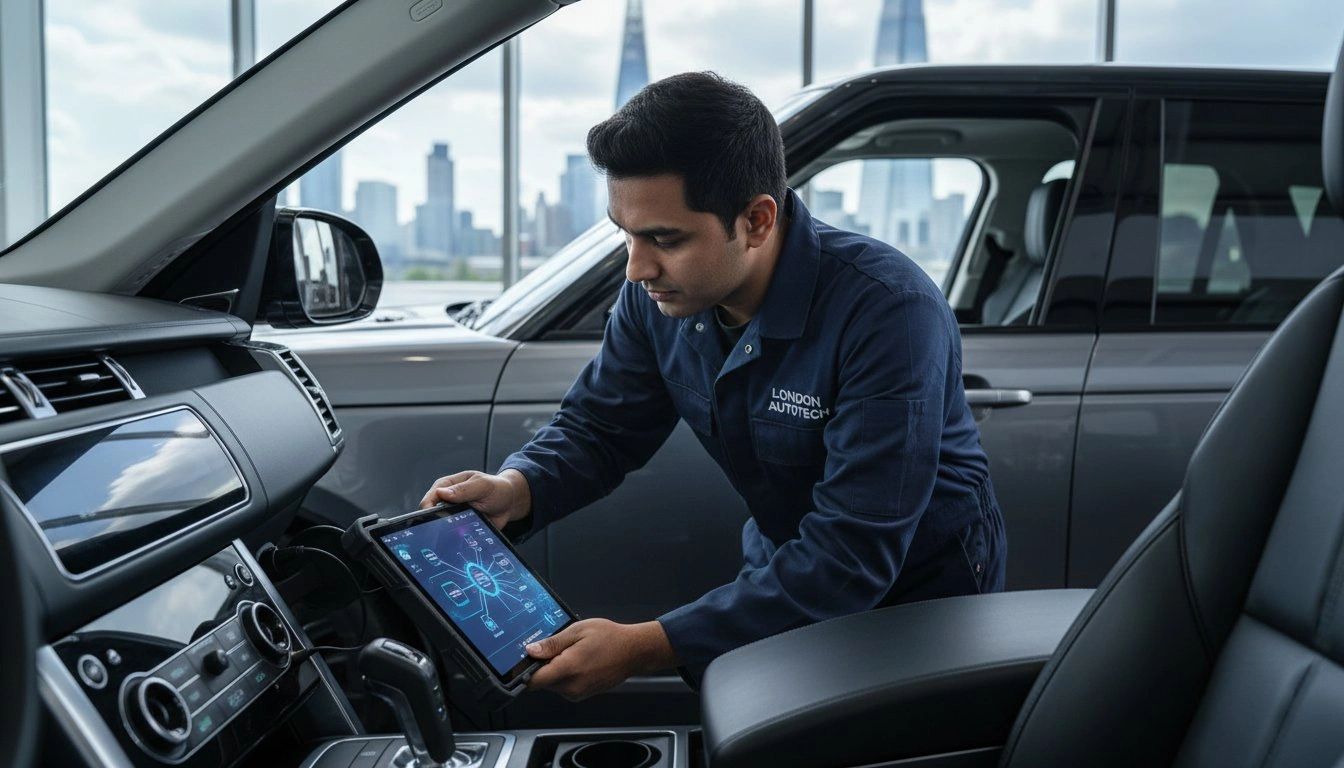
What if the secret to remaining untraceable at a main dealer isn't about hiding data, but about maintaining digital harmony across every ECU in your vehicle? If you're driving a BMW M5 or a Range Rover, you've likely asked how do dealers detect mileage blockers when they plug in their diagnostic equipment. It's a valid concern, especially since the NHTSA estimates that 450,000 vehicles are sold each year with false odometer readings, leading to increased dealer scrutiny. You probably feel that any break in the CAN-Bus data stream will trigger an instant red flag during a forensic mechanical examination, which costs around $695 as of May 2026.
We agree that the anxiety of voiding a manufacturer warranty on a Ferrari or McLaren is a heavy burden for any owner. This article promises to reveal the technical reality behind dealership diagnostics and explain how premium hardware stays hidden within modern vehicle systems. You'll gain a clear understanding of how Carcode Mileage Blockers from MileageBlocker.com synchronise data across all modules to maintain total discretion. We'll preview why high-quality blockers are different from illegal correction tools; this provides the peace of mind you need for your next service appointment with a Lamborghini or Bugatti specialist.
Key Takeaways
- Understand why a modern BMW or Range Rover stores mileage data across 30 different modules, making it more than just a number on your dashboard.
- Learn exactly how do dealers detect mileage blockers using diagnostic equipment and why premium Carcode Mileage Blockers from MileageBlocker.com remain untraceable by synchronising CAN-Bus data.
- Gain insight into the standard technician workflows for Ferrari and Lamborghini servicing, where the focus remains on fault code resolution rather than hunting for hidden devices.
- Discover the specific technical advantages of using FlexRay-compatible blockers to maintain digital harmony during off-road testing or dynamometer sessions.
- Access a practical checklist for supercar owners to ensure their mileage freezer is correctly configured before any official manufacturer inspection or maintenance.
The 'Digital Footprint': How Modern Vehicles Track Mileage
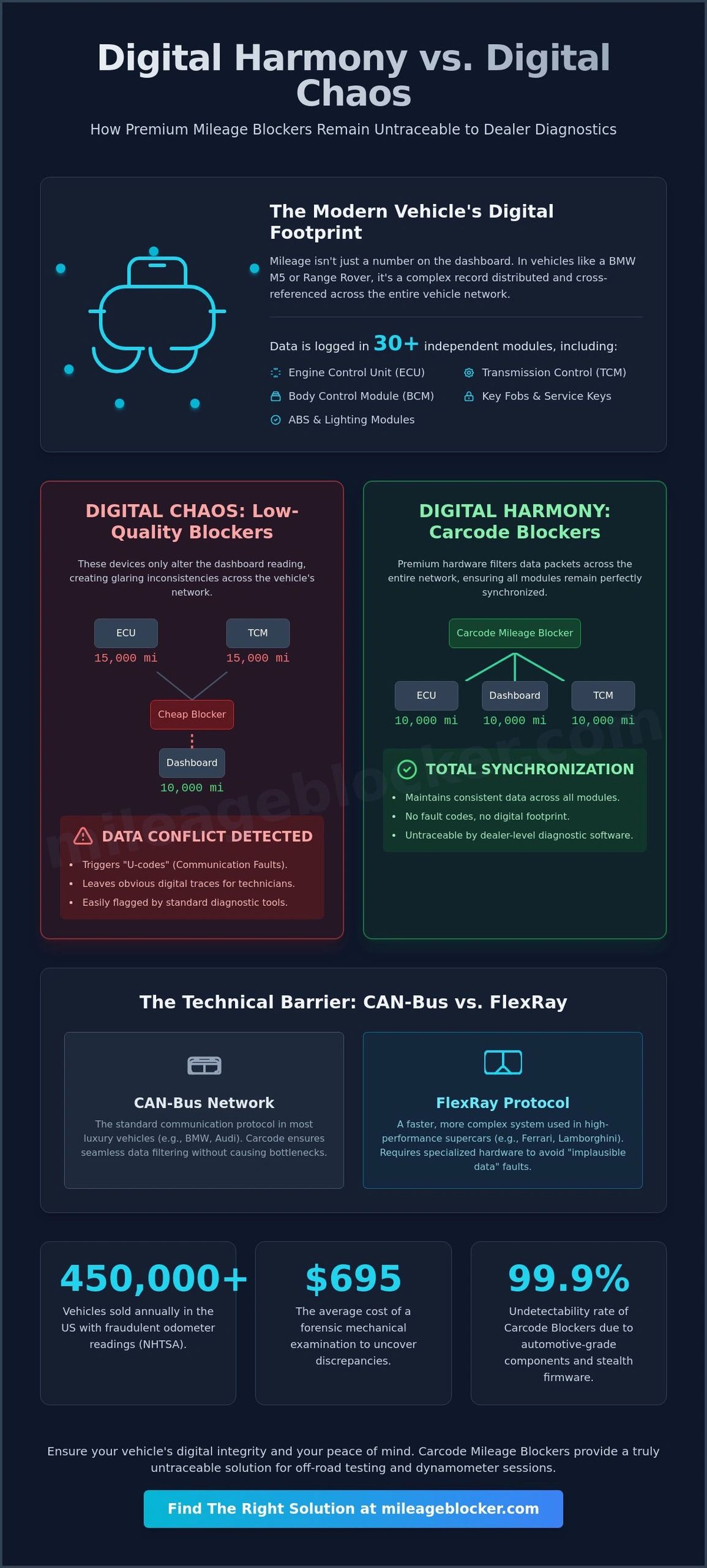
Modern luxury vehicles like the Range Rover Autobiography or BMW M8 are essentially rolling data centres. Every time you drive, your car creates a "digital footprint" across up to 30 different electronic control units. This footprint isn't just a single odometer reading on the dashboard; it's a complex, timestamped record distributed through the Engine Control Unit (ECU), Body Control Module (BCM), and even the key fob. When owners ask how do dealers detect mileage blockers, they're usually worried about these hidden traces. Unlike illegal Odometer fraud involving "correction tools" that rewrite existing history, Carcode Mileage Blockers function by preventing new data from being written. A module is an independent computer within the car that cross-references data with its peers to ensure system integrity.
Where Is Mileage Data Actually Stored?
Mileage isn't isolated to a single chip. While the instrument cluster displays the visible total, the data also resides in several key areas:
- The Engine Control Unit (ECU) and Transmission Control Module (TCM): These track engine hours and gear changes relative to distance.
- Secondary Storage: Key fobs store service data for BMW and Range Rover models.
- Peripheral Modules: ABS sensors and even lighting modules track usage in premium marques like Ferrari and Lamborghini.
Because these modules communicate via the CAN-Bus or FlexRay networks, a simple "mileage stopper" that only affects the dash will leave obvious discrepancies elsewhere. Technicians investigating how do dealers detect mileage blockers often look for these specific mismatches between stored values across the vehicle's architecture.
The Concept of Data Synchronisation
Vehicle systems perform constant "sanity checks." If your BMW's instrument cluster reports 10,000 miles but the Transmission Control Module shows 15,000, the system recognises a conflict. This discrepancy is often how basic devices are found. Advanced Carcode Mileage Blockers from MileageBlocker.com are engineered to maintain digital harmony. They filter data packets across the entire network so that every module agrees on the current state. This ensures that when you find your car and install a premium device for off-road testing, the vehicle's internal logic remains consistent across all memories.
Can Diagnostic Tools Detect a Carcode Mileage Blocker?
The short answer is that high-quality Carcode Mileage Blockers are designed to be untraceable by standard diagnostic equipment. When a technician at a main dealer service centre connects a vehicle to the manufacturer's server, the software performs a routine sweep for data inconsistencies. Because premium hardware from MileageBlocker.com uses genuine automotive-grade components, it doesn't interfere with the vehicle's primary safety or performance systems. This level of engineering is critical for owners of supercars like the McLaren 720S or Bugatti Chiron, which operate on ultra-high-speed data protocols that are far more sensitive than standard road cars.
A primary concern for many is how do dealers detect mileage blockers during a routine health check. Detection usually occurs when a device causes a "bottleneck" in the data stream, leading to communication errors. Given the NHTSA estimates on odometer fraud, which indicate that over 450,000 vehicles are sold with false readings every year, manufacturers have updated their diagnostic software to flag any "implausible" data. Carcode hardware avoids this by filtering data packets in real-time, ensuring the stream remains fluid and natural.
CAN-Bus vs. FlexRay: The Technical Barrier
The "nervous system" of a BMW or Audi is typically based on the CAN-Bus network. This protocol handles the communication between the engine, transmission, and dashboard. However, high-end marques like Lamborghini and Ferrari utilise FlexRay, a faster and more complex system designed for high-performance dynamics. Carcode software is specifically programmed to mimic the natural data flow of these specific protocols. This prevents the car from triggering "implausible data" fault codes, which are the primary indicators technicians look for when trying to determine if a system has been interrupted.
The 'Invisible' Effect during Servicing
When your car is in for a service, a technician using tools like BMW's ISTA or the VW Group's ODIS system won't see the device if it's installed correctly behind the dashboard. The stealth firmware used in Carcode Mileage Blockers leaves no digital trace in the EEPROM memories where mileage logs are stored. Cheap alternatives often fail because they trigger "U-codes," which are communication errors that immediately alert the dealer to a hardware conflict. If you're unsure which protocol your vehicle uses, you can find your car on our compatibility list to ensure you're using the correct hardware for your specific model.
Dealership Servicing: What Technicians Actually See
When you take your BMW M3 or Range Rover Sport for a scheduled service, the technician's primary goal is efficiency. They use manufacturer-specific software like ISTA for BMW or ODIS for the Volkswagen Group, which includes Lamborghini and Bentley. These systems are designed to scan for mechanical failures and safety-related fault codes. They aren't specifically scanning for hidden hardware unless a system conflict arises. Owners often ask how do dealers detect mileage blockers during these sessions, and the answer lies in the diagnostic report's "digital health."
Detection is usually a side effect of poor-quality hardware causing communication errors or "implausible mileage" flags. As discussed in reports on modern odometer tampering, the shift to complex digital systems means technicians rely heavily on what the diagnostic screen tells them. If the software sees a clean history, the technician moves on to the next task on their flat-rate labour schedule.
Diagnostic Software: Codes and Red Flags
An "implausible mileage" code is triggered when the ECU detects that the distance recorded by the wheel speed sensors doesn't match the odometer's increment. Carcode Mileage Blockers prevent these codes from ever being generated by ensuring the data remains consistent across the entire CAN-Bus or FlexRay network. During a routine service, the diagnostic tool views the vehicle's history as a clean, chronological record. It doesn't see "frozen" data; it sees a system operating within its expected parameters.
The Human Factor: Physical Inspections
Mechanics don't remove dashboards or trim panels during a standard service. It's a time-consuming process that isn't authorised by the manufacturer for routine maintenance. However, a physical inspection might occur if you've used a device with messy wiring or non-original connectors. Using the MileageBlocker.com installation guide ensures the device is secured out of sight, maintaining a factory-standard appearance. Dealers only perform deep inspections if a major warranty claim is initiated. To ensure your vehicle remains discreet during testing or off-road use, invest in a premium Carcode Mileage Blocker designed for your specific model.
Ensuring Discretion: Best Practices for Testing and Off-Road Use
Carcode Mileage Blockers are precision instruments engineered specifically for vehicle testing and off-road track use. Owners of high-performance machinery, such as the McLaren Artura or Range Rover SV, frequently ask how do dealers detect mileage blockers when returning to a main service centre. Maintaining discretion isn't just about the hardware; it's about following correct operational procedures. Unlike illegal mileage correction tools, these devices are designed to maintain the integrity of the vehicle's digital architecture during specific testing scenarios without leaving a permanent footprint in the EEPROM memories.
To ensure your hardware is fully integrated with your specific ECU and CAN-Bus configuration, you should always Find Your Car in our database before purchase. This ensures the firmware is matched to your vehicle's specific data baud rate, which is a critical factor in remaining untraceable.
Preparation Before a Dealership Visit
Correct deactivation is essential for maintaining a factory-standard appearance. Most Carcode devices allow you to toggle the blocking function using original steering wheel buttons, meaning no physical switches are visible. Follow this checklist before your appointment:
- Deactivate the blocker: Ensure the device is in "Normal Mode" before entering the dealership premises.
- Avoid mileage resets: Never attempt to "reset" or "roll back" mileage data. A sudden discrepancy in the chronological data log is a primary way how do dealers detect mileage blockers or tampering attempts.
- Pre-service scan: Use a standard OBDII scanner to ensure no unrelated fault codes are present. This prevents technicians from digging deeper into the system to find the cause of a warning light.
Dealers only perform deep forensic inspections if a major warranty claim is initiated. By following these steps, the vehicle remains within its expected operational parameters during a routine health check.
Why Quality Matters for Long-Term Discretion
Cheap "mileage stoppers" from unverified sources often use inferior microchips. These struggle with high-speed FlexRay networks found in the Lamborghini Revuelto or Ferrari 296 GTB, often leading to "limp mode" or communication errors. MileageBlocker.com ensures all firmware is updated for the latest 2026 vehicle models, protecting your car from software conflicts. Our commitment to engineering excellence includes Lifetime Support, providing technical assistance whenever you need to adjust settings for new testing environments. If you need technical guidance for your specific vehicle, Contact us for expert advice on selecting the correct blocker for your supercar.
Mastering Digital Discretion for Your Vehicle Testing
Maintaining a clean digital footprint across your vehicle's 30 modules requires more than just hiding a number on the dashboard. You've learned that sophisticated systems in a Ferrari or Lamborghini rely on digital harmony across CAN-Bus and FlexRay networks. Understanding how do dealers detect mileage blockers allows you to make an informed choice for your next off-road testing session. It's clear that only hardware utilising genuine automotive-grade components can filter data packets effectively without triggering the "implausible data" flags that technicians look for during routine health checks.
A successful testing session depends on the quality of your tools. Carcode Mileage Blockers provide the necessary stealth through original plug connectors and firmware designed for the latest 2026 models. This ensures your Range Rover or BMW remains technically consistent during any off-road use. You don't have to worry about communication errors or "U-codes" when you're using hardware developed by specialists who understand complex vehicle architecture.
Take the next step in protecting your vehicle's data. Secure Your Untraceable Carcode Mileage Blocker at MileageBlocker.com and enjoy the peace of mind that comes with premium engineering. You're now equipped with the technical knowledge to maintain total discretion for all your future testing requirements.
Frequently Asked Questions
Can a dealer detect a mileage blocker through the OBD2 port?
Dealers cannot detect a premium Carcode Mileage Blocker through the OBD2 port because the device filters outgoing data packets in real-time. Standard diagnostic tools like BMW's ISTA only see the processed data stream provided by the ECU modules. Because the blocker prevents the generation of fault codes, the diagnostic report appears clean during a routine health check at a service centre.
Is mileage stored in the car key, and can a blocker hide that?
Yes, mileage is stored in the car key for many premium brands, including BMW and Range Rover. A premium device from MileageBlocker.com stops the mileage data from being synchronised with the key fob during operation. This ensures that when a technician reads your key at the service desk, the displayed mileage matches the odometer on the dashboard.
Will using a mileage blocker void my vehicle's manufacturer warranty?
Using any aftermarket device could technically affect your warranty if it causes a system failure or is physically discovered. This is why how do dealers detect mileage blockers is such a critical question for owners of a Ferrari or McLaren. Carcode hardware is engineered with genuine automotive-grade components to prevent the communication errors that usually lead to detection and subsequent warranty disputes.
What is the difference between a mileage blocker and a mileage correction tool?
A mileage blocker is a preventative tool that stops new data from being recorded, whereas a correction tool attempts to rewrite history in the EEPROM memories. Correction tools are easily detected because they leave digital scars and inconsistent timestamps across the vehicle's 30 modules. In contrast, a blocker maintains digital harmony across the CAN-Bus network, making it a far more discreet solution for off-road testing.
Can a mileage blocker be detected during a standard MOT test in the UK?
A standard UK MOT test won't detect a mileage blocker because the inspection focuses on safety and emissions. The examiner simply records the mileage displayed on the instrument cluster and doesn't perform a forensic ECU analysis. As long as the device is deactivated and the odometer functions normally, it won't trigger any red flags during the 45-minute inspection.
Do I need to remove the blocker every time I go for a car service?
You don't need to physically remove the device for a routine service if it's installed behind the dashboard using original plug connectors. However, you must deactivate the blocking function using your steering wheel buttons before arriving at the dealership. This allows the vehicle to record mileage normally during any test drives conducted by the technician, ensuring the service history remains chronological.
About the author
Pav TomaszeviczChief Editor, MileageBlocker.com
Pav is Chief Editor at MileageBlocker.com and works with the MileageBlocker Technical Team to publish practical information about vehicle compatibility, CAN/CAN-FD electronics, installation and MileageBlocker products.
View author profile →