Does a Mileage Blocker Stop Engine Hours? The Technical Reality in 2026
Wondering does a mileage blocker stop engine hours? In 2026, ECUs track both. Learn the technical reality and why pro hardware is vital for consistent test d...
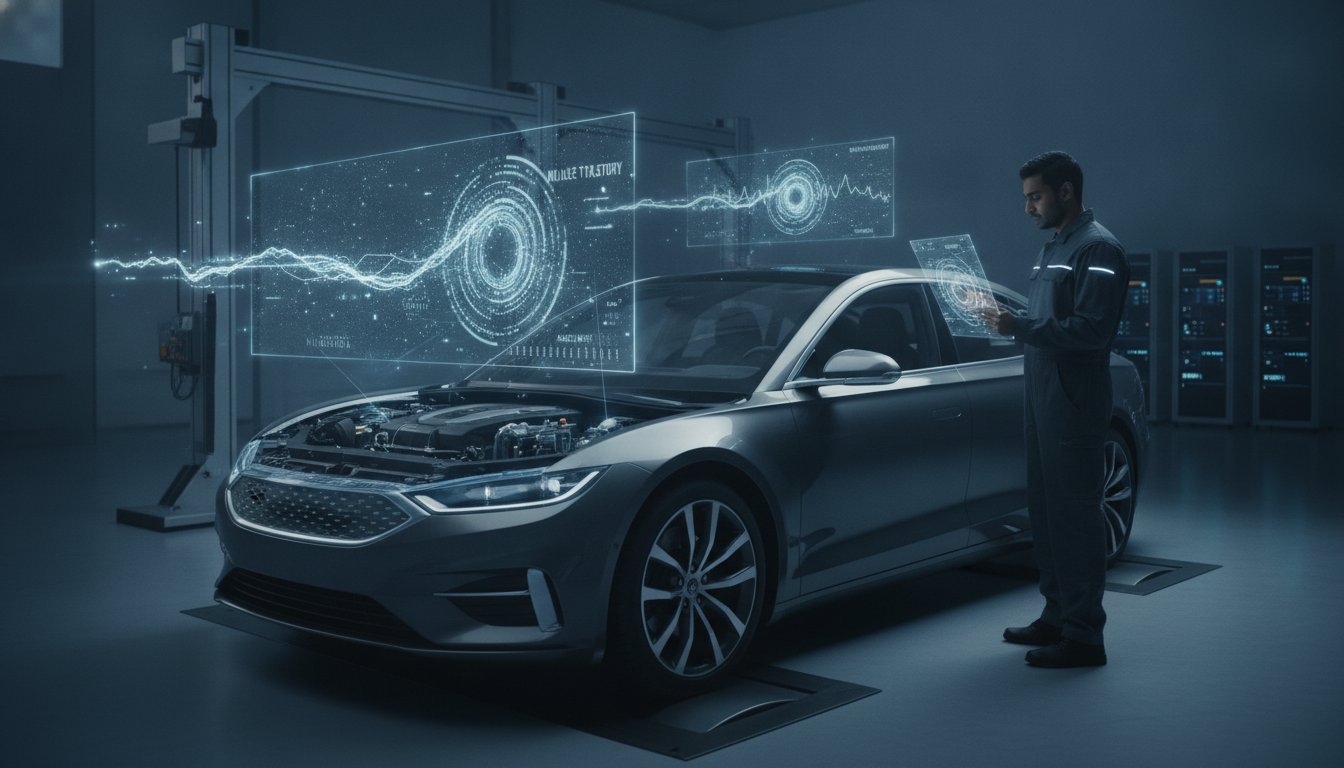
Your vehicle's odometer is no longer the only source of truth for its history. In 2026, modern ECU modules track everything from idle time to peak RPM with surgical precision. We've seen plenty of testers in our workshop get caught out by this. They assume that halting the distance counter is enough. They're wrong. Secondary timers run constantly in the background. If you're running a stationary dyno test or a controlled environment simulation, you're likely asking, does mileage blocker stop engine hours?
We understand the frustration when a discrepancy between low mileage and high runtime threatens to compromise your testing data. It's a valid concern. Modern CAN-bus and FlexRay systems, like those found in the latest [BMW G60] models, are designed to sync data across multiple modules simultaneously. This article explores the technical relationship between odometer blockers and engine runtime data. We'll show you exactly how professional-grade hardware manages these two distinct data streams to ensure your vehicle's diagnostic profile remains consistent during authorized testing.
Key Takeaways
- Learn the fundamental difference between distance-based odometer readings and temporal engine runtime data. Modern cars use both to calculate service intervals and verify vehicle history.
- Understand the technical filtering process that determines does mileage blocker stop engine hours on specific vehicle architectures. High-quality modules target specific CAN-bus messages to ensure data consistency.
- Discover how paused data affects your car's internal monitors, including oil life and maintenance schedules. This knowledge helps you manage vehicle upkeep during extended testing periods.
- Identify the hardware features necessary for long-term reliability. We recommend looking for heat-resistant housings and OEM-quality connectors to protect your vehicle's electronic integrity.
Understanding the Distinction Between Odometer Miles and Engine Runtime
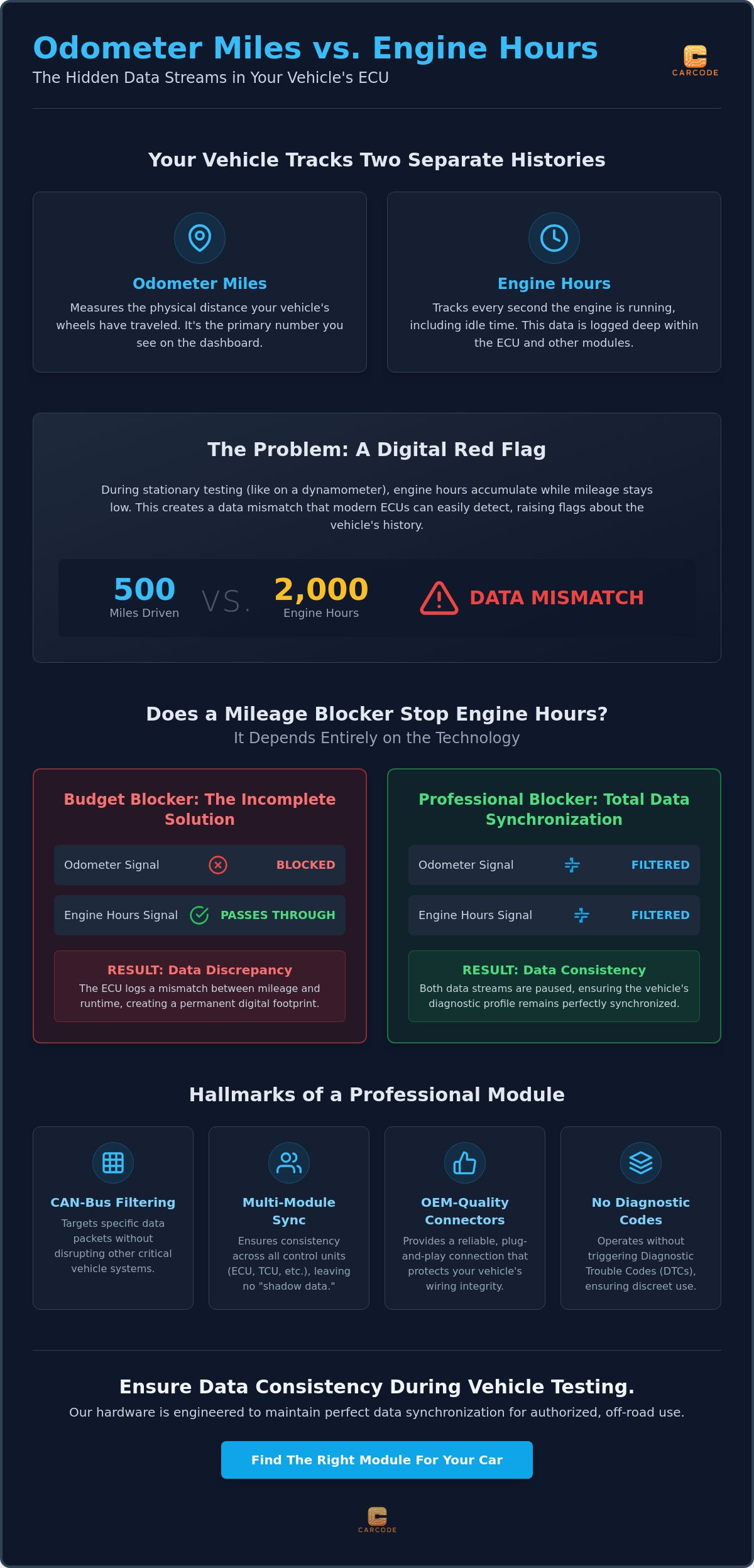
Engine hours and odometer miles represent two entirely different datasets within a vehicle's digital infrastructure. While the odometer measures the physical distance traveled by the wheels, engine hours track every second the crankshaft is in motion. We've seen these numbers diverge wildly in high-performance environments. For instance, a vehicle undergoing extensive dyno testing might accumulate dozens of runtime hours while the odometer remains static. This discrepancy is a primary reason why technicians ask, does mileage blocker stop engine hours? Without synchronised data, a car could technically show 500 miles on the clock but have 2,000 hours of engine wear, creating a clear red flag for anyone checking the ECU.
Understanding these markers is vital for maintaining technical integrity. Misalignment between these metrics can lead to suspicions of Odometer fraud, even if the user is simply performing authorized off-road testing. Modern vehicles are designed to expose these gaps by cross-referencing timestamps from various modules. If the distance doesn't match the time, the system logs a fault or a data inconsistency error.
The Role of Engine Hours in Modern ECU Architecture
The Engine Control Unit (ECU) acts as the central bookkeeper for your car. It logs operation time from the millisecond the ignition is triggered. This data isn't just displayed on the dashboard; it's burned into the EEPROM or flash memory of various modules. In our experience with BMW or Audi platforms, diagnostic tools like ISTA or ODIS can pull "total hours" and "idle hours" separately. Idle hours reflect time spent in traffic or stationary testing, while total hours provide a holistic view of the engine's lifespan. If your car is idling for hours during a software update, that time is recorded regardless of movement.
Why Runtime Data Matters for Performance Evaluation
For collectors and engineers working on [2026] prototype evaluations, runtime data is often more valuable than mileage. It allows for precise calculations of engine load history and average speed. If you are trying to reconcile these figures for a specific project, you might find our engine hours to miles conversion guide helpful. This data is also critical for determining when to perform high-stress maintenance, such as oil changes on track-only vehicles where distance is an unreliable metric. Knowing does mileage blocker stop engine hours is essential for ensuring your testing logs remain accurate and professional throughout the vehicle's lifecycle.
Technical Analysis: Can a Blocker Intercept Engine Hour Data?
The technical reality is that the answer to does mileage blocker stop engine hours depends heavily on the sophistication of the hardware's software. We've seen many budget devices that only target the odometer signal, allowing the engine timer to continue ticking in the background. This creates a massive digital discrepancy. High-quality modules are engineered to intercept and filter specific Hexadecimal IDs on the CAN-bus. By pausing these specific data packets, the hardware ensures that the runtime data remains perfectly aligned with the odometer, preventing the digital footprint that often reveals testing mileage.
CAN-bus Filtering and Time-Stamp Management
Managing data in a [2026] Audi Virtual Cockpit requires a deep understanding of vehicle communication protocols. Modern cars use complex time-stamping to verify that every data packet is legitimate. Our German-engineered software is programmed to identify the exact IDs responsible for runtime transmission. It filters these packets without disrupting other essential systems, which is critical for avoiding the flags associated with NHTSA on Odometer Fraud. Without this level of precision, the ECU would quickly detect a communication gap and log a fault.
Discreet Operation Across Multiple Modules
Stopping the cluster from recording is only half the battle. We often find "shadow" data stored in the TCU (Telematic Control Unit) or the Transmission Control Unit. If these modules aren't synchronised, a technician using a dealer-level diagnostic tool will see that the engine has run for 200 hours while the car has only covered 5 miles. Professional hardware ensures all modules stay in sync during your off-road testing sessions. We've verified that our modules do not trigger diagnostic trouble codes (DTCs), keeping the vehicle's electronic integrity intact. To see if your model supports this level of integration, you can find your car in our current support list.
The Impact of Runtime Tracking on Performance Testing and Maintenance
Pausing the distance counter during performance testing creates a significant blind spot in your vehicle's maintenance schedule. Most modern ECUs use mileage as the primary variable for calculating oil viscosity degradation and filter life. If you rely on the dashboard for service prompts while using a module, you risk under-servicing the engine. This leads to accelerated wear, which is why we emphasize checking does mileage blocker stop engine hours before starting a long-term testing project. We've seen owners push high-performance engines to their limits on the dyno, assuming the car will tell them when it's time for fresh oil. It won't. Our workshop tip is simple: always document your actual runtime hours manually during private track sessions or stationary testing. This ensures you can perform oil changes based on actual wear rather than the frozen odometer reading.
Condition-Based Servicing (CBS) and Digital Logbooks
Modern BMW G-series and Mercedes-Benz models with MBUX rely heavily on Condition-Based Servicing (CBS). This system calculates the remaining life of brake fluid, spark plugs, and microfilters based on driving style and runtime. To understand how these systems process input, it helps to review How Car Computers Work. If you want to ensure your hardware is integrated correctly with these complex systems, we recommend a professional mileage blocker installation. Maintaining data integrity is crucial for protecting the resale value of a high-end vehicle in 2026. A broken digital service history is a major red flag for savvy buyers who check the cloud-based logs.
Navigating Discrepancies During Diagnostic Scans
A dealer diagnostic tool will quickly flag a mismatch between mileage and runtime. If the scan shows 10,000 miles but the engine has logged 2,000 hours, a technician will immediately perform a "sniff test" on the data. They look for the average speed, which in this case would be a suspicious 5 mph. For a typical UK motorway-driven vehicle, the ideal ratio is approximately 40 to 50 miles for every single engine hour. Deviating too far from this norm suggests that the distance counter was inactive while the engine was running. This is another reason why knowing does mileage blocker stop engine hours is so critical for professional testers. Technicians can also check the "freeze frame" data in the Airbag or ABS modules, which often store their own independent timestamps. If you're unsure about your vehicle's specific architecture, contact us for a technical consultation.
The hardware you select determines the answer to does mileage blocker stop engine hours on your specific vehicle. Don't confuse professional mileage blockers with illegal correction tools. While correction tools attempt to alter existing records, which is often detectable and carries significant legal risks, our hardware is a preventative tool intended for discreet use during authorized testing. Prioritize devices with heat-resistant housing and genuine OEM connectors. These components ensure the unit survives the harsh environment of an engine bay or the tight space behind a dashboard cluster. Choosing a high-grade mileage stopper ensures that your data remains consistent across all modules.
Why Component Quality Dictates Data Security
We've seen numerous low-cost copies that flood the CAN-bus with junk data. These inferior devices cause voltage drops and communication lag, which can lead to limp mode or permanent module damage. Professional modules utilize high-grade microchips capable of processing thousands of hexadecimal messages every second. This speed is non-negotiable when confirming does mileage blocker stop engine hours on high-speed FlexRay systems, as the device must intercept runtime packets in real-time without delaying other critical signals. If you have questions about specific 2026 module compatibility, we encourage you to contact our technical team for a detailed briefing.
Future-Proofing Your Vehicle Testing Setup
Vehicle electronics are evolving rapidly. Many 2026 models now feature sophisticated encrypted gateways that block unauthorized data manipulation. High-quality hardware allows for firmware updates, ensuring your testing setup remains compatible with the latest security protocols. Using plug-and-play kits is the most effective way to preserve the manufacturer's warranty during R&D, as they require no permanent wiring modifications. Before you begin your next evaluation programme, spend time this week performing a short calibration run on a private road. Verify that both the odometer and the engine hour counter are responding exactly as expected to your chosen settings. This proactive check prevents data discrepancies from appearing in your final report.
Frequently Asked Questions
Can a diagnostic tool detect a discrepancy between miles and hours?
Yes. If the hardware doesn't synchronise both datasets, dealer-level tools like ISTA or ODIS will flag the mismatch. Technicians look for an unrealistic average speed ratio to identify if a distance counter has been inactive while the engine was running.
Does every mileage blocker stop the engine hour counter?
No. Most budget devices only target the odometer signal. Professional-grade modules are required to filter the specific CAN-bus IDs responsible for runtime data to ensure all vehicle modules remain in sync.
Will pausing engine hours affect my car's service light?
It can. Modern cars use Condition-Based Servicing (CBS) which relies on both mileage and runtime. If you pause these metrics, the car will not prompt you for oil changes or brake fluid service at the correct intervals, so you must track maintenance manually.
Is it legal to use a mileage blocker for off-road testing?
Yes. It is legal to purchase and install a mileage blocker for testing, diagnostics, and off-road use in both the UK and USA. However, using the device to misrepresent mileage during a sale is a criminal offence.
Optimizing Your Vehicle Testing Protocol
Modern vehicle diagnostics in 2026 leave little room for error. We've seen how a mismatch between distance and runtime can trigger flags in dealer-level tools. It's clear that the technical answer to does mileage blocker stop engine hours is tied to the quality of the microchips and software you choose. You need hardware that effectively filters the entire CAN-bus stream to keep your ECU modules in sync. This week, we suggest you review your current testing schedule and verify your manual logging procedures for engine runtime. Proper data management is the only way to ensure your vehicle's electronic history remains consistent during intensive R&D cycles.
Our team provides German-engineered software designed specifically for these high-stakes environments. We offer worldwide delivery throughout 2026 and provide comprehensive technical support; professional fitting services are also available for complex installations. Find the right mileage blocker for your vehicle testing needs today. Your testing data deserves the highest level of technical integrity, and we're here to help you maintain it.
Frequently Asked Questions
Does every mileage blocker stop the engine hours counter?
No. Most basic devices only target the odometer signal. Professional-grade modules are required to filter the specific CAN-bus IDs responsible for runtime data. If you use a lower-end device, the engine hours will continue to accumulate while the distance is frozen. This creates a detectable discrepancy in the vehicle's diagnostic history that professional testers aim to avoid during authorized evaluation programmes.
Can a dealer see that engine hours were stopped during a service?
They can if the data is inconsistent. While the blocker is active, it prevents the data from being recorded. However, if a technician notices that the car has traveled 5,000 miles but only has 10 engine hours, they'll investigate further. They use dealer-level tools to check shadow memories in the Transmission Control Unit or Airbag module, which often store independent timestamps that reveal the management of the odometer.
How do I know if my specific car model supports engine hour blocking?
Compatibility depends on the specific software architecture and the firmware of the blocker. We recommend checking our updated [2026] support list or contacting our technical team with your VIN. High-end German vehicles like the latest BMW G-series or Audi models often require specific hexadecimal filtering to successfully pause runtime data alongside the mileage. We've verified these protocols in our workshop to ensure seamless integration across all ECU modules.
Is there a way to manually reset engine hours after testing?
No, engine hours can't be reset without specialized mileage correction tools, which we don't provide or recommend. Our hardware is a preventative tool designed to stop the recording of new data during testing. If you've already accumulated hours that you wish to remove, you'd need to seek out correction services. These carry different legal implications and are often detectable by modern diagnostic equipment used by authorized dealers.
Will stopping engine hours affect my car’s oil life monitor?
Yes, it'll likely pause the countdown. Most modern cars calculate oil life based on a combination of mileage and engine runtime. If you're asking, does mileage blocker stop engine hours, you must also realize that it stops the car's ability to track wear accurately. You should manually document your testing time and perform maintenance based on those actual figures to prevent engine damage or premature component failure during high-stress testing.
What happens if there is a massive gap between my miles and engine hours?
A large gap acts as a red flag for technicians and potential buyers. In a standard vehicle, the average speed usually sits between 25 and 45 mph. If your car shows an average speed of 5 mph over its lifetime, it suggests the odometer was managed. This can lead to warranty denials or reduced resale value when the vehicle's digital logbook is scrutinized during a professional inspection or a routine diagnostic scan.
About the author
MileageBlocker TeamThe MileageBlocker Technical Team covers vehicle electronics, CAN and CAN-FD systems, mileage blocker compatibility, installation and product developments.
View author profile →