
Do Mileage Blockers Show on Car History Checks?
Does a mileage blocker show on a car history check? Learn what UK reports can reveal, how to spot mileage discrepancies and why a clean check is not proof.
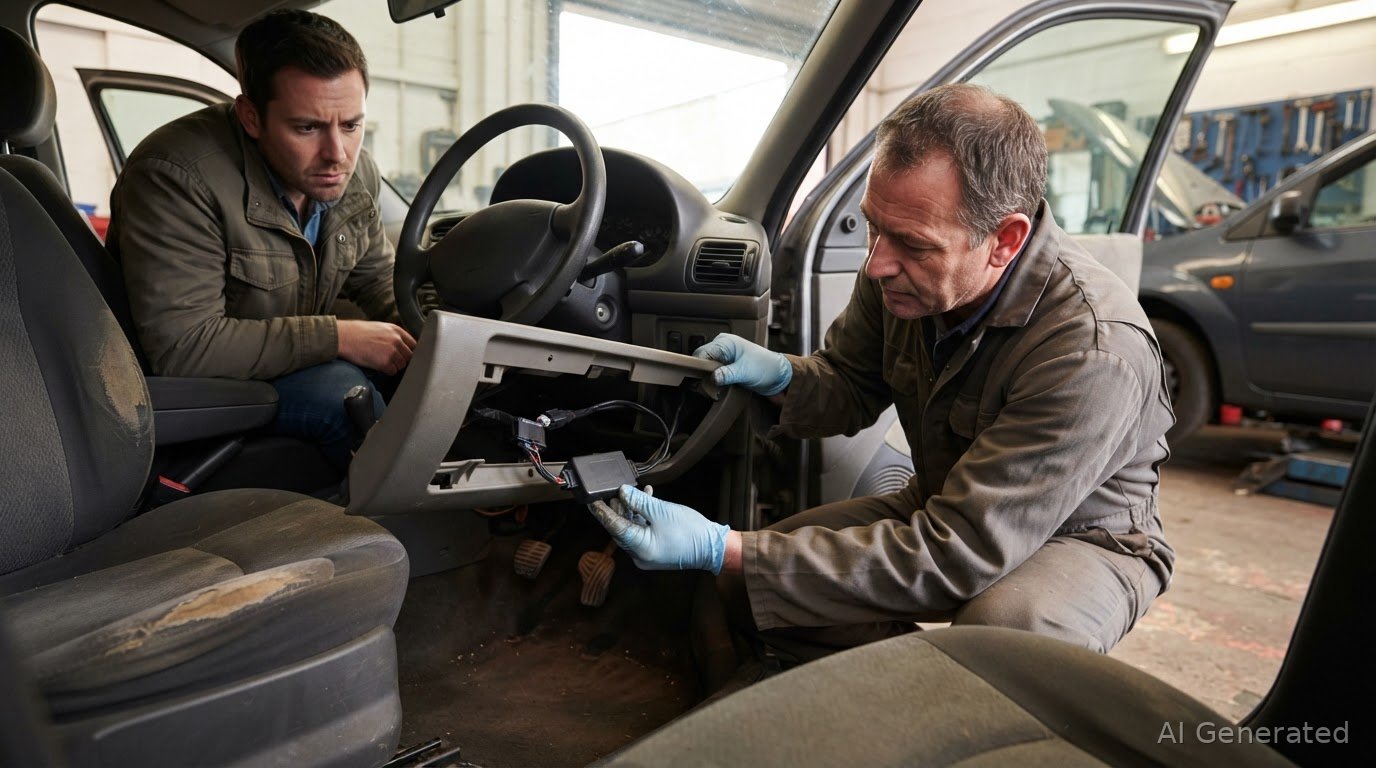
A clean car history check does not prove that a mileage blocker has never been used. Does a mileage blocker show on a car history check? A report may flag mileage records that conflict, but it may not identify a blocker as the cause.
A consistent history can feel reassuring when you’re buying a used car, but recorded mileage is only part of the picture. Gaps between entries, an unexpectedly low reading or a mismatch with the vehicle’s condition are all reasons to look more closely.
This guide explains what a UK car history check can and cannot show, how to read MOT and service records, and which signs may point to a mileage discrepancy. It also covers UK rules on mileage misrepresentation and why clear records matter. A check can flag a mismatch, but that alone does not establish how it happened.
Key Takeaways
- Learn why a history check can flag mileage inconsistencies without identifying a blocker as their cause.
- Recognise why unusually low mileage, gaps in records or mismatches between records and vehicle condition deserve closer attention.
- Understand how UK rules may apply when a vehicle’s mileage is misrepresented, and what buyer protections can be relevant.
- See how mileage blockers work and when a vehicle-specific device or fitting service may be appropriate for authorised use.
What Are the Signs of a Mileage Blocker in a Used Car?
A mileage blocker may leave no visible clue on the dashboard or instrument cluster. A more useful warning is a mismatch, such as an odometer reading below an earlier recorded figure or one that conflicts with the vehicle’s apparent use. A physical sign alone cannot prove that a blocker was fitted or explain a discrepancy.
A mileage blocker and a mileage correction device work differently. A blocker can interrupt mileage signals while the vehicle is in use, so the odometer may not record that distance. A correction device changes a mileage reading or related data after recording. Inconsistent records or vehicle data may raise questions about either, but a history check does not necessarily identify the device or method.
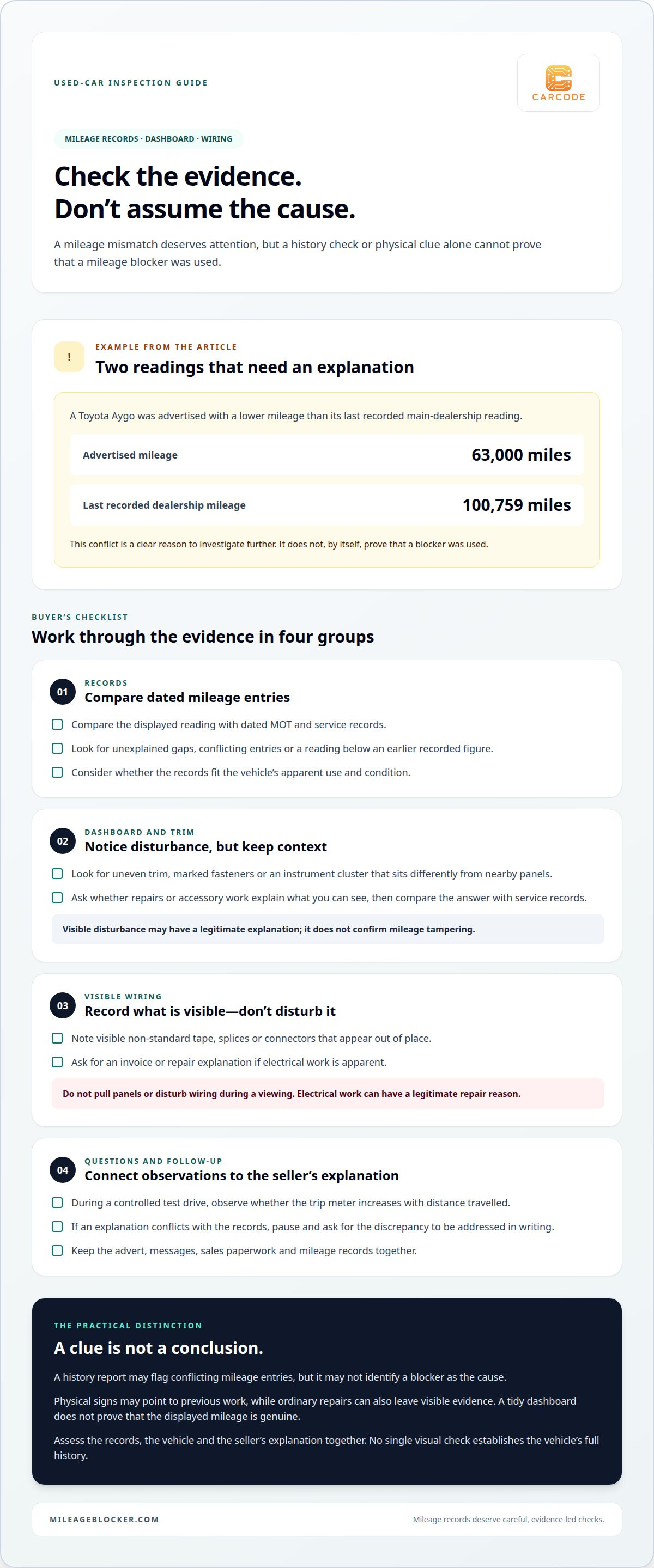
Consider a Toyota Aygo advertised with 63,000 miles despite a last recorded main-dealership mileage of 100,759 miles. That gap is a clear reason to investigate the vehicle’s history further; it does not, by itself, prove a blocker was used. A buyer should treat conflicting readings as a material concern, not as proof of one particular type of tampering.
In the UK, the legal issue is how inaccurate mileage is used or represented. Knowingly selling a clocked car may amount to fraud under the Fraud Act 2006, which carries penalties of up to ten years’ imprisonment, according to the UK legislation register. A seller’s knowledge and conduct matter; an unexplained discrepancy alone does not establish fraud.
If a car bought from a trader was not as described, the UK legislation register says the Consumer Rights Act 2015 generally gives a buyer 30 days from delivery to use the short-term right to reject it. Keep the advert, sales paperwork and mileage records as evidence of what was represented and when.
A blocker’s presence and its use are separate matters. Mileage blockers are intended strictly for legitimate automotive testing, tuning and diagnostic purposes, in private, rolling-road or controlled test environments. It is illegal to use a mileage blocker to misrepresent a vehicle’s true mileage when selling or advertising it. Keep mileage information transparent and accurately documented.
UK laws on odometer tampering and misrepresentation
In the UK, the legal concern is not simply that an odometer reading is inaccurate. What matters is whether someone knowingly presents that figure as genuine when selling a vehicle. For a trader sale, the Consumer Rights Act 2015 requires the car to match its description. A false mileage statement may therefore raise consumer protection issues, while deliberate deception may also engage fraud law.
The Digital Markets, Competition and Consumers Act 2024 replaced the Consumer Protection from Unfair Trading Regulations 2008 on 6 April 2025. On 20 October 2026, the UK Government announced plans to add car clocking to banned commercial practices under Schedule 20. That announcement of plans does not, by itself, establish that an individual sale breached the law. A device’s presence and how someone represents a vehicle are distinct issues.
Does a mileage blocker show on a car history check? A report may reveal conflicting mileage entries, but that discrepancy alone cannot establish that a blocker caused them. The entries show recorded readings, not necessarily the vehicle’s full distance travelled or why a record differs.
For a buyer, the practical question is whether the mileage description formed part of the sale and what evidence supports a discrepancy. Keep the advert, sales documents and relevant correspondence together. If the seller is a trader, these materials can help show what was represented and when. Private sales may involve different legal considerations, depending on what was said and relied upon.
Physical signs around the dashboard or instrument cluster do not prove a legal breach. Likewise, a consistent-looking history does not establish that every mileage statement was accurate. Assess records and explanations together; neither gives a definitive finding about who changed a reading or why.
Dashboard and wiring signs of tampering
An inspection may reveal disturbance around the instrument cluster, but that cannot confirm mileage tampering by itself. When viewing a car, look for uneven trim, marked fasteners or a cluster that sits differently from surrounding panels. These signs may relate to repairs, accessory installation or other work. Ask the seller to explain them and compare the explanation with the service records.
Treat wiring signs with the same care. Non-standard tape, visible splices or out-of-place connectors can point to electrical work, but not necessarily an odometer device. A repair may have a legitimate reason, such as replacing a damaged harness. Do not pull panels or disturb wiring during a viewing. Note what is visible and arrange an appropriate technical inspection.
- Compare the dashboard display with dated MOT and service records for unexplained mileage changes.
- Check whether the instrument cluster appears aligned with adjacent trim and controls.
- Note visible wiring changes, then ask for an invoice or repair explanation.
- During a controlled test drive, observe whether the trip meter increases with distance travelled.
A tidy dashboard does not prove that the displayed mileage is genuine. Electronic changes may leave no obvious physical mark, while ordinary repairs can leave visible evidence. A dealer’s inspection or vehicle testing may add useful information, but no visual check alone establishes the vehicle’s full history. Treat each observation as one part of the evidence.
If the seller’s explanation conflicts with service records, pause the purchase and ask for the discrepancy to be addressed in writing. Keep the advert, messages and paperwork together. Citizens Advice provides consumer information for people considering their options after a disputed purchase. If you have already bought the vehicle, the agreement, seller type and evidence of what was represented can affect your options. Physical signs should prompt careful questions, not an immediate accusation of fraud.
How mileage blockers work
A mileage blocker is an electronic device that can interrupt mileage-tracking signals. When those signals are interrupted, the odometer may stop adding mileage while the vehicle moves, so the displayed figure may differ from the distance actually travelled. This is a general explanation, not a description of every vehicle’s installation or response.
Vehicle electronics differ by manufacturer, model and generation. A device designed for one application cannot be assumed to suit another, even when both vehicles share a manufacturer. The signal path and vehicle response depend on the specific system, so a general description cannot reliably predict dashboard displays, diagnostic behaviour or stored data for every model.
A mileage blocker also differs from a mileage correction device. A blocker interrupts mileage recording during vehicle operation; a correction device changes an existing mileage figure or related data. Their purpose and timing differ, but either intervention can create a gap between recorded mileage and actual distance. Neither should be treated as proof of a vehicle’s complete history.
How a device works is separate from whether its use is lawful. Carcode mileage blockers are sold strictly for legitimate automotive testing, tuning and diagnostic purposes. They are intended for use on private property, rolling roads and controlled test environments only. It is illegal to use a mileage blocker to misrepresent a vehicle’s true mileage when selling or advertising it. Keep any mileage records accurate and transparent.
For a specific vehicle, the correct application and installation details depend on its exact model and generation. A vehicle-specific fitting service can address the relevant electronics without assuming one procedure fits every car. Avoid applying generic wiring instructions to a different manufacturer or model. The practical information in the mileage blocker FAQs can help clarify common questions about device use and vehicle applications.
MileageBlocker.com
MileageBlocker.com provides vehicle-specific mileage blocker devices and a fitting service for authorised uses, including vehicle testing and off-road tracks. The key point is to match any device and fitting to the vehicle’s exact application, rather than assume one setup suits every model or generation.
If you have a question about a particular vehicle, MileageBlocker.com can explain the relevant device and fitting service. These products are intended for legitimate testing, tuning and diagnostic use, not to conceal a vehicle’s true mileage when it is sold. Keep mileage information transparent and accurately documented whenever ownership or vehicle records are involved.
For information about a vehicle-specific application or fitting, contact MileageBlocker.com.
Make Your Next Decision With Clear Information
If you’re still wondering whether a mileage blocker shows on a car history check, focus the next step on your situation. Note whether you’re assessing a car before purchase or reviewing a vehicle you already own. This keeps your questions tied to the decision at hand, rather than assumptions about what a report can prove.
For questions about a vehicle-specific application, have the vehicle’s exact make, model and generation to hand when you contact MileageBlocker.com. Clear details make the conversation more useful from the outset.
Contact MileageBlocker.com with your question and move forward with a clearer next step.
Frequently Asked Questions
What is car clocking and is it illegal in the UK?
Car clocking means deliberately falsifying or misrepresenting a vehicle’s mileage. A reading that appears wrong is not, by itself, proof of clocking or wrongdoing. In a sale, the key issue is whether someone knowingly gave a false account of the mileage. If you suspect this happened, keep dated evidence of the claim and the vehicle’s recorded mileage before raising the matter with the seller.
Can service records and main dealers reveal the real mileage?
Service records and dealer invoices can help show what mileage was recorded when work took place. For each document, note the date, mileage figure and work described, then put the entries in chronological order. A service booklet may record routine visits, while invoices can add details about repairs. Neither should be assumed to cover every journey or workshop visit.
I've bought a car with a clocked odometer, what should I do?
Act promptly and keep the original advert, contract, payment evidence and messages from the seller. Write to the seller, identify the specific statement you believe was inaccurate, include copies of relevant evidence and explain the resolution you are seeking. Keep a dated copy of your complaint and the reply. If you bought from a trader, state that clearly in your correspondence.
What is a mileage blocker and how does it affect a car’s recorded mileage?
A mileage blocker can pause the odometer’s mileage recording while a vehicle moves. For legitimate testing, tuning or diagnostic use, keep a separate record of the distance travelled during that period. This log helps distinguish the dashboard figure from actual use when reviewing test activity or preparing vehicle documentation.
Can a mileage blocker be detected on a UK car history check such as HPI or Experian?
A history-check report helps you review the mileage entries it contains, but it is not a dedicated test for identifying a particular device. Compare the dates and figures, noting unexplained gaps or changes. If the seller gives a separate explanation, keep it with the report so you can assess both accounts together.
What mileage records do UK vehicle history checks use, and where do they come from?
UK vehicle-history reports may draw on recorded events such as MOT tests, servicing and repairs. The source and detail vary: an MOT entry relates to a test, while a service invoice records work documented by that business. Check the date and context for each mileage figure, since entries from different event types may not represent the same kind of record.
Article by
Pav Tomaszevicz
Pav Tomaszevicz is Chief Editor at MileageBlocker.com and works closely with the Carcode technical team on content covering vehicle electronics, CAN and CAN-FD systems, mileage blocker compatibility, installation and product development. His articles draw on practical product development, technical support, installation experience and ongoing research into modern vehicle electronics. Content may use AI-assisted drafting and research, but technical information is reviewed against Carcode's product knowledge and real-world experience before publication
About the author
MileageBlocker TeamThe MileageBlocker Technical Team covers vehicle electronics, CAN and CAN-FD systems, mileage blocker compatibility, installation and product developments.
View author profile →