
Are Mileage Blockers Legal on Your Own Car? UK Guide
Are there any legal consequences of using a mileage blocker on your own car? Read UK guide to legal risks, mileage disclosure and legitimate testing use.
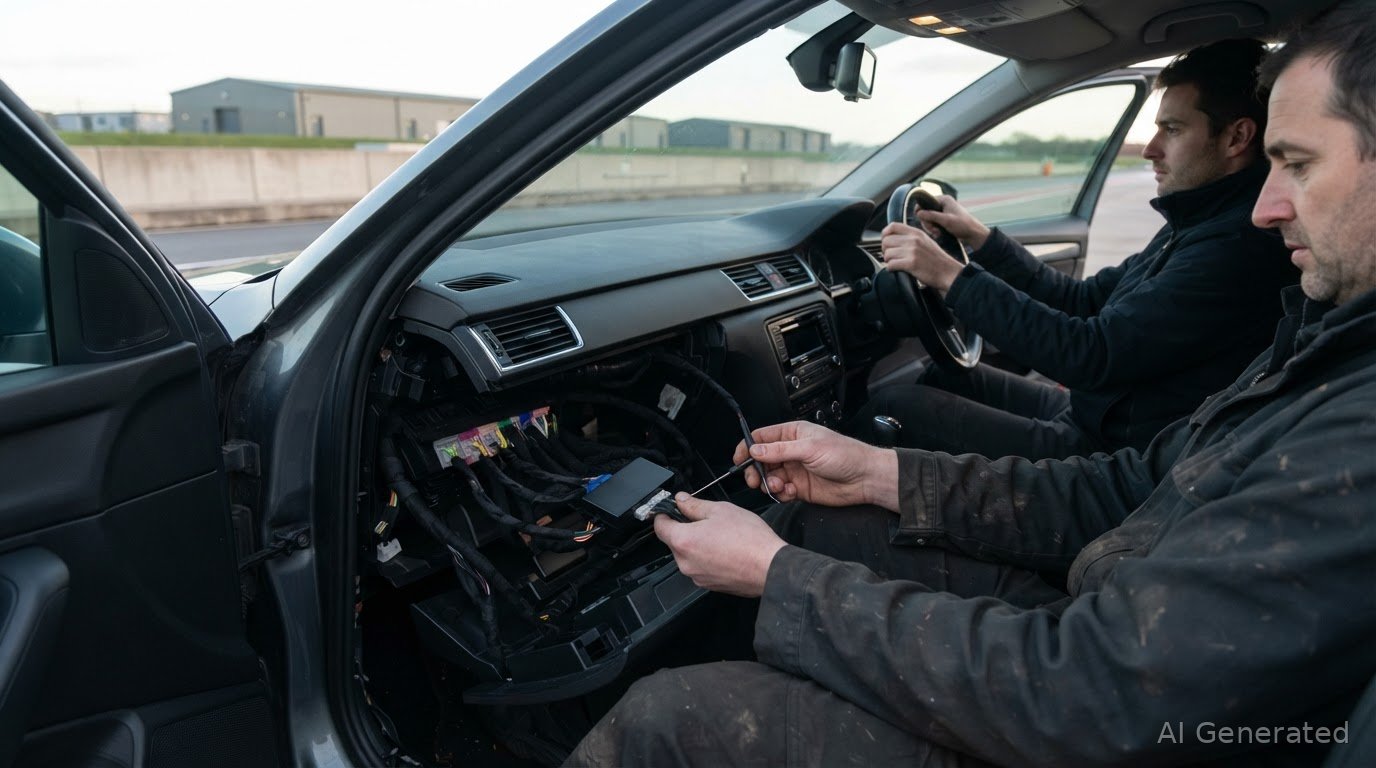
Whether owning or fitting a mileage blocker on your own car is lawful in the UK depends on the circumstances and how the device is used. Using it to mislead someone about the car’s mileage can have serious legal consequences. If you’re asking whether there are legal consequences for using a mileage blocker on your own car, the key issue is whether its use creates a false impression of the vehicle’s true mileage. According to The National Archives, the Fraud Act 2006 applies in England, Wales and Northern Ireland; Scotland has a separate criminal-law framework.
It’s understandable to focus on the fact that the odometer reading may stop increasing. The important distinction is between pausing mileage recording for testing or off-road use and concealing unrecorded miles from a buyer or in official records.
This guide explains the legal considerations around using a mileage blocker on your own car in the UK, including the limits on lawful use and why accurate mileage disclosure matters if you sell the vehicle. It also explains how mileage blockers fit into legitimate testing, tuning and diagnostics.
Key Takeaways
- Understand why the purpose and context of using a mileage blocker matter when considering legal risk.
- Learn which kinds of mileage representations can create problems when a vehicle is sold or documented.
- See how interrupting mileage recording can affect the relationship between the odometer reading and distance actually travelled.
- Find out when a vehicle-specific Mileage Blocker Device or Mileage Blocker Fitting Service may suit testing or off-road use.
What are mileage blockers?
A mileage blocker is an electronic device that pauses mileage recording while active. The odometer may then show less distance than the vehicle has travelled; those miles have not disappeared. This distinction matters in controlled testing, diagnostics and off-road use, and it is essential to give an accurate account of the vehicle’s mileage if it is later sold.
Buying, owning or fitting a device is distinct from using it to deceive someone. In the UK, misrepresenting a vehicle’s mileage when selling it can lead to legal consequences. A mileage blocker is not the same as mileage correction, which changes recorded mileage. The Fraud Act 2006 section 2 covers fraud by false representation, according to The National Archives. The same Act’s section 6 concerns possession or control of an article for use in connection with fraud. The National Archives states that this offence carries a maximum sentence of 5 years’ imprisonment on conviction on indictment.
Selling or fitting a device does not, by itself, establish that mileage fraud has occurred. The context and purpose matter. The Fraud Act 2006 section 7 addresses making, adapting, supplying or offering to supply an article for use in fraud when its statutory conditions are met, according to The National Archives. A person must not use a device to create a false mileage impression for a buyer or in vehicle records.
If a blocker has already been fitted or used, stop using it for ordinary road journeys and keep a clear record of any distance not recorded. Before selling the vehicle, disclose the mileage discrepancy and share that record with the next owner.
For example, if mileage recording was paused during a controlled test, the dashboard reading may not represent the vehicle’s full distance travelled. A written record helps explain the difference. Using a device for legitimate testing is distinct from misrepresenting the vehicle’s mileage when selling or advertising it.
UK legal status of owning and using a mileage blocker
In the UK, buying, owning or fitting a mileage blocker is not, by itself, the same as using it to mislead someone. The legal position depends on the circumstances, including the purpose of its use and how the vehicle’s mileage is represented afterwards.
Ownership and Use on Your Own Car
Owning or fitting a device to your own car does not, by itself, establish that an offence has occurred. Whether its use has legal consequences depends on the circumstances and the law that applies in the relevant part of the UK. The Fraud Act 2006 applies to England, Wales and Northern Ireland; Scotland has a separate criminal-law framework, according to The National Archives.
For legitimate testing, keep a record of when mileage recording was paused and the distance travelled. This helps explain the vehicle’s mileage history, but does not change the requirement to represent its true mileage accurately.
Possible Criminal Penalties
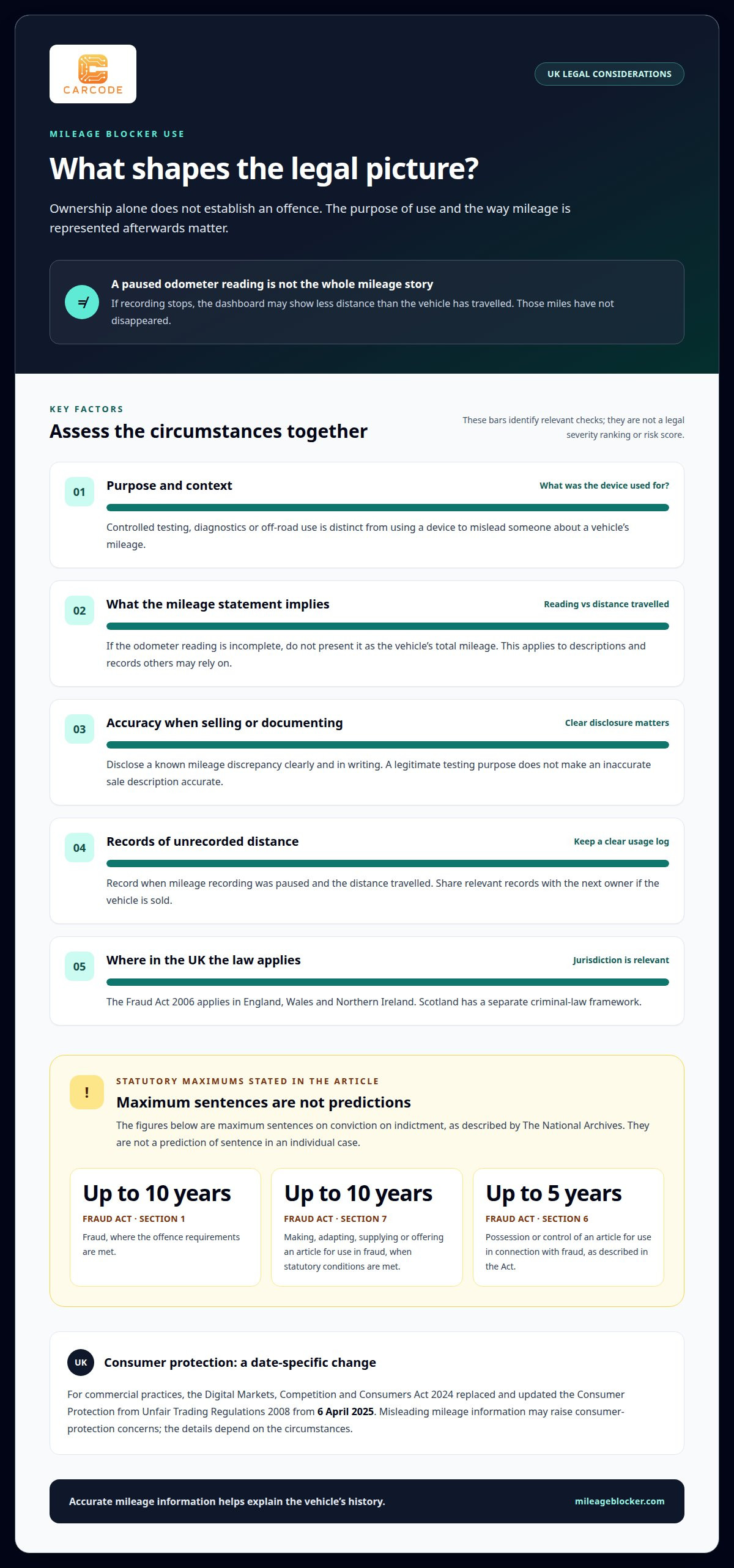
Criminal consequences depend on whether conduct meets the requirements of a relevant offence under the law applicable in the relevant jurisdiction; ownership alone does not determine the outcome. The National Archives explains that a conviction on indictment for fraud under section 1 of the Fraud Act 2006 can lead to up to 10 years’ imprisonment.
The National Archives also states that section 7 addresses making, adapting, supplying or offering to supply an article for use in fraud when its statutory conditions are met. Its maximum sentence is 10 years’ imprisonment on conviction on indictment. These are statutory maximums, not a prediction of sentence in an individual case.
Private Use Versus Use Before a Sale
A test record for your own files is not a substitute for clear disclosure. If the odometer reading is incomplete, do not present it as the vehicle’s total mileage. The essential point is that anyone relying on the vehicle’s mileage receives an accurate account.
Before selling, disclose any known mileage discrepancy clearly and in writing, and retain supporting records. Do not advertise or describe an incomplete odometer reading as the vehicle’s true mileage.
Consumer Protection from Unfair Trading Regulations 2008
The Consumer Protection from Unfair Trading Regulations 2008 are relevant to understanding how UK consumer protection around misleading mileage has changed. For commercial practices, the Digital Markets, Competition and Consumers Act 2024 replaced and updated those Regulations from 6 April 2025. The change matters when a business sells a vehicle or gives buyers information about its recorded mileage.
What UK laws prohibit altering or suppressing a vehicle’s odometer reading? The key legal issue is not simply that a reading was paused or altered. Misleading a buyer about the vehicle’s mileage may engage consumer-protection law and the Fraud Act 2006. A device’s fitting and use must be considered in context, including what mileage information is later presented.
In practice, buyers need accurate information to assess a used vehicle’s history. If a seller knows the dashboard reading omits distance travelled, presenting it as the vehicle’s total mileage can mislead. The same concern applies if inaccurate readings appear in service records or information supplied for an MOT. A legitimate testing purpose does not make a misleading sale description accurate.
Consumers who discover mileage misrepresentation after a sale may report it to Action Fraud and Trading Standards. They may also seek to unwind the sale or claim compensation. The appropriate route depends on the facts, including what the seller said, what the buyer relied on, and what evidence records the actual mileage. Written disclosures and a usage log can help clarify the gap between displayed and actual readings.
Enforcement can involve scrutiny of business practices, not only the module fitted to one vehicle. The Office of Fair Trading reviewed businesses offering mileage correction services from November 2012 to March 2013. That review concerned a different period and should not be confused with the current framework. For a buyer, the practical point is to keep adverts, sale documents, messages and mileage records that show what was disclosed.
How mileage blockers affect odometer readings
A mileage blocker pauses mileage recording while active, so the odometer may show less distance than the vehicle has travelled. Any unrecorded distance remains part of the vehicle’s history, and its disclosure may be required when the vehicle is advertised or sold, depending on the circumstances and applicable rules.
The precise technical application depends on the vehicle. MileageBlocker.com offers vehicle-specific devices for a range of petrol, diesel, hybrid and electric vehicles. A plug-and-play mileage blocker is designed for its specified vehicle application, rather than being assumed to work identically across different models.
That gap can affect how later records are understood. UK MOT history records mileage readings, and the GOV.UK service provides results from tests carried out since 2005. If an MOT reading is lower than an earlier record, or fails to reflect distance subsequently travelled, the sequence may appear inconsistent. A usage log helps explain the difference; it does not change the odometer’s recorded figures.
Could using a mileage blocker affect UK car insurance or an insurance claim? The outcome depends on the policy, the information provided to the insurer and the circumstances. Check the policy terms and ask the insurer how the device should be disclosed before fitting or using it.
Could a mileage blocker affect a UK car warranty, finance agreement or lease contract? The consequences depend on the relevant warranty, agreement and circumstances. Review the written terms and, where necessary, check with the manufacturer, finance provider or leasing company before fitting or using a device.
For legitimate testing, keep a dated record of when mileage recording was paused and the distance travelled. This helps explain differences between the odometer reading and other vehicle records. It does not replace any disclosure required when the vehicle is sold or advertised.
For practical information about operation and fitting, browse the mileage blocker FAQs.
MileageBlocker.com
MileageBlocker.com sells vehicle-specific Mileage Blocker Devices and offers a Mileage Blocker Fitting Service for legitimate automotive testing, tuning and diagnostics. Carcode mileage blockers are sold strictly for legitimate automotive testing, tuning and diagnostic purposes. They are intended for use on private property, rolling roads and controlled test environments only.
Using a mileage blocker to misrepresent a vehicle’s true mileage when selling or advertising it may breach applicable law, depending on the jurisdiction and circumstances. Carcode accepts no liability for misuse. For technical information about a vehicle application or fitting, contact MileageBlocker.com.
Make your next decision with clear vehicle records
If you’re asking whether there are legal consequences of using a mileage blocker on your own car, the answer depends on the jurisdiction and circumstances. Do not use it to misrepresent the vehicle’s true mileage. Keep accurate records and disclose any known discrepancy.
For an appropriate vehicle application, MileageBlocker.com offers a Mileage Blocker Device, a Mileage Freezer and a Professional Fitting Service. The right technical option depends on the vehicle; these products are not legal advice. Keep your vehicle records consistent with its actual use, and don’t present an odometer reading as complete if you know distance went unrecorded.
Take the time to match the technical application to your vehicle and intended use before proceeding. For product and fitting information, contact MileageBlocker.com through the FAQ page and take the next step with a clear understanding.
Frequently Asked Questions
What Role Do DVLA and MOT Records Play?
DVLA registration isn’t required solely because a mileage blocker is fitted; MOT records provide a separate mileage trail. The GOV.UK MOT history service shows available test results from 2005 onwards, including mileage recorded at tests. For example, a gap or unexpected sequence between recorded readings may prompt questions about the vehicle’s history. These records show test readings, not a complete account of every mile travelled.
What happens if you misrepresent mileage when selling a car?
A buyer who discovers that the advertised mileage was misleading may report the matter to Action Fraud or Trading Standards. Depending on the evidence and circumstances, they may seek to unwind the sale or claim compensation. Keep relevant evidence, such as the advert, sale documents and messages about mileage. A written explanation of a known discrepancy can help distinguish an honest disclosure from a misleading representation.
What must a UK seller disclose if a car's mileage has been altered or is inaccurate?
A seller should tell the buyer, in writing before the sale, that the displayed mileage doesn’t represent the vehicle’s true mileage. Explain the known discrepancy and provide any available record of distance not shown by the odometer. For example, a log of testing or track use can help make the vehicle’s mileage history clearer. Don’t describe an incomplete dashboard reading as the car’s total mileage.
Can mileage blocking affect a car's MOT history, service records or vehicle valuation in the UK?
Pausing mileage recording can create a difference between distance travelled and later odometer readings in MOT or service records. An MOT entry records the reading at the time of the test; it does not account for distance that was not recorded. Keep records that explain any known discrepancy, and disclose it accurately if the vehicle is advertised or sold.
About the author
MileageBlocker TeamThe MileageBlocker Technical Team covers vehicle electronics, CAN and CAN-FD systems, mileage blocker compatibility, installation and product developments.
View author profile →