
App-Controlled Mileage Blockers: Why We Avoid Them
Explore how a mileage blocker with app control works, why vehicle-specific modes matter, and how UK disclosure duties depend on use and circumstances in prac...
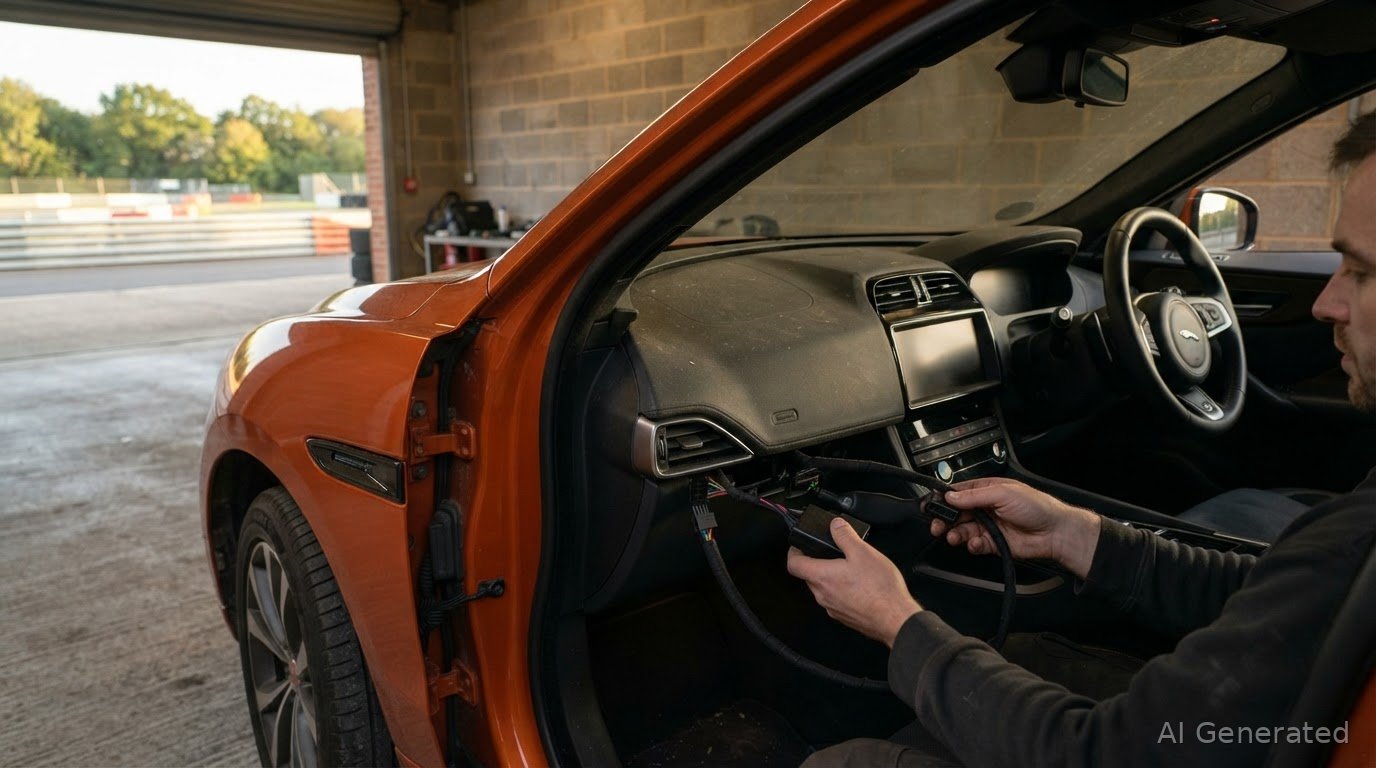
In the UK, the legal position on buying or fitting a mileage blocker can depend on the circumstances and how it is used. The Consumer Protection from Unfair Trading Regulations 2008 may be relevant if a buyer is misled about a vehicle’s mileage, but whether they apply in a particular case depends on the facts. A mileage blocker with app control lets the user operate available modes on supported vehicles, but app access doesn’t remove the need to disclose unrecorded miles.
It’s reasonable to ask what app control changes and whether it affects the vehicle’s displayed mileage or the legal position. The key distinction is between using a device for legitimate testing, tuning or diagnostics in a controlled environment and misrepresenting a vehicle’s mileage.
This article explains how app-controlled modes work, why features depend on the vehicle-specific device, and why the legal position can depend on the circumstances when a vehicle has travelled miles that its odometer did not record. It also covers disclosure and responsible use, so you can assess the technology without mistaking app control for permission to conceal mileage.
Key Takeaways
- Understand why app access changes how supported modes are controlled, not the vehicle-specific operation of the device.
- Learn how a mileage blocker interacts with the vehicle’s mileage recording system and why configurations can differ.
- Know the UK legal distinction between fitting a device and using it to mislead buyers or falsify vehicle records.
- See when vehicle-specific equipment or a fitting service may suit authorised testing and off-road use.
Is Odometer Blocker illegal?
In the UK, the device’s presence and its use are separate issues. A mileage blocker may affect how a vehicle records mileage while active, depending on the vehicle and product. Using one to create a false impression for buyers carries a different risk from using it during off-road testing. The context and accuracy of mileage information matter.
Product design and vehicle compatibility vary. A module intended for one vehicle is not automatically compatible with another, even if their dashboards look similar.
Which mileage blockers offer smartphone app control? App control is available for selected vehicle models, not as a universal feature. Compatibility depends on the exact vehicle and module; app availability alone does not mean a device suits every model from a manufacturer.
How do app-controlled mileage blockers compare with odometer correction tools? Their functions can differ, and the precise behaviour depends on the vehicle and product. Neither function makes inaccurate mileage information appropriate for buyers or vehicle records.
Can mileage blockers be detected during an MOT or vehicle inspection? There is no single detection outcome that applies to every vehicle or inspection. A displayed mileage figure should not be treated as proof of the distance actually travelled if the vehicle’s mileage recording may have been affected.
What are the risks of installing a mileage blocker? The main technical consideration is matching the module to the vehicle’s electronic configuration. A mismatch can prevent the device from working as intended. Misrepresenting mileage can also create legal and buyer-dispute risks. Check the device’s vehicle application and installation information before fitting it, especially when model generations differ.
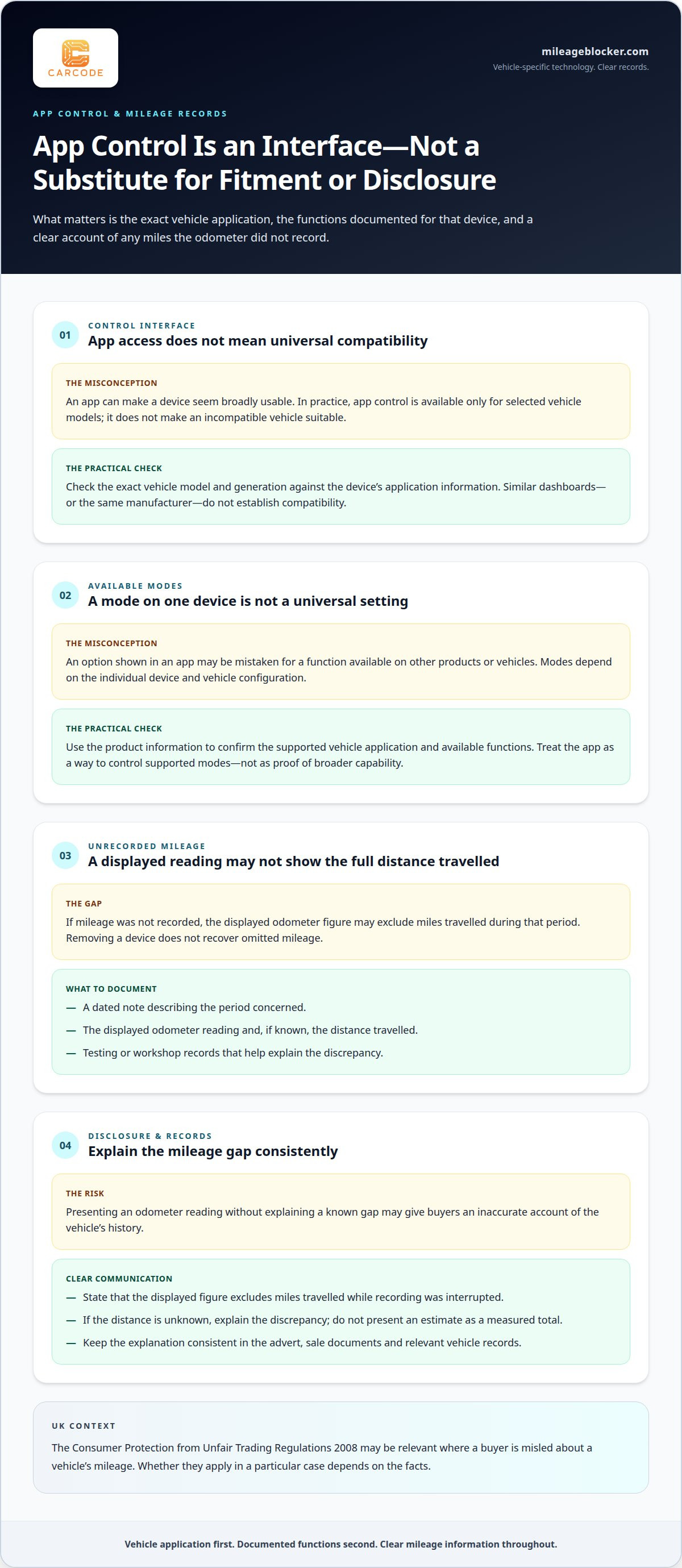
App availability and vehicle compatibility are separate considerations: an app can control a supported module, but it cannot make an incompatible vehicle suitable. Check the exact model and generation against the device’s application information before installation.
UK legality and disclosure of unrecorded miles
If mileage has gone unrecorded, document the gap clearly. Keep a dated note of the period concerned, the displayed reading and, if known, the distance travelled. Testing or workshop records can help explain why the odometer reading does not represent the vehicle’s complete use.
According to the UK legislation register, using a mileage blocker to mislead buyers, during an MOT, or in service records is illegal under the Consumer Protection from Unfair Trading Regulations 2008. The key issue for a seller is the impression given by the information as a whole. A mileage figure presented without explaining a known gap may give buyers an inaccurate account of the vehicle’s history.
When advertising a vehicle, state clearly that the displayed odometer figure excludes miles travelled while recording was interrupted. Do not present that figure as the vehicle’s full mileage. If the distance is unknown, explain the discrepancy rather than presenting an estimate as a measured total. Clear wording helps buyers distinguish the odometer reading from the distance actually travelled.
Handle service and MOT records carefully, too. If a recorded reading is copied into paperwork, make clear when it does not represent the complete distance travelled. Removing a device does not recover omitted mileage, so removal alone cannot resolve the historical gap. Keep the explanation consistent across the advert, sale documents and relevant vehicle records.
The seller’s stated position is that buying or fitting a blocker is legal in the UK, while using it to misrepresent mileage is not. For background on common device questions, the mileage blocker FAQs provide further context.
App control of mileage blocker modes
App control can make selecting a supported mode more convenient, but it should not be the sole reason to choose a device. The feature is available for selected vehicle models, and the app does not determine which functions suit a particular vehicle. The vehicle application comes first; the control interface is secondary.
Operating modes depend on the individual device and vehicle configuration. Do not assume that a mode shown for one product is available on another, even if both are from the same manufacturer. The same applies to labels in an app: an option describes a function for its supported application, not a universal setting across all mileage blockers.
There is also a practical distinction between choosing a mode and understanding its effect. App access may provide a convenient way to select an available function, but it cannot make an unsupported mode appropriate for a different vehicle. For this reason, the article’s title is not a claim that every app-controlled unit should be avoided. It reflects a cautious approach to treating app control as a deciding feature without first considering the device’s vehicle-specific operation.
For legitimate testing or diagnostics in a controlled environment, the key question is whether the exact device provides the function required for that application. The phone interface alone cannot answer this. Product information should identify the supported vehicle application and available modes; these details are more useful than assuming an app means broader capability.
In short, app control is an interface, not a substitute for vehicle-specific engineering. Treat it as a secondary consideration and assess the device by its documented vehicle application and functions. That keeps the decision grounded in what the selected hardware is designed to do, rather than simply whether it has an app.
Smartphone app control is available only on selected mileage blockers for particular vehicle models. Product information identifies the vehicle applications and modes supported by each device.
How do app-controlled mileage blockers work?
A mileage blocker’s effect on mileage recording depends on the specific device and vehicle. App control may let the user select a supported function, but it does not by itself show how the device handles vehicle signals or how the vehicle stores mileage. These details can vary by application.
For this reason, an unchanged odometer display should not be taken as a complete account of the distance travelled. How the displayed figure relates to recorded or stored mileage during operation depends on the specific vehicle and device.
App control is best understood as an interface for a device’s electronic function. A phone may let the user select a supported setting, but the app itself does not perform the mileage-blocking function. A selected setting also does not change the distance the vehicle travels.
Vehicle electronics differ across manufacturers and model generations, so signal handling, available settings and instrument behaviour can vary by application. Read a mode description as information for its stated device, not as a general description of every app-controlled module. The control method and signal-processing behaviour are related, but they are not the same specification.
For controlled testing, distinguish three things: the distance physically travelled, the mileage recorded by the vehicle and the value shown on the odometer. How these relate depends on the vehicle and device. This distinction helps prevent an unchanged display from being mistaken for proof that the vehicle has not moved, and clarifies that the app controls a device function, not the vehicle’s actual distance.
MileageBlocker.com
MileageBlocker.com sells vehicle-specific mileage blocker technology for legitimate testing, tuning and diagnostics in controlled environments. Match the device and its functions to the vehicle’s exact model and generation instead of assuming a mileage blocker with App control works universally. A mileage recording device or odometer freezer may suit a legitimate application where mileage recording needs to be managed. A Mileage Blocker Fitting Service is available for customers who need installation support.
App control does not remove the need to keep an accurate vehicle history. Disclose relevant miles that the odometer did not record, particularly when selling or advertising the vehicle. Misrepresenting a vehicle’s true mileage may be illegal, depending on the jurisdiction and circumstances.
For vehicle-specific information about equipment or fitting, contact MileageBlocker.com.
Choose based on the vehicle, not the interface
An app can make control more convenient, but convenience alone is a weak basis for choosing vehicle electronics. Start with the intended use, then check whether the device’s documented functions suit the exact vehicle. This keeps the decision focused on compatibility and responsible operation, rather than the appeal of controlling a setting from a phone.
When considering a mileage blocker with app control, ask more than whether an app is available. Check whether the vehicle-specific module and its functions suit the application, and keep a clear, accurate account of the vehicle’s mileage history. These considerations remain essential even when the interface appears simple.
If you are weighing an application or fitting option, put the vehicle model, generation and intended use at the centre of the discussion. Send your questions to MileageBlocker.com for information relevant to your next step. A careful, vehicle-specific decision is the soundest way forward.
Frequently Asked Questions
What is a mileage blocker?
A mileage blocker is a vehicle-specific electronic module designed to affect mileage recording while active. How it operates and interacts with vehicle electronics depends on the product and the vehicle. Compatibility depends on the vehicle’s model and generation; a module intended for one generation may not suit a later version carrying the same model name. These devices are intended for controlled testing, tuning, diagnostics or off-road use.
What is a mileage blocker with app control?
A mileage blocker with app control lets a user operate supported functions through a smartphone application. App control is available for selected vehicle models and does not make the device universal. The module, vehicle generation and available modes must correspond. For a workshop preparing a vehicle for controlled testing, the app is an interface for a compatible device, not a substitute for vehicle-specific installation information.
Are mileage blockers legal in the UK?
In the UK, the legal position depends on how the device is used. According to the UK legislation register, using a mileage blocker to mislead buyers, during an MOT, or in service records is illegal under the Consumer Protection from Unfair Trading Regulations 2008. If a vehicle’s odometer has not recorded all miles, do not present its displayed reading as the complete distance travelled.
Article by
Pav Tomaszevicz
Pav Tomaszevicz is Chief Editor at MileageBlocker.com and works closely with the Carcode technical team on content covering vehicle electronics, CAN and CAN-FD systems, mileage blocker compatibility, installation and product development. His articles draw on practical product development, technical support, installation experience and ongoing research into modern vehicle electronics. Content may use AI-assisted drafting and research, but technical information is reviewed against Carcode's product knowledge and real-world experience before publication
About the author
MileageBlocker TeamThe MileageBlocker Technical Team covers vehicle electronics, CAN and CAN-FD systems, mileage blocker compatibility, installation and product developments.
View author profile →