Will a Dealer Know I Had a Blocker on My Car? The Full Breakdown
The prospect of a dealership service or a vehicle trade-in can create significant uncertainty, especially if you''ve used a mileage blocker for legitimate tes...
The prospect of a dealership service or a vehicle trade-in can create significant uncertainty, especially if you've used a mileage blocker for legitimate testing purposes. The primary concern is straightforward: will a dealer know I had a blocker on the car? This single question can lead to worries about voiding your warranty or facing difficult questions during an inspection. However, the detectability of a mileage blocker is not a matter of chance; it is a direct result of the device's quality and technical sophistication.
This guide provides the full technical breakdown you need. We will explore the specific diagnostic procedures and inspection methods dealerships use to check for data discrepancies across a vehicle's various ECU modules. You will learn the critical differences between inferior, easily detectable devices and the premium quality, untraceable mileage blockers designed for secure and discreet use. Gain the confidence to use a high-quality device for its intended testing functions without the fear of future repercussions.
Key Takeaways
- Understand the full dealer inspection process, which combines physical checks, service history reviews, and advanced diagnostic scans to verify a vehicle's condition.
- The answer to 'will a dealer know I had a blocker on the car' depends almost entirely on the quality of the device's software and its integration with all ECU modules.
- Learn the critical difference between a mileage blocker and an illegal odometer correction tool, and why dealers are specifically trained to spot the latter.
- Discover the key features of a premium, untraceable mileage blocker, ensuring it leaves no trace in any of the vehicle's electronic memory units after removal.
How Dealers Inspect a Car's Mileage and History
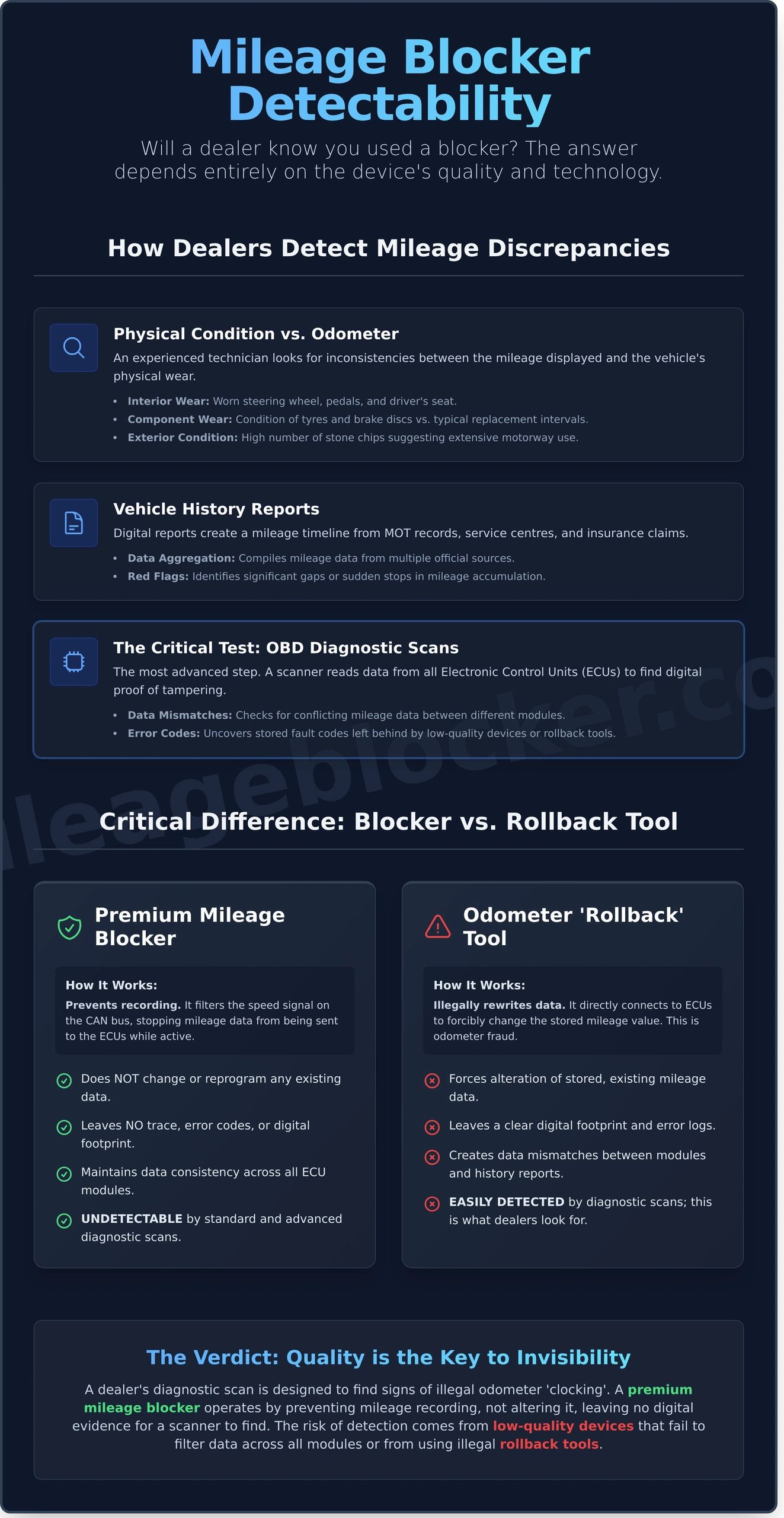
When a dealership evaluates a vehicle for trade-in or purchase, they perform a multi-point inspection that goes far beyond a simple test drive. Their primary goal is to verify that the car's physical condition, digital records, and electronic data are all consistent. This comprehensive process creates a baseline for valuation and is designed to uncover any discrepancies, including those related to the vehicle's true mileage. Understanding this process is the first step in knowing how a mileage blocker might be identified.
To see how technicians spot traditional signs of mileage tampering, this video provides a helpful overview:
Physical Condition vs. Odometer Reading
The initial inspection is often a manual, hands-on assessment. An experienced technician can quickly spot signs of wear that don't match the mileage displayed on the odometer. This is a subjective but effective method for flagging major inconsistencies. Key areas of focus include:
- Interior Wear: Excessive shine on the steering wheel, worn-down pedal rubbers, and collapsed driver's seat bolsters can suggest a car has been driven far more than its odometer indicates.
- Component Wear: The condition of tyres and brake discs is compared against typical replacement intervals.
- Exterior Condition: A high number of stone chips on the bonnet and bumper can point to extensive motorway driving.
Vehicle History Reports
Dealers rely heavily on digital vehicle history reports from services that aggregate data from numerous sources. In the UK, this includes MOT records, service centre reports, and insurance claims. These reports build a timeline of the vehicle's life, with mileage figures recorded at specific dates. Any significant gaps in this timeline or a sudden stop in mileage accumulation is an immediate red flag for potential Odometer fraud. While effective at catching traditional rollbacks, this method is less likely to detect a mileage blocker that has been used consistently from an early stage.
On-Board Diagnostic (OBD) Scans
This is the most critical and technologically advanced step in the inspection. A technician connects a diagnostic scanner to the vehicle’s OBD-II port, allowing them to read data directly from the car’s various Electronic Control Units (ECUs). The scan checks for stored fault codes and data mismatches between different modules. For owners wondering, "will dealer know I had a blocker on the car," this is the most likely point of discovery. A low-quality device may fail to filter mileage data across all control units or leave behind electronic footprints and error codes, creating an easily detectable anomaly.
The Critical Difference: Mileage Blockers vs. Correction Tools
To understand if a mileage blocker is detectable, you must first grasp a critical distinction. Dealerships and technicians are not looking for blockers; they are trained to detect the signs of illegal odometer fraud, a practice commonly known in the UK as 'clocking'. The method used to alter a vehicle's mileage is the single most important factor in its detectability, and a premium quality mileage blocker operates on a completely different principle than a crude mileage correction tool.
How Odometer Correction ('Rollback') Tools Work
These devices are designed to illegally alter the mileage reading. They work by directly connecting to a vehicle's electronic systems and reprogramming the stored value in the instrument cluster, Engine Control Unit (ECU), and other modules. This forced data change almost always leaves a digital footprint. It creates inconsistencies and error logs that advanced diagnostic tools can easily uncover. Furthermore, the altered mileage will conflict with previous MOT records and service history, creating an obvious red flag. This practice is a serious offence; you can see the severity with which governments treat it by reviewing the federal law on odometer tampering in the US, with similarly strict regulations here in the UK.
How a Premium Mileage Blocker Works
In complete contrast, a premium mileage blocker does not change, erase, or reprogram any existing data. Its function is preventative. When activated for legitimate off-road or testing purposes, the device intercepts and filters the speed signal on the vehicle's CAN bus network. This means that while the blocker is active, the mileage data simply isn't sent to the various control units for recording. The odometer and all related modules effectively stop counting. Because no data is written, there is nothing to 'correct' or roll back later, leaving no trace of its operation in the vehicle's memory.
Why This Distinction Matters to a Dealer
This fundamental difference directly answers the question: will a dealer know I had a blocker on the car? A dealer's diagnostic scan is designed to look for the tell-tale signs of reprogramming-data mismatches between modules, hidden error codes, or evidence of software tampering. A high-quality mileage blocker creates none of these signs. Since it prevents mileage from being recorded rather than altering it after the fact, its effect is untraceable by standard or even advanced diagnostic tools. Be aware, however, that poor quality devices marketed as 'blockers' may actually be simple rollback tools in disguise, which will be easily detected. This is why investing in a premium, well-engineered device is paramount.
Can a Dealer's Diagnostic Tool Detect a Quality Blocker?
This is the central concern for most users: will a dealer know I had a blocker on the car when they plug in their diagnostic computer? The answer depends entirely on the quality and engineering of the device. A professional diagnostic scan searches for fault codes and communication anomalies between the vehicle’s electronic control units (ECUs). While a cheap, poorly made device will almost certainly leave a digital footprint, a premium mileage blocker is specifically designed to be invisible to these systems.
The 'Untraceable Effect' Explained
A high-quality mileage blocker achieves its untraceable effect through superior hardware and software. These devices are built with genuine automotive-grade components and original plug connectors, ensuring a perfect physical and electronic fit. The software is meticulously programmed not to conflict with other modules on the CAN-Bus network. This seamless integration means it performs its function without generating the fault codes that would appear on a diagnostic scan, making it completely invisible to the car's self-diagnostic systems.
Risks of Low-Quality Devices
In contrast, low-quality devices are a significant liability. Their poorly coded software often disrupts communication between essential modules like the ABS, transmission, and engine ECU. This disruption creates a cascade of error codes that a dealer’s technician will see immediately. Furthermore, their inferior components can cause electrical issues or fail unexpectedly, flagging a problem. Using such a device can lead to complications, drawing unwanted attention to illegal modifications. It is vital to distinguish between using a professional tool for vehicle testing and activities where, as the NHTSA defines odometer fraud, mileage is illegally altered for deceitful purposes. Learn more from our detailed Mileage Blocker FAQ.
The Importance of Proper Installation
Even the most advanced device can be detected if installed incorrectly. A loose connection or damaged wire can generate a specific fault code, alerting a technician that a non-standard modification is present. This is why professional fitting is crucial to preserving the blocker’s undetectable nature. A correct installation ensures the device is securely connected and discreetly placed, leaving no physical or electronic trace. We offer detailed guides and a professional installation service to guarantee a flawless and secure setup.
Key Scenarios: When a Dealer is Most Likely to Look Deeper
The answer to the question, "will dealer know I had a blocker on the car" isn't a simple yes or no; it depends entirely on the context of the visit. The level of scrutiny your vehicle undergoes varies dramatically between different interactions. A routine oil change involves a fraction of the diagnostic effort applied to a major engine warranty claim. Understanding these scenarios is key to making an informed decision, as the primary risk of detection comes from a low-quality device causing secondary electrical faults.
A premium mileage blocker, engineered with genuine automotive-grade components, is designed to be untraceable and integrate seamlessly with your vehicle's systems. Here’s a breakdown of when a dealer is most likely to investigate your vehicle's electronics.
During a Trade-In Appraisal
This is a comprehensive evaluation where a dealer assesses the vehicle's overall condition to determine its value. The appraisal involves a full range of checks, including diagnostic scans, a review of service and MOT history, and a thorough physical inspection. The main risk here is not a diagnostic flag, but a major discrepancy between the odometer reading and the vehicle's physical wear and tear. A quality blocker used correctly for off-road or testing purposes will not create a detectable software issue.
Investigating a Warranty Claim
This is the highest-scrutiny scenario you can face. When investigating a costly fault, especially related to the engine, transmission, or complex electronics, technicians are tasked with finding the root cause. They will run in-depth diagnostics, analysing data from multiple ECU modules and the CAN-Bus network. A poorly made blocker that causes voltage drops, communication errors, or other electrical faults would almost certainly be discovered during this intensive process. This is where investing in a superior quality device is critical.
Routine Maintenance and Servicing
For standard servicing like an oil change, brake fluid flush, or filter replacement, the risk is typically very low. Service technicians follow a standard procedure, which includes running a basic diagnostic scan to check for pre-existing error codes (DTCs). They are not actively searching for aftermarket modules. As long as the mileage blocker is functioning correctly and not generating any system faults, it should go completely unnoticed during routine workshop visits.
How to Choose a Blocker That is Genuinely Undetectable
Having understood the risks associated with low-quality devices, the focus now shifts to the solution: selecting a premium mileage blocker engineered for complete discretion. The nagging question of "will dealer know I had a blocker on the car?" ultimately comes down to the quality, engineering, and support behind the product you choose. Investing in a superior device is an investment in peace of mind, ensuring no trace is left behind.
To differentiate a reliable, untraceable tool from a risky gadget, focus on these key indicators of quality:
- Component Quality: The physical materials must match automotive manufacturing standards.
- Software Integrity: The programming must be stable and developed specifically for your vehicle's systems.
- Manufacturer Support: The seller must stand behind their product with long-term assistance.
Prioritize High-Quality Components
The first sign of a premium blocker is its physical construction. Look for devices that use genuine OEM-style plugs and automotive-grade, heat-resistant wiring. This ensures a perfect, secure connection to your vehicle's existing loom without causing any damage. Cheaply made connectors and inferior wires are not only unreliable but can be an immediate red flag to any technician performing a physical inspection. Poor external materials are a clear indicator of poor internal electronics.
Verify In-House Software Development
A mileage blocker's effectiveness lies in its software. Reputable companies develop their own software in-house, allowing for rigorous testing and refinement. This ensures the device communicates flawlessly with all necessary ECU modules without creating software conflicts or error logs that would be flagged by dealership diagnostic tools. For example, our blocker for the Honda model range is extensively tested to guarantee stable and untraceable operation.
Look for Lifetime Support
A manufacturer that is confident in its product's engineering will offer comprehensive support. Lifetime support demonstrates that the company stands behind its quality and reliability. In the world of complex vehicle electronics, having access to an expert is vital should you have any questions about installation or operation. It is a hallmark of a professional-grade tool. If you have any questions about compatibility or features, feel free to contact us for expert advice.
By choosing a product built with these principles, the concern of 'will dealer know I had a blocker on the car' is addressed through superior engineering, making the effect truly untraceable.
Ensuring Your Discretion: The Undetectable Difference
The question of will dealer know I had a blocker on the car ultimately comes down to one critical factor: the quality of the device. While dealerships and their advanced diagnostic tools can easily spot the inconsistencies left by cheap mileage correction tools, a premium-grade blocker operates on an entirely different level. The key is choosing a device engineered not to alter data, but to halt its recording across all electronic control units (ECUs) without leaving a digital footprint.
A truly untraceable effect is only achievable through superior engineering. That's why our modules are built with genuine automotive-grade components and feature our own in-house developed software, ensuring they leave no error codes or traces in any vehicle memory module. This commitment to quality guarantees that your legitimate testing or off-road use remains your private business, undetectable by even the most thorough main dealer inspections.
For complete peace of mind and reliable performance backed by lifetime support, investing in the right technology is essential. Shop for a premium, untraceable mileage blocker for your vehicle now and take control of your vehicle's data with confidence.
Frequently Asked Questions
Is using a mileage blocker illegal?
In the United Kingdom, it is legal to purchase and install a mileage blocker for legitimate purposes, such as testing vehicle performance on private land or for off-road use. However, it is a criminal offence under the Fraud Act 2006 to misrepresent a vehicle's mileage when selling it. The legality depends entirely on the intended use; using it to deceive a buyer is illegal, while using it for testing is not.
Can a mileage blocker be completely removed before going to the dealer?
Yes. Our premium quality mileage blockers are engineered with genuine plug-and-play connectors for straightforward installation and removal. When you unplug the device, the vehicle’s electronic systems revert to their original state without leaving any digital footprint in the ECU or other modules. This ensures a clean, non-invasive process, leaving no physical or software evidence that a blocker was ever installed on the car.
Will a mileage blocker void my car's warranty?
Using a mileage blocker for its intended off-road or testing purposes should not void your warranty. However, if a dealer finds the device installed and attributes a fault to it, they could potentially dispute a warranty claim. This is why the untraceable effect and easy removal of our modules are crucial. By removing the device before any service or diagnostic work, you significantly reduce any risk of warranty complications.
Does a mileage blocker affect other systems like the speedometer or cruise control?
Our mileage blockers are developed to integrate flawlessly with your vehicle's CAN-Bus or FlexRay systems. While the odometer reading is paused, essential functions such as the speedometer, cruise control, and other driver assistance systems continue to operate as normal. This is a key feature of our high-quality modules, distinguishing them from inferior products that may cause system errors or disable critical functions during use.
What happens if a dealer does find a mileage blocker on my car?
A common question is, "will dealer know I had a blocker on the car?" If a device is physically discovered, the dealer's response can vary. They might refuse to perform service, void a portion of the warranty related to electronics, or simply remove it. Because our modules are designed to be untraceable in the vehicle's memory once removed, the only risk is physical discovery, which is negated by unplugging the device before your visit.
How do I know if the mileage blocker is active or inactive?
Our modules provide a clear and simple confirmation of their status. Activation and deactivation are controlled via a sequence of button presses on your steering wheel or dashboard, such as pressing the "OK" or "RES" button three times. A visual indicator, like a brief flash of the hazard lights or an icon on the instrument cluster, will confirm whether the module is currently active or inactive, ensuring you are always in full control.
About the author
Pav TomaszeviczChief Editor, MileageBlocker.com
Pav is Chief Editor at MileageBlocker.com and works with the MileageBlocker Technical Team to publish practical information about vehicle compatibility, CAN/CAN-FD electronics, installation and MileageBlocker products.
View author profile →