
What Is a Mileage Blocker? A Simple Guide
The term ‘mileage blocker’ often brings up more questions than answers. Is it legal in the UK? Will it interfere with my car’s complex e...
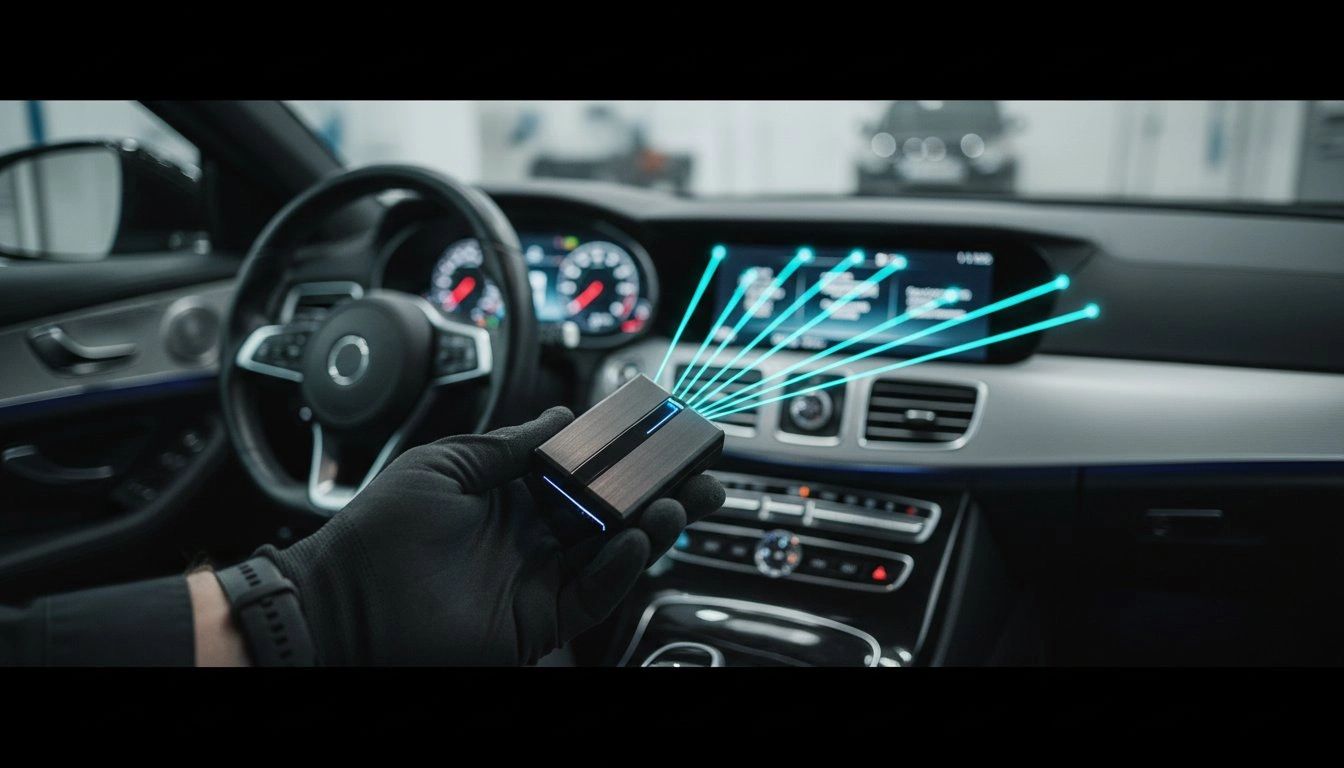
The term ‘mileage blocker’ often brings up more questions than answers. Is it legal in the UK? Will it interfere with my car’s complex electronics? And crucially, how is it any different from the illegal odometer ‘clocking’ tools that can land you in serious trouble? This confusion is common, but understanding the distinction is essential. A premium-quality mileage blocker is a sophisticated diagnostic tool, engineered specifically to halt mileage recording from all control units for legitimate purposes like vehicle testing or off-road use. It is not a fraudulent rollback device.
This guide is designed to provide clear, direct answers. We will explore exactly how a mileage stopper functions by interfacing with your vehicle’s CAN-Bus system, detail its ethical and legal applications, and demonstrate why a professionally engineered, untraceable module is fundamentally different from cheap, risky alternatives. By the end, you will have a confident understanding of the technology, its intended purpose, and how to ensure you are using a safe, high-quality product that protects your vehicle's integrity.
Key Takeaways
- Learn how a mileage blocker is designed to halt mileage recording for legitimate purposes like off-road vehicle testing and research.
- Discover how these devices interface with a vehicle's CAN bus system to control the flow of mileage data to all electronic modules.
- Understand the critical legal distinction in the UK between using the device for off-road testing and illegal odometer misrepresentation on public roads.
- Identify the key features of a high-quality, untraceable device and learn about the typical DIY plug-and-play installation process.
What is a Mileage Blocker (and What is it NOT)?
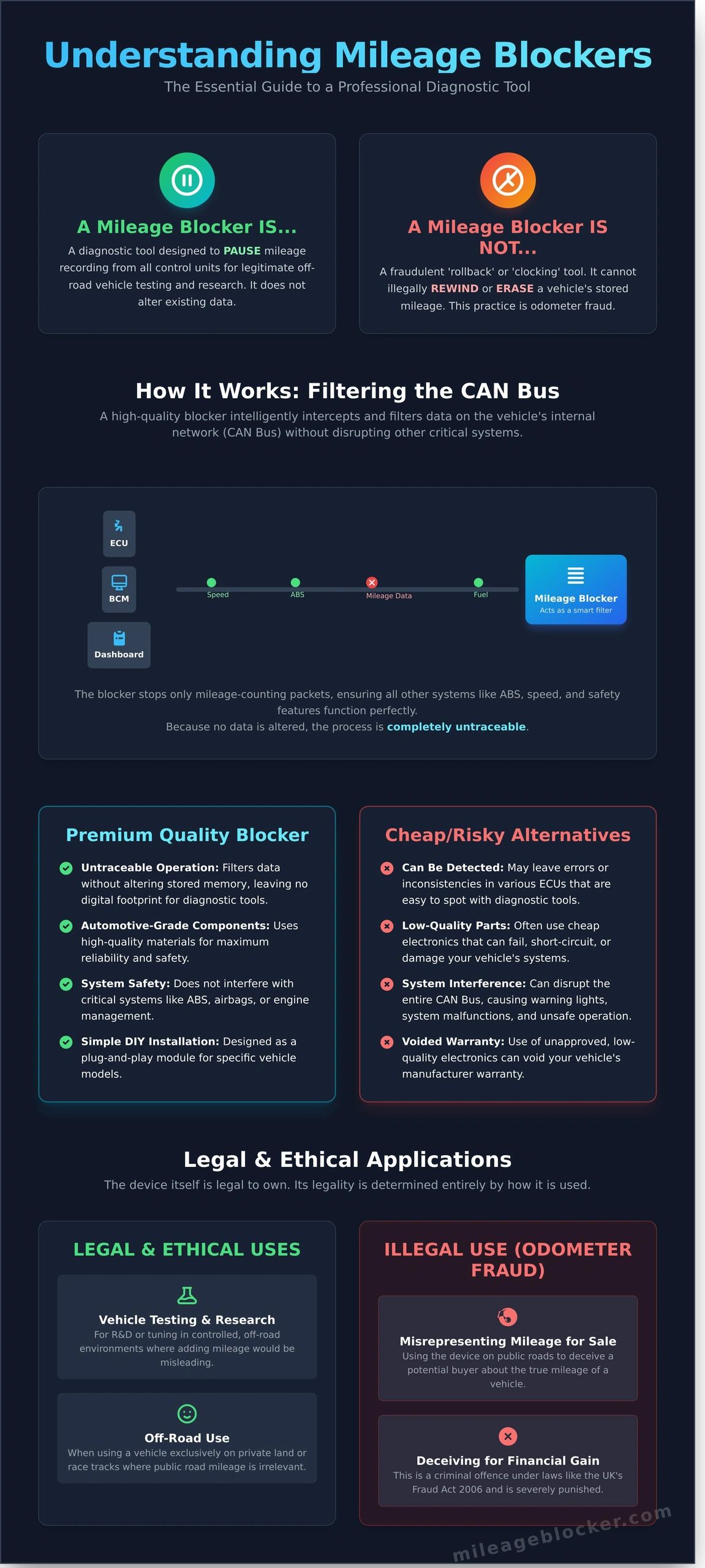
A mileage blocker is a small electronic device designed to stop a vehicle’s odometer and control units from recording new mileage. Its primary, intended purpose is for vehicle testing, research, and development in off-road or controlled environments. It is crucial to understand what it is not: it is not a tool for illegally altering or erasing a vehicle's history. Think of it like pausing a stopwatch-it stops the count from going up, but it cannot turn back time.
For a visual explanation of how these devices function, the following video provides a clear overview:
The Core Function: Halting Mileage Recording
The device works by intercepting data signals transmitted on the vehicle's CAN-Bus system before they reach the odometer and various ECU modules. When activated, it effectively filters out the mileage-counting pulses, so the digital dashboard displays a static value. The effect is only active while the device is turned on; once deactivated, the car resumes recording mileage as normal. This tool is also commonly known as a mileage stopper or odometer freezer.
Mileage Blocker vs. Odometer Correction/Rollback Tools
It is essential to distinguish a blocker from odometer correction or 'rollback' tools. Rollback devices are designed to illegally access and alter the mileage data stored permanently in a vehicle's electronic control units (ECUs). This practice, known as Odometer fraud, is a serious offence in the United Kingdom and can lead to severe penalties. In contrast, a blocker does not change any stored data; it simply prevents new data from being written. Because no existing information is altered, its use leaves no digital footprint and is untraceable by diagnostic tools. Correction tools, however, often leave behind evidence of tampering in other modules. Regardless of the method, selling a vehicle without disclosing its true mileage is illegal.
How Does a Mileage Blocker Actually Work?
To understand how a mileage blocker operates, you first need to understand your vehicle's internal communication system. Unlike older cars with simple mechanical odometers, modern vehicles rely on a complex digital network. The device intelligently interacts with this network to control mileage recording without leaving a digital footprint.
Understanding Your Car's Data Network (CAN Bus)
Think of the Controller Area Network (CAN bus) as your car's central nervous system. It's a sophisticated network that allows various electronic control units (ECUs) to communicate with each other. Everything from your engine management and transmission to your infotainment system sends data packets across this network. Mileage data is just one of many signals constantly being transmitted and recorded, often in multiple modules like the Engine Control Unit (ECU), Body Control Module (BCM), and even the gearbox memory.
The 'Filtering' Process: Why It's Untraceable
A mileage blocker acts as a smart filter on the CAN bus. When activated for testing or off-road use, it intercepts and filters out the specific data packets responsible for counting distance travelled. Crucially, it does not delete, roll back, or rewrite any existing mileage data stored in the car's memory modules. This preventative filtering process is the key difference from fraudulent odometer correction tools. Because no data is altered, the process is untraceable by dealer diagnostic tools. This is fundamentally different from the illegal practices described by sources like the NHTSA on Odometer Fraud, which involve altering existing records.
Impact on Other Vehicle Systems
Premium quality blockers are engineered with safety and reliability as the top priority. They are programmed specifically for each vehicle model, ensuring they only interact with the mileage data. All other critical information-such as speed readings on your dashboard, ABS signals, airbag status, and fuel consumption-is allowed to pass through the network without interference. This is why using genuine automotive-grade components is essential. In contrast, cheap, universal devices can disrupt the entire CAN bus, leading to system errors, warning lights, and potentially unsafe operation.
Legal and Ethical Uses: When is it Okay to Stop Mileage?
The legality of a mileage blocker is determined entirely by its application, not its existence. While owning such a device is perfectly legal, its use is strictly regulated. The primary and lawful purpose of these modules is for vehicle testing, tuning, and development in controlled, off-road environments where mileage accumulation would be misleading.
It is crucial to distinguish this from illegal activity. Using any device to misrepresent a vehicle's mileage during a sale is considered odometer fraud. This is a serious criminal offence under the UK's Fraud Act 2006, intended to deceive a buyer for financial gain. The global consensus on this is clear, as detailed by authorities like the NHTSA on odometer fraud, which outlines the severe consequences of such deception.
Vehicle Testing and Tuning Scenarios
In professional automotive settings, stopping the odometer is often necessary for accurate diagnostics and development. This ensures that test-related mileage does not falsely inflate the vehicle's road-use history. Legitimate uses include:
- Dynamometer (Dyno) Testing: When tuning an engine or testing performance on a rolling road, a vehicle can accumulate significant mileage while stationary. A stopper prevents these "false miles" from being recorded.
- ECU and Software Development: Programmers and engineers testing new electronic control unit (ECU) software or vehicle functions must run systems for extended periods, which is not reflective of actual driving.
- Post-Repair Verification: Mechanics can use the device on private property to test repairs extensively without adding unnecessary miles to a customer's odometer.
Off-Road and Track Day Use
A vehicle's odometer is intended to measure wear and tear from use on public roads. Mileage accumulated in other environments, such as on a private race track or during a car show, doesn't represent typical usage. Activating a mileage blocker in these specific off-road situations helps preserve the vehicle's value by ensuring the odometer accurately reflects its on-road history.
Important Legal Disclaimer
We must state this unequivocally: using a mileage blocker on public roads is illegal in the United Kingdom and most other countries. The device should only be activated in controlled, off-road environments for testing purposes. The responsibility for using the device lawfully rests entirely with the user. Always check your local and national laws before use. For more specific questions, please consult our detailed Mileage Blocker FAQ.
Key Features of a High-Quality Mileage Blocker
Once you understand what a mileage blocker does, the next step is to recognise the vast difference in quality on the market. Not all devices are created equal, and opting for a cheap, poorly made alternative can lead to significant electronic issues, dashboard errors, and even permanent damage to your vehicle's control modules. A high-quality mileage blocker is an investment in your vehicle's integrity.
To make an informed and safe choice, focus on three pillars of quality: the physical components, the sophistication of the software, and overall usability.
Premium Components and Build Quality
The foundation of a reliable device is its physical construction. Look for modules that use genuine, automotive-grade plug-and-play connectors. This ensures a perfect fit without the need to cut or splice wires, preserving your vehicle's warranty and electrical system. Furthermore, the casing and internal components must be made from heat-resistant materials to withstand the high temperatures behind a car's dashboard, ensuring both durability and safety. Reputable suppliers develop and test their hardware in-house, maintaining strict quality control from start to finish.
The Importance of an 'Untraceable' Effect
The most critical feature of a premium mileage blocker is its software. A truly untraceable effect means the mileage-stopping process is not recorded in any of the vehicle's electronic control units (ECUs) or EEPROM memories. This is only possible with software that is specifically programmed for your car's exact model, year, and specification. Avoid generic, 'one-size-fits-all' devices, as these often cause conflicts within the CAN-Bus or FlexRay systems, leaving behind digital footprints and error codes that are easily discovered during a diagnostic scan.
Ease of Use and Control
A superior device should integrate seamlessly with your vehicle's existing controls. Most high-end blockers are activated and deactivated using a sequence of steering wheel buttons (such as the 'RES' or 'OK' button), making operation simple and discreet. Some advanced models may also offer control via a dedicated mobile app for added convenience. A key sign of a well-designed product is clear visual confirmation, such as a flashing hazard light or a specific icon appearing on the dashboard to indicate when the blocker is active.
Ensuring your device has these features is crucial for safe and effective operation. Reputable suppliers, such as those found at mileageblocker.com, focus on these quality pillars to deliver a reliable product for testing and off-road use.
Installation and Compatibility: What You Need to Know
One of the most common questions we receive is, "Can I install a mileage blocker myself?" For most vehicle owners, the answer is a definitive yes. Our modules are engineered with premium-quality, original plug connectors, specifically designed for a straightforward, plug-and-play installation process. This section outlines everything you need to know about compatibility and fitting, whether you choose a DIY approach or professional assistance.
Checking Vehicle Compatibility
Before purchasing, it is absolutely critical to ensure the device is compatible with your vehicle. Modern cars utilise complex electronic systems like the CAN-Bus, meaning a generic device will not work and could potentially cause issues. The mileage blocker you choose must precisely match your car’s make, model, and year of manufacture to guarantee flawless operation. You can use our vehicle finder tool to select the exact module for your car. For example, you can find specific modules for all modern Honda models and many others.
The DIY Installation Process
Our kits are designed for simplicity, allowing most users to complete the installation in under 30 minutes without specialist tools. The process requires no permanent modifications to your vehicle's wiring.
- Access the Port: You will typically need to remove a trim panel behind the instrument cluster or near the OBD port to access the correct connector.
- Disconnect the Original Plug: Carefully unplug the existing connector from its socket.
- Plug in the Module: Simply plug the mileage blocker in line, connecting it between the original cable and the port.
Crucially, no wire cutting, splicing, or soldering is required. This ensures the process is completely reversible and leaves no trace on the vehicle’s systems once the module is removed, protecting your manufacturer's warranty.
When to Choose Professional Fitting
We understand that not everyone is comfortable working on their vehicle's electronics. If you prefer the peace of mind that comes with an expert installation, a professional fitting is an excellent option. This ensures the device is installed correctly, safely, and efficiently by a trained technician, saving you time and guaranteeing perfect function from the start. To arrange an appointment or get a quote, learn more about our professional installation service.
The Smart Solution for Mileage Control
Understanding the function of a mileage blocker is the first step. As we've covered, this device is designed to halt the mileage recording process across all vehicle control units, intended for legitimate purposes such as off-road vehicle testing. It is a preventative tool, fundamentally different from illegal mileage correction devices. When selecting a module, prioritising quality is essential to ensure reliability and proper function within your vehicle's complex electronic systems.
Our devices offer an untraceable effect, undetectable even with advanced diagnostic tools. Built with premium quality, genuine automotive-grade components, they guarantee performance and durability. Installation is straightforward, with a simple DIY process that requires no wire cutting, preserving your vehicle's integrity.
Equip your vehicle with the market-leading tool for testing and analysis. Shop for a premium Mileage Blocker for your vehicle now.
Frequently Asked Questions About Mileage Blockers
Will a mileage blocker affect my car's warranty?
A premium quality mileage blocker will not void your vehicle's warranty. Our modules use genuine plug-and-play connectors, which means there is no need to cut or solder any wires during installation. Since the device can be removed without leaving any physical trace of modification, the manufacturer's warranty on your vehicle's components remains fully intact. This ensures a completely reversible and non-invasive solution for your testing needs.
Can a mileage blocker be detected during a service or diagnostic check?
No, a high-quality mileage blocker is designed to be completely untraceable. It filters mileage data from all relevant control units and ECU modules in real-time, preventing the data from being stored in the vehicle's memory. Because no discrepancies are recorded, even the most advanced dealership diagnostic tools cannot detect that the device has been used. This ensures total discretion during routine servicing and maintenance checks.
How do I turn the mileage blocker on and off?
Our mileage blockers are controlled easily and discreetly using your vehicle's existing steering wheel buttons. There are no extra switches or remotes required, preserving the factory look of your car's interior. A specific sequence of button presses, which will be detailed in your installation guide, allows you to activate and deactivate the module seamlessly whenever needed. The device will retain your last selected setting even after the engine is turned off.
Is it legal to own a mileage blocker in the UK?
Yes, it is legal to purchase and own a mileage blocker in the United Kingdom. The intended and legal purpose for these devices is for vehicle testing, tuning, or off-road use where you need to prevent mileage from accumulating. However, it is illegal to use the device to deceive a potential buyer by misrepresenting a vehicle's true mileage during a sale. The module should be used responsibly and for its intended diagnostic purposes only.
Does the mileage 'catch up' after the device is removed or turned off?
No, the mileage does not 'catch up' or jump forward. A mileage blocker doesn't just hide the odometer display; it completely stops the mileage data from being recorded in all of the vehicle’s electronic control units (ECUs). When you deactivate or remove the module, the odometer will simply resume counting from the exact point where it was paused. There is no sudden addition of the miles driven while the device was active.
Will a mileage blocker work on an electric or hybrid vehicle?
Absolutely. Our premium mileage blockers are developed with advanced software specifically programmed for the complex electronic systems in modern electric (EV) and hybrid vehicles. They interface correctly with the unique CAN-Bus and FlexRay communication protocols used in these cars. This ensures flawless performance, stopping mileage recording without interfering with the battery management system or other critical vehicle functions, and without generating any dashboard errors.
What is the difference between a mileage freezer and a mileage stopper?
There is no functional difference between a mileage freezer, a mileage stopper, and a mileage blocker. These are simply different marketing terms used to describe the same device. All these terms refer to an electronic module that connects to the vehicle's CAN-Bus system to filter and halt the recording of mileage data across all memory modules. Regardless of the name, the core purpose and technology are identical: to prevent mileage accumulation for testing purposes.
About the author
Pav TomaszeviczChief Editor, MileageBlocker.com
Pav is Chief Editor at MileageBlocker.com and works with the MileageBlocker Technical Team to publish practical information about vehicle compatibility, CAN/CAN-FD electronics, installation and MileageBlocker products.
View author profile →