
What Happens When You Remove a Mileage Blocker? The Facts
The decision to remove a mileage blocker after testing or off-road use often comes with questions and uncertainty. Will the odometer suddenly jump to its tru...
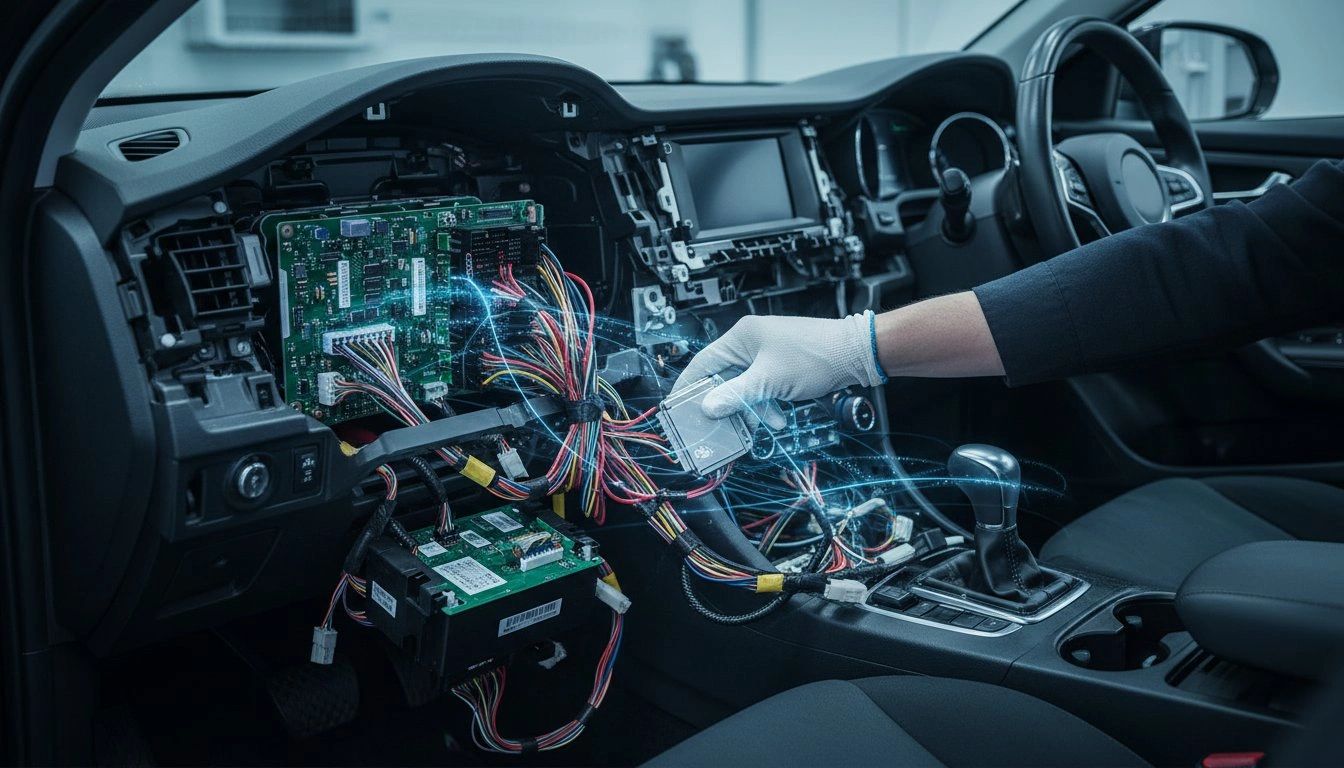
The decision to remove a mileage blocker after testing or off-road use often comes with questions and uncertainty. Will the odometer suddenly jump to its true, unrecorded value? Will removing the module trigger a cascade of dashboard error codes or leave a digital footprint in the vehicle's ECU? Understanding exactly what happens when you remove mileage blocker technology is crucial for ensuring a smooth transition back to standard operation. The fear of creating a permanent, detectable issue is a significant concern for any discerning vehicle owner.
The outcome of this process depends entirely on the quality of the device you installed. While inferior products can cause unpredictable behaviour, a premium quality mileage stopper is engineered for a seamless and untraceable effect. In this technical guide, we will detail the precise process of removing a high-quality device. You will discover why our modules leave no trace, how they prevent data conflicts within the CAN-Bus system, and the simple steps to safely restore your vehicle's normal mileage recording functions without any unwanted surprises.
Key Takeaways
- Removing a premium mileage blocker is a straightforward process that restores normal mileage tracking without causing the odometer reading to jump or change unexpectedly.
- Learn exactly what happens when you remove mileage blocker; your vehicle simply resumes normal mileage counting from its last recorded point without any sudden increases.
- Understand why a premium device is crucial for modern vehicles, as mileage data is recorded in multiple control units (ECUs) beyond just the dashboard display.
- Discover the simple, plug-and-play removal process and learn why you may still need to check systems like service interval indicators after deactivation.
The Direct Answer: Reverting to Normal Mileage Tracking
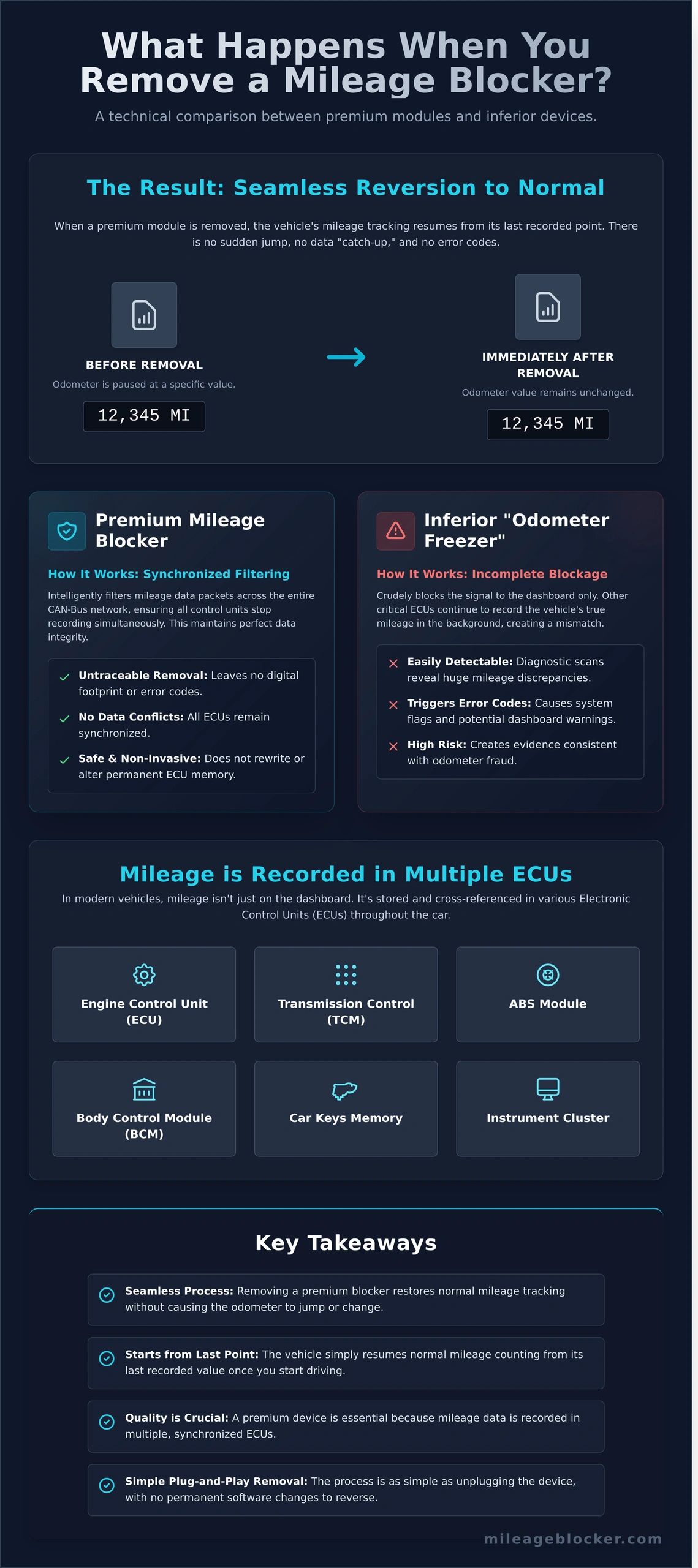
For anyone asking, "what happens when you remove mileage blocker?" the answer is refreshingly simple and free of complications. When a premium-quality module is properly uninstalled, your vehicle’s mileage recording resumes precisely from the point it was paused. Contrary to common misconceptions, the odometer reading will not spontaneously jump, increase, or attempt to "catch up" to an estimated true value. The entire process is engineered to be seamless and completely discreet, triggering absolutely no error codes, warning lights, or diagnostic flags within the vehicle's sensitive electronic systems. Your car immediately and safely reverts to its standard factory operation for tracking distance.
To better understand this concept and see a practical demonstration of a vehicle with a removed blocker, watch this helpful video:
What You'll See on the Dashboard
Upon removing the mileage blocker, a quick glance at your dashboard will reveal that nothing has changed. The mileage displayed on your odometer will remain exactly as it was when the device was last active. The number does not adjust itself. Only when you begin to drive the vehicle will the odometer start to accumulate new miles, counting upwards from that last recorded value. Understanding the basics of what an odometer is helps to clarify this; it is fundamentally a digital counter. Our module pauses the input to that counter, and removing it simply allows new input to resume. The transition is invisible, with no flicker, delay, or other indication on the display.
Why High-Quality Devices Ensure a Smooth Transition
This seamless reversion is a direct result of superior engineering and a non-invasive design philosophy. Unlike illegal "mileage correction tools" that attempt to hack and rewrite permanent data, our mileage blockers function as intelligent, isolated modules. They are designed as simple plug-and-play devices that filter data packets on the vehicle’s Controller Area Network (CAN bus). This means they intercept and stop mileage data from being written to various ECU modules and the permanent EEPROM memory. Crucially, they do not alter, delete, or corrupt any existing stored information. Because no permanent software is modified, removing the device is as safe as unplugging any other certified automotive component, guaranteeing a clean and untraceable return to standard functionality.
The Technology Explained: Why Quality Makes a Difference
Modern vehicles are far more complex than their predecessors. The days of a single, mechanical odometer are long gone. Today, mileage data is recorded and cross-referenced across multiple electronic control units (ECUs) within the car's network. This decentralised system is designed for redundancy and security, but it also creates a significant challenge for any device intended to halt mileage recording for legitimate testing purposes.
The mileage you see on your dashboard is just one data point. The same, or similar, information is often stored in:
- The Engine Control Unit (ECU)
- The Transmission Control Module (TCM)
- The ABS Module
- The Body Control Module (BCM)
- Even in the memory of your car keys
This is precisely why the quality and sophistication of a mileage blocker are paramount. A cheap, poorly designed device can create more problems than it solves.
How a Premium Mileage Blocker Works
A premium mileage blocker operates by intelligently filtering data packets across the vehicle's entire Controller Area Network (CAN bus). Instead of crudely blocking a single signal, it ensures that all relevant control units stop receiving mileage data simultaneously. This synchronised halt prevents any module from recording conflicting information, maintaining perfect data integrity across the system. No desynchronization occurs, which is the key to an untraceable effect.
The Dangers of Inferior 'Odometer Freezers'
In contrast, low-quality devices often only stop the signal reaching the instrument cluster (the dashboard). While the odometer display stops counting, other critical ECUs in the background continue to log the vehicle's true mileage. When such a device is removed, a routine diagnostic scan will instantly reveal a major discrepancy between modules. This is a significant red flag for technicians and can lead to serious legal implications, as it creates evidence consistent with Odometer Fraud.
Is the Removal Process Traceable?
This is the critical question. A professionally engineered mileage blocker does not alter or reprogram any of your vehicle's software. It functions as a plug-and-play filter that intercepts and modifies data signals in real-time without writing any permanent changes to any ECU's memory. Therefore, what happens when you remove mileage blocker of a premium quality is simple: the vehicle returns to its factory state. There is no digital footprint, no error codes, and no trace left behind for diagnostic tools to detect.
Beyond the Odometer: Impact on Service Indicators & Diagnostics
When you deactivate and remove a mileage blocker, the main odometer reading is the least of your concerns-it simply continues counting from where it was paused. The more complex question of what happens when you remove mileage blocker hardware involves the various electronic control units (ECUs) that also track distance for their own purposes. A premium quality device accounts for these systems, but understanding their function is key to ensuring your vehicle operates as expected post-removal.
Modern vehicles are intricate networks, and a mileage stopper must do more than just halt the dashboard display. It must pause the recording of distance data across the entire CAN-Bus system to prevent conflicts and error codes.
Service Interval Counters (e.g., ASSYST, CBS)
Many modern cars, particularly from brands like Mercedes-Benz (ASSYST) and BMW (Condition Based Servicing - CBS), use sophisticated algorithms to calculate when maintenance is due. These systems rely heavily on mileage data stored within specific modules. A high-quality mileage blocker pauses these internal counters simultaneously with the odometer. Upon removal, they resume counting from their exact paused state, ensuring service reminders remain synchronised with the vehicle's displayed mileage.
What Diagnostic Tools Can See
This is where the difference between a premium mileage blocker and a crude 'mileage correction tool' becomes evident. After removing a properly engineered blocker, professional diagnostic tools will find no discrepancies. The mileage value will be consistent across all relevant ECUs, from the engine control module to the transmission and ABS. This creates an untraceable effect because no conflicting data points are logged. This data integrity is critical, as tampering is heavily scrutinised. For instance, the NHTSA official interpretation on mileage blockers confirms their illegal status for on-road use in certain jurisdictions, highlighting the importance of data consistency during vehicle inspections.
Trip Computers and Fuel Economy Data
Onboard systems that provide driver information are also affected. When the mileage blocker is active, the following occurs:
- Trip A & Trip B: These user-resettable trip meters will stop accumulating distance.
- Fuel Economy: Average consumption figures (e.g., MPG or L/100km) will freeze, as their calculation depends on distance travelled.
Once the device is removed, these functions return to normal. The trip meters will resume counting, and the fuel economy data will begin to adjust and normalise as you continue to drive, reflecting your current driving habits.
A Practical Guide to Removing Your Mileage Blocker
When your vehicle testing or off-road use is complete, removing your mileage blocker is a direct and non-invasive process. The procedure is simply the reverse of the installation, requiring no special programming or complex diagnostic equipment. Understanding what happens when you remove mileage blocker modules starts with this physical process, which seamlessly restores the vehicle's original factory connections without leaving any trace of its prior installation.
Crucially, always ensure the vehicle's ignition is completely switched off and the key is removed before you begin. This vital safety precaution protects the sensitive electronic control units (ECUs) and the CAN-Bus system from potential electrical damage, ensuring a safe and successful removal every time.
Step 1: Accessing the Device
Our mileage blockers are engineered for discreet placement and are typically installed behind the vehicle's instrument cluster. To access the module, you will need to carefully detach the surrounding dashboard trim and remove any screws securing the cluster. The exact procedure varies by make and model, but the process is designed to be straightforward. For detailed, vehicle-specific instructions and diagrams, please refer to our comprehensive installation guides, which you can simply follow in reverse.
Step 2: Disconnecting the Blocker
The mileage blocker functions as a plug-and-play intermediary, utilising genuine automotive-grade connectors that match your vehicle’s factory parts. You will see the module connected between the main wiring harness and the back of the instrument cluster. The removal involves unplugging the blocker from both the male and female connectors. Once the module is free, take the vehicle’s original wiring plug and reconnect it directly back into its corresponding socket on the instrument cluster. The connection will click securely into place, restoring the original circuit.
Step 3: Final Checks
With the original wiring fully restored, the final step is to verify that everything is in perfect working order. This confirms the complete answer to what happens when you remove mileage blocker hardware: the vehicle’s electronic systems return to their standard operational state, just as they were from the factory.
- Carefully reassemble the instrument cluster and all dashboard trim pieces you removed, ensuring a secure fit.
- Insert the key and turn the vehicle’s ignition on. Check that the dashboard and infotainment system power up correctly.
- Confirm that all gauges, warning lights, and the digital display are functioning as expected.
Should you have any questions during the process, our dedicated support team is ready to provide expert assistance. You can reach us through our contact page for prompt and professional help.
Found an Unknown Blocker? Here’s What to Do
Purchasing a used vehicle in the UK can sometimes come with surprises. If you discover a small electronic module connected behind your dashboard, you may have found a previously installed mileage blocker. Before you attempt to remove it, it’s crucial to understand that not all blockers are created equal. The quality of the device will determine the consequences of its removal and help you avoid significant data discrepancies.
Identifying the Device
The first step is to carefully inspect the module without disconnecting it. A premium-quality device is typically easy to identify, whereas a cheap copy often reveals itself through poor craftsmanship. Look for these key indicators:
- Branding and Build: Reputable manufacturers will have clear branding, model numbers, or serial numbers on the casing. The casing itself will feel robust and professionally made, not like a generic plastic box.
- Connectors and Wiring: High-quality modules use genuine, automotive-grade plug-and-play connectors that match your vehicle’s own. Poorly made devices often feature shoddy wiring, excessive electrical tape, or ill-fitting generic connectors that can damage your car’s systems.
Assessing the Risks of Removal
Understanding what happens when you remove mileage blocker hardware is directly linked to its origin. If the device is a low-quality copy, it may have been storing mileage data within its own memory. Upon removal, this stored mileage can suddenly sync with the vehicle’s electronic control units (ECUs), causing an immediate and irreversible jump in the odometer reading. This not only devalues the vehicle but can also create a service history conflict, flagging the car as potentially clocked.
In contrast, premium mileage blockers from trusted suppliers do not store mileage data. When you remove a high-quality unit, the odometer simply continues recording from its last known point, ensuring a seamless and discrepancy-free transition.
When to Seek Professional Advice
If you cannot confidently identify the device or are unsure about its quality, the safest course of action is to proceed with caution. We strongly recommend consulting a trusted automotive electronics specialist or a reputable garage. They have the diagnostic tools and experience to safely assess and remove the unit without risking damage to your vehicle's sensitive systems.
For more information on common concerns and the technical differences between modules, please review our detailed Mileage Blocker FAQ. To ensure untraceable performance and reliable operation, always source your components from a proven developer like mileageblocker.com.
Your Vehicle's Integrity: The Final Verdict on Blocker Removal
Ultimately, the answer to what happens when you remove mileage blocker technology depends entirely on its quality. A premium, well-engineered device will allow your vehicle’s systems to revert to normal tracking instantly, leaving no diagnostic trace. In contrast, inferior modules can cause persistent errors in the ECU, compromising your vehicle's electronic integrity even after they are gone.
For vehicle testing or dedicated off-road use, choosing a superior tool is non-negotiable. Our blockers are built with Genuine Automotive-Grade Components for flawless integration. The simple plug-and-play design ensures effortless installation and removal, guaranteeing a completely Untraceable Effect After Removal. Protect your vehicle’s complex systems with a solution designed for discreet and reliable performance.
Take control with confidence. Shop for a Premium, Untraceable Mileage Blocker for Your Vehicle and experience the difference that quality engineering makes.
Frequently Asked Questions
Will removing a mileage blocker affect my car's warranty?
Removing a premium quality mileage blocker is a non-invasive process. Our modules use genuine plug-in connectors, meaning there is no cutting or soldering of wires. However, any aftermarket modification can potentially give a manufacturer grounds to void a warranty on related electronic systems, such as the instrument cluster or ECU, if discovered. It is crucial to understand your vehicle's specific warranty terms and the legal framework in the UK before installing or removing any device used for testing purposes.
Can a dealership's diagnostic tool tell if a mileage blocker was removed?
A premium mileage blocker is engineered to be untraceable. Unlike inferior products, our devices do not leave error codes or digital footprints in the vehicle's ECU or other control modules. Once the blocker is properly removed, a dealership's standard diagnostic tools will not be able to detect that a device was ever installed. The mileage will simply resume counting from its last recorded point, with no inconsistencies stored in the car's memory systems, ensuring complete discretion.
Does the mileage blocker have to be removed for a software update?
Yes, we strongly recommend removing the mileage blocker before any dealership service, particularly for software updates to the vehicle's control units (ECUs). The blocker actively filters data on the CAN-Bus system, which could potentially interfere with the diagnostic communication required for a successful software flash. To ensure the update installs correctly and to avoid any potential conflicts, the device should be uninstalled, returning the system to its original factory state before the service appointment.
What is the difference between removing a blocker and using a mileage correction tool?
The key difference lies in their function. Removing a mileage blocker simply deactivates a filtering process. What happens when you remove mileage blocker is that the odometer resumes counting mileage from its last recorded point; it does not alter any previously stored data. In contrast, a mileage correction tool, or "rollback" tool, is used to illegally reprogram and change the existing mileage value stored in the vehicle's EEPROM memories. Our devices are for testing purposes and do not perform rollbacks.
Do I need to do anything after removing the blocker to 'reset' the car?
No special reset procedure is required. The process of removing the module is designed to be seamless. Once the device is unplugged and the original connections are restored, the vehicle's systems will function exactly as they did from the factory. The odometer and all related systems will immediately begin recording new mileage accurately without any need for user intervention, software resets, or recalibration. The car's electronics will operate as if the module was never there.
About the author
Pav TomaszeviczChief Editor, MileageBlocker.com
Pav is Chief Editor at MileageBlocker.com and works with the MileageBlocker Technical Team to publish practical information about vehicle compatibility, CAN/CAN-FD electronics, installation and MileageBlocker products.
View author profile →