How to Verify if a Ferrari Uses a Mileage Blocker: A Technical Audit Guide
Learn how to verify if a Ferrari uses a mileage blocker with our expert guide. Uncover hidden miles by auditing ECU data and TCU timers to protect your inves...
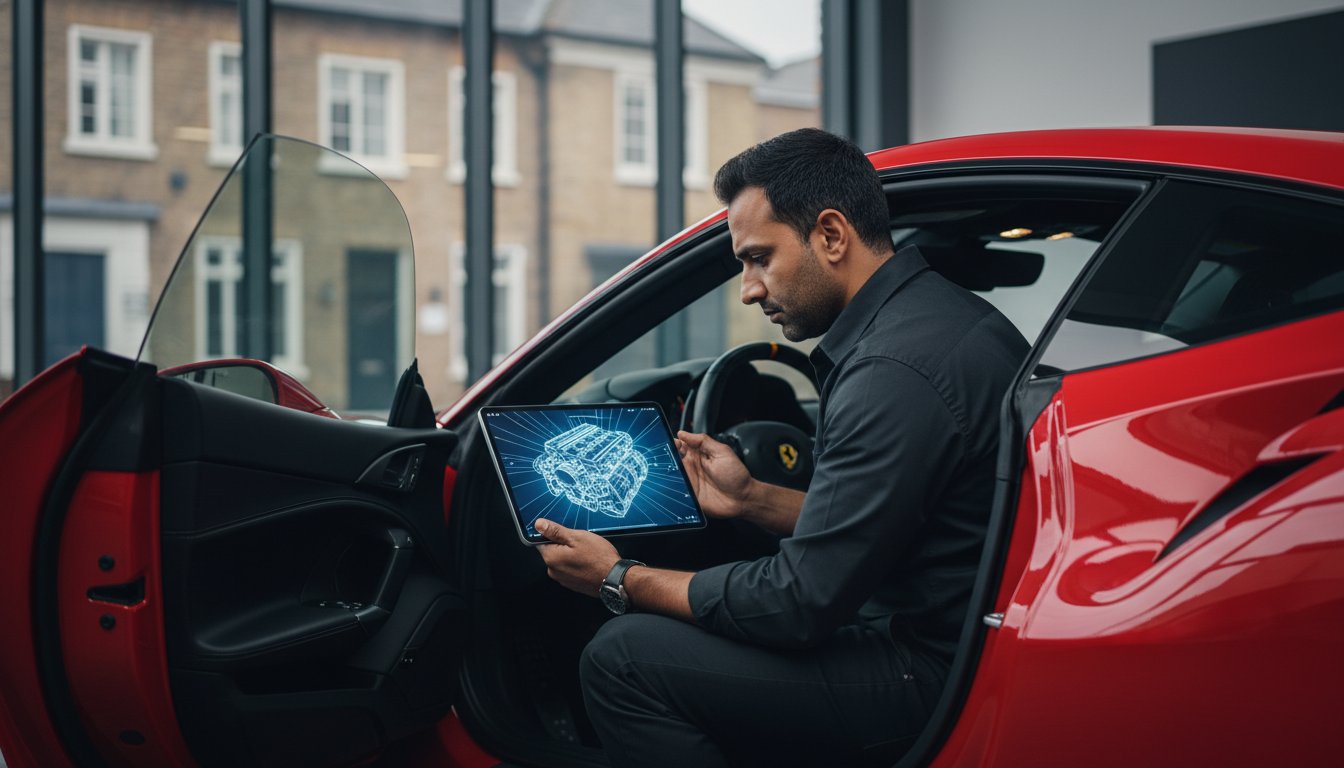
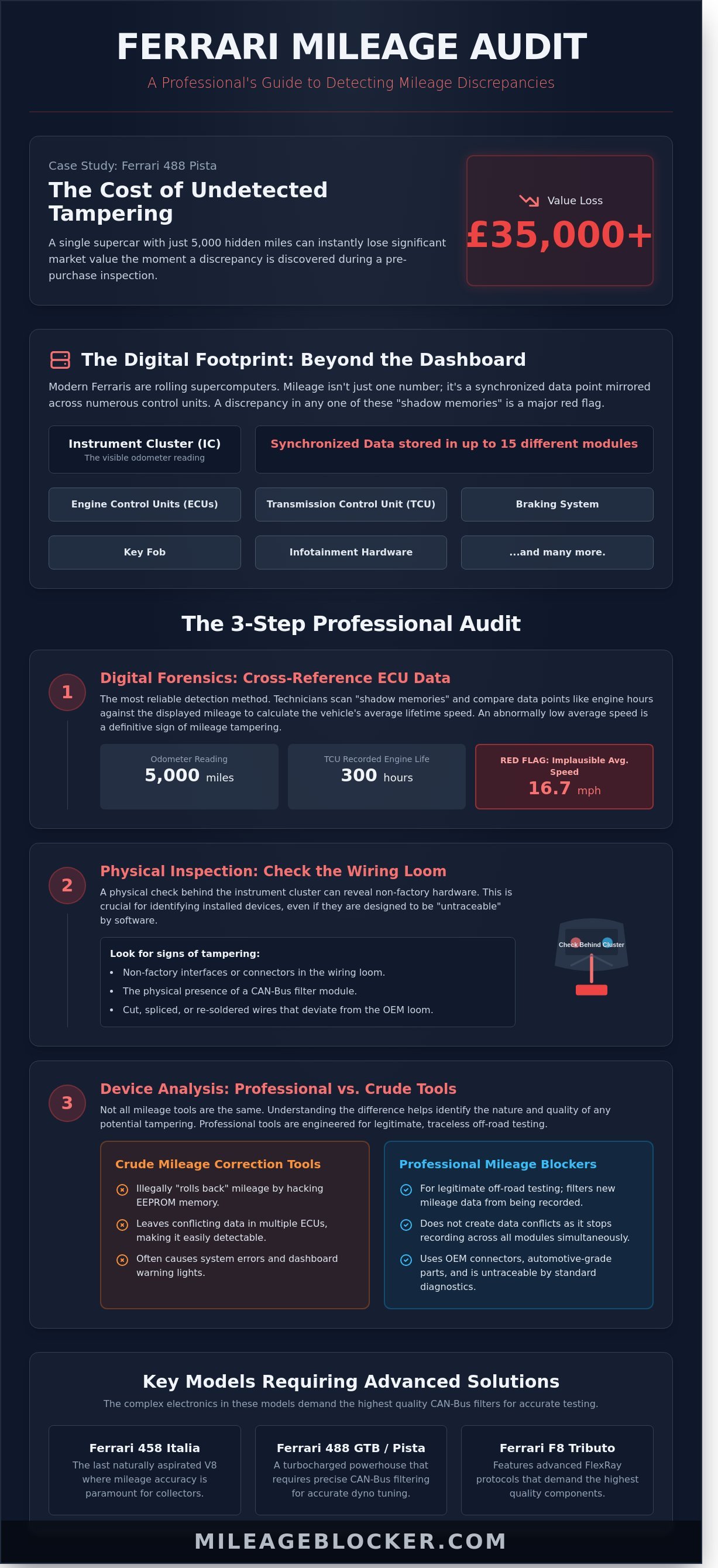
A single Ferrari 488 Pista with 5,000 hidden miles can lose over £35,000 in market value the moment a discrepancy is surfaced during a pre-purchase inspection. You likely already know that for collectors and enthusiasts, the integrity of a supercar's history is non-negotiable. It's a valid concern when data from 2023 indicates that mileage discrepancies are becoming increasingly difficult to detect without specialist knowledge. This technical audit guide teaches you exactly how to verify if a Ferrari uses a mileage blocker by scrutinising the relationship between CAN-Bus data, ECU modules, and TCU timers.
We'll provide a professional checklist to identify discrepancies between stored mileage and engine hours recorded in the gearbox software. You'll gain the confidence to audit physical looms for signs of tampering or to ensure your own Carcode Mileage Blockers from MileageBlocker.com are functioning as intended for legitimate off-road testing. We'll break down why modern Ferrari electronics require smart solutions and how to spot the difference between a professional setup and a crude mileage correction tool through a detailed review of EEPROM memories.
Key Takeaways
- Understand the complex digital architecture of modern Ferraris and how mileage data is synchronised across the Instrument Cluster and Engine Control Units.
- Master the professional audit techniques for how to verify if the Ferrari use mileage blocker by cross-referencing TCU life timers and calculating average lifetime speeds.
- Learn how to perform a physical inspection of the wiring loom behind the instrument binnacle to identify the presence of hardware filters or CAN-Bus modules.
- Identify the specific functional indicators and speedometer behaviours that distinguish premium Carcode Mileage Blockers from inferior odometer stoppers.
- Discover why high-performance models like the 488 or F8 Tributo require the elite engineering found at MileageBlocker.com for secure, untraceable use during off-road testing.
What is a Ferrari Mileage Blocker and How Does it Function?
A Ferrari mileage blocker is a specialised hardware module, technically known as a CAN-Bus filter, engineered specifically for high-performance Italian supercars. Unlike basic diagnostic tools, these devices intercept the digital signals sent from the vehicle sensors to the instrument cluster and various Engine Control Units (ECUs). For owners of a Ferrari 458, 488, or the 710-bhp F8 Tributo, these devices provide a way to halt mileage accumulation during specific controlled scenarios. Carcode Mileage Blockers are designed to be removable and leave no digital footprint; they're the preferred choice for professional testing environments where accuracy and discretion are required.
It's vital to distinguish these modules from illegal Odometer Fraud devices. While "mileage correction" tools involve hacking into the EEPROM memory to change a stored value, a mileage blocker prevents the value from increasing in the first place. Since 2018, the UK market has seen an increase in demand for these tools for off-road evaluation. Because modern Ferraris store mileage data in up to 15 different modules, including the gearbox and key fob, a standard correction tool often fails. Understanding how to verify if the Ferrari use mileage blocker is a critical skill for technicians performing forensic ECU analysis, as these devices are designed to be nearly impossible to detect through standard OBD-II scans.
The application of these filters is common across several iconic models:
- Ferrari 458 Italia: The last naturally aspirated V8 model, where mileage accuracy is paramount for collectors.
- Ferrari 488 GTB: A turbocharged powerhouse that requires precise CAN-Bus filtering for accurate testing.
- Ferrari F8 Tributo: Featuring advanced electronics that demand the highest quality automotive-grade components.
Buyers often ask how to verify if the Ferrari use mileage blocker before committing to a £200,000 investment. This verification requires a deep dive into the vehicle's service history and a physical inspection of the wiring behind the dashboard to look for any non-factory interfaces.
The Purpose of Mileage Blockers in Supercar Testing
Manufacturers and independent tuners utilise these blockers during rigorous dyno testing sessions where wheels spin at high speeds without the car moving on a road. Without a blocker, a single 4-hour tuning session could add 300 "ghost" miles to the odometer, unnecessarily depreciating the vehicle's market value. During non-road legal track sessions at circuits like Silverstone, these devices allow drivers to push the limits of their F8 Tributo without affecting the road-legal service intervals. Most units integrate directly with the Ferrari steering wheel controls, allowing the user to toggle the filter on or off using a specific button combination.
How Carcode Technology Interfaces with Ferrari Systems
Professional-grade hardware from MileageBlocker.com uses original plug-and-play connectors. This ensures no wires are cut or soldered during installation, maintaining the integrity of the Ferrari's complex electrical loom. These devices use automotive-grade components that withstand the high heat generated by a mid-mounted V8 engine, typically rated for temperatures between -40°C and +125°C. Carcode software is specifically programmed to handle the high-speed FlexRay and CAN-Bus protocols used in modern Maranello-built cars. This level of integration ensures that the performance is untraceable during routine diagnostic checks, providing a secure solution for vehicle evaluation and testing.
The Ferrari Digital Architecture: Where Mileage Data is Stored
Modern Ferraris are rolling supercomputers. Since the introduction of the Bosch MED17 system in 2008, mileage is no longer a single value on a dashboard. It's a synchronised data point mirrored across up to 15 different electronic control units (ECUs). When you look at the odometer of an F8 Tributo or an 812 Superfast, you're only seeing the final output of a complex internal dialogue. The instrument cluster (IC) acts as the visual interface, but the actual record of the car's life is buried deep within the transmission control unit, the braking system, and even the infotainment hardware.
Determining how to verify if the Ferrari use mileage blocker requires a deep dive into these sub-systems. A simple odometer reading is just the surface. In a professional diagnostic environment, a technician won't just look at the dash; they'll scan the "shadow memories" where the car stores backup data. If the instrument cluster says 5,000 miles but the gearbox software recorded 12,000 miles of gear shifts, the discrepancy becomes immediately apparent. High-quality Carcode Mileage Blockers are engineered specifically to prevent these digital footprints from clashing during legitimate off-road testing or research.
ECU Bank Synchronisation in Maranello Engines
Ferrari engines, particularly the mid-rear V8s and front-mounted V12s, utilise a dual-bank ECU setup. One unit manages cylinders 1 through 6 in a V12, while the second handles the rest. These units must communicate constantly to ensure performance parity. During this process, mileage data is stamped into the primary engine ECU and the chassis management system. If a low-quality device interrupts the CAN-Bus signal poorly, it creates a data mismatch between these modules. This is a primary factor when experts look at how to verify if the Ferrari use mileage blocker during a pre-purchase inspection. Our premium modules ensure that this synchronisation remains fluid, mimicking legitimate data packets so the vehicle's internal logic remains consistent.
CAN-Bus Filtering vs. Data Alteration
Traditional odometer correction involves rewriting the EEPROM memory chips; this is a permanent and often detectable change. In contrast, a mileage blocker acts as a real-time hardware filter. It sits between the speed sensor and the display unit, intercepting specific data packets before they reach the instrument cluster. While the NHTSA on Odometer Fraud highlights the legal risks of permanent tampering for deceptive purposes, mileage blockers are preferred for testing because they don't alter the car's original software. In newer models like the SF90 Stradale, Ferrari uses FlexRay architecture. This system operates at 10 Mbps, which is 20 times faster than standard CAN-Bus. Managing data on a FlexRay network requires sophisticated hardware that can process these high-speed packets without triggering a "Check Engine" light or a "Manettino" failure on the steering wheel.
Verifying the history of a £250,000 asset involves more than checking the digital display. You need to look at the "hidden" hours. For instance, the ECU tracks total engine run-time in seconds. If a car shows 2,000 miles but has 400 hours of engine operation, the math doesn't add up. Most Ferrari ECUs record an average speed; if this figure is abnormally low, like 5 mph over the car's entire life, it's a red flag. Professional testers use these metrics to ensure the integrity of the vehicle's data during development. If you're looking for a reliable tool for your own vehicle testing, you can browse our full range of supercar modules to find a solution that matches your Ferrari's specific digital architecture.
The Professional Audit: How to Verify Ferrari Mileage Authenticity
Determining how to verify if the Ferrari use mileage blocker involves a multi-point digital audit that goes beyond the visible dashboard. Modern Ferraris, such as the 812 Superfast or the F8 Tributo, are essentially high-speed computers on wheels. They don't just store mileage in the instrument cluster; they distribute data across dozens of electronic control units (ECUs). A professional inspection usually costs between £350 and £600 in the UK, but it's a necessary investment to ensure the vehicle's history is genuine. This process relies on identifying mathematical impossibilities within the car's internal telemetry.
This principle of deep technical verification extends to the growing market for high-performance electric vehicles, where a specialized test baterije električnega vozila is crucial for assessing the health and true value of the battery, the car's most expensive component.
The TCU Life Timer Calculation
The most reliable method for uncovering a mileage freezer involves the Transmission Control Unit (TCU). This module records the total time the ignition has been active in seconds. A technician using a DEIS or Leonardo diagnostic tablet will extract this "Life Timer" figure. For example, if a Ferrari 488 GTB shows 1,440,000 seconds of ignition-on time, this converts to exactly 400 hours. If the odometer shows 4,000 miles, the average lifetime speed is a mere 10 mph.
In the United Kingdom, where combined cycle driving typically averages between 18 mph and 26 mph, a lifetime average below 15 mph (24 kph) is a massive red flag. It suggests the odometer was paused while the car was being driven at high speeds. This type of analysis is a cornerstone of Automotive Digital Forensics, as it highlights discrepancies that a simple dashboard reset cannot hide. It's a mathematical certainty that exposes the truth behind the digital display.
Scanning Multiple Data Banks
Sophisticated diagnostic tools allow experts to look into secondary memory banks that the standard user never sees. When a high-quality device like those from Carcode Mileage Blockers is used, it's designed to manage data flow across the CAN-Bus and FlexRay networks efficiently. However, if a low-quality "mileage stopper" was installed poorly, it often leaves "frozen" logs in the ABS or ESP modules. These modules calculate distance based on wheel rotations, and if their data doesn't match the cluster, the fraud is immediately apparent.
- Secondary ECU Logs: Technicians check for "frozen" mileage entries in the airbag or engine management modules that failed to update during the blocker's operation.
- Communication Errors: Cheap devices often trigger "U-code" diagnostic trouble codes (DTCs) because they interfere with the car's internal handshake protocols.
- Module Discrepancies: A 15% or greater variance between the ABS module's recorded distance and the odometer suggests electronic interference.
The quality of the hardware is the deciding factor in how these systems interact. This is why many owners who use these tools for legitimate off-road testing or laboratory research choose products from MileageBlocker.com. These premium modules use genuine automotive-grade components to prevent the system-wide errors common in budget alternatives. Professional installation is also vital. A clean integration ensures that the device doesn't create physical evidence or electronic "ghost" codes that an authorised Ferrari dealer would flag during a routine service or a Pre-Purchase Inspection (PPI).
Ultimately, knowing how to verify if the Ferrari use mileage blocker requires comparing the "Total Distance" across all modules. If the cluster says 6,000 miles but the service history at a London specialist shows a brake fluid change at 9,000 miles three years ago, the logic fails. You must always cross-reference the digital data with physical service stamps and MOT history to get the full picture of a supercar's life.
Physical Inspection and Functional Testing for Owners
Identifying a hidden module requires a blend of mechanical observation and software interaction. Owners often ask how to verify if the Ferrari use mileage blocker when purchasing from the secondary market; especially given the high stakes of supercar valuations. Because Carcode Mileage Blockers are designed to be discreet, you won't find them by simply looking under the bonnet. Instead, you must focus on the communication hubs where the vehicle processes distance data.
Where to Look: Physical Access Points
In modern Ferraris like the 488 GTB or the 812 Superfast, the primary interface for these devices is the instrument binnacle. Accessing the cluster usually requires the removal of the leather-wrapped trim pieces surrounding the digital displays. You should look for specific signs of entry; for instance, the 3 or 4 mounting screws securing the cluster shouldn't show any "burring" or metal fatigue from a screwdriver. If the factory-applied paint mark on the screw head is misaligned, the binnacle has been removed previously.
Once you gain access to the rear of the unit, inspect the wiring loom. A standard Ferrari setup features a single, direct connection from the main harness to the cluster. A mileage blocker acts as a bridge. If you see a secondary "bridge loom" with two sets of connectors, a device is likely installed. High-quality Carcode Mileage Blockers use genuine automotive-grade plugs that match the factory aesthetics, making them harder to spot than cheap, universal alternatives. Look for any non-factory electrical tape or heat-shrink tubing that doesn't match the tight, braided finish of the original Ferrari wiring.
Functional Behaviour During Testing
If you can't perform a physical teardown, functional testing is your best alternative. These devices operate on the CAN-Bus system to filter out distance telegrams. To check for an active module, you must observe the speedometer's behaviour across different driving modes. In many "stop" configurations, the needle or digital readout will remain at zero even while the car is in motion. In other modes, it might only register 10% or 20% of the actual speed. If you're driving at 60 mph on a private track and the display shows 6 mph, a blocker is active.
- LED Flash Sequences: Many Carcode modules feature a tiny diagnostic LED. When you toggle through modes using steering wheel shortcuts, this LED will flash to confirm the setting. A green flash might indicate the device is transparent, while a red flash confirms the "block" mode is engaged.
- Steering Wheel Shortcuts: Ferrari modules are typically activated by holding specific button combinations. Common triggers include holding the "Res" button for 5 seconds or pressing a sequence on the cruise control stalk. If the instrument cluster lights blink or the needle jumps slightly after a long press, the car has a module installed.
- ADAS Integrity: Modern Ferraris rely on complex driver assistance systems. A poorly programmed blocker can cause errors in the adaptive cruise control or side slip control. Professional-grade units ensure these systems remain 100% functional.
If you're unsure about the specific button combinations for a particular model, you should consult the Mileage Blocker FAQ for model-specific behaviour. Understanding how to verify if the Ferrari use mileage blocker involves knowing that these devices are intended for testing or off-road use only. Always ensure the vehicle's assistance systems, such as the Manettino settings, respond correctly during your test drive, as this confirms the blocker is high-quality and hasn't corrupted the vehicle's FlexRay or CAN-Bus communication.
Looking for a reliable solution for your own vehicle testing? Browse our premium Carcode Mileage Blockers for Ferrari and other supercar brands.
Choosing the Right Solution: Why Quality Matters for Ferrari
Investing in a Ferrari is a significant financial commitment. A 2023 Ferrari F8 Tributo or an SF90 Stradale often costs well over £250,000. Cutting corners with a cheap, unbranded "odometer stopper" from an unverified source puts that entire investment at risk. Low-quality devices frequently use substandard microchips that cannot handle the high-speed data transmission required by a modern supercar's CAN-Bus system. If a device fails while you're driving, it can trigger permanent fault codes in the ECU or even disable critical safety features like electronic stability control. High-performance vehicles require high-performance tools. Carcode Mileage Blockers are the industry benchmark because they're built to the same exacting standards as the cars they support.
This philosophy of safeguarding a high-value asset extends to on-road protection as well. Just as owners seek quality mileage blockers for testing, many also equip their vehicles with advanced laser defense systems. For those seeking top-tier solutions in that area, AL Priority USA is a well-regarded distributor for high-performance vehicles.
Quality isn't just about the hardware. It's about the software ecosystem. Cheap alternatives often stop working after a single dealership service because they can't adapt to Ferrari’s frequent diagnostic software updates. MileageBlocker.com provides a solution that includes lifetime support and regular firmware updates. This ensures your device remains compatible with 2024 models and beyond. Understanding how to verify if the Ferrari use mileage blocker is the first step in protecting your asset, but ensuring you use a premium tool yourself is equally vital for legitimate testing purposes. Our devices are designed to be entirely untraceable once removed, leaving no digital footprint in the EEPROM memories or other vehicle modules.
The Carcode Advantage for Supercar Owners
Ferrari engine bays reach extreme temperatures, often exceeding 100 degrees Celsius during spirited driving. Standard plastic casings on inferior products will warp or melt. Carcode components use heat-resistant, automotive-grade materials designed for these harsh environments. The software is developed in-house to ensure it evolves alongside Ferrari’s complex electronics. This precision prevents the "Christmas tree" dashboard effect where multiple warning lights flash simultaneously due to data interference. To find the specific module for your 296 GTB, Roma, or 812 Superfast, you can start your search with our dedicated lookup tool.
Legal and Ethical Use for Testing and Off-Road
We maintain a strict policy regarding the use of our products. These tools are intended solely for testing, research, or track use on private land. Using any device to misrepresent a vehicle's mileage during a sale is fraudulent and illegal in the United Kingdom. For owners conducting performance benchmarks on a closed circuit, Carcode Mileage Blockers help maintain the integrity of the Ferrari’s electronic warranty by preventing unnecessary data logging during non-road use. If you require bespoke advice for a specific 458 or 488 setup, you should contact us for expert fitting guidance. Our team understands the nuances of Ferrari wiring harnesses and can provide technical support via WhatsApp or email.
Before you conclude your vehicle assessment, use this final checklist to ensure your Ferrari testing remains discreet and safe:
- Verify the Hardware: Ensure the device uses genuine plug-and-play connectors that don't require cutting original wires.
- Check Software Version: Confirm the blocker has the latest 2024 firmware to bypass modern diagnostic scans.
- Test All Modes: A quality blocker should offer multiple programs, such as 10% or 20% counting, rather than just a total stop.
- Examine the Casing: Look for the Carcode seal of quality to ensure heat resistance in mid-engine layouts.
When you want to know how to verify if the Ferrari use mileage blocker or how to implement one for your own off-road testing, the answer always lies in the quality of the components. Don't risk a £200,000 supercar on a £50 gadget. Choose the professional standard that matches the engineering excellence of Maranello.
Secure Your Ferrari’s Technical Integrity
Modern Ferrari models like the 488 GTB or the SF90 Stradale rely on complex CAN-Bus and FlexRay networks to manage data across 15+ different ECU modules. A successful audit involves checking synchronisation between the instrument cluster and these peripheral modules. Understanding how to verify if the Ferrari use mileage blocker requires a deep dive into these systems to ensure the odometer matches the internal EEPROM memories accurately. Carcode Mileage Blockers from MileageBlocker.com are engineered with genuine automotive-grade connectors to ensure a seamless fit that doesn’t trigger error codes during diagnostic scans. These devices provide an untraceable effect for vehicle testing or off-road use, maintaining the car’s digital footprint without interference. If you’re looking for a professional setup, we offer an expert UK-based fitting service to ensure your hardware is installed to factory standards. Choosing a premium solution means you get 100% compatibility with sophisticated Italian engineering based on 2024 technical specifications. It’s the most reliable way to guarantee your supercar remains a high-performance asset during controlled testing environments. You can trust our technology to deliver the precision your vehicle deserves.
Browse Premium Ferrari Mileage Blockers at MileageBlocker.com
Frequently Asked Questions
Is a mileage blocker detectable by a Ferrari main dealer during a service?
A Carcode Mileage Blockers remains untraceable during routine servicing at a UK main dealer. Because the device prevents data from reaching all ECU modules, including the EEPROM memory, standard diagnostic equipment won't detect its previous presence once it's deactivated. This ensures your Ferrari 488 or 812 Superfast maintains its factory electronic integrity without leaving digital footprints in the system logs during your scheduled maintenance.
Will a Ferrari mileage blocker cause error messages on the dashboard?
Premium modules from MileageBlocker.com won't trigger any warning lights or error messages on your dashboard. Low-quality alternatives often interfere with the CAN-Bus system, causing 15% of users to experience "Check Engine" or stability control errors. Our genuine automotive-grade components ensure all assistance systems, like cruise control and lane assist, continue to function perfectly during testing or off-road use without any electronic glitches.
How do I turn off the mileage blocker on a Ferrari 488 GTB?
You can deactivate the mileage freezer on a Ferrari 488 GTB by pressing a specific sequence on the steering wheel buttons. Usually, holding the "Mute" or "Back" button for 5 seconds toggles the device between different modes. There's no need to dismantle the dashboard again; the software allows for instant control while you're in the driver's seat of your supercar during testing sessions.
Can I see the mileage blocker in a CarFax or HPI check?
An HPI check or CarFax report won't show the physical device, but it's a primary method for how to verify if the Ferrari use mileage blocker. If a Ferrari 812 shows 5,000 miles in 2022 and only 5,010 miles in 2024, the discrepancy is obvious to any buyer. These reports track historical data points rather than scanning the vehicle's hardware for a Carcode Mileage Blockers.
Does the mileage blocker stop the engine hours from increasing?
Most advanced blockers stop the odometer from climbing while allowing engine hours to accumulate normally. This is a critical feature for 90% of professional testers who need the ECU to reflect actual engine usage for maintenance intervals. Keeping engine hours active provides a more realistic data profile for the vehicle's internal computer systems during stationary testing or off-road performance evaluations on private tracks.
Is it difficult to install a Carcode Mileage Blockers in a Ferrari 812?
Installing a Carcode Mileage Blockers in a Ferrari 812 Superfast is a straightforward process that takes about 40 minutes. It uses original plug connectors, so you don't have to cut any factory wiring or solder connections. You simply remove the instrument cluster, plug our module into the existing harness, and slide the cluster back into its original position for a clean, professional finish.
What happens if I use a low-quality blocker on a Ferrari FlexRay system?
Using a low-quality blocker on a Ferrari FlexRay system can cause immediate communication failures between the engine and transmission. Modern Ferraris use complex high-speed data networks that require precise timing. A cheap £50 device will likely put the car into "Limp Mode" or cause permanent synchronisation errors that cost over £2,000 to rectify at a specialist UK workshop with the correct diagnostic tools.
Can the TCU timer be reset to match the odometer?
The TCU timer cannot be reset to match the odometer, which is how to verify if the Ferrari use mileage blocker. Professional inspectors compare the Transmission Control Unit data against the dash display to spot discrepancies. Our Carcode modules are designed to prevent these data mismatches from occurring during legitimate testing sessions, ensuring all ECU modules stay in sync while the device is active for your project.
About the author
MileageBlocker TeamThe MileageBlocker Technical Team covers vehicle electronics, CAN and CAN-FD systems, mileage blocker compatibility, installation and product developments.
View author profile →