How to Reset the Mileage on a Car: The 2026 Facts
Wondering how to reset the mileage on a car? Learn the 2026 facts about digital odometers, illegal clocking, and the legal alternative for vehicle testing.
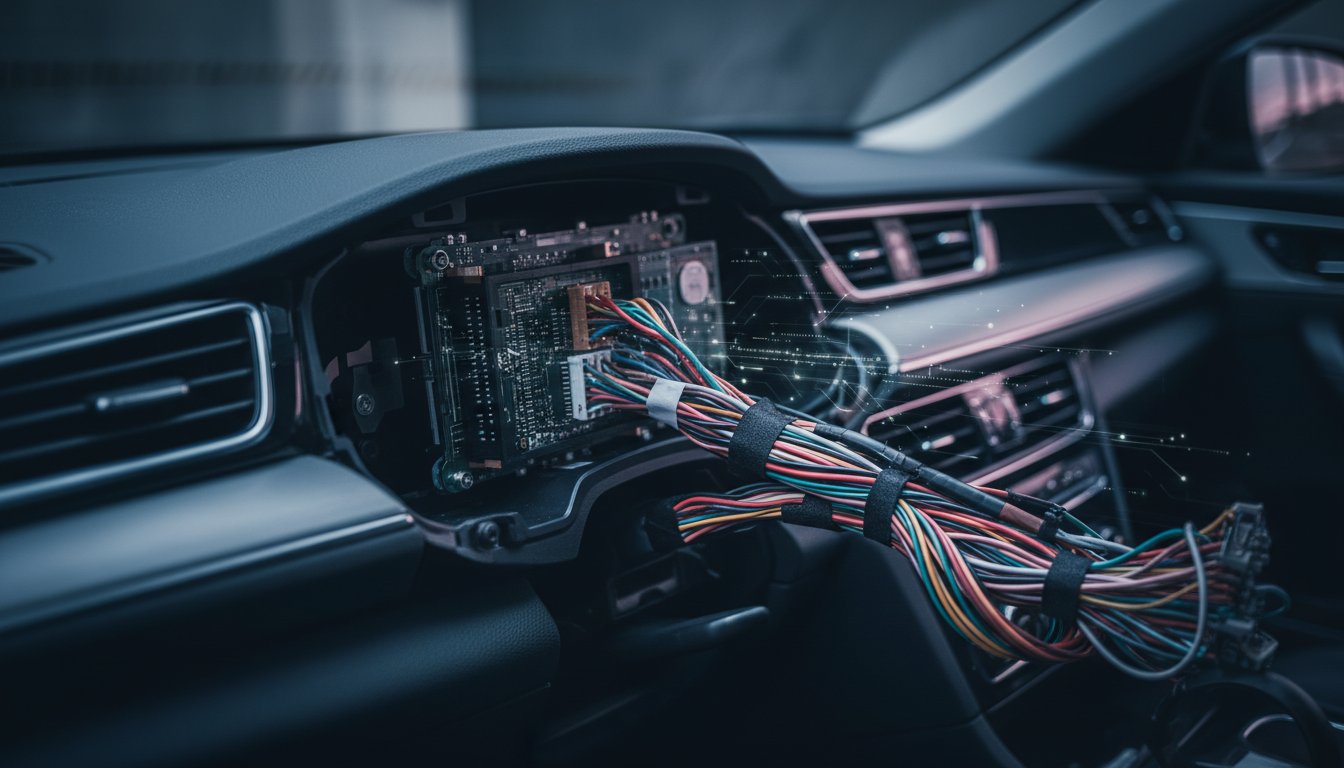
Are you searching for a clear, straightforward answer on how to reset the mileage on a car? It's a question surrounded by myths, misinformation, and genuine concerns about UK law and complex vehicle electronics. The days of simple mechanical rollbacks are long gone. Whether you're behind the wheel of a high-tech Audi A4 or a popular Vauxhall Corsa, modern digital odometers are deeply integrated into the car’s central computer systems, making alteration a completely different challenge.
This guide cuts through the noise to deliver the 2026 facts, offering a definitive answer from Carcode Mileage Blockers on whether you can—and should—alter your car's mileage. You will learn the critical distinction between illegal odometer rollback tools, which constitute fraud, and legitimate, untraceable solutions designed for specific purposes like vehicle testing or off-road use. Forget the old methods; discover the modern approach to mileage management and the advanced tools involved.
Key Takeaways
- Understand why you can't simply roll back the odometer on modern cars like a new BMW or Land Rover, as mileage is stored in multiple electronic control units (ECUs).
- Learn why searching for how to reset the mileage on a car can lead you to illegal 'clocking' tools and the serious legal consequences of odometer fraud in the UK.
- Discover the modern, legal alternative: using a Mileage Blocker to temporarily pause mileage recording for legitimate off-road or vehicle testing purposes.
- Find out how to identify a premium, untraceable device that uses genuine components to safely interact with your car's sensitive CAN-Bus system.
Mechanical vs. Digital Odometers: Why Old Tricks Don't Work
If you're searching for how to reset the mileage on a car, it's crucial to understand that the methods have changed dramatically. On modern vehicles, it is not a simple DIY task. The answer depends entirely on the age and technology of your vehicle, specifically whether it uses a mechanical or a digital odometer. The classic "rollback" tricks you might read about are a relic of a bygone automotive era.
To better understand the complexities involved with digital clusters, watch this helpful video:
The Analogue Era: How Mechanical Odometers Were Reset
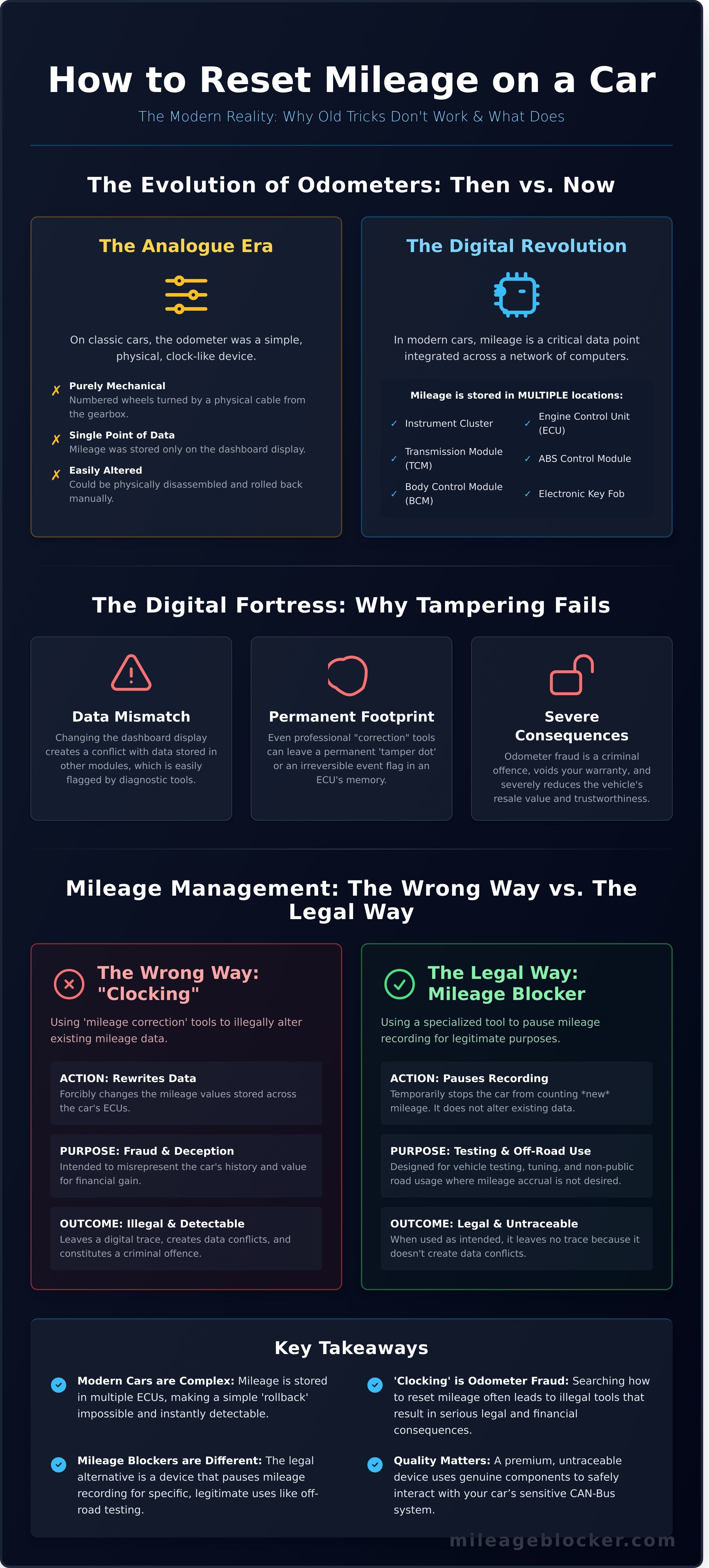
On classic cars, like a 1970s MGB or an old Ford Escort, the odometer was a physical, clock-like device. It consisted of a series of numbered wheels turned by a flexible cable connected to the gearbox. Resetting the mileage, though illegal for fraudulent purposes, was a purely mechanical process. It involved disassembling the instrument cluster and manually turning the wheels to the desired number. This is the outdated method often described in old forum posts, and understanding the fundamental differences between Mechanical vs. Digital Odometers is key. This technique is completely irrelevant for any car manufactured in the last 25 years.
The Digital Revolution: Mileage in Modern Vehicles
Modern cars, such as a new BMW 3 Series or a Vauxhall Corsa, use digital odometers where the mileage is an electronic data point. To prevent tampering, manufacturers record this data in multiple locations across the vehicle’s network. The mileage is logged in several Electronic Control Units (ECUs), which can include:
- The Engine Control Unit (ECU)
- The Transmission Control Module (TCM)
- The ABS control module
- The Body Control Module (BCM)
- Even the electronic key fob in some premium models
This redundancy makes a simple rollback impossible. Changing the number on the dashboard display alone will create a data conflict that is easily detectable by diagnostic tools during an MOT or service. Therefore, the old approach of learning how to reset the mileage on a car is obsolete; modern vehicles demand a far more sophisticated understanding of their electronic systems.
Why You Can't Simply 'Reset' a Modern Car's Mileage
In the era of mechanical odometers, altering a car's mileage was a crude but relatively simple task. Today, however, a vehicle's mileage is not just a number on the dashboard; it's a critical piece of data deeply integrated into the car's electronic ecosystem. Thinking about how to reset the mileage on a car like a modern Audi A6 or a Range Rover Sport involves confronting a sophisticated network designed to prevent that very action.
The mileage is recorded and stored in multiple locations, creating a system of checks and balances. These typically include:
- The instrument cluster (the most obvious location)
- The Engine Control Unit (ECU)
- The transmission control module
- The Body Control Module (BCM)
- In many premium vehicles, even the electronic key fob
Attempting to change the value in one module without updating all the others creates an immediate data conflict that is easily flagged during a diagnostic scan.
Data Synchronisation Across Multiple ECUs
Trying to alter the mileage on a modern car is like attempting to change your age on your driving licence but not on your passport or NHS records. The inconsistency is an immediate giveaway. A vehicle's modules constantly communicate with each other over an internal network, such as a CAN (Controller Area Network) bus. If the instrument cluster suddenly reports a lower mileage than the ECU, a conflict is registered. Specialist dealer tools will spot these data conflicts instantly, exposing any tampering.
The Digital Footprint of Tampering
Even if a so-called "mileage correction" tool attempts to reprogram every module, the act itself can leave behind a permanent digital footprint. Many ECUs, particularly in BMW and Mercedes-Benz models, will log a 'tamper dot' or an irreversible event flag in their memory when the core data is forcibly changed. This marker is invisible to the driver but is clear as day to a qualified technician. This evidence of tampering will almost certainly void your manufacturer's warranty and can lead to serious legal consequences upon resale. In many countries, this is a criminal offence; for example, the strict federal law on odometer fraud in the United States highlights the severity with which authorities view such actions.
Mileage Correction Tools vs. Legitimate Adjustments
When searching for how to reset the mileage on a car, you will undoubtedly encounter so-called 'mileage correction tools'. It is vital to understand the distinction between these devices and the process of legitimate odometer adjustment. The overwhelming majority of these tools are designed for one purpose: illegally altering a vehicle's mileage to misrepresent its value, a practice commonly known as 'clocking'.
This stands in stark contrast to the rare, legally permissible circumstances where an odometer reading needs to be professionally adjusted. In these cases, the process is about maintaining accuracy, not deception, and must be fully documented and disclosed to any future owner.
The Dangers of Illegal 'Clocking' Tools
Illegal clocking tools work by interfacing with a vehicle's onboard computer systems, attempting to overwrite the mileage data stored in various modules, particularly the EEPROM (Electrically Erasable Programmable Read-Only Memory). Using cheap, poorly-engineered tools on a sophisticated vehicle like an Audi A6 or a Mercedes-Benz C-Class is incredibly risky. A failed attempt can corrupt the vehicle's electronic control units (ECUs), potentially 'bricking' the car and leading to catastrophic electronic failure with repair bills costing thousands of pounds.
More importantly, selling a clocked vehicle is a serious criminal offence. Odometer fraud is prosecuted in the UK under the Fraud Act 2006, and its severity is recognised globally, with strict regulations such as the federal law on odometer fraud in the United States serving as a clear benchmark. It is not a minor infraction; it is a deliberate act of deception with severe legal consequences.
When is Mileage Adjustment Legal?
The primary and most common reason for a legal mileage adjustment is the replacement of a faulty instrument cluster. For instance, if the digital dashboard on your Volkswagen Golf fails and needs to be replaced, a new or used unit will be installed. A certified technician is legally required to program the replacement cluster to show the vehicle's last known, true mileage from the old unit or official service records.
Crucially, this is a correction to restore accuracy, not a reset to zero. The objective is to ensure the odometer continues to be a truthful reflection of the vehicle's history. Any other approach would be misleading and illegal. This key difference separates legitimate repair from fraudulent tampering. For more details on legalities and how different devices function, see our Mileage Blocker FAQ.
The Modern Alternative: Preventing Mileage Recording
While directly rolling back an odometer is illegal and leaves a digital trail, modern vehicle technology offers a different approach. Instead of altering the past, the focus shifts to controlling the present. For professionals in the automotive industry, the question isn't always how to reset the mileage on a car, but rather how to prevent it from being recorded during specific, non-road-use situations. This is where a Mileage Blocker, also known as an Odometer Stopper, provides a sophisticated solution.
A Mileage Blocker is a small, plug-and-play electronic device designed to temporarily stop a vehicle's odometer from counting new miles. It's intended strictly for controlled environments, such as vehicle testing and development, not for use on public roads.
How Does a Mileage Blocker Work?
Unlike crude mileage correction tools that attempt to erase data from EEPROM memories, a Mileage Blocker operates on a different principle. It intelligently filters the speed signal before it reaches the vehicle's various Electronic Control Units (ECUs) and modules. This means the mileage data is never recorded in the first place, so there are no data conflicts to resolve or digital footprints to erase. Once the device is deactivated or removed, a car like a modern Audi A6 resumes normal mileage recording without any trace of its use.
Legitimate Use Cases for Stopping Mileage
The demand for such a tool comes from various professional scenarios where adding mileage would be impractical or misleading. Understanding how to stop mileage recording, rather than how to reset the mileage on a car, is crucial for these ethical applications:
- Performance Tuning: When a workshop is dyno-testing a high-performance vehicle like a BMW M4, they may run the car for many hours to calibrate the engine. A mileage stopper prevents hundreds of "phantom" miles from being added.
- Electronics Calibration: Technicians diagnosing complex CAN-Bus communication issues in a new Range Rover might need the vehicle powered on for extended periods. This tool ensures that service time doesn't inflate the odometer reading.
- Off-Road Use: For vehicles used exclusively for track days or on private land, the mileage accumulated in these conditions is not representative of its public road history.
In all these cases, the goal is to maintain the accuracy of the vehicle's road-use history. Professional Mileage Blocker installation ensures the device integrates seamlessly with the vehicle's systems for perfect operation during these specific tasks.
Choosing a Premium Mileage Blocker for Your Vehicle
When you're exploring solutions that interact with your vehicle's sensitive electronics, quality is not just a preference-it's a necessity. Modern cars, from a Mercedes S-Class to an Audi RS e-tron GT, rely on a complex network of control units (ECUs). Using a substandard device can lead to critical system errors, dashboard warning lights, and potentially thousands of pounds in repairs. While many drivers search for how to reset the mileage on a car, a premium mileage blocker offers a sophisticated, non-invasive method to pause mileage recording for testing purposes, without altering existing data.
The key to a reliable device lies in its construction and programming. We insist on using genuine automotive-grade components and original connectors to ensure a perfect, secure fit and flawless communication with your car’s CAN bus or FlexRay system. Each module is programmed specifically for the intended vehicle model, guaranteeing seamless integration and an untraceable effect. This means that once removed, the device leaves no digital footprint that could be detected by dealer diagnostic tools.
What to Look For in a High-Quality Device
To protect your investment and ensure correct functionality, a premium mileage blocker should always offer the following:
- Vehicle-Specific Software: A generic device cannot safely handle the unique software of a modern vehicle. A module for a Ferrari Purosangue, for instance, requires entirely different programming than one for a Ford Mustang.
- Plug-and-Play Installation: A quality blocker should install easily without cutting or soldering any wires, preserving your vehicle's original wiring loom and warranty.
- Comprehensive Support: Look for suppliers offering lifetime support and a reliable warranty, which demonstrates confidence in their product's engineering and durability. You can find the right blocker for your car on our website.
Avoid Cheap and Dangerous Alternatives
Be wary of generic, low-cost devices found on mass-marketplaces. These products are often poorly manufactured with inferior components and untested software. Installing one can cause permanent damage to your car’s complex CAN bus system, leading to unpredictable electronic failures. It is essential to remember that our tools are developed for legitimate testing and off-road use, not for fraudulent activities. They are not the answer for anyone looking for how to reset the mileage on a car for deceptive reasons. Contact us if you have any questions about compatibility or finding the correct device for your vehicle.
The Modern Answer to Mileage Control
As we've explored, the days of manually winding back an odometer are firmly in the past. In today’s advanced vehicles, from an Audi A4 to a Range Rover Sport, mileage is a permanent digital record stored across multiple control units. This means the old question of how to reset the mileage on a car now has a fundamentally different answer. Instead of relying on risky and detectable "correction" tools, the only reliable method for controlling mileage accumulation during off-road use or testing is to prevent it from being recorded in the first place.
For this precise purpose, a premium Mileage Blocker offers a smart, untraceable solution. Engineered with genuine automotive-grade components, our devices ensure flawless integration with your vehicle’s systems for legitimate testing scenarios. With an untraceable effect, worldwide shipping, and lifetime support, you can confidently manage your vehicle's diagnostic needs. Take control of your vehicle's testing processes today.
Shop for a premium Mileage Blocker for your vehicle and invest in a quality, reliable solution.
Frequently Asked Questions
Can a mechanic tell if the mileage has been reset?
Yes, in most modern vehicles, a skilled mechanic can detect mileage tampering. Cars like the BMW 5 Series or Audi A6 store mileage data in multiple locations, including the engine control unit (ECU), transmission module, and even the key fob. A discrepancy between these modules and the dashboard display is a clear red flag that a main dealer diagnostic tool will quickly identify. Physical signs of tampering with the instrument cluster can also reveal alterations.
Is it illegal to reset the mileage on a car in the UK?
The act of changing an odometer reading is not specifically illegal in itself. However, selling a vehicle with altered mileage without disclosing it to the buyer is a criminal offence under the Fraud Act 2006. This practice, known as "clocking," is taken very seriously by Trading Standards. Legitimate adjustments, such as after an instrument cluster replacement, must be fully documented and declared to any potential new owner to remain within the law.
What happens if you get caught resetting a car's mileage (clocking)?
The legal consequences for selling a clocked car in the UK are severe. If prosecuted under the Fraud Act 2006, penalties can range from substantial fines to a prison sentence, which can be up to 10 years in the most serious cases. The court can also order you to pay compensation to the buyer. The financial and personal risks associated with mileage fraud far outweigh any potential gain from the deception.
Can you reset the trip meter on a car?
Yes, resetting the trip meter is a standard, user-operated function on all cars. The trip meter is designed to measure the distance of individual journeys, for example, to calculate fuel consumption for a specific trip. In most vehicles, from a Ford Focus to a high-end Jaguar, this is done simply by pressing and holding a button on the dashboard or through a menu in the infotainment system. This has no impact on the vehicle's permanent odometer reading.
Does disconnecting the battery reset the mileage?
No, this is a common myth for those wondering how to reset the mileage on a car. A vehicle's total mileage is stored in non-volatile memory modules (EEPROMs) that do not require continuous power to retain data. Disconnecting the battery on your Vauxhall Corsa may reset the clock, trip computer, and radio presets, but the legally recorded odometer reading will remain completely unchanged once power is restored.
Why would a car's mileage suddenly show zero?
A car's odometer suddenly displaying zero is almost always a sign of a serious electronic fault. This can be caused by a failed instrument cluster, a corrupted ECU, or a major issue with the vehicle's CAN-Bus communication network. It is not a normal function and indicates a problem that requires immediate diagnosis by a qualified automotive technician. In some cases, it can be the result of a botched mileage alteration attempt with improper tools.
When faced with such extensive and costly electronic failures, some owners find that repairing the vehicle is no longer a viable option. In these situations, services that purchase damaged cars for recycling, such as the Israeli service אוטופירוק or US-based operations like Cash For Junk Cars Michigan, offer a practical alternative to scrapping the vehicle.
How accurate are digital odometers?
Digital odometers are highly accurate and significantly more tamper-resistant than older mechanical types. They calculate distance using data from wheel speed sensors. While very precise, minor inaccuracies can arise from factors like tyre pressure or using non-standard tyre sizes, which change the rolling circumference of the wheel. However, on a well-maintained vehicle, the deviation is typically less than 2% over its entire lifespan, making them extremely reliable.
About the author
MileageBlocker TeamThe MileageBlocker Technical Team covers vehicle electronics, CAN and CAN-FD systems, mileage blocker compatibility, installation and product developments.
View author profile →