
The Evolution of Vehicle Mileage Tracking Explained
From mechanical odometers to connected cars: how vehicle mileage tracking has changed, how modern systems calculate distance, and why data accuracy matters.

A vehicle odometer measures and displays the distance the vehicle has travelled. From mechanical odometers to connected cars, vehicle mileage tracking has evolved from a mechanism driven by vehicle movement to electronic displays, GPS-based estimates and connected systems that can share vehicle data. The odometer reading remains a record of distance, but how it is measured and accessed has changed.
Mileage may look like a single number on the dashboard, but the technology behind it affects how distance is calculated, stored and viewed. GPS tracking is not the same as an odometer built into a vehicle.
This article explains what an odometer is and how mechanical, digital, GPS-based and connected-car systems track mileage. It compares these approaches, explains how vehicle distance is measured and shows why the distinction matters when reviewing a car’s mileage history.
Key Takeaways
- Learn how mechanical and digital odometers turn vehicle movement into a displayed distance, and why the underlying method matters.
- Understand how tyre size can affect the distance an odometer records compared with the distance actually travelled.
- Compare GPS tracking with vehicle-based mileage data, and see why diagnostic records can provide another useful reference.
- Use UK MOT history and service records as context when assessing a vehicle’s mileage, rather than relying on the dashboard reading alone.
Mechanical, digital and GPS-based odometers
Mechanical and digital odometers record distance based on vehicle movement, while GPS systems estimate it from location data. Each method produces a reading differently, so knowing the source matters when interpreting a vehicle’s mileage.
Mechanical and Digital Odometer Operation
A mechanical odometer uses linked components to turn numbered wheels as the vehicle moves. A digital odometer processes distance signals electronically and displays the accumulated total on the instrument panel. Digital displays may show distance to the nearest tenth of a mile or kilometre. This finer display makes small changes visible, but precision on screen does not establish accuracy.
GPS-Based Mileage Readings
A GPS-based system estimates journey distance by comparing recorded location points. Because it uses positioning data rather than the vehicle’s odometer mechanism, its result may differ from the dashboard reading. For example, a fleet manager might use GPS records to review a route, while the car’s odometer shows its accumulated mileage. These are separate records, not interchangeable measurements.
Comparing Mileage Accuracy
No method is automatically the most accurate in every situation. Mechanical and digital readings depend on vehicle calibration and movement signals, while GPS estimates rely on location data. UK law also matters when mileage information is used. Using a mileage blocker to misrepresent a vehicle’s true mileage when selling or advertising it is illegal. Penalties depend on the offence and circumstances, so there is no single fixed penalty to give here.
The Shift to Digital Odometers
Digital odometers became common in most vehicles manufactured after the 1990s, though the transition varied across models. The change replaced visible numbered wheels with an electronic display, while the purpose remained recording accumulated distance. For UK buyers, MOT readings offer another comparison point: according to the UK Government, testers enter the odometer reading into the MOT Testing Service, and it appears on the MOT certificate and online MOT history.
How odometers measure distance
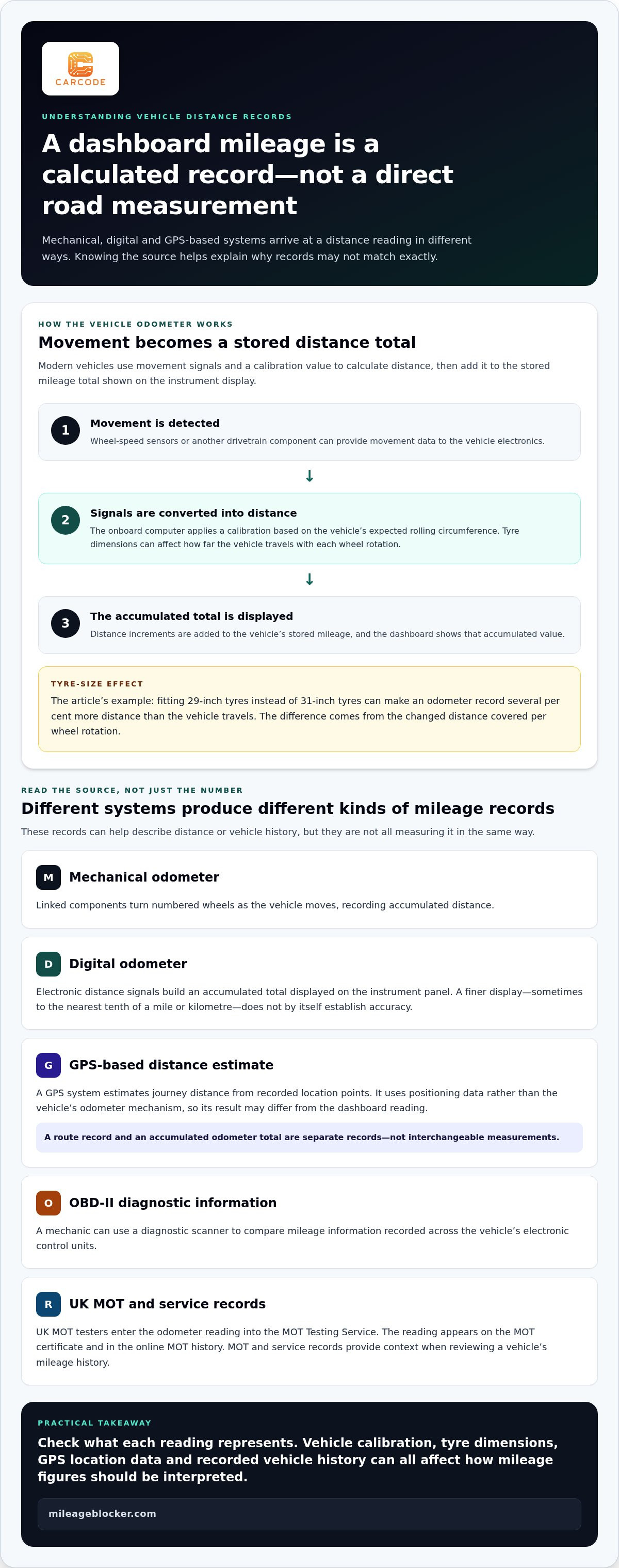
Modern cars calculate distance from wheel or drivetrain movement, then record the accumulated total electronically. The onboard computer converts movement signals into distance using a calibration value. Tyre dimensions can affect the result because they change how far a wheel travels during each rotation.
Wheel Sensors and Distance Measurement
Wheel sensors detect rotation and provide movement data that vehicle electronics can use to estimate distance. Depending on the design, signals may come from wheel-speed sensors or another drivetrain component. The computer applies a calibration based on the vehicle’s expected rolling circumference. This matters because the same number of rotations can represent a different road distance with a different tyre size.
For example, fitting 29-inch tyres instead of 31-inch tyres can make an odometer record several per cent more distance than the vehicle travels. A smaller tyre completes more rotations over the same road distance. A smaller wheel diameter can cause the odometer to record more distance than the vehicle travels. This is a calculation effect, not a separate journey.
Onboard Mileage Recording
An onboard computer converts movement signals into distance increments and adds them to the vehicle’s stored mileage total. The instrument display shows that accumulated value to the driver. The signal path and storage arrangement depend on the vehicle, so the dashboard figure is the visible result of an electronic calculation.
For example, a 100-mile journey should increase the displayed total, but the calibration and effective tyre circumference influence the calculation. The odometer does not independently measure the road beneath the car. A tyre size that differs from the intended specification can therefore affect the recorded distance. This distinction is useful when comparing dashboard mileage with a route record, since the two systems may calculate distance from different inputs. The odometer’s figure reflects its vehicle calibration and movement signals, while route records depend on their own measurement method.
Telematics and OBD-II mileage tracking
Telematics sends selected vehicle data to connected services, while OBD-II diagnostic tools access information through the vehicle’s diagnostic system. The move from mechanical odometers to connected cars has extended mileage records beyond the dashboard.
Privacy, Data Ownership, and Consent
Connected mileage services may share vehicle information with a provider, so drivers should understand what data is collected and who can access it. Depending on the system, mileage may appear alongside journey or location information. This matters when a vehicle is shared by family members, employees or a fleet.
Review the service’s terms and account settings to understand data access and permissions. For a company vehicle, drivers and fleet managers should agree on who can view records and how the information will be used. OBD-II checks are different: a mechanic can use a diagnostic scanner to compare mileage information recorded across the vehicle’s electronic control units.
Costs and Benefits of Connected Tracking
Connected tracking can make mileage and journey records available through a service or app. Fleet managers may use trip information to review vehicle use and maintain operational records. Insurers may use mileage data when a policy or service relies on driving information. The practical value depends on the data provided and how the organisation uses it.
Costs may include tracking hardware, a connected service or subscription, and the time needed to manage the resulting records. The balance depends on the use case. A fleet with regular vehicle activity may find trip records useful for administration, while a driver who rarely needs detailed journey information may gain less from continuous tracking. Compare ongoing costs with the specific record-keeping task the system is meant to support.
Keep the source clear when comparing figures. An OBD-II scan, a connected service and an MOT record are separate records produced by different processes. Treating them as interchangeable can obscure why readings differ. For a useful vehicle history, note which system produced each figure and compare it with relevant service documentation.
When did electronic digital odometers replace mechanical odometers in cars?
There was no single year when every car changed from mechanical to digital mileage display. Digital odometers became common in most vehicles manufactured after the 1990s, but the transition varied between manufacturers and models. A vehicle’s age can suggest which display it has, but its instrument panel gives the direct answer.
Mechanical odometers used visible numbered wheels, while digital versions displayed mileage electronically on the dashboard. This changed how drivers read the total, not what it represented: accumulated distance. A car with a digital display still records mileage from vehicle movement; the screen itself does not measure distance.
The change also affects how older cars are interpreted. A vehicle built before digital displays became common may have a mechanical counter, while a later model may use an electronic display. These are broad historical clues, not a reliable way to identify every car. The model and instrument-panel design matter more than assuming the display type from the registration year.
For buyers, display type is only one part of a vehicle’s mileage record. A mechanical counter shows mileage on numbered wheels, while an electronic display presents stored mileage as digits. Neither appearance alone establishes the car’s complete history. Compare the displayed figure with dated records, such as service documents, and look for a consistent sequence of readings.
Digital displays also made it easier to present mileage alongside other electronic instrument readings. The key change was from a mechanical counter with numbered wheels to an electronic readout integrated into the dashboard. A digital figure may look precise, but its format does not prove accuracy or explain how the vehicle calculates and stores distance.
The 1990s therefore mark a broad transition, not a universal dividing line. When assessing a specific car, identify its model and inspect the instrument panel, then compare its mileage with available records. This approach is more useful than assuming every vehicle from a particular period received the same odometer technology.
MileageBlocker.com: Mileage Blocker Device
MileageBlocker.com sells a Mileage Blocker Device designed for off-road, testing, tuning and R&D use, including controlled vehicle testing and rolling-road sessions. It pauses odometer recording during these activities. It should not be used to alter the recorded mileage of any vehicle being offered for sale. The device is technical testing hardware, not a means of changing a vehicle’s history.
Vehicle electronics vary between models and generations, so the appropriate device and its operation are vehicle-specific. Review the application information for the relevant vehicle before choosing a product. MileageBlocker.com also offers a fitting service for customers who want professional installation.
Use mileage records transparently and retain accurate vehicle history. Visit MileageBlocker.com to explore the available options.
Build a Clear Mileage Record for Every Vehicle
As vehicle systems become more connected, keep dashboard odometer readings separate from estimates produced by GPS or telematics services. Record the source, date and purpose of each reading, particularly during testing or when vehicle-use records are reviewed. This gives anyone reviewing the history useful context about how each figure was produced.
Understanding how mileage tracking has evolved, from mechanical odometers to connected cars, also helps you make more informed choices about vehicle-specific electronics. The correct next step depends on your vehicle and intended use. For questions about MileageBlocker.com technology and its intended applications, explore the MileageBlocker.com FAQs. A consistent, transparent record-keeping approach helps keep vehicle information clear as technology changes.
Frequently Asked Questions
What is a vehicle odometer?
A vehicle odometer records the distance a vehicle has travelled over its life. Its accumulated total differs from a trip meter, which drivers can reset to measure a particular journey or interval. For example, a driver might reset the trip meter after refuelling while the odometer continues to track the vehicle’s overall distance.
How did mechanical vehicle odometers work and when were they first introduced?
Mechanical odometers used a drive mechanism and linked gears to advance numbered wheels as the vehicle moved. As one wheel completed its sequence, it advanced the next and increased the displayed total. They were used before electronic displays became common, but their introduction across cars was gradual, not tied to one universal date. The digits made accumulated distance readable without an electronic screen.
How do connected cars transmit mileage data to manufacturers, apps and fleet managers?
Connected cars can send vehicle information through an onboard telematics unit, which communicates with an external service over a wireless network. The service processes the data and may make selected information available through a manufacturer’s platform, an app or a fleet management system. The data and update process depend on the vehicle and service. Mileage may be presented alongside other vehicle or journey information.
About the author
MileageBlocker TeamThe MileageBlocker Technical Team covers vehicle electronics, CAN and CAN-FD systems, mileage blocker compatibility, installation and product developments.
View author profile →