
Mercedes-Benz Mileage Blocker Guide: Supported Models
This Mercedes-Benz Mileage Blocker Guide covers supported models, model-year fitment, CAN Bus technology, activation modes, installation and removal details.
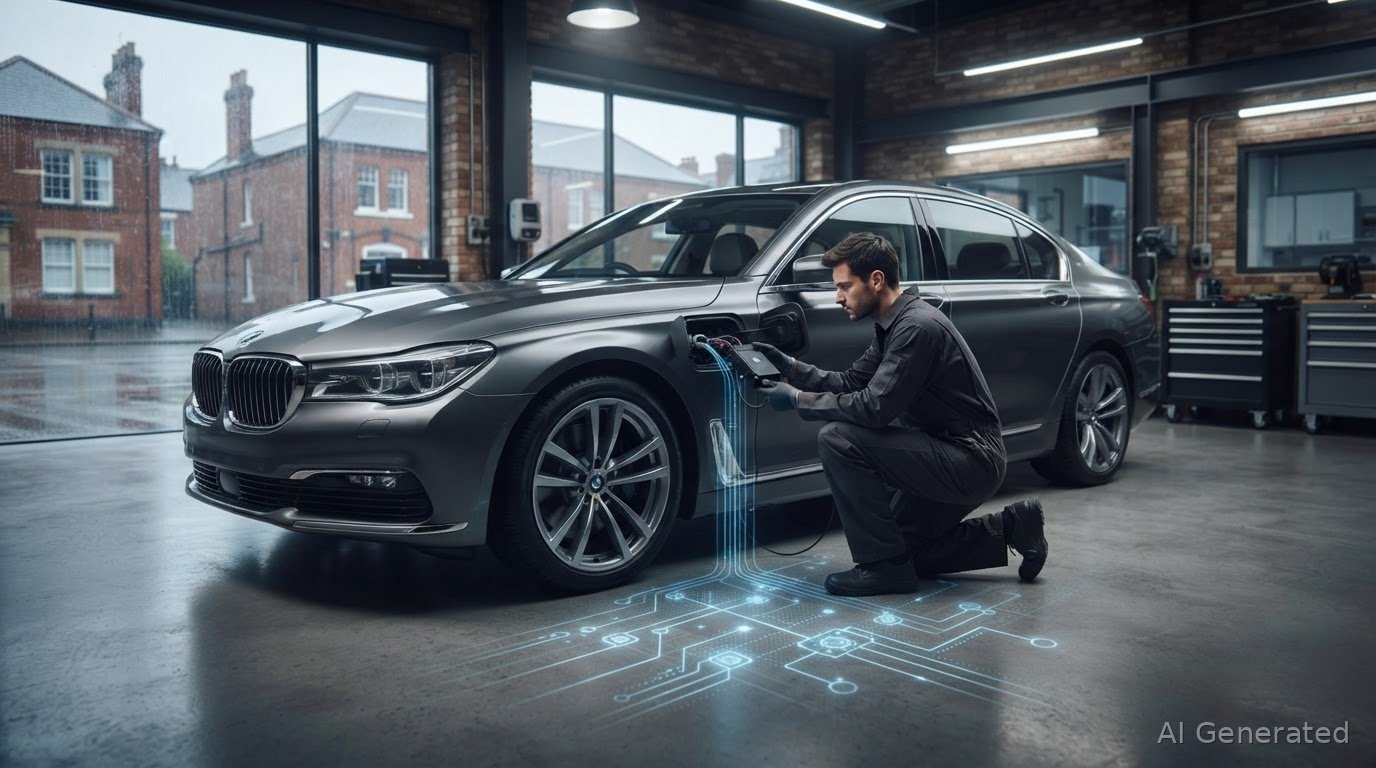
A Mercedes mileage blocker is not universally compatible or safe to assess by model name alone: the exact generation and vehicle electronics matter. Available Mercedes applications span 2009 to the current day, but compatibility and operation can differ between models and model years. This Mercedes-Benz Mileage Blocker Guide explains the practical factors behind a suitable match.
It’s reasonable to want clear answers about reliability, installation and what happens when the device is removed. This guide covers CAN Bus technology, activation modes, fitting and removal, and supported Mercedes models and years, while distinguishing general principles from vehicle-specific details. It also explains the intended use of mileage blocker technology, including vehicle testing and off-road applications, so you can assess the information in the right context.
Key Takeaways
- Match a mileage blocker to the exact Mercedes model generation and year, not just the badge.
- Understand that fitting and removal depend on the vehicle-specific device and installation instructions.
- Check the activation method for the particular application; operating modes and controls can vary.
- Learn how CAN Bus communication relates to the system, and keep use within appropriate testing or off-road contexts.
Installation and removal
Mercedes-Benz fitting depends on the exact vehicle application. Product information describes plug-and-play installation in approximately 15 minutes, with no cutting, soldering or coding required.
Installation Procedure
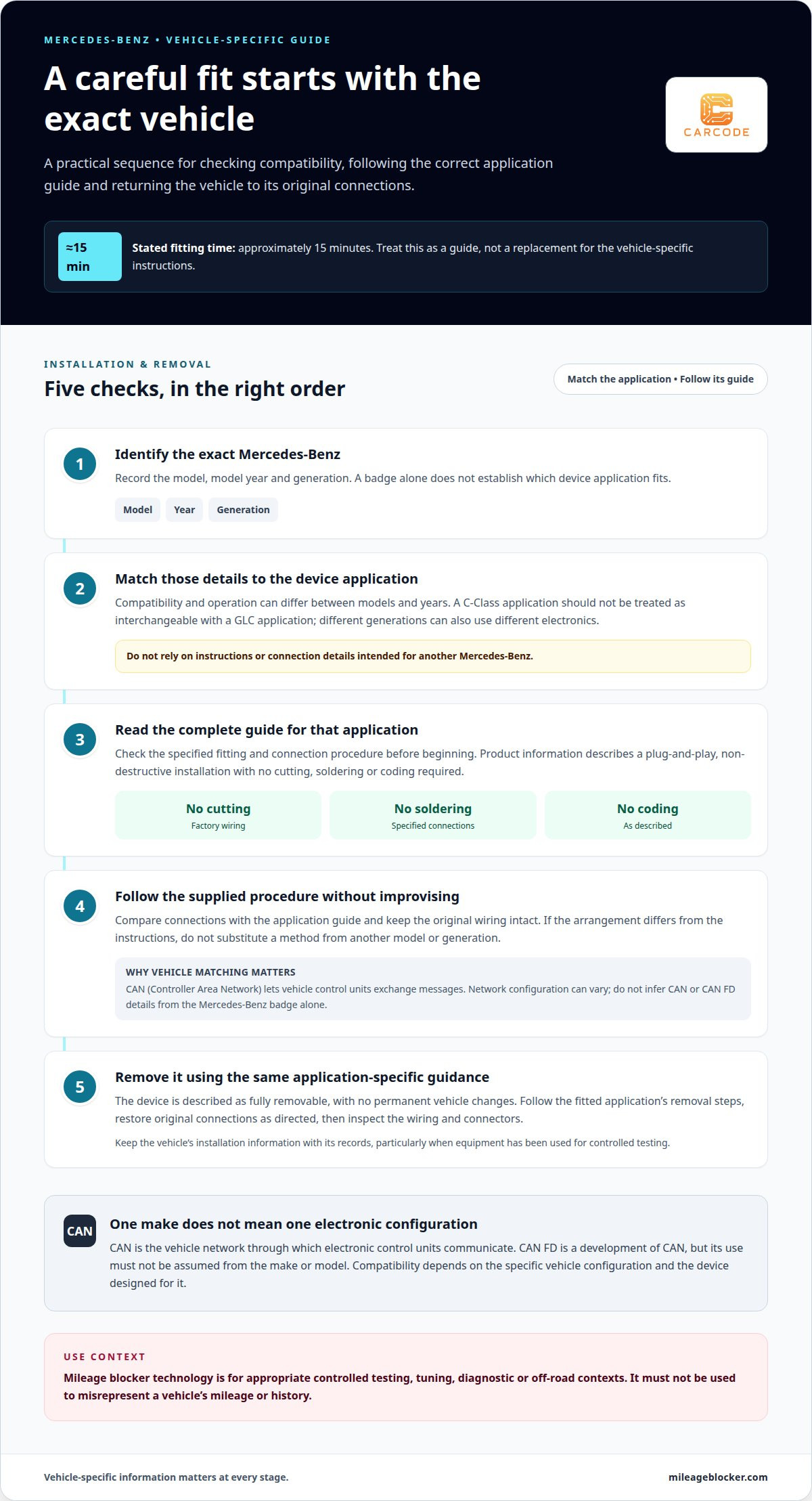
Start by identifying the Mercedes-Benz model, model year and generation. Match those details to the device application before fitting, then follow its step-by-step guide in sequence. Don’t rely on instructions for another Mercedes-Benz: vehicle badges alone don’t establish the correct installation approach.
The stated fitting time is approximately 15 minutes. Treat this as a guide, not a substitute for following each step. Read the instructions fully before beginning, and use the specified process for the selected application. The procedure is designed as plug-and-play, without coding or permanent changes to the vehicle.
Wiring Connections
The fitting guide determines how the vehicle-specific module connects. Product information describes a non-destructive installation, with no cutting or soldering of factory wiring. Do not assume that connector details or connection points match across Mercedes-Benz models. Use the instructions for the exact device and vehicle application, not a diagram or method intended for another generation.
Before completing the fitting, compare each connection with the step-by-step guide. Keep the original wiring intact, and don’t improvise if the arrangement differs from the instructions. Plug-and-play installation makes fitting straightforward, but it doesn’t replace the need to follow the supplied procedure and match the device to the vehicle.
Removal Process
The device is fully removable, with no permanent changes to the vehicle. To reverse the installation, follow the instructions for the fitted Mercedes-Benz application. Remove the module and restore the original connections as directed. Don’t use removal steps from another model, since connection arrangements can vary.
After removal, inspect the wiring and connectors, then follow the guide’s final checks. Keep the vehicle’s installation information with its records, especially when the device was used for controlled testing. This provides a clear account of temporary equipment and helps ensure the vehicle is returned to its intended configuration.
Activation modes
For Mercedes applications covered by the product information, activation uses the steering-wheel Back/Home button pressed three times. Don’t assume this applies to every Mercedes-Benz model or generation. Check the guide for the exact vehicle application before operating the device, as controls and functions can vary.
Activation and mode selection are related, but they aren’t interchangeable. The activation input operates the device; its mode set determines the options available for that specific application. Don’t assume every Mercedes-Benz application has the same modes or that a control works identically across generations. Only the selected device’s mode set applies. Modes from different devices must not be combined.
Before a controlled test, identify the installed application and read its operating instructions. Use the specified Back/Home input and confirm the device’s state as directed for that version. Don’t try sequences from another Mercedes model or repeat button presses not described in the guide. Keep operation specific to the hardware fitted.
Some product information describes mode memory as persistent between ignition cycles. Treat this as an application-specific feature, not a universal rule for every Mercedes-Benz device. If a test requires a particular setting, note the selected mode and verify it using that device’s instructions before starting.
Use mileage blocker technology only in appropriate controlled testing, tuning, diagnostic or off-road contexts. It must not be used to misrepresent a vehicle’s mileage or history. For Mercedes-Benz applications, the practical rule is direct: match the instructions to the exact device, follow the stated control method, and do not infer modes or activation behaviour from another vehicle.
For the module's steering-wheel activation procedure, press Return 3 times quickly; some instructions specify doing this within 2 seconds. Because instructions can differ by version, follow the procedure supplied for the installed module rather than combining Return steps with another control sequence. Confirm its state as directed before testing.
CAN Bus technology
CAN stands for Controller Area Network. It allows a vehicle’s electronic control units to exchange messages over a shared network. In a Mercedes-Benz, these messages support communication between vehicle systems. A mileage blocker designed for this environment must match the vehicle’s electronic configuration, not just its badge.
CAN communication isn’t identical across every Mercedes-Benz. The model, generation and year can affect vehicle electronics and device compatibility. For example, a C-Class application shouldn’t be treated as interchangeable with a GLC application. Different generations of the same model can also use different electronic architectures.
A vehicle-specific device interfaces with relevant electronic signals. The connection method and signal handling depend on the application. CAN bus isn’t a universal plug-in point that makes one module suitable for every Mercedes-Benz. Compatibility depends on the hardware and vehicle configuration, so check the model and year before choosing a device.
CAN FD is a development of CAN that changes how data can be communicated. Don’t assume a Mercedes-Benz uses it based on the make or model alone. Network type is an application-specific technical detail: the device must be designed for the vehicle and network it is intended to work with.
To assess compatibility, identify the Mercedes-Benz model, establish its generation and year, then match those details to the device application. Don’t infer network architecture from another vehicle in the range. A facelift may use different electronics from an earlier version. Choose the application specified for that vehicle, not a general claim about Mercedes-Benz CAN systems.
Mercedes models and model-year coverage
Mercedes-Benz applications cover model years from 2009 to the current day across the range. This describes the overall span, not a shared year range for every model. The C-Class application is listed for 2007-2018, so its specific coverage extends earlier and ends before the broader range’s latest vehicles. This Mercedes-Benz Mileage Blocker Guide distinguishes the overall range from individual model fitment.
Available model applications include the A-Class, B-Class, C-Class, CLA, GLA, GLC, GLS, G-Class, S-Class, CLS, Vito, V-Class and GLE. These names identify vehicle lines, not universal year compatibility. Each line may include separate generations, so check the applicable years for the specific application.
When identifying an application, gather the vehicle details that distinguish one version from another:
- Model: record the exact line, such as C-Class or GLC.
- Model year: use the vehicle’s documented year.
- Generation: note the generation or facelift where known.
- Body style: identify whether it is a saloon, estate, coupé or van.
These distinctions matter because two vehicles with the same badge may have different electronics. An A-Class from one generation should not be assumed to match a later A-Class. Likewise, the C-Class range’s 2007-2018 listing should not be applied to the GLE or Vito. Model names alone cannot establish fitment.
For a practical match, compare the Mercedes-Benz model, documented year and generation with the relevant application. Include a facelift or body variant where applicable. This Mercedes-Benz Mileage Blocker Guide can help organise the details, but the specific application’s year range determines compatibility.
For help matching a model and year to an application, find answers in the frequently asked questions.
For Mercedes EQ models, the page gives an average electric-only range of about 250 to 300 miles per charge, depending on model and driving conditions. This is an average, not a range that should be assumed for every EQ model. It is a separate consideration when identifying a vehicle, alongside the model, documented year and generation needed to check the relevant application.
MileageBlocker.com: Mileage Blocker Device
MileageBlocker.com offers vehicle-specific Mileage Blocker Devices for appropriate vehicle testing and off-road use. The device is intended to stop the odometer recording mileage while it is active. Select the application that matches the Mercedes-Benz model, generation and year, since hardware and operation can vary across the range.
If you’d prefer professional installation, MileageBlocker.com offers a fitting service for its devices. The fitter follows the vehicle-specific requirements, while the step-by-step guide is available if you’re installing it yourself. Use the device only for legitimate automotive testing, tuning and diagnostics, and never to misrepresent a vehicle’s mileage.
Visit MileageBlocker.com to explore the Mercedes-Benz applications or arrange the fitting service.
Make the next step a vehicle-specific one
Before choosing a device, decide how it will be used and who will fit it. This makes the next step practical: you can focus on the Mercedes-Benz application and the fitting option that suits your situation, rather than relying on broad model-name assumptions. Keep the vehicle’s identifying details available when discussing fitment, so the conversation can focus on the relevant application.
This Mercedes-Benz Mileage Blocker Guide is a starting point, not a substitute for matching the device to the vehicle. Use the same careful approach for any intended testing or off-road use, and keep the vehicle’s history accurately represented. A clear understanding of purpose and fitment helps you make a considered choice.
Review the fitment FAQs and contact MileageBlocker.com about your vehicle. Take the next step when you’re ready to discuss the right application.
Frequently Asked Questions
Are Mercedes mileage blockers safe and reliable?
Reliability depends on using a device designed for the exact Mercedes-Benz application and following its fitting instructions. These devices are intended for controlled testing, tuning and off-road use, not ordinary road use. “Designed for off-road, motorsport, dyno testing and vehicle development use.” It should not be used to alter the recorded mileage of any vehicle being offered for sale. Keep use within the stated purpose.
Which Mercedes-Benz models and model years are compatible with mileage blockers?
Compatible applications cover selected Mercedes-Benz models from 2009 to the current day. Examples include the A-Class, C-Class, GLC, GLE, G-Class, S-Class, CLA, Vito and V-Class. Coverage is not automatic across every year of each model. For example, two C-Class vehicles from different generations may require different applications. Identify the exact model, model year and generation before selecting a device.
About the author
MileageBlocker TeamThe MileageBlocker Technical Team covers vehicle electronics, CAN and CAN-FD systems, mileage blocker compatibility, installation and product developments.
View author profile →