
What Is a Mileage Blocker? A Plain-English Guide Before Purchase
Discover what is a mileage blocker, how CAN-bus modules pause odometer recording during vehicle testing, and the key differences from mileage correction.
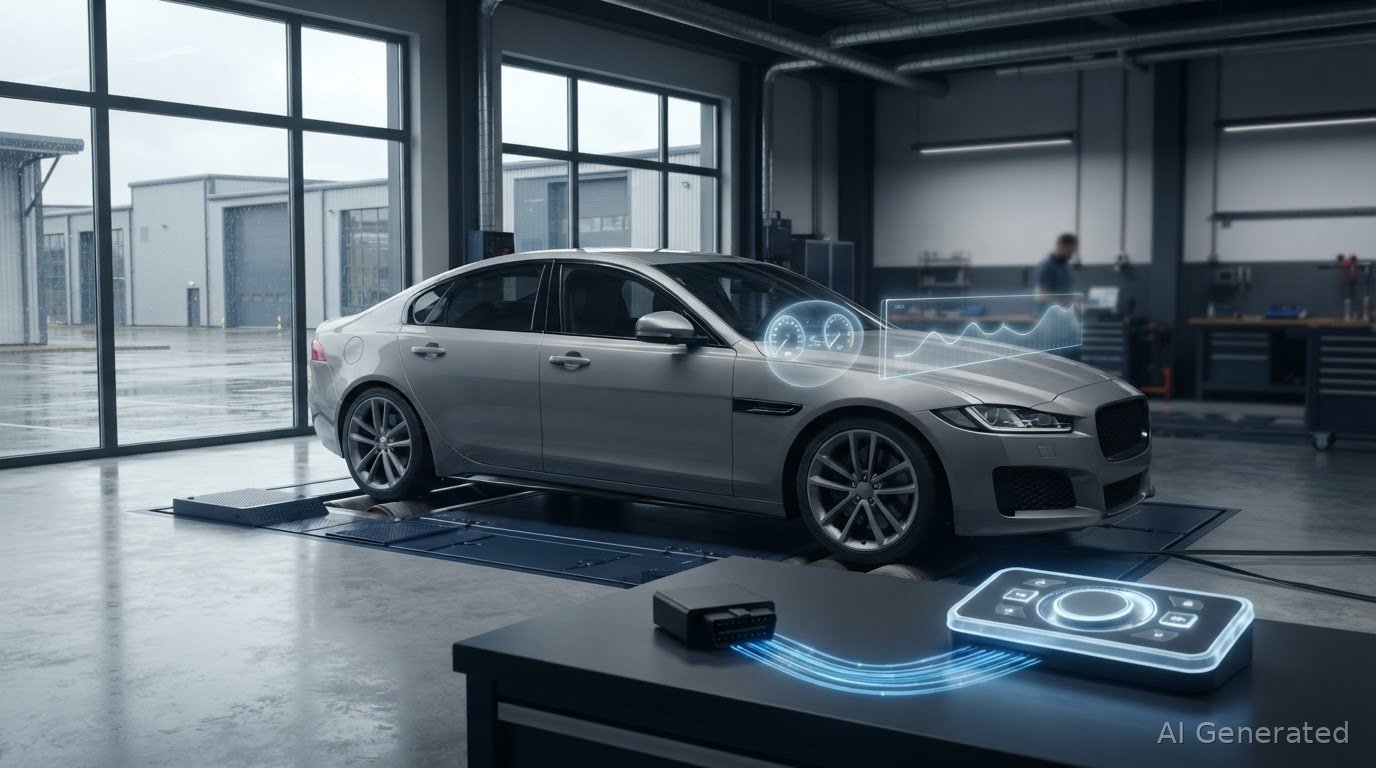
What if an odometer needs to pause recording during a controlled vehicle test, without changing mileage already recorded? That is the practical question behind what is a mileage blocker. Also called a mileage stopper or odometer freezer, it is a plug-and-play CAN-bus module designed to pause odometer recording during testing. The key distinction is that a blocker pauses new recording, while a mileage correction tool changes a previously recorded value.
Mileage blockers are technical testing hardware designed for off-road, testing, tuning and R&D use. They are not general-purpose mileage tools. This guide explains their basic function, how they relate to CAN-bus technology and what to consider before exploring a vehicle-specific application. It should not be used to alter the recorded mileage of any vehicle being offered for sale. It is illegal to use a mileage blocker to misrepresent a vehicle’s true mileage when selling or advertising a vehicle. Carcode Ltd accepts no liability for misuse.
Key Takeaways
- Learn what is a mileage blocker and why it is also called a mileage stopper or mileage freezer.
- Understand the basic role of CAN-bus technology, and why it does not tell you how every vehicle is configured.
- See how pausing mileage recording differs from changing a value already recorded.
- Know the intended testing contexts and which vehicle details matter when exploring a specific application.
What Is a Mileage Blocker? A Clear Definition
“Mileage blocker” describes a type of technical testing hardware, not a complete specification. The name gives you its general purpose, but it does not establish whether a particular unit suits your vehicle or explain its exact operating details. For that, check the information for the specific vehicle application.
“Mileage stopper” and “mileage freezer” are alternative names for the same broad category. The terms alone do not confirm different mechanisms, operating modes or fitment. When comparing product information, focus on the stated function, intended use and vehicle application rather than assuming that a different label means a different capability.
The video below discusses mileage blockers and concerns around their misuse.
What does the term mileage blocker mean?
The term identifies a device category, not a universal design. Do not treat “stopper” or “freezer” as evidence of a particular mechanism, operating mode or vehicle fit. Those details must come from information for the relevant application. The terminology helps identify the subject, but it cannot replace vehicle-specific product information.
Is a mileage blocker the same as a mileage correction tool?
No. A mileage blocker pauses odometer recording during testing; a mileage correction tool changes a value already recorded. These are distinct functions, so do not assume a product can perform both based on its name. Check the stated function for the particular product, and keep the difference between pausing recording and changing an existing value clear.
How Does a Mileage Blocker Relate to CAN-Bus Technology?
CAN bus is a communication network that allows electronic systems in a vehicle to exchange information. It is a useful starting point for understanding vehicle electronics, but the term does not describe the layout or behaviour of every car. This overview of CAN bus technology explains the general network concept, not a specific vehicle’s design.
A mileage blocker is a CAN-bus module designed to pause odometer recording during testing. Vehicle electronics and product applications differ, so a general description cannot confirm compatibility or explain exactly how a module will operate in a particular car. Do not transfer details from one vehicle to another, even if their model names are similar.
What can be explained without vehicle-specific details?
At a general level, CAN bus allows vehicle systems to communicate. Connection points, data handling and electronic behaviour depend on the specific application, so they cannot be reliably described for every vehicle in a general guide. For more context about mileage storage, read the article on how modern cars store mileage in multiple ECUs.
Why does compatibility depend on the vehicle?
Vehicle applications can require different hardware and operating details. MileageBlocker.com lists support for 45+ car makes, but a broad make or model description is not enough to establish that a particular unit fits. Check the exact vehicle application, including its year and cluster type, against the relevant product information.
For general product questions, the MileageBlocker.com FAQ is a useful reference.
What Is a Mileage Blocker Designed For, and What Are Its Limits?
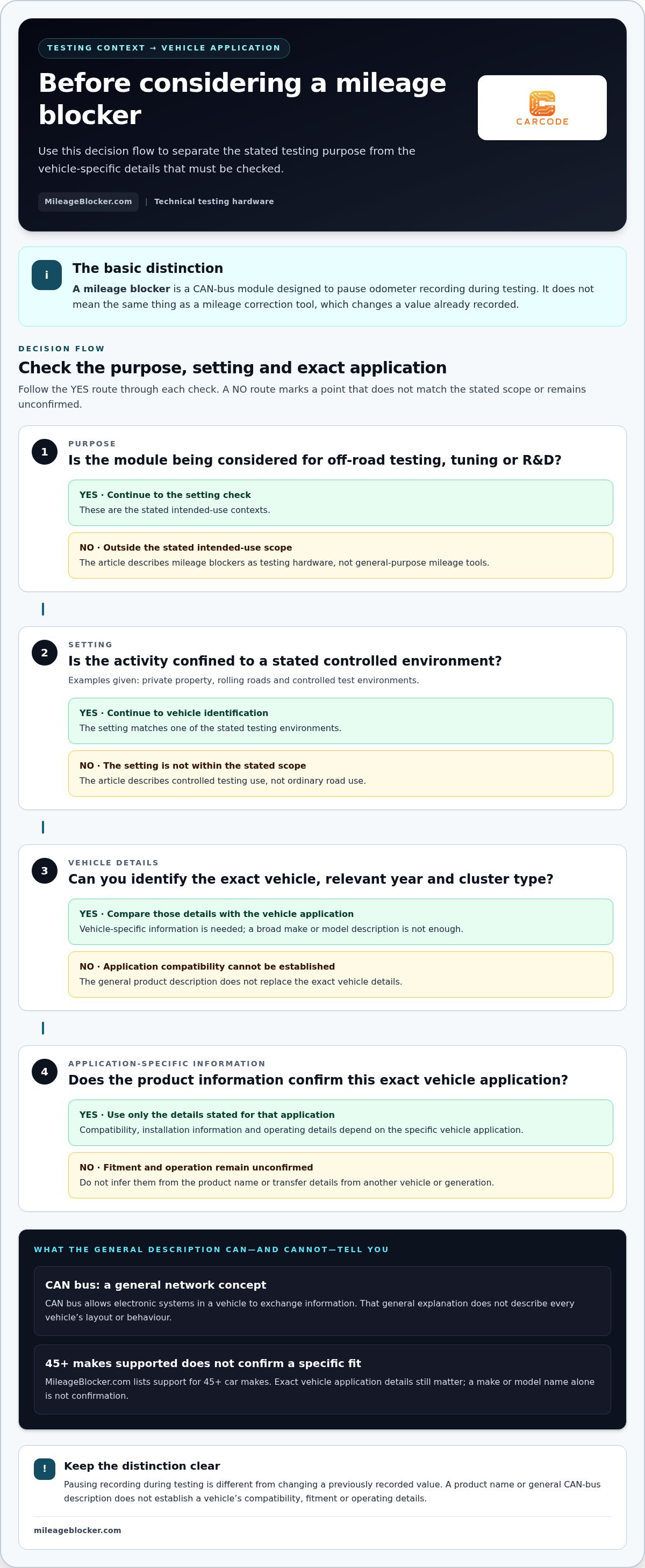
The intended-use boundary matters: a controlled test is different from ordinary vehicle use. Before considering a mileage blocker, define the testing activity and setting, then identify the specific vehicle application. This keeps the device’s technical role separate from how a vehicle is used or represented outside the test.
Which settings are within the stated intended use?
Mileage blockers are designed for off-road, testing, tuning and R&D use. They are intended for use on private property, rolling roads and controlled test environments only. A setting alone does not establish that a particular unit suits every vehicle, so application-specific information still matters.
Carcode mileage blockers are sold strictly for legitimate automotive testing, tuning and diagnostic purposes. It should not be used to alter the recorded mileage of any vehicle being offered for sale. It is illegal to use a mileage blocker to misrepresent a vehicle’s true mileage when selling or advertising a vehicle. Carcode Ltd accepts no liability for misuse. By purchasing, customers confirm they will use the product lawfully and responsibly.
Why is the distinction from vehicle sale important?
Testing records and a vehicle’s sale description serve different purposes. Do not present a reading affected during a test as a complete account of distance travelled, and do not use a blocker to misrepresent a vehicle’s true mileage when selling or advertising it. For context on a separate subject, see the discussion of legitimate uses of mileage correction.
What Should You Understand Before Exploring a Mileage Blocker?
Separate the general answer to what is a mileage blocker from the details that apply to one vehicle. The device is technical testing hardware designed for off-road, testing, tuning and R&D use, not for ordinary road use. Start by working through two questions:
- What is the testing context? Define the controlled off-road, testing, tuning or R&D activity the module is intended to support.
- Which exact vehicle application is involved? Identify the vehicle, including its relevant year and cluster type, before reviewing product-specific information.
This order helps prevent a general description from being mistaken for a compatibility claim. Knowing what a mileage blocker does does not establish that a particular module suits a particular vehicle.
Which product details depend on the exact vehicle?
Compatibility, installation information and operating details are specific to the vehicle application. Do not infer them from the product category or transfer them from a different model. MileageBlocker.com’s modules are plug-and-play and firmware-matched to the exact year and cluster type, but you should still refer to the information for the precise application. General descriptions explain the purpose; application details are what matter for a particular vehicle.
Where can readers find the next practical answers?
The FAQ is a useful next step for general product questions. It can help clarify what to look for after you have defined the intended test and identified the vehicle application. Use it alongside the relevant product information, rather than as a substitute for checking the details that apply to your vehicle.
For answers to general product questions, visit the MileageBlocker.com FAQ.
Take the Next Step with the Right Application
Before exploring a specific product, define the testing context and identify the exact vehicle application. This keeps general information about what is a mileage blocker separate from vehicle-specific compatibility, installation and operating details. MileageBlocker.com by Carcode offers plug-and-play CAN-bus modules that are hand-built and bench-tested in the UK. The live website lists 45+ car makes supported and 375+ products available.
The modules are designed, manufactured and supported by Carcode Ltd, with no middlemen and no white-labelling. Use the information for the exact application rather than assuming that details for one vehicle apply to another.
Frequently Asked Questions
What is a mileage blocker used for?
A mileage blocker is technical hardware for controlled automotive testing, tuning and R&D. For example, it may be used during a rolling-road test in a controlled setting. The intended application must match the vehicle, and the device should not be used to alter the recorded mileage of any vehicle being offered for sale.
How does a mileage blocker use CAN-bus technology?
A mileage blocker is a CAN-bus module designed to pause odometer recording during testing. CAN bus is the network that allows vehicle systems to exchange information, but this general explanation is not a wiring guide. The exact implementation depends on the vehicle application, so it cannot establish how a particular car will behave.
Can a mileage blocker be used on a vehicle being sold?
No. It is illegal to use a mileage blocker to misrepresent a vehicle’s true mileage when selling or advertising it.
Does every mileage blocker work with every vehicle?
No. Mileage blockers are vehicle-specific, so do not assume that a module for one application suits another, even when the vehicles share a manufacturer or model name. Identify the exact vehicle application and consult its relevant product information. A general description cannot establish compatibility, installation details or operation for a particular vehicle.
For vehicle-specific product information and answers to general questions, visit the MileageBlocker.com FAQ.
About the author
MileageBlocker TeamThe MileageBlocker Technical Team covers vehicle electronics, CAN and CAN-FD systems, mileage blocker compatibility, installation and product developments.
View author profile →