
Strategies for Preserving a Car’s Value for Collectors
Learn proven strategies for preserving a car's value for collectors, focusing on provenance, genuine maintenance records, and condition over low mileage alone.
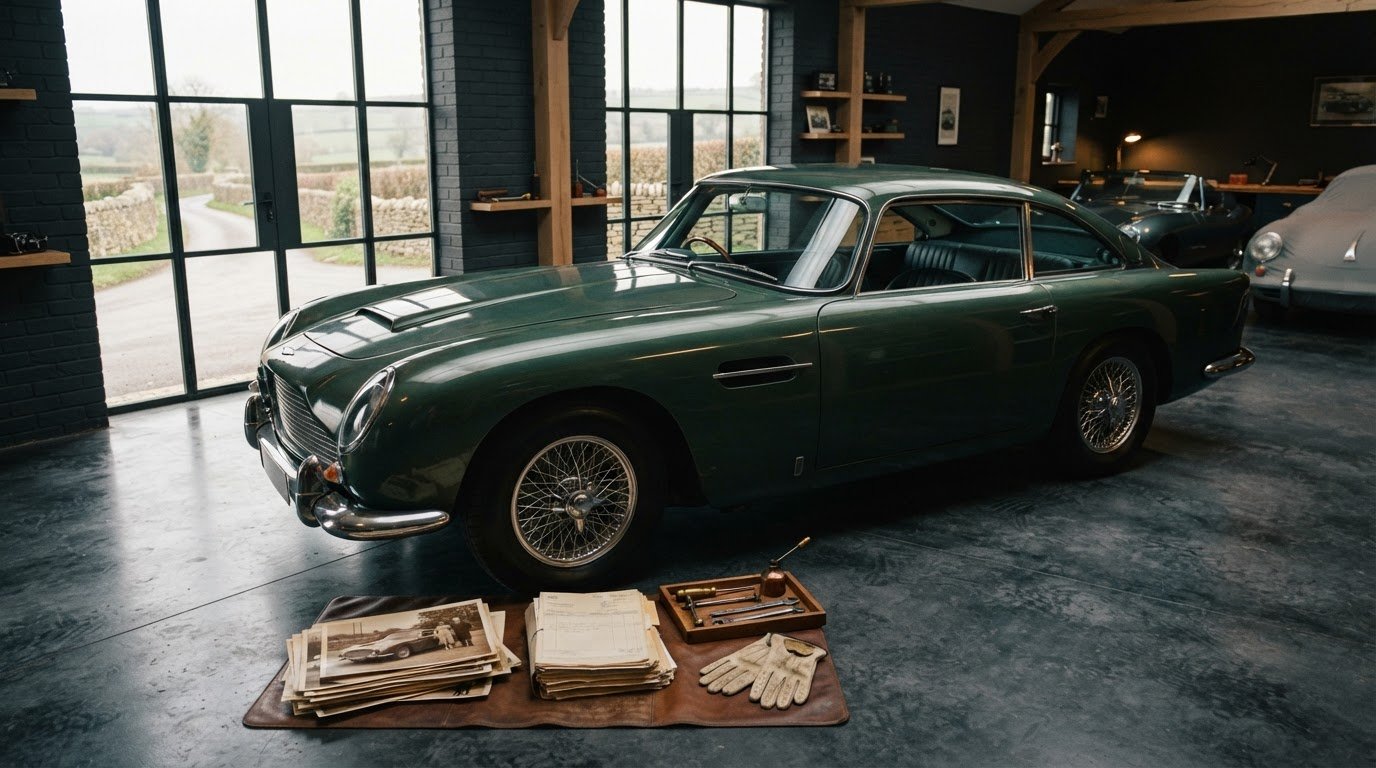
Could keeping a collector car’s mileage low weaken its story if the records don’t explain how? Low mileage may support a car’s appeal, but it cannot replace condition, provenance or a credible usage history. The most effective strategies for preserving a car's value for collectors protect the vehicle while keeping its history clear.
It’s understandable to worry that driving your car could affect its future value, or that maintenance and restoration could compromise originality. In practice, careful use and well-organised records can tell prospective buyers more than a low odometer reading alone. The key is to assess the car’s priorities before making changes, document its care and keep its mileage history accurate.
You’ll also see why limiting unnecessary use is different from suppressing recorded mileage. Mileage blocker devices are intended for vehicle testing or off-road tracks, not for preserving collector value or disguising a car’s history.
Key Takeaways
- Use strategies for preserving a car's value for collectors that account for originality, condition, provenance and buyer expectations, not just mileage.
- Keep dated invoices, service records, restoration details and photographs together so completed work is easier to verify.
- Assess the car’s needs, follow suitable care guidance and review its condition regularly to make storage and use decisions deliberately.
- Keep mileage history accurate. Mileage blocker devices are for authorised testing or off-road tracks, not for disguising a car’s history or preserving its value.
What Really Preserves a Collector Car’s Value?
The strategies for preserving a car's value for collectors begin with more than keeping the odometer reading low. Value and appeal depend on the individual vehicle: its originality, condition, history, rarity and the expectations of likely buyers. The description of a classic car can also vary according to age and historical significance, so no single preservation approach suits every car.
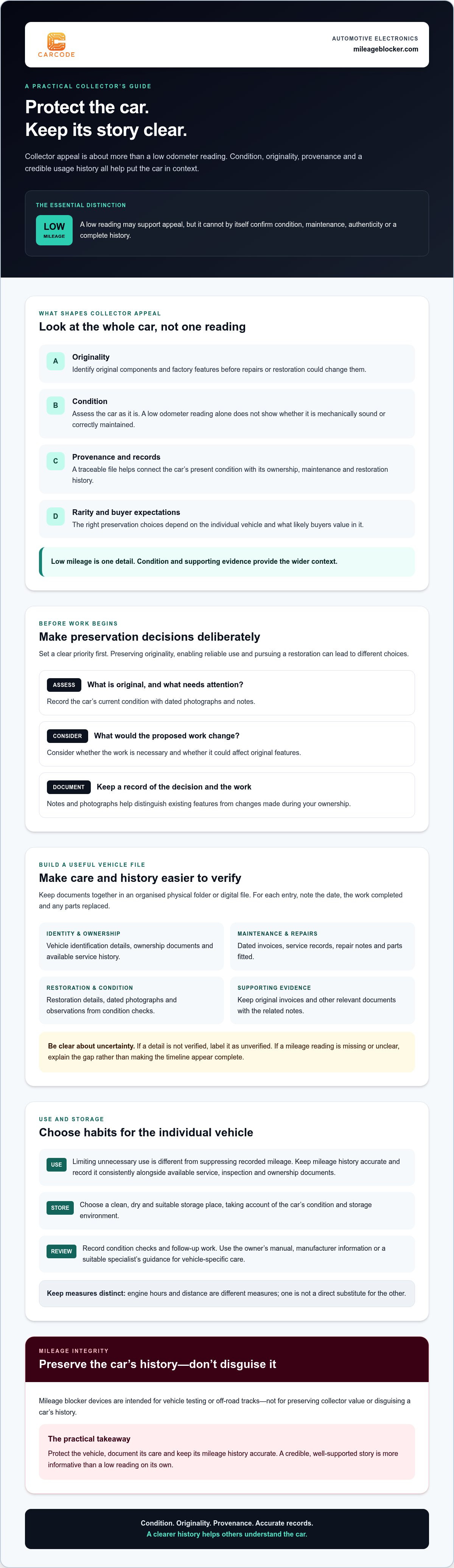
Documented condition and credible provenance give buyers a clearer basis for understanding a car’s history and the work it has received. Routine maintenance can help protect a vehicle without changing its character. Restoration decisions need more care: replacing original components or altering factory features may affect authenticity and how collectors view the car. Before work begins, identify what is original, what needs repair and what the proposed work would change.
Why provenance and condition matter together
Records connect a car’s present condition with its ownership, maintenance and restoration history. A consistent file can show what was inspected, repaired or replaced, rather than leaving buyers to rely on assumptions. Low mileage alone cannot confirm that a car is mechanically sound, correctly maintained or authentic. The odometer reading is one detail; condition and supporting evidence provide the wider context.
Set a preservation goal before making changes
Decide what you want to preserve: originality, reliable use or a particular restoration outcome. These priorities can lead to different choices, especially if a repair could alter original features. Before maintenance or cosmetic work, take dated photographs and make notes about the car’s condition. For each proposed change, consider whether it is necessary, whether it affects originality and how you will document it. This creates a reference for later decisions and helps distinguish existing features from changes made during your ownership.
How Do Maintenance and Records Support a Collector Car’s Value?
Maintenance helps protect a car’s condition; documentation makes that care easier to assess. Keep dated invoices, service records, restoration details and supporting photographs together in an organised digital file or physical folder. For each entry, note the date, the work completed and any parts replaced. Retain supporting documents where available, so a future buyer can distinguish completed work from an assumption or recollection.
Transparent records help a future buyer assess what work was completed, when it was done and what evidence supports the car’s condition and history. For broader preservation ideas, see Chubb’s guidance on protecting a classic car’s value. Treat general advice as a starting point, and follow the manufacturer’s information or a suitable specialist’s guidance for your particular vehicle.
What to include in a collector-car file
Build the file around information that can be checked and updated. Include the vehicle’s identification details, ownership documents and available service history. Add dated photographs and brief descriptions of repairs, parts fitted and restoration decisions. Keep original invoices and other supporting documents with the relevant notes. If a detail is uncertain, label it as unverified rather than presenting it as established fact. This makes gaps visible and preserves a useful distinction between documented history and recollection.
Document mileage and use honestly
Record mileage consistently alongside available service, inspection and ownership documents. If a reading is missing or unclear, explain the gap rather than trying to make the timeline appear complete. Engine hours and distance are different measures, so don’t treat one as a direct substitute for the other; see this guide to engine hours and miles for more context.
Record condition checks with the date and your observations, and keep notes of any follow-up work. The appropriate checks and intervals depend on the vehicle, so use its manufacturer’s guidance or consult a specialist familiar with it. These habits support the strategies for preserving a car's value for collectors by keeping both its care and its history traceable.
Which Storage and Use Habits Help Protect a Collector Car?
Preservation works best as a repeatable process, not a one-size-fits-all storage checklist. Start by assessing the car’s condition and storage environment. Then follow suitable care guidance, document any work and review the vehicle’s condition over time. The right approach depends on the car and its materials, so use the owner’s manual or a qualified specialist’s advice rather than applying a universal schedule.
Plan storage around the individual vehicle
Choose a clean, dry and suitable place to store the car, taking account of its present condition and the storage environment. Check the vehicle periodically for changes, and record any observations or maintenance in its file. A routine that suits one vehicle may not suit another, so base storage and care decisions on the car’s needs and relevant guidance. Dated notes make it easier to compare its condition over time and plan further care.
Use also involves a balance: limiting unnecessary wear should not mean ignoring appropriate mechanical care. Follow vehicle-specific guidance on checks and maintenance, and ask a specialist where the car’s requirements are unclear. Effective strategies for preserving a car's value for collectors support its condition while keeping its use and care history credible.
Keep use and changes transparent
Record significant use, including track use, alongside repairs and modifications. Note what changed and when, and retain supporting documents where available. If work affects original features, describe the change accurately in the vehicle file. Clear entries help distinguish ordinary use from work that may affect originality or condition.
A mileage blocker is not a preservation method and should never be used to disguise a car’s history. These devices are intended for authorised vehicle testing or off-road tracks, with suitability confirmed for the specific vehicle and use. For a neutral overview of the device category, read this guide to mileage blocker technology. Keep odometer information and records transparent, and check relevant guidance for your circumstances.
How Can Collectors Protect Value Without Misrepresenting Mileage?
Obscuring or misrepresenting mileage isn’t a sound collector-value strategy. A low displayed reading cannot replace a credible account of a car’s use, condition and maintenance. If the odometer reading needs explanation, provide the available records and describe any gaps clearly. Transparency gives prospective buyers a more reliable basis for assessing the vehicle.
Why transparent mileage history supports trust
Buyers consider mileage alongside service records, condition and provenance. Consistent entries in invoices, inspection documents and ownership records help them understand the car’s history. Where records conflict or a reading is uncertain, explain what is known rather than presenting an assumption as fact. No device can authenticate a car, improve its condition or preserve its collector value; those questions depend on the vehicle and the evidence available.
When to ask about a mileage blocker
Mileage blocker devices have a limited context here: vehicle testing or use on off-road tracks. They aren’t a means of managing a collector car’s road-use history or disguising mileage. Before considering a device, confirm its suitability for the specific vehicle and intended use. Permitted use can depend on jurisdiction and circumstances, so check reliable, jurisdiction-specific guidance before proceeding. Don’t rely on general information as a legal conclusion.
For general questions about the device category, consult the mileage blocker FAQ. Verify vehicle-specific details for the exact application rather than assuming information for another model or generation will apply. The distinction is straightforward: maintain accurate mileage records for the car, and consider specialist equipment only for its intended context.
Protect the Car’s History as Carefully as Its Condition
The strongest strategies for preserving a car's value for collectors combine thoughtful care with a history that can be checked. Set a clear preservation goal before making changes, follow guidance suited to the individual vehicle, and keep dated records of maintenance, restoration, use and mileage. Together, these steps help a future buyer understand what the car is and how it has been cared for.
Low mileage alone doesn’t prove condition or authenticity. Keep odometer information accurate, explain any gaps in the records and never use a device to disguise a car’s history. A mileage blocker has a separate, limited purpose: authorised vehicle testing or off-road use, with suitability confirmed for the specific vehicle. It is not a way to preserve collector value.
If you have a relevant testing or off-road application, MileageBlocker.com by Carcode offers vehicle-specific hardware, with fitting available on request. Contact MileageBlocker.com by Carcode about vehicle-specific device information and confirm the application details before proceeding. Careful decisions and clear records provide a practical foundation for looking after your car.
Frequently Asked Questions
Does low mileage always make a collector car more valuable?
No. Mileage is one part of a car’s assessment, not a universal measure of value. Condition, originality, provenance and maintenance history also matter, as do the expectations of buyers interested in that particular vehicle. A low reading doesn’t, by itself, confirm mechanical condition or authenticity. Consider the full history and available evidence rather than assuming mileage alone determines collector appeal.
How can I document a collector car’s history?
Keep a consistent, dated file of service records, invoices, ownership documents and photographs. Record repairs, restoration work and changes clearly, including what was done and when. Retain original supporting material where available, so another person can distinguish evidence from recollection. Avoid claims you can’t substantiate. These records are among the practical strategies for preserving a car's value for collectors because they make its history easier to assess.
Should I drive a collector car regularly to preserve its value?
There’s no universal driving schedule that suits every collector car, and driving or storage alone can’t guarantee value preservation. Consider the vehicle’s condition and storage environment, then follow care guidance specific to its make and model. Record use and maintenance in the vehicle file. If you’re unsure what’s appropriate, consult a qualified specialist familiar with the car.
Can a mileage blocker preserve a collector car’s value?
No. A mileage blocker should not be presented as a way to preserve collector value or conceal mileage from a buyer. MileageBlocker.com describes its devices for vehicle testing or off-road tracks, not for misrepresenting a car’s history. Keep mileage records accurate and transparent. Permitted use can depend on jurisdiction and circumstances, so check reliable, jurisdiction-specific guidance for your intended use.
About the author
MileageBlocker TeamThe MileageBlocker Technical Team covers vehicle electronics, CAN and CAN-FD systems, mileage blocker compatibility, installation and product developments.
View author profile →