
Mileage Blocker: The Ultimate Guide to Odometer Stopper Technology
The ultimate guide to mileage blocker technology. Learn how odometer stoppers work, their legal uses for testing, and how to choose a safe, undetectable device.
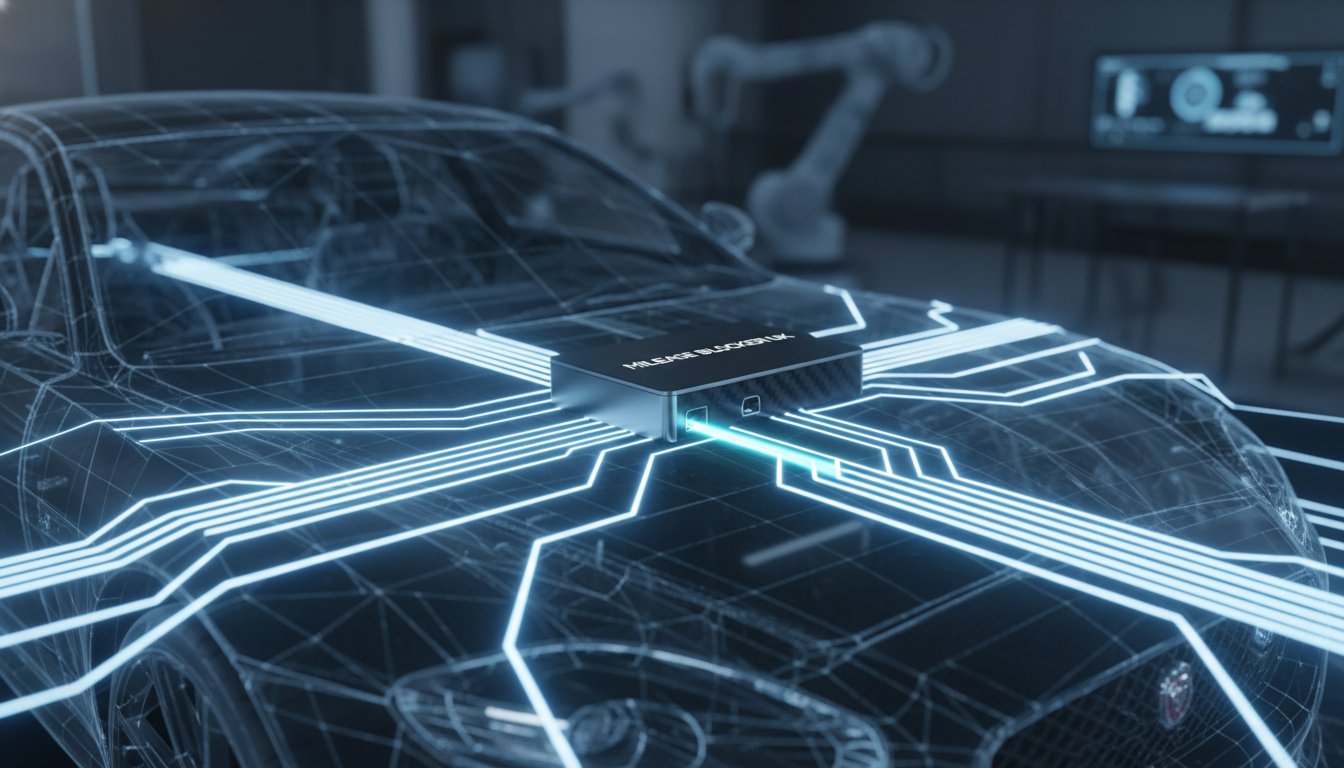
Navigating the advanced electronics of modern vehicles requires a smart, reliable solution. When considering a device for testing or off-road use, concerns about potential damage to sensitive ECUs, detection by diagnostic scans, and the legality of the tool are paramount. The market is filled with confusing options, making it difficult to distinguish between a professional-grade mileage blocker and a risky, inferior product. This guide is engineered to eliminate that uncertainty, providing the clarity needed to make a confident and informed decision.
We provide a clear, technical breakdown of how odometer stopper technology functions, interfacing safely with your vehicle's CAN-Bus system. You will understand why premium quality components are non-negotiable for achieving an untraceable effect that is invisible to diagnostic tools. We will also clarify the crucial difference between a blocker and illegal rollback devices. Ultimately, you will gain the knowledge to choose a reliable, high-performance tool that guarantees a simple, reversible installation process for your vehicle's specific testing requirements.
What is a Mileage Blocker and How Does It *Really* Work?
A mileage blocker is a specialized electronic device designed to halt the mileage recording process in a vehicle's digital odometer. Its primary, intended purpose is for vehicle testing and research in controlled, off-road environments-such as dynamometer (dyno) testing, performance tuning, or electronics development. To understand its function, it's essential to know about the CAN (Controller Area Network) Bus, the internal communication system that allows dozens of electronic modules in a modern car to share information. For a foundational understanding of the component this device interacts with, see the Wikipedia article explaining what is an odometer and its history.
Unlike fraudulent "mileage correction tools" that illegally roll back or alter existing mileage, a blocker simply filters the data stream in real time. It acts as a gatekeeper on the CAN Bus, preventing new distance data from being recorded across the vehicle's various control units. It does not erase, change, or "hack" the mileage that is already stored. When the device is deactivated, the vehicle resumes recording mileage from the exact point it left off, with no data loss or alteration.
The Technology Behind the 'Untraceable Effect'
In modern vehicles, mileage isn't stored in just one place. It's broadcast across the CAN Bus and recorded in multiple electronic control units (ECUs), such as the Engine Control Module, Body Control Module (BCM), and the instrument cluster itself. A high-quality module filters this data stream before it reaches these modules. Because it prevents the mileage data from ever being written to the permanent EEPROM memories, there are no discrepancies or traces of alteration for diagnostic tools to detect.
Why It Doesn't Interfere with Other Systems
A premium-quality blocker is engineered with precision. It targets only the specific data packets associated with distance recording. All other critical communications-for your engine, ABS, airbags, and other safety systems-are allowed to pass through the CAN Bus without interference. This selective filtering ensures your vehicle operates correctly without generating dashboard errors or compromising safety, a stark contrast to cheap, poorly designed devices that can disrupt the entire network.
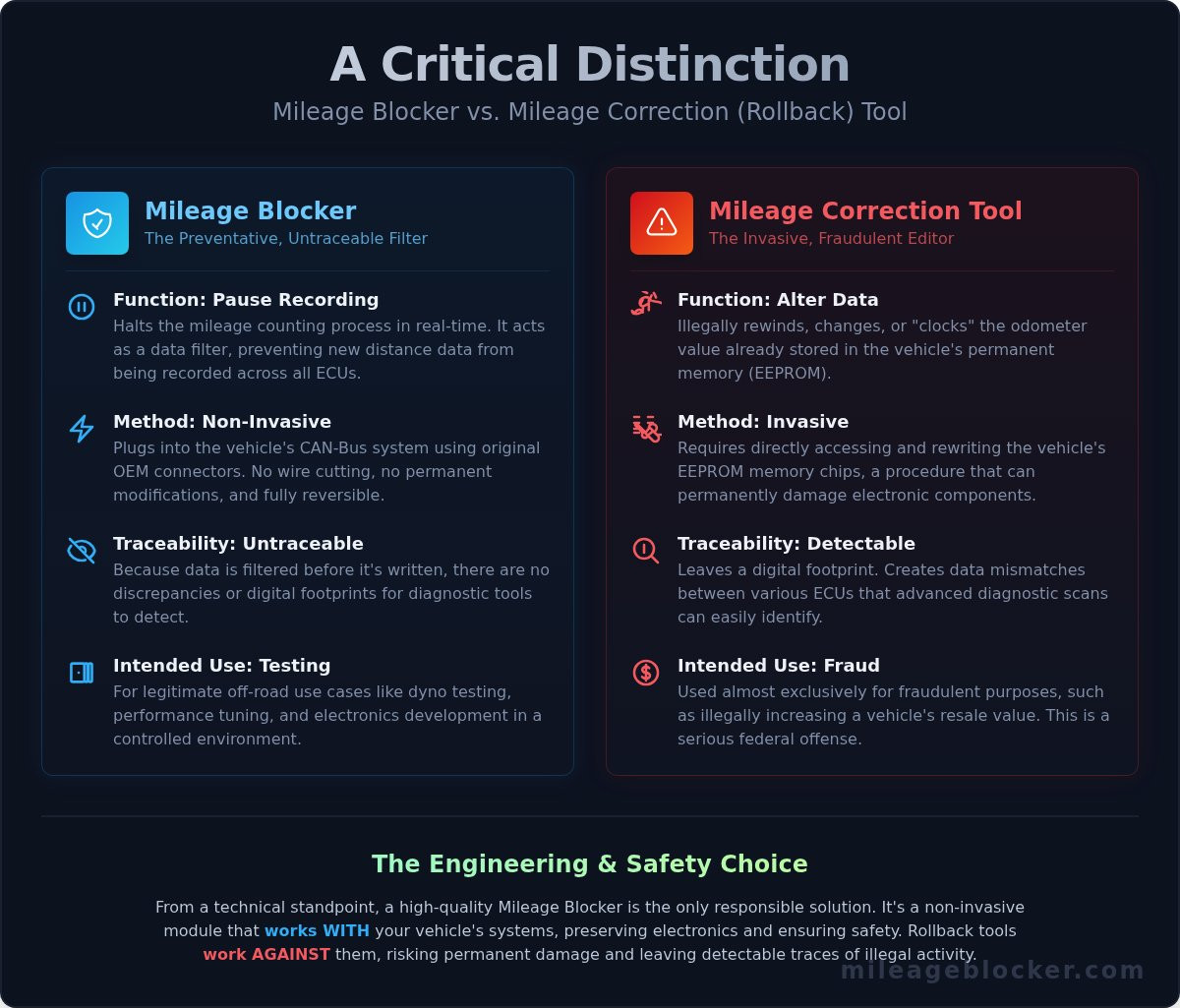
Mileage Blocker vs. Mileage Correction Tools: A Critical Distinction
Understanding the difference between a mileage blocker and a mileage correction tool is the most critical step in making an informed decision for your vehicle. These devices serve fundamentally different purposes and operate on entirely different principles. One is a preventative tool for specific, legitimate applications, while the other is an alteration tool primarily used for fraud.
Framing the comparison is simple: a mileage blocker is designed to filter mileage data in real-time for testing purposes, while a correction tool is used to illegally rewrite historical data. Let's break down the technical and ethical distinctions.
Odometer Blockers: Filtering Data in Real-Time
A high-quality mileage blocker module is an advanced electronic device engineered to pause the mileage recording process across all of a vehicle's control units (ECUs). It operates as a filter, not an editor.
- Function: Halts the counting process simultaneously in the instrument cluster, central gateways, and other memory modules, ensuring data consistency.
- Method: Plugs directly into the vehicle's existing diagnostic or CAN-Bus system using OEM connectors. No wires are cut, and no permanent modifications are made.
- Traceability: Because the device does not reprogram or erase existing mileage data, its operation is untraceable by diagnostic tools.
- Intended Use: Designed exclusively for ethical vehicle testing, performance tuning, and off-road applications where mileage accumulation is not desired.
Mileage Correction/Rollback Tools: Reprogramming Stored Data
Mileage correction or "rollback" tools are fundamentally invasive devices designed to fraudulently alter a vehicle’s recorded odometer reading. Their operation is widely illegal and unethical.
- Function: Illegally rewinds, changes, or "clocks" the odometer value that is permanently stored in the vehicle's memory.
- Method: Requires directly accessing and rewriting the vehicle’s EEPROM memory chips. This is an invasive procedure that can permanently damage electronic components.
- Traceability: This process often leaves a digital footprint. In modern vehicles, mileage is stored in multiple ECUs, and a rollback tool frequently creates a data mismatch that advanced diagnostic scans can easily identify. This practice violates strict federal odometer fraud laws and is a serious offense.
- Intended Use: Almost exclusively for fraudulent purposes, such as artificially increasing a vehicle's resale value by misrepresenting its usage.
Why a Blocker is a Superior Technical Solution
From an engineering and safety standpoint, a blocker is the only responsible choice. It is a non-invasive module that preserves the integrity of your vehicle’s sensitive electronic systems, unlike rollback tools which risk corrupting critical ECU software. The effect is also completely reversible; simply deactivate the device to resume normal mileage recording. It works with the vehicle's systems, not against them. Choose the safe and reliable solution for your vehicle.
Key Features of a Premium-Quality Mileage Blocker
In the market for vehicle diagnostic tools, not all devices are created equal. This is especially true for the mileage blocker, where the difference between a premium product and a cheap alternative can be the difference between seamless operation and catastrophic electrical failure. A low-quality device can introduce errors into your vehicle’s CAN-Bus system, trigger warning lights, or fail under normal operating temperatures. Furthermore, using any device to misrepresent a vehicle's odometer reading for a sale is illegal under federal odometer fraud laws. For legitimate testing and off-road applications, investing in a superior-quality tool is the only reliable choice.
Automotive-Grade Components and Build Quality
The physical construction of a mileage stopper is the first indicator of its quality. Premium devices are engineered to meet or exceed OEM standards, ensuring they integrate perfectly with your vehicle without causing damage. Key physical attributes include:
- Genuine Plug-and-Play Connectors: High-quality modules use original connectors that provide a perfect, secure fit. This eliminates the need for cutting or splicing wires, preserving your vehicle's warranty and electrical integrity.
- Heat-Resistant Materials: The device and its wiring are made from materials designed to withstand the high temperatures found behind the dashboard and near the engine bay, preventing melting or degradation over time.
- Superior Manufacturing: Precision soldering and professionally manufactured circuit boards prevent electrical shorts and ensure consistent, long-term performance and reliability.
Advanced Software and User Interface
The software is the core of any mileage blocker. Inferior programming can cause conflicts with other electronic control units (ECUs), leading to system glitches or inaccurate data logging. A premium device features stable, professionally developed firmware that works in harmony with your vehicle's systems. Look for user-centric features like simple activation and deactivation, often using the vehicle’s existing steering wheel buttons for discreet control. Many top-tier models also include a memory function that recalls the last used setting, so you don’t have to reconfigure it after each engine start.
Verification and Customer Support
A reputable seller stands behind their product. The most reliable suppliers develop their own hardware and software in-house, giving them an unparalleled understanding of their product's functionality. This expertise translates into better customer support and product confidence. When choosing a provider, verify that they offer detailed, vehicle-specific installation instructions and have a dedicated technical support team available via email or chat. A lifetime warranty is the ultimate sign that the manufacturer is confident in their product's quality, durability, and performance.
This principle of choosing high-quality, specialized electronics extends to other areas of vehicle enhancement as well. For instance, drivers looking for advanced protection on the road might also want to explore AL Priority System, which offers a similar level of sophisticated engineering for laser defense.
Installation and Operation: A User's Guide
Modern vehicles feature complex electronic systems, which can make the idea of installing a new device seem intimidating. However, our premium modules are engineered with the user in mind. The installation and operation of a mileage blocker are designed to be straightforward, secure, and fully reversible, requiring no permanent modifications to your vehicle.
The DIY Installation Process
Our kits are developed for a direct, plug-and-play fitment, eliminating the need for complex wiring. While every vehicle is different, the general process is consistent and non-invasive. Quality kits never require you to cut or solder any wires, preserving your vehicle's factory warranty and integrity.
- Access the Module: The first step typically involves carefully removing a trim panel to gain access to the back of the instrument cluster or another specific control module.
- Connect the Device: You will disconnect the original wiring harness from the module and plug the mileage blocker in-line. It uses genuine, automotive-grade connectors to ensure a perfect and secure fit.
- Reassemble: Once connected, simply tuck the device and wiring away and reinstall the trim.
It is crucial to follow the detailed, vehicle-specific installation guide provided with your purchase to ensure a correct and safe setup.
Operating the Mileage Blocker
Activating and controlling the device is designed to be simple and discreet, often using your vehicle's existing steering wheel or dashboard buttons. For example, a common activation method is pressing the "RES" or "OK" button a few times in quick succession. Confirmation is typically provided by a visual cue, such as a quick flash of the hazard lights or an indicator on the instrument panel. Many of our devices offer multiple modes (e.g., 100% block, 50% block, 10% block) that you can cycle through with the same button. Deactivation is just as easy and instantly restores normal mileage recording.
When to Consider a Professional Fitting Service
While the DIY process is straightforward, we understand that some owners prefer a hands-off approach. A professional fitting is an excellent option for those who are not comfortable removing vehicle trim or simply want the ultimate peace of mind. It guarantees a flawless, factory-like installation and saves you valuable time. For ultimate convenience and the assurance of a perfect setup, you can learn more about our professional fitting service.
Legality and Ethical Use: What You MUST Know
The primary concern for potential users is, understandably, the legality of these devices. The legal status of a mileage blocker is straightforward: owning the device is perfectly legal in most countries. However, its legality hinges entirely on its application. These are specialist tools developed for specific, legitimate purposes, and using them outside of those contexts can have serious legal repercussions.
Our modules are engineered as premium-quality tools for professionals and enthusiasts who require them for valid diagnostic and testing scenarios. They are not designed for fraudulent activities.
The Intended and Legal Purpose
A mileage blocker is intended for use in controlled environments where adding mileage to the odometer is unnecessary or would invalidate test results. The device should only be active during these specific off-road situations:
- Vehicle Testing & Tuning: When testing a vehicle's performance on a dynamometer (dyno), mileage accumulation is irrelevant and can devalue the car. The blocker allows for extensive testing without affecting the odometer.
- Research & Development: Manufacturers and performance shops use these tools during the development and testing of new components to isolate variables without mileage being a factor.
- Off-Road Driving: For vehicles used exclusively on private land, such as farms or large estates, the odometer reading is not a required measure of use.
- Diagnostic Checks: Mechanics may use a blocker to check vehicle functions during extended stationary tests without adding "false" miles.
The Illegal Application: Odometer Fraud
Using a mileage blocker to deceive a potential buyer about a vehicle's true mileage is illegal and constitutes odometer fraud. This is a serious offense in most countries, including the United States and the European Union, and carries severe penalties, including substantial fines and imprisonment.
The device must always be deactivated before the vehicle is driven on public roads. Misrepresenting a vehicle's mileage during a sale is unethical, illegal, and undermines the trust essential to the automotive market.
Your Responsibility as a User
The responsibility for ethical and legal use lies entirely with the vehicle owner. By purchasing and installing this device, you acknowledge that it is intended for legitimate testing and off-road purposes only. We sell our products with the clear understanding that they will not be used for deceptive practices on public highways.
Disclaimer: Laws regarding odometer modification vary by country and state. Always check your local and national laws before purchasing and using this product.
The Intelligent Choice for Mileage Control
Navigating the world of odometer technology requires a clear understanding of the tools available. As this guide has detailed, the critical distinction lies between preventative devices and fraudulent correction tools. A superior mileage blocker is a sophisticated instrument engineered for legitimate off-road and vehicle testing applications, designed specifically to preserve the integrity of your vehicle’s complex electronic systems. Understanding its proper function and the importance of ethical use is the first step toward making an informed decision.
When performance and discretion are critical, only the highest quality will suffice. Our modules guarantee a completely untraceable effect on all ECUs, are built with premium automotive-grade components, and feature a user-friendly simple plug-and-play installation. This is the professional standard for vehicle diagnostics and testing. Ready to equip your vehicle with the market-leading solution? Shop Premium, Untraceable Mileage Blockers Now and take control of your testing process.
Frequently Asked Questions
Can a dealership detect a mileage blocker?
A premium quality mileage blocker is designed to be completely untraceable. Unlike simple mileage correction tools, our device doesn't just target the odometer display; it filters mileage information from all relevant ECU modules and EEPROM memories. When removed, it leaves no electronic footprint or error codes that could be discovered by dealership diagnostic tools. This ensures its operation remains undetectable during routine service or diagnostics, preserving the vehicle's integrity for testing or off-road use.
Will installing a mileage blocker void my car's warranty?
No, installing our device will not void your vehicle's warranty. Our modules are designed for simple plug-and-play installation using genuine automotive-grade connectors, which means there is no cutting or soldering of wires. The device can be completely removed before any dealership visit, returning the vehicle to its factory state. Since there is no permanent modification and the device leaves no trace after removal, the manufacturer's warranty remains fully intact and unaffected.
What happens to the mileage when I remove the mileage blocker?
When you remove or deactivate the mileage blocker, the vehicle’s odometer and all control units will resume counting mileage from the exact point where they were paused. The device does not alter or roll back the existing recorded mileage; it simply stops the counting process. There is no sudden jump or loss of data. The transition is seamless, and the car will begin to accrue new mileage normally, ensuring consistent and predictable operation.
How do I know which mileage blocker is compatible with my specific vehicle?
We develop and program our modules for the specific CAN-Bus or FlexRay architecture of each vehicle. To find the correct device, simply use the search tool on our website to select your car’s make, model, and year of manufacture. This will direct you to the exact product engineered for your vehicle's system. Choosing the correct, model-specific module is critical for guaranteeing flawless, untraceable performance and full compatibility with all electronic systems.
Is it difficult to remove the device once it has been installed?
No, removal is just as simple and straightforward as the initial installation. Our modules are engineered as plug-and-play solutions. To remove the device, you simply access its location, disconnect our module, and then reconnect the original factory plugs. No special tools or technical expertise is required. The entire process can typically be completed in less than 30 minutes, completely restoring the vehicle to its original configuration without leaving any physical evidence.
Do mileage blockers work on electric and hybrid vehicles?
Yes, absolutely. We offer mileage blockers specifically designed and programmed for a wide range of electric (EV) and hybrid vehicles. These advanced vehicles rely on even more complex electronic networks to record mileage, and our modules are tailored to their unique communication protocols. Whether it's a fully electric or a hybrid powertrain, our device ensures the same reliable and untraceable performance, making it an effective solution for testing purposes on modern vehicles.
About the author
MileageBlocker TeamThe MileageBlocker Technical Team covers vehicle electronics, CAN and CAN-FD systems, mileage blocker compatibility, installation and product developments.
View author profile →