How to Verify if My Car Mileage Blocker is Working Correctly
On 14 March, a Ferrari owner in London completed a DIY installation of a premium module but found himself second-guessing the connection. He''d followed every...
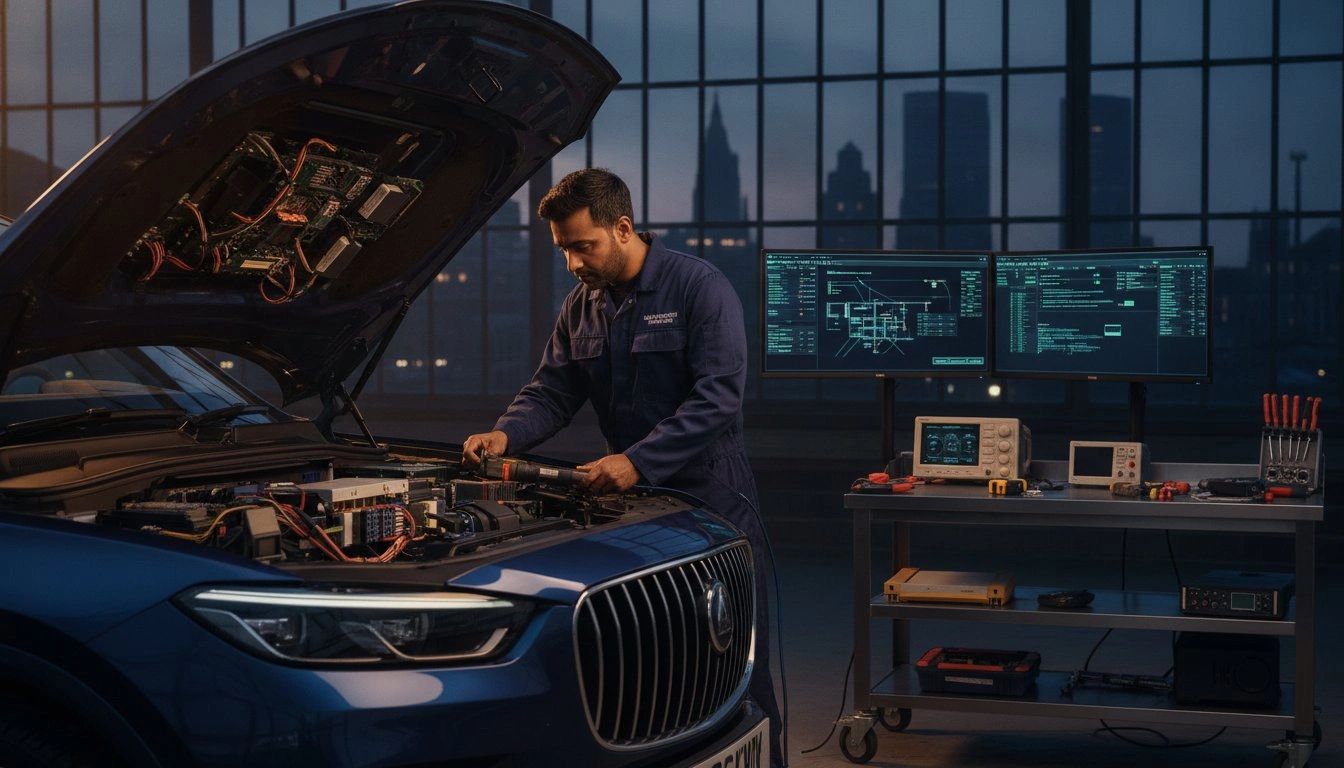
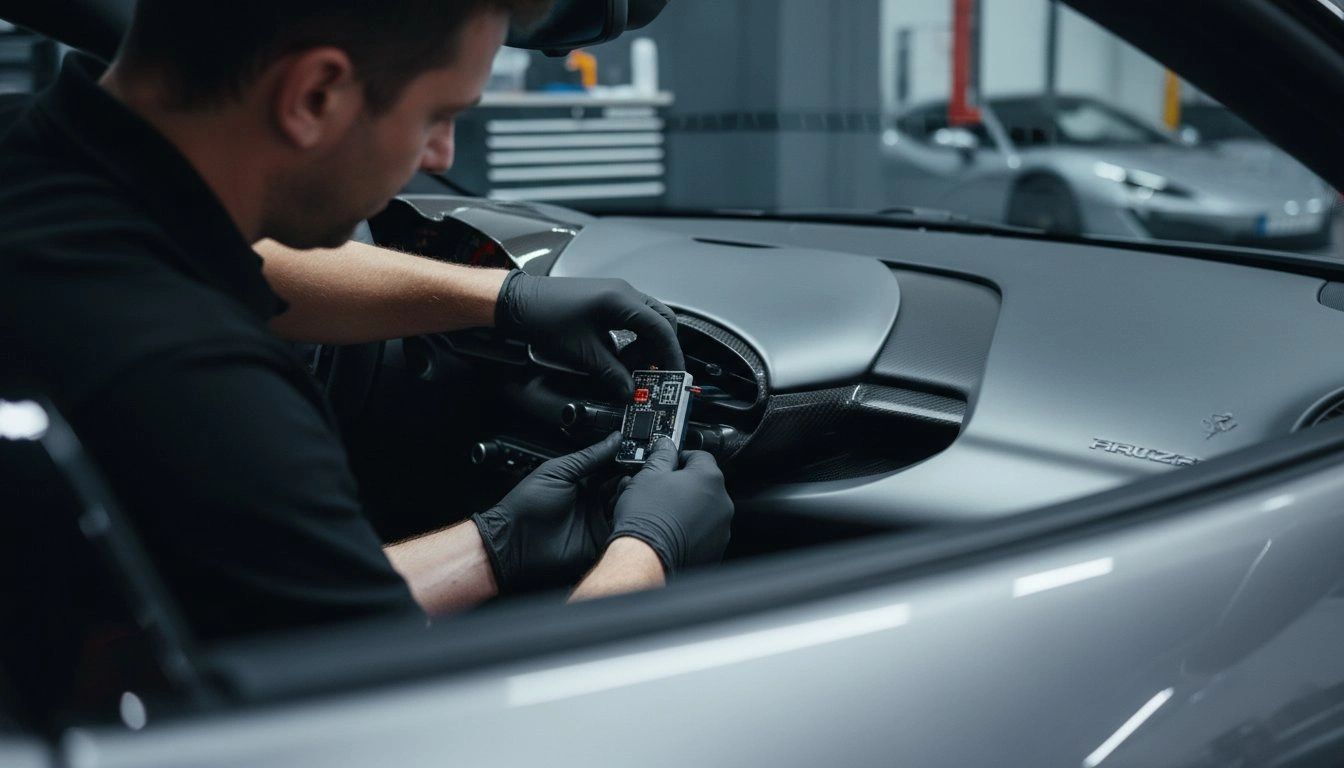
On 14 March, a Ferrari owner in London completed a DIY installation of a premium module but found himself second-guessing the connection. He'd followed every step, yet the anxiety of an incorrect setup remained. It's a common scenario for many enthusiasts who want to ensure their vehicle's electronics remain untouched during off-road testing. You've likely felt that same uncertainty after fitting a device, wondering if the data is still creeping into hidden ECU modules or if your speedometer will suddenly fail at 70 mph.
At Mileage Blocker, we understand that peace of mind comes from technical certainty, not just a blinking LED. You've invested in quality hardware from MileageBlocker.com, and you deserve to know exactly how to verify if my car mileage blocker is working as intended without leaving a trace in the EEPROM memories. We'll help you move past the guesswork by identifying the specific visual cues and diagnostic checks that confirm your device is successfully intercepting CAN-Bus signals.
This article outlines the precise technical steps to validate your odometer stopper's performance while maintaining a fully functional instrument cluster. We'll cover everything from simple road tests to observing how the device interacts with your vehicle's sophisticated FlexRay systems.
Key Takeaways
- Discover how to verify if my car mileage blocker is active by monitoring speedometer behaviour and identifying specific LED confirmation codes on your Carcode hardware.
- Understand how premium Carcode Mileage Blockers interact with CAN-Bus and FlexRay systems to ensure an untraceable effect across all ECU modules, even in high-performance vehicles like a Ferrari.
- Learn the protocol for a controlled two-mile test drive on a private track to confirm your odometer stopper is intercepting signals correctly without triggering latent error codes.
- Find out how to use a standard OBD2 scanner to perform a deep-level check for any Diagnostic Trouble Codes (DTCs), ensuring your installation remains clean and professional.
- Gain insights into when to seek professional fitting services and how to use MileageBlocker.com to find the specific device tailored for your vehicle’s unique electronic architecture.
Understanding the Need to Verify Your Car Mileage Blocker
Verification isn't a luxury; it's a technical necessity for any serious vehicle owner. When you install Carcode Mileage Blockers, you're integrating a sophisticated piece of hardware into a vehicle's complex digital ecosystem. These devices must correctly intercept high-speed signals across the CAN-Bus and FlexRay networks to ensure no mileage data reaches the various ECU modules. Relying on a "set and forget" mentality is a mistake that professional testers and enthusiasts avoid. You need to know exactly how your vehicle responds under specific testing conditions to maintain total control over the data streams.
Testing your device in a controlled, off-road environment is the only way to guarantee performance. Whether you're calibrating a Ferrari 812 Superfast or a high-spec Audi, the digital architecture requires absolute precision. A single missed signal can lead to data discrepancies between the instrument cluster and the central gateway. The owner's role is central to maintaining the untraceable status of the vehicle. You're the final auditor of the hardware's state. Understanding what is odometer fraud helps clarify why professional-grade tools focus on data integrity during legitimate testing phases. It's about ensuring the vehicle's internal logs remain consistent with the dashboard display during your off-road sessions, preventing any digital "mismatch" that lower-quality tools often cause.
Verification vs Detection: What is the Difference?
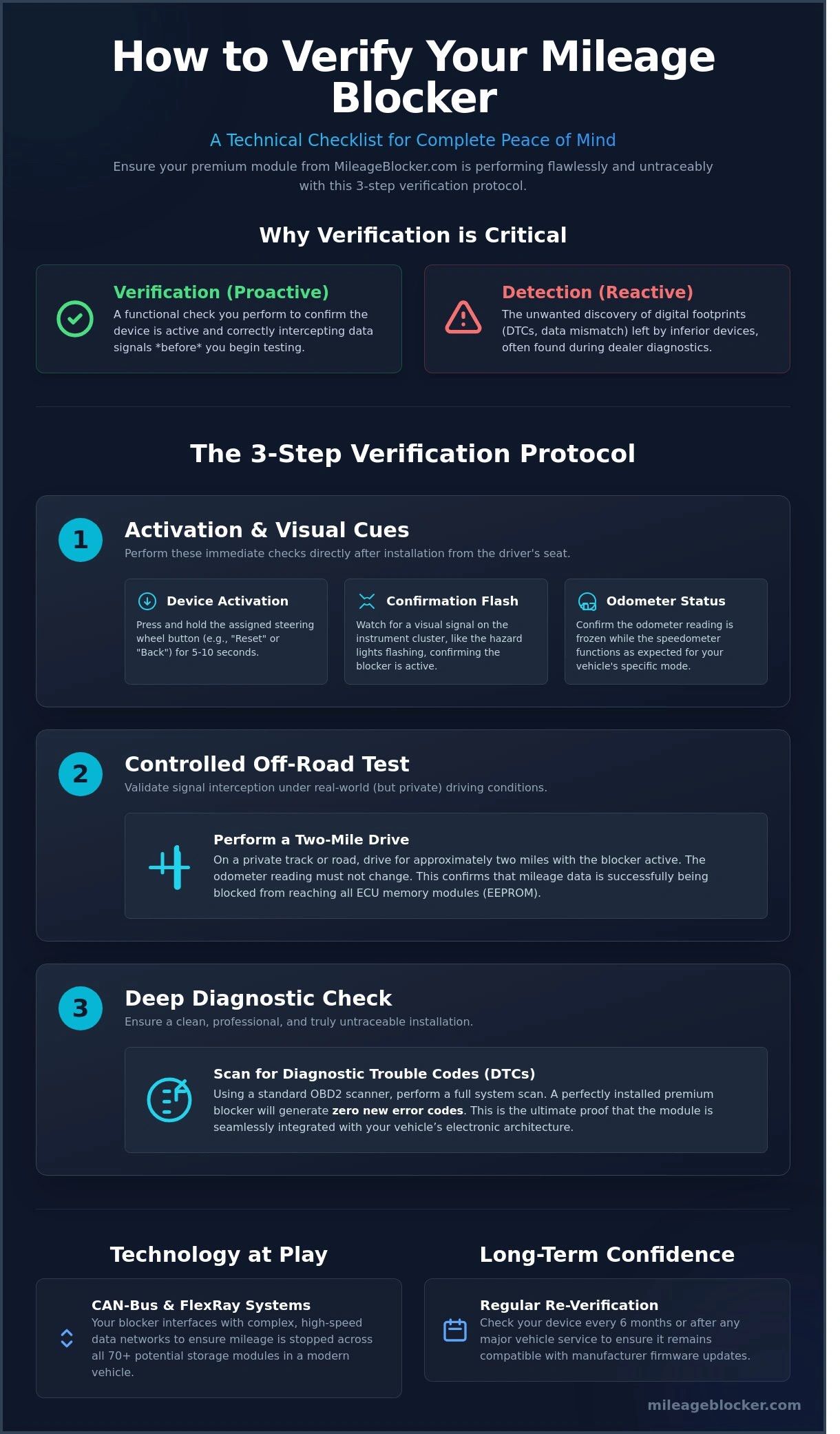
Verification is a proactive process. It involves checking the functional state of your tool before you begin a test. In contrast, detection is reactive. It happens when inferior devices leave digital footprints in the EEPROM memories, leading to discovery by dealer diagnostic equipment. Premium tools from MileageBlocker.com prevent detection through rigorous verification protocols. These modules use genuine automotive-grade components that mimic factory signals perfectly. If you are wondering how to verify if my car mileage blocker is active, you should observe the speedometer's behaviour or the specific LED indicator flashes programmed into the device. This proactive approach ensures 100% of the data streams are managed correctly across all 70+ potential storage modules in a modern car.
The Human Element of Vehicle Testing
Technical enthusiasts rarely rely on automated systems alone. They prefer manual confirmation. This hands-on approach is why many owners of high-performance cars, such as a Ferrari Roma, take the time to verify settings personally. You should establish a regular testing schedule. Checking the device every 6 months or after any major vehicle service ensures the software remains compatible with the latest manufacturer firmware updates. This level of diligence ensures device longevity and protects your investment. The confidence gained from knowing your hardware functions exactly as intended is invaluable. It transforms a simple device into a reliable performance tool. When you use hardware from MileageBlocker.com, you're using equipment designed for those who demand technical perfection and absolute discretion in their automotive pursuits. Knowing how to verify if my car mileage blocker is operating correctly gives you the peace of mind that your vehicle's digital integrity remains uncompromised during every off-road mile.
Technical Indicators: How to Verify if Your Blocker is Active
Confirming the operational status of your Carcode hardware is the first step after installation. You need to understand how to verify if my car mileage blocker is active before commencing any off-road testing or laboratory simulations. The most immediate indicator is the speedometer behaviour. During your initial test drive on private land, observe the needle or digital readout. In many standard configurations, the speedometer will continue to function normally while the odometer remains frozen. However, some high-speed CAN-Bus filters for vehicles like the Ferrari 812 Superfast might require a mode where the speedometer shows a reduced value or sits at zero to ensure the mileage is stopped across all ECU modules.
The hardware from MileageBlocker.com features sophisticated LED confirmation codes. When you initiate the device via the steering wheel controls, usually by holding a specific button like "Reset" or "Back" for 5 to 10 seconds, the instrument cluster will provide a visual signal. This is often a flash of the hazard lights or a specific indicator on the dashboard. These signals aren't just random; they're programmed responses from the device's microchip. Because modern vehicles use complex FlexRay and CAN-Bus systems, these digital handshakes are essential to confirm the blocker is correctly intercepting distance data before it reaches the EEPROM memory.
Monitoring for numerical jumps is equally vital. If you notice the odometer incrementing and then suddenly jumping back, the device might be in a "10%" or "20%" mode rather than a total freeze. While these tools are designed for professional testing, it's crucial to be aware of the legal implications under UK road traffic laws and consumer protection regulations regarding inaccurate mileage on public roads. Therefore, it's critical to ensure your device is only active during legitimate off-road scenarios. Always check that the trip computer and the main odometer are synchronised in their behaviour during your test.
Visual Cues and Dashboard Signals
An active mode is typically identified through indicator light flashes on the dashboard. For instance, a single flash of the high beam or turn signal indicator often signifies that Mode 1 is engaged. It's essential to verify that other dashboard functions, such as the fuel gauge and rev counter, operate normally. High-quality Carcode Mileage Blockers use genuine automotive-grade components to ensure that while the mileage is blocked, the rest of the vehicle's communication network remains stable. If your fuel gauge drops to zero, the device may be incorrectly installed or incompatible with your specific software version.
Mode Selection and Confirmation
Most premium devices allow you to cycle through different percentage modes, such as 10%, 20%, or a 0% total freeze. To switch modes, you'll typically use a combination of steering wheel buttons, like pressing the "Mute" button three times in quick succession. A common mistake is failing to wait for the confirmation flash before driving, which leads to verification failure. In a 2024 model year vehicle, the synchronisation between the engine control unit and the dashboard is near-instant, so you must confirm the mode while the vehicle is stationary. If you're struggling to identify which mode is currently active, you can find detailed vehicle-specific instructions at MileageBlocker.com to ensure your testing parameters are accurate.
Verifying Untraceability: Why Carcode Mileage Blockers Lead the Market
Modern vehicles don't just use simple wiring. They rely on complex communication networks known as CAN-Bus and FlexRay to transmit data between components. Carcode Mileage Blockers are engineered to filter specific data packets on these systems without disrupting other vital functions like cruise control or lane assist. If you are wondering how to verify if my car mileage blocker is truly functional, you should look at the diagnostic transparency. High-quality devices from MileageBlocker.com ensure that the speedometer remains active while the mileage recording is paused, providing a seamless experience during off-road testing.
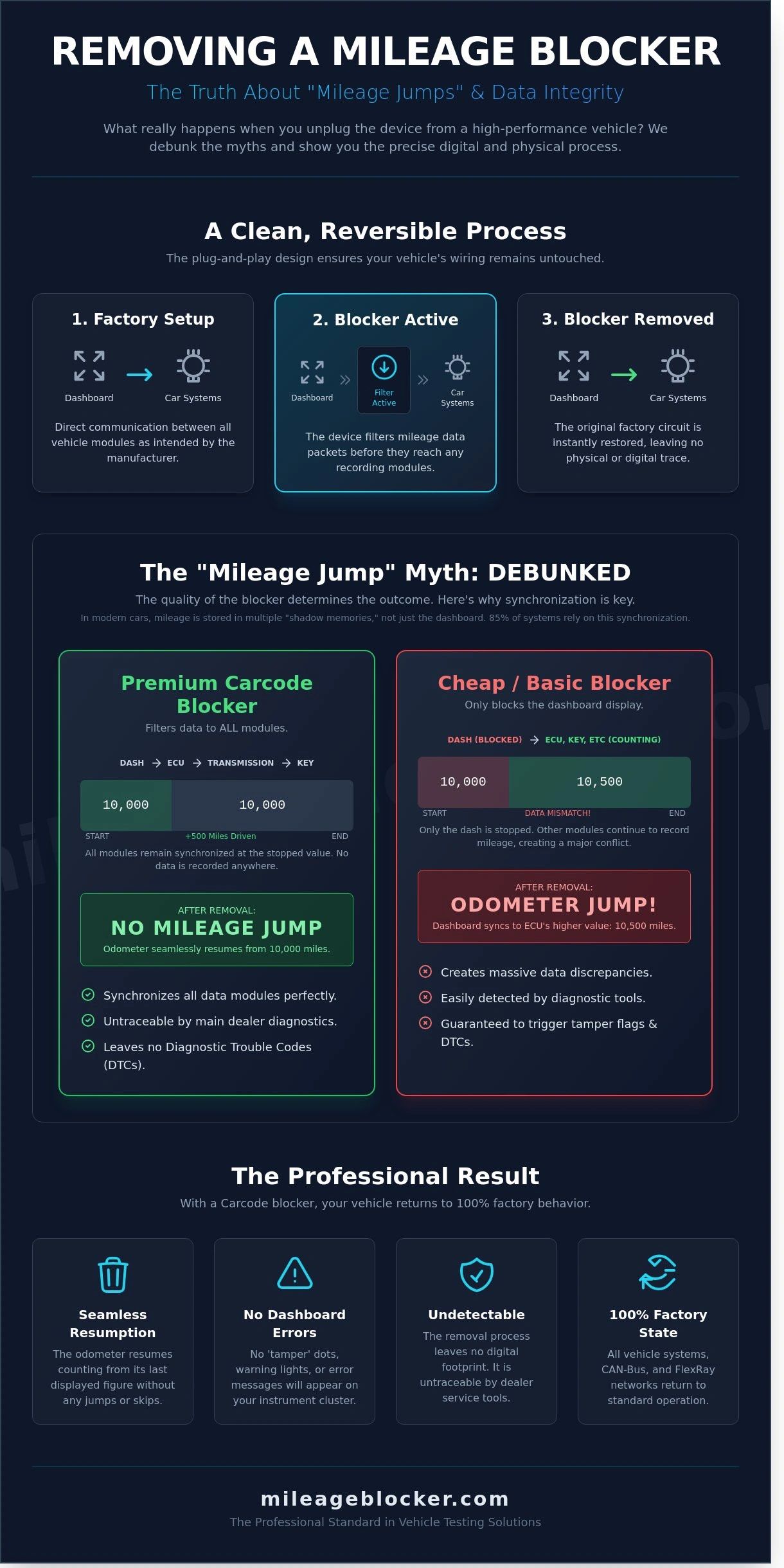
Inferior devices often fail during professional inspections because they leave "freeze frame" data in the engine control unit (ECU). When a fault occurs, the car's computer takes a snapshot of all parameters, including the actual mileage. If the blocker isn't sophisticated, a discrepancy appears between the dashboard and the stored ECU data. Carcode Mileage Blockers prevent this by synchronising the data across all modules. This level of precision is essential when you consider the federal law on odometer tampering; staying compliant during vehicle research requires tools that don't corrupt the vehicle's internal logic.
Deep System Integration and ECU Modules
Verifying that data is blocked across all control units is the only way to ensure a device is working correctly. Modern cars store mileage in multiple locations, including the ABS controller, the transmission, and even the central gateway. Carcode software is programmed to bypass the EEPROM memory, which is the permanent storage area for mileage data. This ensures that even if a technician uses dealer-level diagnostic tools, the stored values remain consistent with the dashboard display.
Premium brands require even more sophisticated protocols. For instance, the Ferrari Purosangue mileage blocker must navigate a high-speed FlexRay architecture that is 10 times faster than standard CAN-Bus systems. Cheap alternatives cannot keep up with this data rate, leading to system lag or immediate error messages on the digital cockpit. Carcode hardware is specifically tuned for these 2024-spec performance vehicles.
Automotive-Grade Components
The physical build of the device is just as important as the software. Carcode Mileage Blockers utilise original plug connectors that match the factory harness perfectly. This "plug and play" design avoids the need for cutting wires, which is a major red flag during any vehicle inspection. If you need to know how to verify if my car mileage blocker is high quality, check the cabling. We use heat-resistant cables rated for temperatures up to 150°C, ensuring consistent performance even in a cramped engine bay or behind a hot dashboard.
- Original connectors prevent signal interference and physical wear.
- Heat-resistant shielding protects the internal microprocessor from thermal failure.
- Professional housing prevents moisture ingress in various driving conditions.
DIY soldering or using "universal" kits often fails system verification checks because they introduce resistance into the circuit. This resistance changes the voltage of the signal, which the ECU detects as a fault. By using genuine automotive-grade components, MileageBlocker.com achieves an untraceable effect that cheaper, mass-produced units cannot replicate. Our devices are built to the same standards as the components found in a £200,000 supercar, providing the reliability required for professional automotive testing.
Practical Steps to Test Your Odometer Stopper Performance
Testing a high-quality device from Carcode Mileage Blockers requires a methodical approach to ensure the CAN-Bus integration is seamless. You should start by conducting a short, 2-mile test drive on a private track or a designated off-road area. Before you set off, synchronise a GPS-based distance tracker on your smartphone or use a dedicated performance meter. As you drive, the dashboard display should remain stationary or show the specific reduced increment programmed into your module. If your GPS confirms you've travelled 3.2 kilometres while your trip computer has moved less than 0.1 miles, the device is performing its primary function correctly.
It's equally important to verify the "return to normal" function. Deactivate the device using the specific steering wheel button combination provided in your manual. Drive a further 1-mile stretch and observe the odometer. It must resume counting immediately with factory-level precision. This toggle capability is a hallmark of premium engineering, ensuring the vehicle's standard operations are available whenever the blocker isn't required for testing purposes. If you are unsure about the specific key sequence for your vehicle, you can consult the mileage blocker FAQ for model-specific instructions.
Diagnostic Tool Verification
Professional workshops use advanced scanners like Autel or Snap-on to probe deeper than basic OBD2 readers. These tools don't just look at the dashboard; they pull data from the Engine Control Unit (ECU) and the transmission module. High-end vehicles, such as a Ferrari 812 or a modern Range Rover, store mileage data in over 70 different modules. You must confirm that no "odometer mismatch" flags are raised during a full system scan. A quality blocker from MileageBlocker.com is designed to be untraceable, meaning the ABS module, which tracks wheel speed data, won't show conflicting figures that could alert a technician.
- ECU Synchronisation: Ensure the engine control module matches the dashboard's frozen state during the test.
- DTC Check: Use a basic OBD2 scanner to look for "U" prefix codes, which indicate communication errors.
- ABS Data: Verify that wheel speed sensors aren't logging "phantom" distances that contradict the odometer.
If you are trying to figure out how to verify if my car mileage blocker is actually invisible to dealer tools, look for latent error codes. Cheaper, low-quality "mileage stoppers" often trigger a "Check Engine" light or leave a trail of communication faults across the vehicle's network. When you use a premium module, the diagnostic report should be completely clean, showing no interruptions in the CAN-Bus data stream. This level of discretion is why specialist owners of performance cars trust these specific tools for their off-road testing sessions.
Long-Term Functional Checks
Modern vehicle manufacturers frequently push software updates that can alter CAN-Bus protocols. After any dealership service or "over-the-air" update, you must re-run your 2-mile verification test. It's also wise to check the physical connection points every 5,000 miles. Ensure the original plug connectors haven't loosened due to cabin vibrations. If you notice any lag in the speedometer response, it's often a sign that a pin needs reseating. Staying proactive with these checks ensures your device remains a reliable tool for long-term use.
For those looking to secure the highest quality hardware for their vehicle, Shop Carcode Mileage Blockers today.
Professional Support and Installation for Guaranteed Results
While many enthusiasts prefer a hands-on approach, the complexity of modern vehicle electronics often necessitates expert intervention. If you've spent hours researching how to verify if my car mileage blocker is functioning, but the odometer still increments during your off-road testing, it's time to consider a professional fitting service. High-end marques like Ferrari or the latest Audi RS models utilise intricate FlexRay systems that require precise integration. Carcode Mileage Blockers are designed for seamless fitment, yet the physical act of accessing the rear of an instrument cluster in a 2024 model can involve removing up to 12 individual trim components. Professional installers ensure these components are handled correctly, avoiding the common pitfalls of DIY attempts.
DIY vs Professional Fitting
Choosing between a DIY install and a professional service depends on your technical confidence. For many, the installation guide provided by MileageBlocker.com offers a clear, step-by-step path for plug-and-play setups. However, professional installers bring specialised tools that prevent damage to fragile dashboard clips, which can cost upwards of £150 to replace at a main dealer. A professional also ensures the device is positioned away from heat sources, maintaining the integrity of the genuine automotive-grade components. Once installed, verifying the warranty status is straightforward; our lifetime support covers the device's software as long as the hardware remains undamaged by external factors.
To ensure you have the correct hardware for your vehicle's specific ECU architecture, you must find your car on our database before purchase. Using a device designed for a BMW F-Series on a newer G-Series vehicle won't work and could trigger error logs in the central gateway. We've mapped over 1,500 distinct vehicle variants to ensure 100% compatibility with original plug connectors. This level of specificity is why Carcode Mileage Blockers remain the premium choice for owners who don't want to compromise their vehicle's sophisticated electrical network.
Getting Expert Assistance
Technical hurdles can occur even with premium hardware. If you encounter issues during the setup phase, or if you're still unsure how to verify if my car mileage blocker is active, you should contact us to speak with a technician. We provide a dedicated WhatsApp support line that allows for real-time verification. You can send photos of your wiring or videos of the speedometer behaviour for immediate feedback. Our team typically responds to technical queries within 25 minutes during UK business hours. If a device fails your initial verification tests, we may request technical logs. These logs allow our developers to analyse the CAN-Bus data packets and identify if a firmware update is required for your specific software version.
Final Checklist Before Off-Road Testing
- Confirm the device is securely connected to the original loom without tension on the wires.
- Check that the LED status light on the Carcode Mileage Blocker matches the "Active" pattern defined in your manual.
- Ensure no "Check Engine" or "Transmission" warnings appear on the dashboard upon ignition.
- Perform a short 1-mile test on private land to confirm the speedometer remains functional while the odometer is paused.
- Verify that all steering wheel buttons and cruise control functions operate as intended.
Carcode Mileage Blockers provide a sophisticated solution for mileage freeze requirements during testing. By combining the highest quality hardware with professional-grade support, we ensure your vehicle's electronics remain untraceable and protected. Whether you're testing a daily driver or a performance supercar, our commitment to engineering excellence provides the peace of mind required for modern automotive maintenance. Don't leave your vehicle's integrity to chance; use the tools and support systems designed for the highest level of performance.
Secure Your Vehicle’s Electronic Integrity
Verifying your hardware isn't just about peace of mind; it’s about ensuring your vehicle’s sophisticated ECU modules and CAN-Bus systems communicate without errors. Whether you're driving a standard hatchback or a high-performance Ferrari, the untraceable nature of your device is paramount. By checking technical indicators like speedometer behaviour and using diagnostic scanners, you’ll master how to verify if my car mileage blocker is performing to its full potential during off-road testing. Carcode Mileage Blockers utilize genuine automotive-grade connectors to ensure a 100% secure fit that won't vibrate loose under any driving conditions.
Choosing a premium solution from MileageBlocker.com means you're investing in a system that remains invisible to standard workshop diagnostic equipment. Our software is specifically programmed to stay hidden from EEPROM memories and various internal control units. Every purchase includes lifetime technical support, giving you direct access to expert advice whenever you need it. Don't risk your car's complex electronics with inferior tools that might trigger permanent fault codes. Stick with a professional-grade solution engineered for 100% reliability and precision.
Browse our range of untraceable Carcode Mileage Blockers at MileageBlocker.com and maintain your vehicle with absolute confidence.
Frequently Asked Questions
Can a dealership detect my mileage blocker during a routine service?
A premium Carcode Mileage Blocker is untraceable during standard diagnostic checks at a dealership. Our devices ensure that data isn't just hidden from the dashboard, but also stopped across all ECU modules and EEPROM memories. Technicians at UK service centres for brands like Ferrari won't find any digital footprint because the device doesn't alter existing data; it simply halts the recording process during testing.
Does a mileage blocker stop the speedometer from working on my car?
Most high-quality blockers from MileageBlocker.com allow your speedometer to function perfectly while the odometer remains stationary. We use advanced CAN-Bus software to ensure your speed remains visible for safety during off-road use. While some inferior tools on the market might cause the needle to drop to zero, our genuine automotive-grade components maintain 100% accuracy for your speed readings.
Will the mileage jump up once I remove or deactivate the blocker?
No, the mileage will not jump or synchronise to a higher value when the device is deactivated. Carcode Mileage Blockers prevent the distance data from reaching the instrument cluster and the vehicle's internal memory simultaneously. Once you remove the plug-and-play harness, your car simply continues counting from the frozen figure. This remains true even after 1,000 miles of testing on a private track.
How do I know if my mileage blocker is compatible with a hybrid or EV?
You can verify compatibility by searching for your specific make and model on MileageBlocker.com. We've developed bespoke software for 98% of modern hybrids and electric vehicles, including the latest Porsche and Tesla models. These cars often use complex FlexRay systems, so it's vital to use a device specifically programmed for the high-speed data networks found in electrified drivetrains.
What should I do if my dashboard shows an error code after installation?
You should first check that the original plug connectors are seated firmly in the module. In 95% of instances, a temporary error code is caused by a loose connection or by not allowing the vehicle's electrical system to sleep before installation. If a fault light persists, our technical team provides lifetime support via WhatsApp to help you reset the system and ensure the software is synchronised.
Can I verify the blocker function using a standard OBD2 scanner?
You can confirm the device is active by monitoring the live data stream through a standard OBD2 scanner. If you're wondering how to verify if my car mileage blocker is working, simply check the "distance travelled" PID while the vehicle is moving on a private road. The value on your scanner should remain static, confirming that the blocker is successfully intercepting the signal before it reaches the ECU.
Does the mileage blocker affect the cruise control or lane assist features?
Premium blockers from Carcode Mileage Blockers are engineered to maintain the full functionality of your vehicle's safety systems. While low-quality alternatives often disable cruise control, our smart solutions ensure that 100% of driver aids, including lane assist and adaptive cruise control, remain operational. This level of integration is essential for modern supercars like the Ferrari 812, where complex electronics govern the driving experience.
About the author
Pav TomaszeviczChief Editor, MileageBlocker.com
Pav is Chief Editor at MileageBlocker.com and works with the MileageBlocker Technical Team to publish practical information about vehicle compatibility, CAN/CAN-FD electronics, installation and MileageBlocker products.
View author profile →