
ECU Replacement & Mileage Discrepancies Explained
Can vehicle mileage become inconsistent after replacing an instrument cluster or ECU? Learn why mismatches occur, how to check records, and next steps to take.
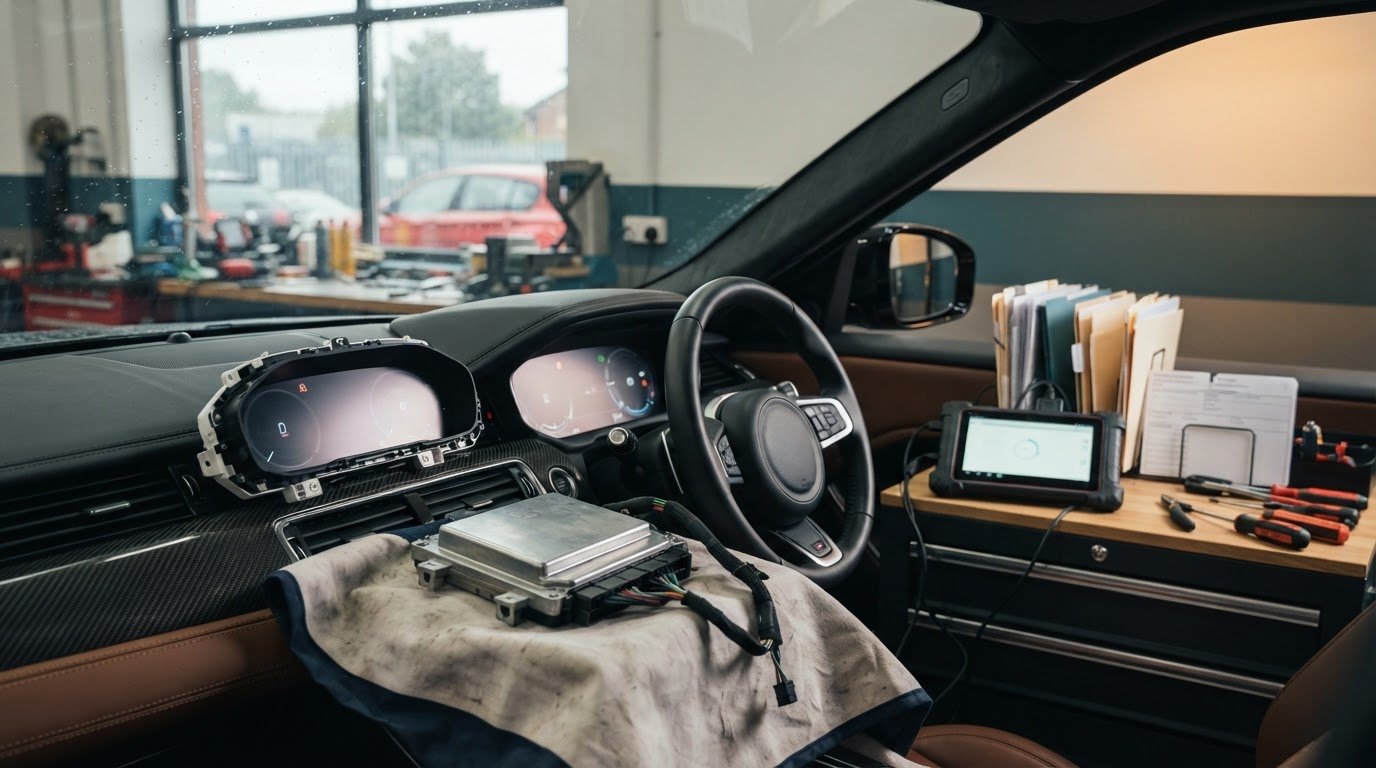
Can Vehicle Mileage Become Inconsistent After Replacing an Instrument Cluster or ECU? Yes. A replacement module may show a different reading if its stored mileage does not match the vehicle’s previous record. But a mismatch is a diagnostic clue, not proof that someone deliberately altered the odometer.
It is understandable to question which figure is accurate when a repair appears to have changed the vehicle’s history. The answer depends on the vehicle, the component replaced and the work performed. One reading alone may not explain what happened.
To investigate, record the current display and date, gather repair and maintenance paperwork, and compare each figure with its source and date. Service documents and previous MOT history may help build a timeline. A professional diagnostic assessment may provide further context, but its findings should be considered alongside the records. Keep the replacement paperwork and avoid presenting an unsupported mileage figure as certain.
Key Takeaways
- Can Vehicle Mileage Become Inconsistent After Replacing an Instrument Cluster or ECU? Yes, a replacement may be associated with a different displayed reading, but the cause depends on the vehicle and repair.
- A difference between the dashboard reading and existing records needs investigation; it does not, by itself, establish why the mismatch occurred.
- Record the current display and date, gather repair and maintenance paperwork, and ask the repairer what component was replaced and what work was carried out.
- If the readings remain unclear, retain the documentation and describe the discrepancy accurately when discussing the vehicle with a prospective buyer.
Can an Instrument Cluster or ECU Replacement Cause a Mileage Mismatch?
Can Vehicle Mileage Become Inconsistent After Replacing an Instrument Cluster or ECU? Yes. A replacement can be associated with a different displayed mileage, but the result depends on the vehicle and the work carried out. A difference between the current display and an earlier record is something to investigate, not an explanation in itself.
Modern vehicles use electronic systems that communicate with one another. An Engine Control Unit (ECU) manages engine functions, but that general role does not establish where mileage is stored or how a particular vehicle handles a replacement. Vehicle-specific information matters.
This video discusses considerations around replacing an instrument cluster:
What does an inconsistent mileage reading mean?
First, identify exactly which readings you are comparing: the dashboard display, a previous MOT record, a service document or a value reported by diagnostic equipment. Note the date and source of each figure, and check that the readings use the same units. They may refer to different points in the vehicle’s history. A diagnostic result also needs to be interpreted in the context of the vehicle and the test performed.
No single figure should be treated as definitive without supporting evidence. The useful question is how the readings fit together and what documentation exists around the replacement.
Does a mismatch prove mileage tampering?
No. A mismatch alone does not establish its cause. It may be connected with replacement work, but that possibility should be checked rather than assumed. Equally, do not dismiss the difference without reviewing the records and repair history.
An observed mileage discrepancy is evidence of conflicting readings, not proof of deliberate alteration. The explanation depends on the vehicle, the component and the work involved.
How Can Replacing a Cluster or ECU Affect the Mileage Display?
A vehicle’s mileage display is part of a wider electronic system. Depending on the vehicle, several modules may exchange information, but their roles and the way mileage data is handled are not universal. Replacing a component can therefore be associated with a different dashboard reading. That change alone does not confirm that the vehicle’s complete mileage history has changed.
Why might a replacement instrument cluster show another reading?
The instrument cluster presents information to the driver. After replacement, the displayed reading may depend on the replacement unit and how it relates to that vehicle’s configuration. A difference might appear after the work, but the display alone cannot establish why. The explanation requires details about the exact make, model, generation and repair procedure. Assumptions about coding or programming are not a substitute for those details.
Can an ECU replacement also be relevant?
It can be relevant to an investigation, but that does not mean every ECU stores, displays or updates mileage. The ECU’s functions and its relationship with other vehicle electronics vary. Assess a reading difference after an ECU replacement alongside the repair records and technical information for that specific vehicle.
Module behaviour must be checked for the exact vehicle; it cannot be reliably inferred from the component name alone. This distinction matters: a changed display is not the same as a confirmed change to the vehicle’s overall recorded distance.
Establish which component was replaced and what work was carried out. Use the repair documentation and information relevant to the exact vehicle to understand the displayed reading, rather than applying a general rule to every cluster or ECU replacement.
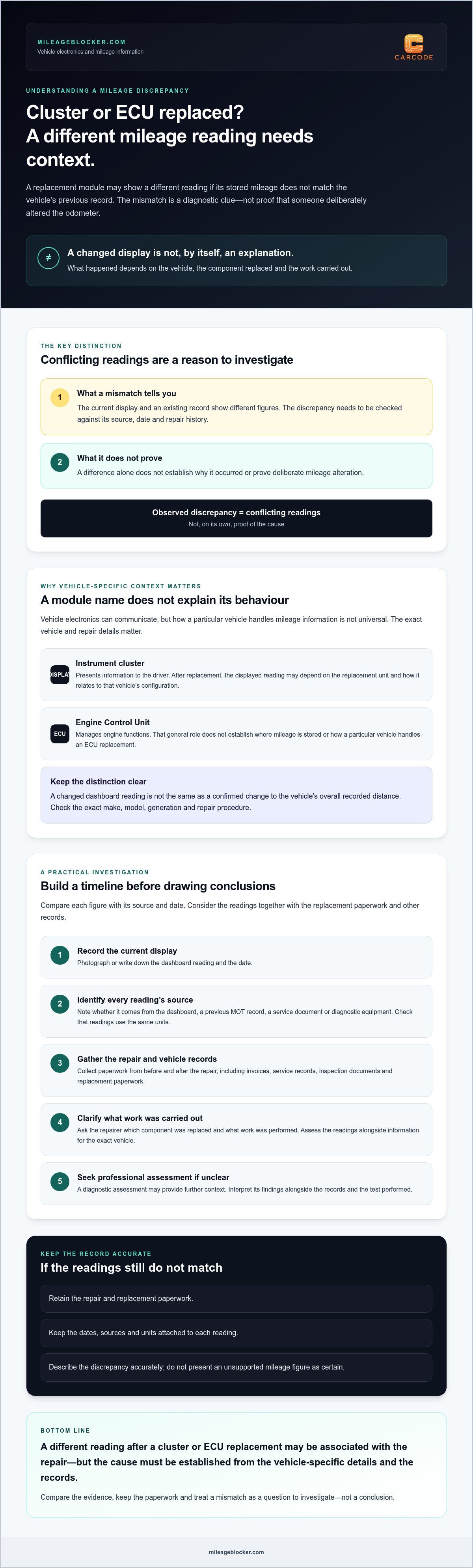
How Should You Investigate a Mileage Discrepancy After Replacement?
Start by building a clear timeline, not by deciding which reading must be correct. If you are asking, “”, records from before and after the repair can help establish what changed and when.
What records can help establish the timeline?
Photograph or write down the current dashboard reading and date. Gather documents from before and after the repair, such as invoices, service records, inspection documents and paperwork that records mileage. Put them in date order and note the source of each figure.
Mark gaps or conflicts rather than filling them with guesses. Ask the repairer which component was replaced and what work was carried out. Keep the response and supporting paperwork with the vehicle’s records.
What can a professional diagnostic check confirm?
A qualified technician familiar with the make, model and generation can assess the issue using vehicle-specific information and appropriate diagnostic equipment. Ask what the check covers and request the findings in writing. Available diagnostic data may help explain a discrepancy, but its scope and limitations depend on the vehicle and procedure used.
Diagnostic data can provide evidence about the checks performed, but it does not automatically establish a complete or certain mileage history. Compare the findings with the paperwork and ask the technician to explain how they support their assessment.
Keep the investigation factual: retain records, document unanswered questions and avoid presenting an unverified figure as certain. If the discrepancy remains unexplained, seek further advice from a professional familiar with the exact vehicle and replacement work.
What Should You Do Next if the Readings Still Do Not Match?
If you are still asking, “”, keep the evidence together and seek an explanation tied to the exact vehicle and repair. Retain invoices, service records, inspection documents and dated readings. Ask the repairer to confirm which component was replaced and what work was carried out. If the explanation does not account for the displayed figure, request clarification rather than assuming the cause.
When should you seek further technical advice?
Get a second assessment if the records conflict, the repair details are unclear or the reading remains unexplained. Choose a professional familiar with the vehicle’s specific make, model, generation and replacement work. Provide the documents and ask what the assessment can establish and what remains uncertain. A careful review can help distinguish documented facts from assumptions.
If you are buying or selling the vehicle, describe the mismatch accurately. Do not present one reading as the confirmed total distance if the available evidence does not support that conclusion. Keep the repair paperwork and any written technical findings with the vehicle records so others can understand the timeline.
How does this differ from mileage blocker technology?
Investigating a discrepancy is separate from using a mileage blocker. MileageBlocker.com by Carcode sells vehicle-specific devices intended for vehicle testing or off-road track use. A mileage blocker is not a diagnostic tool or a repair for an inconsistent reading, and it should not be used to alter or misrepresent a vehicle’s recorded history. Consider product information separately from the work needed to understand a mismatch.
Keep the Mileage Record Clear and Evidence-Based
It can, but a difference between the display and earlier records does not, by itself, explain what happened. The cause depends on the vehicle and the specific replacement work.
Keep repair paperwork and dated mileage records together, and ask the repairer for a clear account of the work performed. If the readings still conflict, seek an assessment from a professional familiar with that vehicle. Treat diagnostic findings as evidence to consider, not automatic proof of its full history. If buying or selling, describe any unresolved discrepancy accurately rather than presenting an unverified figure as certain.
MileageBlocker.com sells mileage blocker devices for vehicle testing or off-road track use, with a fitting service available on request. This technology is separate from investigating or resolving an odometer discrepancy.
With a documented timeline and careful, vehicle-specific assessment, you can take the next step with greater confidence.
Frequently Asked Questions
Can an instrument cluster replacement change the mileage shown?
Yes, a replacement instrument cluster can show a different reading in some circumstances. It can, but the result depends on the exact vehicle and replacement work. A mismatch alone does not identify its cause. Check repair records and seek advice from a professional familiar with the vehicle rather than assuming all clusters behave alike.
Does replacing an ECU reset the vehicle mileage?
There is no universal answer. Mileage storage and display behaviour vary by vehicle, so an ECU replacement may have different implications depending on the system and work performed. Confirm which ECU was replaced and ask the repairer what was done. Do not assume a reset occurred or that a particular module contains the mileage. Check reliable technical information for the exact vehicle before drawing conclusions.
Does a mileage discrepancy after a repair prove odometer tampering?
No. A discrepancy is a reason to investigate, not proof of deliberate alteration. Repair documentation, service history and a qualified assessment specific to the vehicle can help clarify what may have happened. Compare the dates and sources of the readings, and keep gaps or conflicts visible. No single record or diagnostic result should automatically be treated as the complete vehicle history.
How can I check a car’s mileage after its instrument cluster or ECU has been replaced?
Collect the replacement invoice and available service and inspection records, then note each recorded reading with its date and source. Ask the repairer which component was replaced and what work was performed. A qualified technician may carry out diagnostic checks, but their scope varies by vehicle and procedure. Do not assume a scan tool will reveal a definitive total mileage.
Should a replacement instrument cluster or ECU be programmed to match the old mileage?
The appropriate procedure depends on the vehicle, the component and applicable requirements, so confirm it with a qualified professional familiar with that exact system. Do not rely on generic programming instructions or assume one process applies to every model. Keep records of the replacement and any work undertaken. If the readings remain unresolved, describe the discrepancy transparently rather than presenting an unverified figure as certain.
For product information about a mileage blocker for vehicle testing or off-road track use, contact MileageBlocker.com. Fitting is available on request.
About the author
MileageBlocker TeamThe MileageBlocker Technical Team covers vehicle electronics, CAN and CAN-FD systems, mileage blocker compatibility, installation and product developments.
View author profile →