
Digital Odometers Explained: How Mileage Is Stored
Digital odometers are not as simple as they look: how modern vehicles store mileage across ECUs, instrument clusters, and CAN networks. Read our full guide.
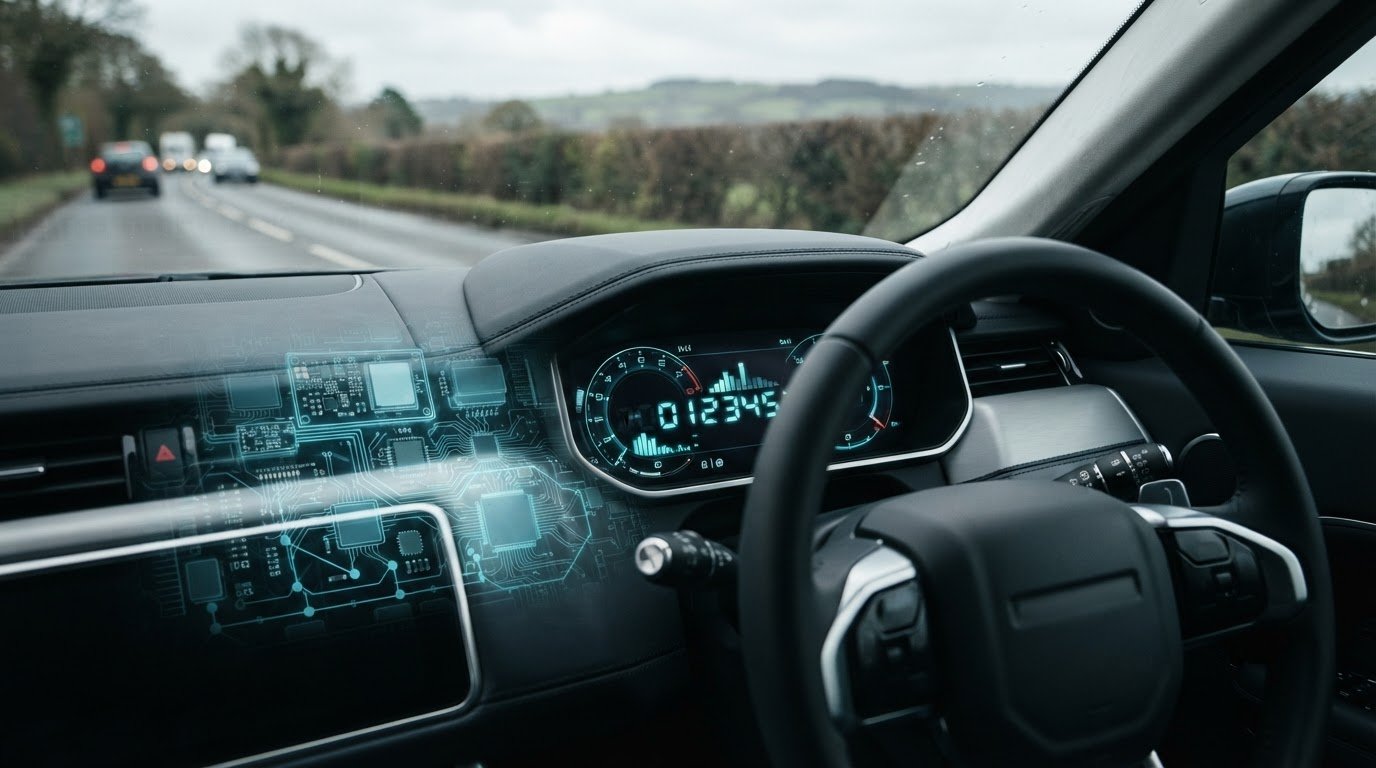
Digital Odometers Explained: How Mileage Is Stored
What if the mileage on your dashboard is only one part of the vehicle’s mileage story? Digital Odometers Are Not as Simple as They Look: How Modern Vehicles Store Mileage explores why the figure drivers see may not be the only mileage-related information held by a modern vehicle. It’s understandable to expect one clear reading, but vehicle electronics can make the picture more complex.
This guide explains what a digital odometer displays and why related information may differ across vehicle systems. A discrepancy can have several possible explanations, including a replaced component or a fault, so it isn’t proof of misconduct on its own. You’ll learn how to distinguish the displayed reading from other vehicle data, which records can help put a difference in context, and when to ask a qualified specialist to investigate. The aim is to assess the evidence, not draw a snap judgement from a single number.
Key Takeaways
- The dashboard odometer shows a driver-facing distance reading, not a complete map of all mileage-related vehicle data.
- The instrument cluster, ECU and CAN bus may be involved, but vehicle systems do not all store or handle information in the same way.
- A mismatch can have several explanations and is not, by itself, proof of tampering.
- Start by documenting the displayed reading, gathering vehicle records and seeking a vehicle-specific assessment.
What Does a Digital Odometer Actually Record and Display?
A digital odometer displays the vehicle’s accumulated distance, usually as a number on the instrument display. It shows the reading presented to the driver, but it isn’t a complete map of every mileage-related record held by the vehicle.
The digital odometer reading is the displayed distance, not a definitive inventory of mileage data across the vehicle. Displayed mileage, distance travelled and related information handled by vehicle electronics are connected concepts, but they are not automatically identical records. The arrangement depends on the vehicle’s design.
The video below offers a general perspective on odometer readings. It isn’t vehicle-specific diagnostic guidance.
What is the difference between the displayed reading and stored data?
The display is the value shown to the driver. Other vehicle modules may exchange or retain mileage-related information, but where and how this happens varies by design. The dashboard figure alone doesn’t reveal every related data point or establish a vehicle’s definitive mileage.
Why did odometers move from mechanical counters to digital displays?
Mechanical odometers used physical counters to present distance. Digital systems show the reading electronically as part of the vehicle’s broader electronic interface. The change affected how information is displayed and handled, but it doesn’t mean every vehicle follows one standard storage arrangement. For a historical and technical overview of both approaches, see Odometer.
In practice, the display is a useful starting point, not the whole picture. Understanding how vehicle modules may handle related information is the next step.
How Do Modern Vehicle Modules Handle Mileage Information?
A digital odometer sits within a wider electronic system, but the relationship between its display and other vehicle data depends on the vehicle. The instrument cluster presents information to the driver. The Engine Control Unit (ECU) and other control modules may also handle or exchange mileage-related information, but their role cannot be assumed without vehicle-specific documentation.
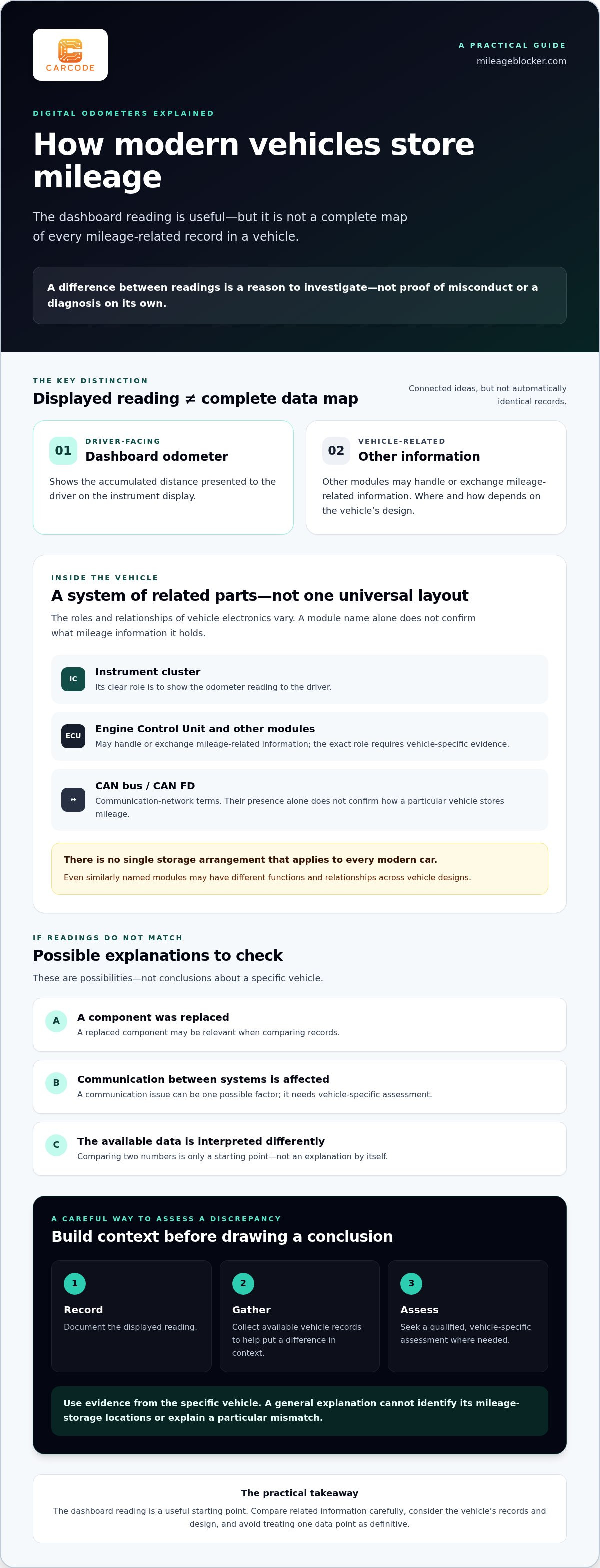
Module layout and mileage-data behaviour are vehicle-specific; there is no single arrangement that applies to every modern car. A module name alone does not prove what mileage information it holds or how that information relates to the dashboard reading.
What roles can the instrument cluster and control modules play?
The cluster’s clear role is to show the driver the odometer reading. Other modules may contribute to vehicle functions that use or communicate mileage-related information. CAN bus is a term for a vehicle communication network, and CAN FD is another network term. Neither term, by itself, confirms how a particular vehicle stores mileage. Establishing the relationship between modules requires evidence about that vehicle’s design.
Does every modern car store mileage in the same way?
No. Vehicle architectures, data records and communication methods can differ. Even when vehicles have similarly named modules, their functions and relationships may not be identical. A general explanation can describe the concepts, but it cannot identify a specific vehicle’s mileage-storage locations. That requires appropriate vehicle-specific information.
Treat a difference between readings as a point to investigate, not as a diagnosis. It does not, by itself, establish why records differ or prove intentional alteration. Compare any mismatch with available vehicle records and seek an assessment based on the specific vehicle rather than drawing conclusions from one data point.
Why Can a Digital Odometer Reading Differ from Other Vehicle Data?
A difference between the dashboard reading and mileage-related information from another source can have several possible explanations. A component may have been replaced, communication between vehicle systems may be affected, or the available data may be interpreted differently. These are possibilities to investigate, not a diagnosis of a particular vehicle.
How a vehicle calculates and presents distance depends on its design. General background on how digital odometers work can explain the underlying concept, but it cannot establish what caused a discrepancy in a specific car. Comparing two numbers is only the starting point.
Can replacing an instrument cluster or ECU affect displayed mileage?
It can be relevant, but the outcome depends on the vehicle and the circumstances of the replacement. Don’t assume a replacement component will display or retain mileage in a particular way without vehicle-specific evidence. Check repair invoices, service history and paperwork for the replacement, then ask a qualified specialist to assess the vehicle. The related topic, ECU Replacement & Mileage Discrepancies Explained, provides further context on replacement-related questions.
Does a mismatch prove that a vehicle's mileage was altered?
No. An inconsistency warrants investigation, but it doesn’t by itself prove tampering, fraud or any precise cause. A diagnostic scan may provide useful information, but what the system makes available and how the results are interpreted depend on the vehicle. A scan alone should not be treated as definitive proof of its true mileage.
Keep the distinction clear: an innocent data inconsistency and deliberate misrepresentation are not the same explanation. Compare findings with documented vehicle history and obtain a vehicle-specific assessment before drawing conclusions.
How Should You Check a Digital Odometer Discrepancy Responsibly?
Start with what you can verify, then build a vehicle-specific picture. A displayed reading and diagnostic data can provide useful context, but neither should automatically be treated as definitive mileage on its own. Check the evidence carefully rather than drawing a conclusion from one figure.
What information should you gather before asking for an assessment?
Start with records you can check and compare:
- Record the current dashboard reading and the date. A clear photograph can document what was displayed.
- Collect available service history, repair invoices and paperwork for any replaced instrument cluster or control module.
- Note the vehicle’s exact make, model, generation and year when seeking technical guidance.
- Compare dated mileage entries in the records and note where they differ. Avoid assuming the cause before the records have been assessed.
Ask a qualified specialist to assess the information for that specific vehicle. Diagnostic data may add context, but its meaning depends on the vehicle and the information available. A scan alone may not establish definitive mileage.
Where do mileage blockers fit, and where do they not?
A mileage blocker is intended to prevent distance accumulation in an appropriate testing context. Mileage correction concerns adjustment of a displayed reading, for example in connection with a repair. These are different functions, and the effect of either depends on the vehicle and equipment involved. Neither should be assumed to change every vehicle record in the same way.
MileageBlocker.com by Carcode supplies vehicle-specific mileage blocker devices for vehicle testing or off-road tracks, with fitting assistance available on request. This is not a basis for concealing or misrepresenting a vehicle’s history. For a UK sale, present the mileage and relevant history accurately, and check the requirements that apply to your circumstances.
Use the evidence to take the next step
The dashboard odometer shows a driver-facing distance reading, but it isn’t a complete map of mileage-related information across a vehicle. Module arrangements vary, and a difference between readings can have several possible explanations. It does not, by itself, prove tampering or identify a precise cause.
Record the displayed figure, gather service and repair documents, then seek a vehicle-specific assessment. Diagnostic information can add context, but shouldn’t be treated alone as definitive proof of a vehicle’s mileage. Keep vehicle history accurate and don’t conceal or misrepresent it.
For appropriate vehicle testing or off-road use, MileageBlocker.com by Carcode sells vehicle-specific mileage blocker devices, with fitting available upon request. If you’re considering a device for an appropriate application, contact MileageBlocker.com to ask about vehicle compatibility and fitting.
Frequently Asked Questions
Is the mileage shown on a digital odometer the vehicle's only mileage record?
No. The dashboard reading is the driver-facing odometer figure, but vehicle electronics may also handle or retain related mileage information. The location and relationship of any such information depend on the vehicle’s design. The displayed reading is useful evidence, but it shouldn’t be treated as a complete map of every mileage-related record the vehicle may contain.
Can a diagnostic scan reveal a car's definitive mileage?
No. A diagnostic scan may show information that helps explain a discrepancy, but what it can access and how the data should be interpreted depend on the vehicle. A scan result alone doesn’t establish definitive mileage. Consider it alongside the dashboard reading, service and repair documentation, and a vehicle-specific assessment rather than treating one electronic value as conclusive.
Why might mileage differ after an instrument cluster or ECU replacement?
A replacement may be relevant if the displayed reading and other available vehicle information no longer align, but the result depends on the vehicle and the circumstances of the replacement. Don’t assume every cluster or ECU handles mileage in the same way. Check repair invoices and service records, and ask a qualified specialist to assess the particular vehicle before deciding what explains the difference.
Does a difference between mileage readings prove odometer tampering?
No. A mismatch calls for careful investigation, but it doesn’t by itself prove tampering, fraud or any specific cause. Component replacement, communication issues or differences in how information is interpreted may be relevant possibilities, not confirmed explanations. Compare available readings with documented vehicle history and seek a vehicle-specific assessment before reaching a conclusion or making claims about the vehicle’s past.
Do all modern vehicles store mileage in multiple control modules?
No. Vehicle electronics and mileage-data arrangements vary, so it isn’t accurate to assume every modern vehicle stores mileage in multiple control modules. Some systems may exchange or retain related information, but the specific modules and their roles require vehicle-specific evidence. Digital Odometers Are Not as Simple as They Look: How Modern Vehicles Store Mileage is a useful reminder not to generalise from one vehicle to another.
About the author
MileageBlocker TeamThe MileageBlocker Technical Team covers vehicle electronics, CAN and CAN-FD systems, mileage blocker compatibility, installation and product developments.
View author profile →