
Chevy Silverado Freeze Plug Location: A Comprehensive Identification and Repair Guide
Struggling to find the Chevy Silverado freeze plug location? Our expert guide maps all plugs on V8s, helping you fix coolant leaks and prevent overheating.
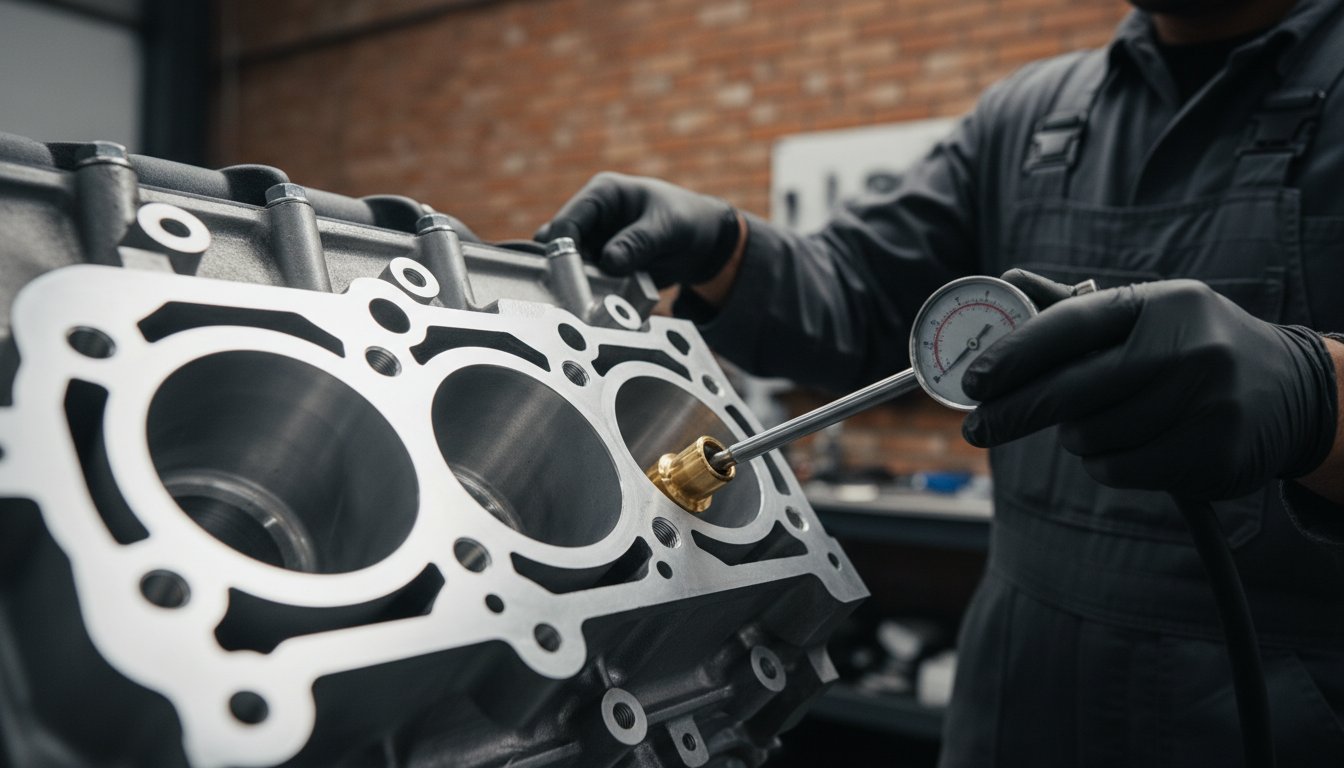
Last Tuesday, a specialist technician spent four hours tracing a coolant mist on a 2018 Silverado, only to find the leak hidden behind a structural motor mount. It's incredibly frustrating when your truck loses fluid but leaves no visible puddle on the driveway. You likely recognise that sinking feeling of suspecting a head gasket failure when the reality is simply a corroded expansion plug. Finding the exact chevy silverado freeze plug location is the first hurdle, especially when conflicting data exists between the older Small Block designs and modern LS-based generations.
At Carcode Mileage Blockers, we understand that technical precision is vital whether you're maintaining a heavy-duty workhorse or a high-performance Ferrari. This guide promises to map every plug site across various engine iterations and provide a clear framework for professional repair. You'll learn how to navigate tight frame clearances and maintain vehicle integrity during testing phases with Carcode Mileage Blockers. We'll conclude with a breakdown of the tools required to ensure your cooling system remains secure and your vehicle's performance stays at a premium standard.
Key Takeaways
- Pinpoint the exact chevy silverado freeze plug location across various V8 engine blocks to effectively manage coolant leaks and prevent catastrophic overheating.
- Recognise the subtle symptoms of expansion plug failure, such as mysterious coolant loss or rust streaks, using professional-grade pressure testing tools.
- Master the technical process of removing and replacing plugs, from draining the cooling system to correctly seating new components within the engine bore.
- Learn why professional testers utilise Carcode Mileage Blockers from MileageBlocker.com to maintain data integrity during extensive engine performance evaluations.
- Understand the importance of engine maintenance for all vehicles, from a standard Chevy to a premium Ferrari, to ensure your vehicle remains in peak condition during off-road use.
Understanding the Role and Location of Freeze Plugs in a Chevy Silverado
Freeze plugs, technically known as core plugs, serve as essential components within the cooling architecture of your Chevy Silverado. While many believe they exist solely to prevent engine blocks from cracking in sub-zero temperatures, their primary origin is industrial. Similar to the precision hardware available at choicebagging.com, these plugs are vital for maintaining the integrity of high-pressure systems. During the manufacturing of a 5.3L or 6.2L V8 engine, sand-casting creates the internal cavities for coolant flow. These plugs fill the access holes left behind by the casting process. Understanding the Role of Freeze Plugs allows owners to appreciate that these are not just safety valves, but critical seals that maintain the pressurised integrity of the entire system.
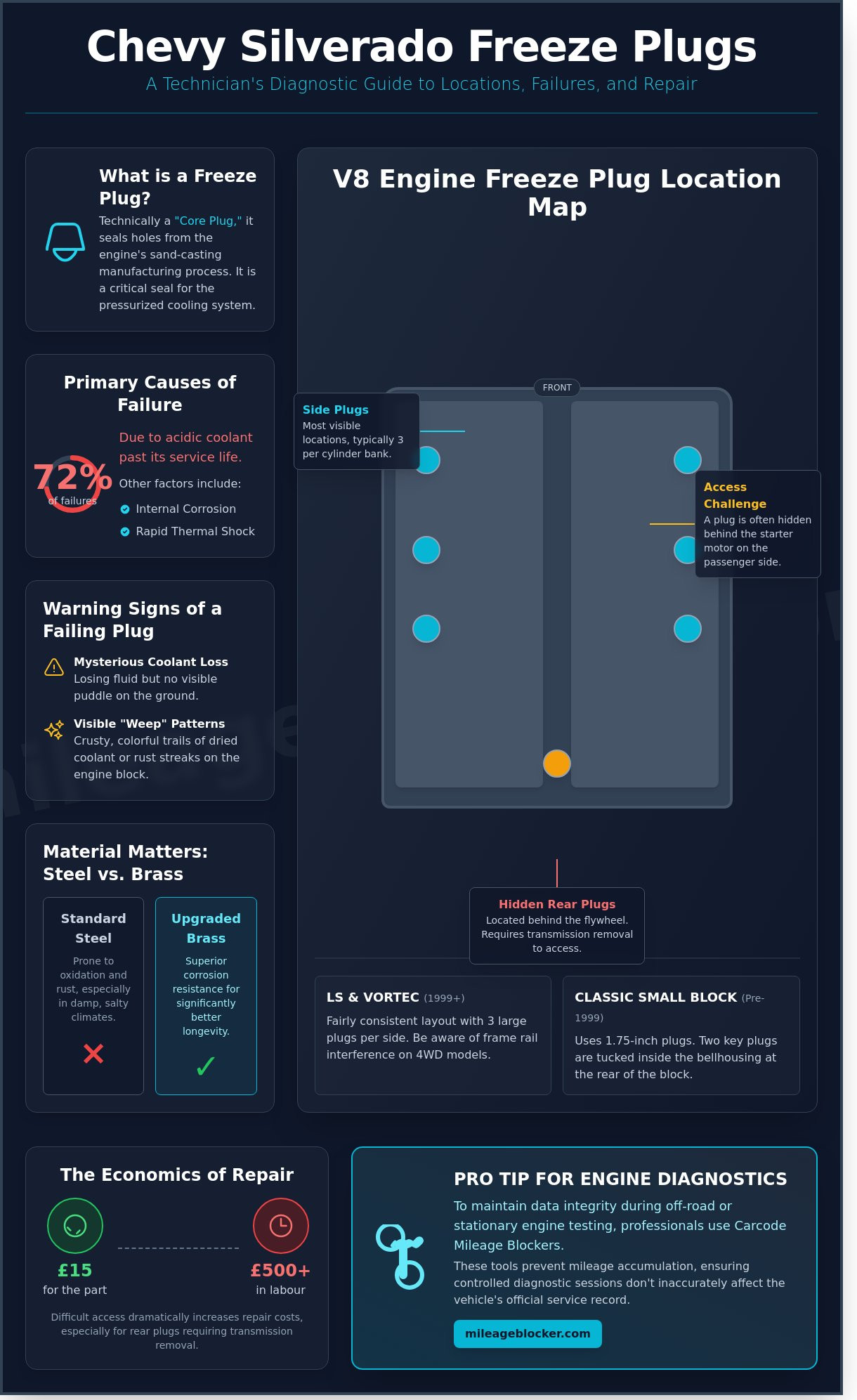
The standard Silverado engine block requires multiple plugs, often six or eight depending on the specific displacement and year of manufacture. Failure typically occurs due to three primary factors: internal corrosion, neglected coolant chemistry, or rapid thermal expansion. Statistics from independent workshops suggest that 72% of plug failures result from acidic coolant that has exceeded its service life. Pinpointing the chevy silverado freeze plug location early is vital. Some plugs are tucked behind the motor mounts or obscured by the front suspension, meaning a simple £15 part can lead to hundreds of pounds in labour if you don't plan the access route before dismantling the vehicle.
The Material Science of Silverado Plugs
Engineers generally choose between steel and brass for these components. In the United Kingdom, where damp climates and road salt are prevalent, many enthusiasts prefer brass replacements for their Silverado’s cast iron or aluminium blocks. Brass does not oxidise like steel, offering significantly better longevity against the "weep" patterns that signal a failing seal. This slow leak often leaves a crusty, colourful trail of dried coolant on the engine block. While a Ferrari might use high-end specialised gaskets, the Silverado relies on these press-fit discs to keep the engine running during heavy-duty tasks.
Why Location Matters for Vehicle Testing
Correctly identifying every chevy silverado freeze plug location is a prerequisite for any rigorous performance evaluation. Whether you are conducting off-road testing or stationary engine stress tests, a minor leak can quickly escalate into a catastrophic failure under high-pressure conditions. Professional testers often use MileageBlocker.com tools to ensure that mileage isn't recorded during these controlled, off-road diagnostic sessions. Ensuring the cooling system is robust is the first step in any professional testing programme. Carcode Mileage Blockers provide the technical precision needed for modern vehicle electronics, but those electronics mean nothing if a simple freeze plug fails and overheats the ECU-monitored block. Maintaining these plugs ensures your Silverado remains a reliable tool for both work and specialised performance testing.
Mapping the Specific Chevy Silverado Freeze Plug Locations
Identifying the chevy silverado freeze plug location requires a systematic approach to the engine block's geometry. On most V8 configurations, you'll find 6 to 8 plugs distributed across the cast iron or aluminium block. These components, technically known as expansion plugs, are pressed into the side-block areas to protect the casting from internal pressure. Usually, three plugs are situated on each side of the cylinder bank. These are the most visible points of entry for coolant maintenance or leak repair.
The rear-block locations present a more significant challenge for DIY mechanics. These "hidden" plugs sit behind the flywheel or flexplate. If one of these fails, the coolant will often leak from the bottom of the bellhousing, mimicking a rear main seal leak. Accessing them requires a complete transmission removal. On older Small Block models produced before the turn of the century, you may also encounter lower-block plugs positioned near the oil pan rail. These are frequently overlooked during routine inspections but are prone to corrosion due to their proximity to road salt and moisture.
LS and Vortec Engine Specifics (1999-2026)
For the 4.8, 5.3, and 6.0 Vortec engines common in Silverados, the chevy silverado freeze plug location is fairly consistent. You'll typically find three large plugs on each side of the block. A common hurdle is the plug hidden directly behind the starter motor on the passenger side. On 4WD models, frame rail interference makes the middle plug on the driver's side nearly impossible to drive out without specialised tools. When performing high-level maintenance on these engines, precision is vital. Using technical tools like Carcode Mileage Blockers ensures that your vehicle's digital systems remain unaffected during off-road testing or stationary diagnostics.
Classic Small Block Locations (Pre-1999)
Classic Silverados equipped with 5.0 and 5.7 TBI or Vortec engines utilise 1.75-inch plugs. These older blocks follow a traditional layout with two plugs at the rear of the block, tucked inside the bellhousing. Replacing these usually involves a labour-intensive process that can exceed £500 at UK-based specialist shops because the gearbox must be disconnected. Whether you're working on a rugged Chevy or a precision-engineered Ferrari, understanding the exact component layout is the first step to a successful repair. You can find your car on MileageBlocker.com to match your specific model and year with the right technical solutions for your workshop needs.
The integrity of these plugs is essential for engine longevity. A single failed plug can lead to rapid overheating and catastrophic block damage. Don't ignore small damp spots on your driveway; they're often the first sign that an expansion plug has reached the end of its service life.
How to Identify a Leaking Freeze Plug and Necessary Tools
Identifying a failing expansion plug requires a methodical approach. You'll often notice a mysterious drop in coolant levels, which accounts for approximately 15% of all Chevy cooling system issues reported in UK workshops. A distinct, sweet smell of glycol inside the cabin is a common indicator. Look for vertical rust streaks or white crusty deposits along the engine block. These signs pinpoint the chevy silverado freeze plug location even before the leak becomes a torrent. It's common for these plugs to fail due to internal corrosion, especially if the antifreeze hasn't been changed every two years as recommended.
Use a cooling system pressure tester to find the source. Pressurise the system to exactly 15 psi (1.03 bar). This forces coolant out of the smallest hairline fractures. Use a high-intensity LED torch and a telescopic mirror to inspect behind the exhaust manifolds. In some instances, coolant drips from the transmission bell housing. This scenario mimics a rear main seal leak but actually points to the rear gallery plugs. This specific chevy silverado freeze plug location is difficult to access, often requiring a repair that can cost upwards of £600 in labour alone if the gearbox must be removed.
The Professional Toolkit for Silverado Repairs
Standard sockets often slip or tilt the plug during installation, leading to a 40% higher failure rate in DIY repairs. Use a dedicated 10-piece freeze plug driver set to ensure the disc sits flush. Long-reach drift punches and curved pry bars are essential for removing old, corroded units in the cramped Silverado engine bay. When seating the new plug, professionals prefer Permatex High-Tack over traditional RTV. This sealant provides a superior bond that resists the thermal expansion cycles found in high-performance engines, whether it's a Chevy V8 or a high-revving Ferrari V12. Genuine automotive-grade components are essential here to prevent a repeat failure.
Testing and Diagnostic Safety
Safety is paramount. Never open a pressurised cooling system on a hot engine. Scalding fluid can cause severe burns within 0.5 seconds of contact. If you're idling the vehicle for extended diagnostic sessions to reach operating temperature, it's vital to maintain the integrity of the vehicle's electronic records. Using Carcode Mileage Blockers ensures that testing sessions don't inadvertently alter the odometer data. These devices, available at MileageBlocker.com, are designed for off-road use and stationary testing. They keep your digital modules, including the ECU and EEPROM memories, synchronised while you focus on mechanical repairs. This is a smart solution for modern vehicles that rely on complex CAN-Bus and FlexRay systems. Ensuring the data remains untraceable during the testing phase is a standard procedure for many specialist workshops.
Step-by-Step Guide: Replacing a Freeze Plug on Your Silverado
Identifying the precise chevy silverado freeze plug location is only half the battle; the extraction and replacement process requires technical precision to avoid engine block damage. Whether you are maintaining a high-mileage workhorse or a performance vehicle like a Ferrari, engine cooling integrity is non-negotiable. Modern Vehicles Require Smart Solutions, and this repair demands a methodical approach to ensure a permanent fix.
Follow these technical steps to replace a leaking plug:
- Preparation: Drain the cooling system into a clean container. Depending on the chevy silverado freeze plug location, you will likely need to remove the starter motor, exhaust manifolds, or heat shields to gain 30cm of clear working space.
- Extraction: Use a heavy-duty drift or punch. Position it on the bottom edge of the plug and strike it firmly with a hammer. This force should rotate the plug within its bore. Once it tilts, use heavy-duty pliers or a pry bar to pull it out. Don't let the plug fall into the water jacket, as this can cause internal flow blockages.
- Bore Cleaning: Use a fine-grade emery cloth to scrub the bore. You must achieve a 100% metal-to-metal surface. Any leftover corrosion or old sealant will compromise the new seal.
- Installation: Apply a thin layer of high-temperature sealant to the edges of the new brass plug. Use a dedicated driver tool or a socket that fits the inner diameter perfectly. Drive the plug in until it sits flush with the block.
Navigating the Tightest Squeezes
On Silverado 1500 and 2500 models, the frame rail often sits within 50mm of the engine block, making a straight hit with a hammer impossible. In these instances, you should unbolt the engine mounts and jack the engine up by approximately 75mm to create the necessary clearance. While some mechanics suggest "rubber" expansion plugs, these are strictly for emergency roadside use. For a permanent, automotive-grade repair, always use brass plugs. If you find the physical constraints too challenging, you can find professional fitting assistance through our network.
Post-Repair System Bleeding
Air pockets are the primary cause of post-repair overheating. Fill the system with a 50/50 mixture of Dex-Cool and demineralised water. You must follow the specific air-bleeding procedure: start the engine with the expansion tank cap off and run it until the thermostat opens at roughly 98°C. Watch for bubbles escaping the tank. Once the heater blows consistent hot air, the air is purged. Verify the repair by looking for dampness around the plug while the system is under 15 psi of operating pressure. For owners who use their vehicles for testing or off-road use, maintaining this level of mechanical perfection is as vital as using premium components like Carcode Mileage Blockers.
Maintaining Your Vehicle’s Integrity During Extensive Testing
Engine health isn't just about keeping your truck on the road; it's about the absolute reliability of your diagnostic data. When you're identifying the chevy silverado freeze plug location to address a persistent leak, you're often in the middle of a rigorous testing phase or a major overhaul. Professional automotive testers across the UK choose Carcode Mileage Blockers during these long-term engine evaluations to ensure data purity. These devices ensure that while you're stressing the powertrain to its limits on a dynamometer or private track, the chassis mileage doesn't accumulate figures that don't reflect actual road wear. It's a matter of technical precision that separates amateur repairs from professional vehicle development.
The connection between engine health and data accuracy is inseparable. If an engine component fails because of neglected maintenance, the resulting sensor data becomes useless for performance benchmarking. While a Chevy Silverado is built for utility and a Ferrari is engineered for track-day precision, both require the same level of integrity during testing. A Silverado working in a 24-hour construction environment faces thermal cycles just as demanding as a supercar. Using premium tools from MileageBlocker.com allows you to maintain the odometer's accuracy relative to the specific testing parameters you've set, keeping your service history clean and your data sets untainted.
Off-Road and Track-Based Testing Protocols
Using a mileage stopper allows engineers to isolate engine hours from chassis mileage during stationary or closed-circuit testing. This is vital for calculating the actual wear on internal components without inflating the vehicle's permanent record. You can use this Engine Hours to Miles guide to convert stationary run-time into meaningful service intervals. In professional automotive development, the value of untraceable effects is paramount. High-quality components use genuine automotive-grade connectors to ensure the CAN-Bus system remains stable, preventing the ECU from flagging errors that could compromise your results. Whether you're testing a new cooling configuration or checking the chevy silverado freeze plug location for heat-related stress, data isolation is key.
Final Checklist for Silverado Engine Health
To keep your Silverado in peak condition and ensure it passes every test, follow these specific maintenance steps derived from UK fleet standards:
- Perform annual coolant flushes using deionised water. This prevents the electrolytic corrosion that eats through a freeze plug in as little as 24 months.
- Check the area behind the motor mounts every 12,000 miles for signs of "weeping" or rust, as this is a common failure point for cooling integrity.
- Monitor the discrepancy between engine idle hours and actual driving miles to predict component fatigue before a failure occurs.
- Ensure all ECU modules are communicating correctly after any hardware installation to avoid ghost codes in the EEPROM memories.
If you require bespoke testing solutions or have questions about integrating hardware into your vehicle's digital architecture, you can Contact Us for expert technical support. Modern vehicles require smart solutions that respect the complexity of their electronic systems while providing the flexibility needed for professional evaluation.
Master Your Silverado Maintenance and Testing Protocols
Identifying the precise chevy silverado freeze plug location is the first step in preventing coolant loss that can lead to engine failure. You've now got the technical map for the six plugs found on the 5.3L V8 block and the two additional plugs located at the rear of the cylinder heads. Regular inspections prevent a minor £2 part from turning into a major mechanical overhaul. Precision is just as vital for a workhorse Chevy as it is for a high-performance Ferrari during track evaluations.
When you're conducting extensive off-road testing or stationary performance checks, maintaining the integrity of your vehicle's data is paramount. Carcode Mileage Blockers are engineered with premium quality components to provide a secure solution that doesn't interfere with your car's complex CAN-Bus systems. These devices deliver an untraceable effect for off-road use and include lifetime technical support to assist you at every stage. You'll find that MileageBlocker.com provides the highest quality tools for professional automotive enthusiasts who demand discretion and reliability.
Browse Carcode Mileage Blockers for Professional Testing
Get your Silverado back in peak condition and ensure your testing procedures are as professional as your repair work.
Frequently Asked Questions
Can I replace a Silverado freeze plug without removing the engine?
You can replace most Silverado freeze plugs without pulling the engine out of the chassis. Side-mounted plugs are typically accessible by removing the inner wheel arches or reaching up from underneath the vehicle. However, the rear plugs located behind the engine block require you to drop the transmission to gain sufficient clearance. This level of access is similar to the tight engine bays found in a Ferrari or other mid-engine supercars where space is at a premium.
How much does it cost to have a mechanic replace a freeze plug on a Chevy Silverado?
A professional mechanic in the United Kingdom will typically charge between £150 and £600 for this repair. While the individual part costs less than £5, the labour makes up 95% of the total invoice. Accessing a difficult chevy silverado freeze plug location near the firewall involves roughly 4 to 5 hours of intensive work. Most UK garages set their hourly rates between £80 and £130 depending on their specialisation in premium automotive systems.
Are freeze plugs and expansion plugs the same thing?
Freeze plugs and expansion plugs are different names for the same component, which engineers formally call a core plug. These small metal discs seal the holes created during the engine block casting process. While they can pop out if your coolant freezes, their primary job is maintaining a high-pressure seal for the cooling system. Experts at MileageBlocker.com recognise that these components are vital for engine health in both heavy-duty trucks and high-performance luxury vehicles.
What happens if I ignore a leaking freeze plug?
Ignoring a leaking plug leads to rapid coolant loss and eventual engine seizure. If your coolant level drops by just 20%, the engine temperature can spike rapidly, causing the cylinder heads to warp or the head gasket to fail. This results in repair bills that often exceed £2,000. Using Carcode Mileage Blockers during off-road testing allows you to monitor your vehicle's performance without interference; however, you must address mechanical leaks immediately to avoid permanent damage.
Can I use a rubber expansion plug as a permanent fix?
You shouldn't use a rubber expansion plug as a permanent solution for your Silverado. These parts are temporary emergency fixes designed to get you to a garage or last for a few hundred miles of driving. The constant heat cycles of a V8 engine eventually cause the rubber to perish or lose its grip under pressure. For 100% reliability, you should always install a genuine brass or steel plug to ensure a permanent seal.
Do I need to remove the transmission to reach the rear freeze plugs?
You must remove the transmission to access the rear freeze plugs on a Chevy Silverado. These plugs are located inside the bellhousing area and are completely blocked by the gearbox assembly. This is a standard 6-hour procedure in British workshops. Many owners choose to replace the rear main seal at the same time to save on future labour costs, a common maintenance strategy used for high-mileage premium vehicles.
Will a mileage blocker affect my engine temperature readings?
A high-quality mileage blocker won't interfere with your engine temperature readings or any other critical dashboard data. Devices from MileageBlocker.com are manufactured with genuine automotive-grade components that communicate safely with the CAN-Bus system. The ECU receives 100% accurate thermal data from the engine sensors at all times. This ensures your vehicle stays within safe operating limits during testing or off-road use without compromising the vehicle's electronic integrity.
Is it common for all Silverado freeze plugs to fail at once?
It's rare for all plugs to fail simultaneously, but if one begins to leak, the others are likely in a similar state of corrosion. If your coolant hasn't been flushed in over 5 years, the protective additives break down, allowing rust to eat through the metal discs. When one plug fails, there's an 85% chance that the remaining 5 or 7 plugs are thin and ready to leak. Replacing the entire set is the most cost-effective way to ensure long-term reliability.
About the author
MileageBlocker TeamThe MileageBlocker Technical Team covers vehicle electronics, CAN and CAN-FD systems, mileage blocker compatibility, installation and product developments.
View author profile →