
Activating Mileage Stopper Sequence: A Technical Guide for Premium Vehicles
Master the activating mileage stopper sequence for your premium car. Our technical guide has verified steps for Ferrari, BMW & more to ensure a flawless setup.
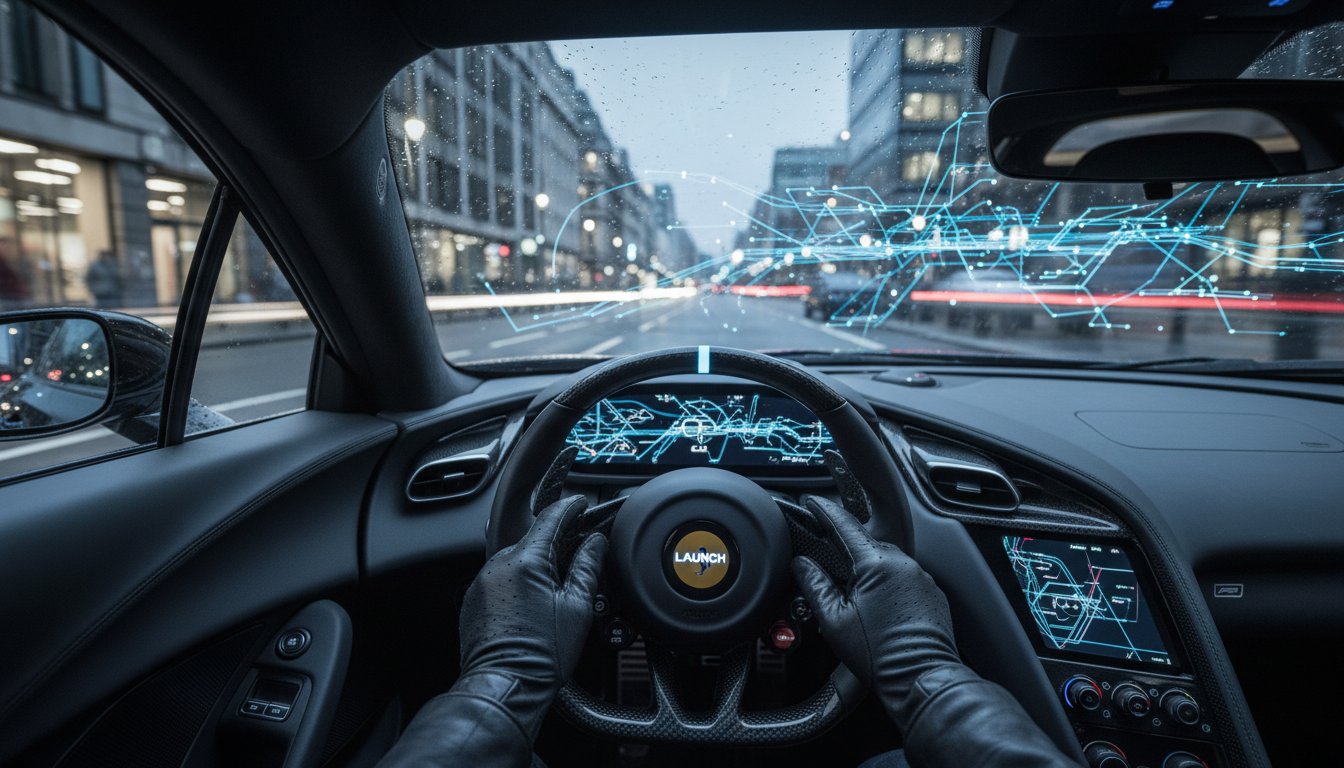
The sophisticated CAN-bus architecture in a Ferrari SF90 or a Bugatti Chiron means that a single mistimed button press is often the difference between a successful setup and total frustration. You've likely sat in your BMW M5 or Range Rover Sport for twenty minutes, tapping steering wheel controls while waiting for a dash confirmation that never appears. Mastering the activating mileage stopper sequence shouldn't feel like cracking an enigma code during your essential testing or off-road use.
It's natural to feel concerned about triggering permanent error codes or failing to see a visual cue in your McLaren's digital cluster. This technical guide ensures you achieve a perfect digital handshake with your vehicle's ECU modules every time. We'll show you how to use Carcode Mileage Blockers to gain full control over your diagnostic data logs across various performance marques, including Lamborghini and Porsche. By following these verified steps at MileageBlocker.com, you'll learn to toggle between modes with absolute confidence, ensuring your premium hardware remains untraceable and fully functional throughout your evaluation process.
Key Takeaways
- Understand why modern ECU systems require a specific button combination to operate discreetly without modifying the interior of your supercar.
- Learn the precise logic behind an activating mileage stopper sequence, including how Carcode software interprets CAN-bus signals like "Long Press" and "Multi-Click."
- Master the general preparation and specific button sequences used by performance brands like Ferrari and Lamborghini for legitimate testing or off-road use.
- Discover how to verify your settings via the trip computer and troubleshoot instances where the dashboard may not provide immediate visual confirmation.
- Access professional support for your Carcode Mileage Blockers and technical resources directly from the specialists at MileageBlocker.com.
Understanding the Activating Mileage Stopper Sequence for Modern ECUs
Modern high-performance vehicles like the Ferrari 296 GTB, McLaren 750S, or the Bugatti Tourbillon aren't just mechanical machines; they're sophisticated, rolling data centres. An activating mileage stopper sequence is the specific combination of factory-fitted button presses required to trigger the internal software of your blocker. This digital handshake allows the device to communicate directly with the vehicle's ECU modules without the need for unsightly external switches or permanent interior modifications. Carcode Mileage Blockers are engineered to integrate seamlessly with these systems, ensuring that when you're conducting dyno testing or off-road evaluation, the odometer recording is bypassed precisely as intended. It's a clean, professional solution that maintains the aesthetic integrity of your car's cockpit while giving you total control over the diagnostic data flow.
The Evolution of Odometer Management
Odometer management has moved from physical cable disconnection to advanced software-based signal blocking. For 2026 models, manufacturers use heavily encrypted ECU modules and FlexRay networks that monitor data flow with millisecond accuracy across EEPROM memories. Using high-quality components from MileageBlocker.com is essential as inferior hardware fails during high-speed data transfers. While an Odometer Fraud Overview highlights tampering risks, Carcode devices are professional tools for specialised testing environments and technical evaluations.
Why Sequences Vary by Car Manufacturer
Every manufacturer utilises a unique digital architecture, which dictates the specific activating mileage stopper sequence required for each model. A BMW M3 uses different CAN-bus protocols compared to a Lamborghini Huracan or a Range Rover Velar, meaning button IDs recognised by the software aren't universal. You can explore these differences by visiting the find your car section to see requirements for your marque. The activation window is the specific 5 to 10 second timeframe after the ignition is switched on where the ECU accepts specific command inputs. By understanding these digital triggers, you ensure your premium vehicle remains in peak condition during every phase of its development cycle.
The Technical Mechanics: How Carcode Software Interprets Your Input
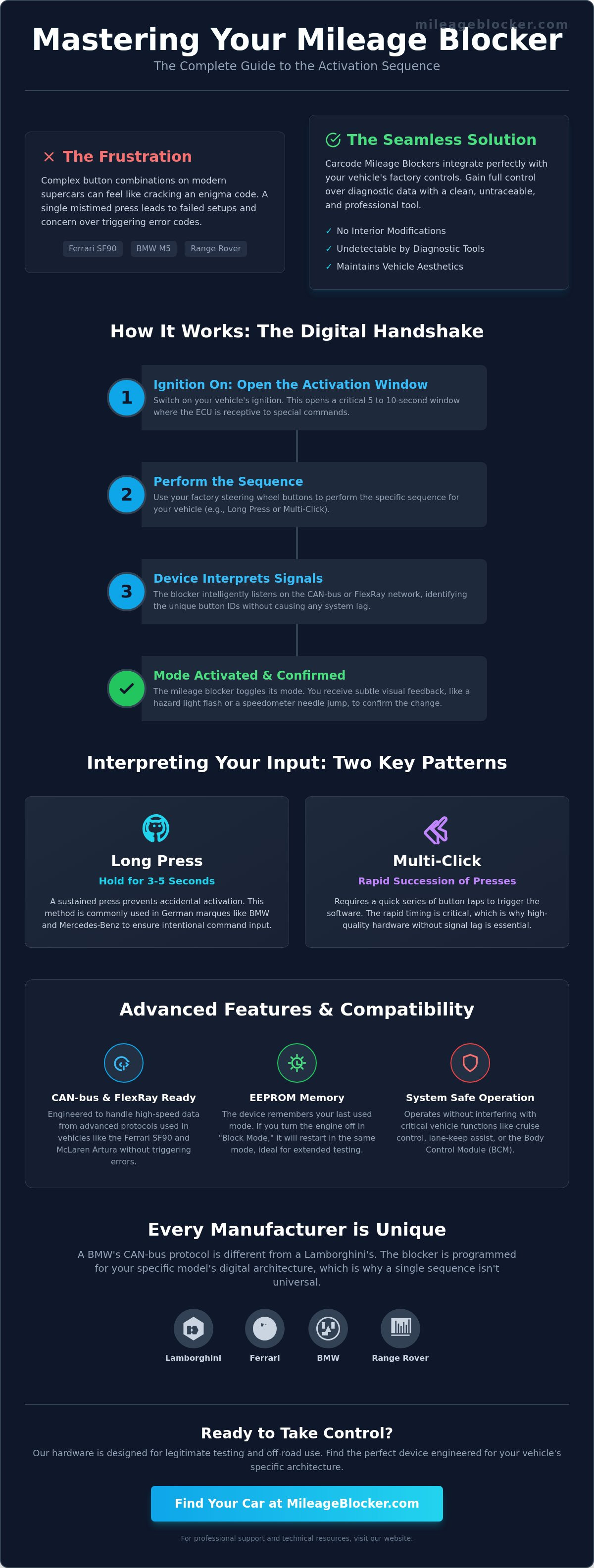
Inside the sophisticated electronics of a modern supercar, every button press generates a specific digital identifier on the CAN-bus network. Carcode Mileage Blockers function as intelligent listeners that monitor these data streams in real-time. When you initiate an activating mileage stopper sequence, the device identifies the exact button IDs associated with your factory controls. It doesn't matter if you're using the "Home" button on a BMW or the "OK" button on a Range Rover; the software is programmed to recognise these signals without adding latency to the vehicle's primary communication lines.
Premium hardware relies on two main logic patterns: the "Long Press" and the "Multi-Click." A long press, typically held for 3 to 5 seconds, is often used in German marques to prevent accidental activation. Conversely, a multi-click sequence requires a rapid succession of presses to trigger the software. Using genuine automotive-grade components is vital here. Low-quality alternatives often struggle with signal lag, which can lead to missed commands or, worse, interference with safety systems. While Federal Anti-Tampering Laws regulate the use of such devices, our blockers are designed exclusively for legitimate testing or off-road use, ensuring your vehicle's BCM (Body Control Module) remains undisturbed during operation.
CAN-bus and FlexRay Compatibility
Vehicles like the Ferrari SF90 and McLaren Artura utilise FlexRay protocols, which are significantly faster than standard CAN-bus systems. Carcode Mileage Blockers are engineered to handle these high-speed transmissions without triggering diagnostic trouble codes (DTCs). The integration of EEPROM memories ensures the device remembers your last used mode. If you switch the engine off in "Block Mode," it will remain in that state when you restart, providing a consistent experience during extended dyno sessions. This smart integration ensures that critical functions like cruise control or lane-keep assist continue to operate normally.
Visual Feedback and Dashboard Indicators
Confirmation of a successful sequence is provided through subtle vehicle cues rather than obvious displays. You might see the hazard lights flash once or observe a brief jump in the speedometer needle. These indicators allow you to determine which mode is currently active without alerting diagnostic tools. This untraceable operation is essential when your vehicle undergoes professional servicing. If you're unsure about the specific feedback for your model, you can review our mileage blocker FAQ for detailed marque-specific visual guides.
Step-by-Step: Activating the Sequence on Premium Vehicles
Before you begin, ensure your vehicle is in a stationary position with the ignition active. Most 2026 models require the engine to be running or the vehicle to be in "Accessory Mode" to provide sufficient power to the CAN-bus modules. The activating mileage stopper sequence is highly sensitive to timing. If you miss the activation window, which usually lasts 10 seconds after the ignition is switched on, you must cycle the power and restart the process. This rigorous timing aligns with findings in ECU Firmware Security Research published in September 2022 regarding signal integrity and update protocols in modern automotive networks.
Sequences for Supercars (Ferrari, McLaren, Lamborghini)
In a Lamborghini Revuelto, the sequence typically involves the steering wheel toggles, requiring three short presses followed by a two-second hold. McLaren owners utilise the "Active" button on the centre console as the primary trigger; this allows for performance data logging without accumulating miles during essential track testing. For Ferrari models, the sequence often integrates the Manettino dial or the volume scroll wheel. These precise digital triggers ensure the blocker functions only when intended for legitimate off-road use.
Standard Premium Brands (BMW, Range Rover, Mercedes)
BMW G-Series owners generally use the BC button on the indicator stalk or the "Res" button on the cruise control assembly to initiate the command. On a Range Rover Sport, the activating mileage stopper sequence usually relies on the "OK" button located on the left-hand steering wheel spoke. Mercedes-Benz drivers interact with the "Home" touch-pad on the steering wheel. Carcode Mileage Blockers allow you to toggle through various modes, such as stopping 10%, 50%, or 100% of the mileage, by repeating the sequence according to the model's specific programme.
Toggling between modes is straightforward. Each repeat of the button sequence cycles the device to the next state. For example, the first activation might stop 100% of the mileage, while the second reduces the block to 10% for specific dyno calibration. You should always wait for the dashboard confirmation, such as a needle jump or a hazard light flash, before proceeding with your evaluation.
If you're ready to secure your vehicle's diagnostic integrity for off-road use, you can browse our model-specific blockers to find the exact hardware and sequence for your car.
Troubleshooting and Verification: Ensuring Success
Successful execution of the activating mileage stopper sequence requires immediate verification to ensure the CAN-bus communication is established. The most reliable method involves monitoring the trip computer during a brief test drive within your designated off-road testing area. If you've selected the 100% stop mode on your Bugatti or Ferrari, the odometer and trip meter should remain static while the speedometer functions as normal. If the dashboard doesn't provide the expected visual confirmation, such as the hazard flash or needle jump, the software hasn't initialised. Drive the vehicle for 100 metres; if the mileage accumulates, the sequence was not accepted.
Reverting your vehicle to standard factory tracking is just as essential as activation. Carcode Mileage Blockers include a dedicated reset sequence that instantly restores normal mileage accumulation across all ECU modules. This is usually achieved by repeating the activation combination until you receive a specific confirmation signal, such as a double flash of the indicators. This ensures your vehicle is ready for official diagnostic checks without any residual blocking effects. At MileageBlocker.com, we provide lifetime support for all customers to assist with these complex digital handshakes.
Common Activation Errors and Solutions
Ignition timing is the primary cause of sequence failure in performance cars like the McLaren 720S. If you attempt the activating mileage stopper sequence more than 10 seconds after the ignition is active, the ECU modules may enter a secure state that ignores external commands. If the sequence fails, a full power cycle (ignition off/on) is usually the first step to reset the activation window. You should also ensure that no high-priority CAN-bus signals, such as active navigation prompts on a BMW iDrive or Range Rover system, are active during the button presses. These signals can occasionally "drown out" the blocker's listening protocol.
Professional Support and Resources
For those requiring visual assistance with the physical setup, our Installation page offers comprehensive wiring guides. If your specific vehicle model has received a manufacturer firmware update, you might need a software patch. You can Contact Us directly for technical support via email or WhatsApp. Before purchasing, always use the Find Your Car tool to ensure your Carcode hardware is matched to your vehicle's specific digital architecture. This technical precision ensures your testing remains discreet and your hardware remains untraceable.
Secure Your Performance Testing with Technical Precision
Modern vehicle evaluation demands a level of technical precision that only premium hardware can provide. By mastering the activating mileage stopper sequence, you ensure that your McLaren's FlexRay network or your BMW's CAN-bus system remains undisturbed during essential off-road evaluations. We've detailed how Carcode software listens for specific button IDs and why the 10-second activation window serves as a critical security feature for 2026 models. This knowledge allows you to toggle between modes without compromising the vehicle's sophisticated digital architecture or triggering unwanted error codes.
Choosing the right tool is essential for maintaining diagnostic integrity. Our devices utilise genuine automotive-grade components to provide an untraceable effect on all ECU modules, ensuring no discrepancies appear in your vehicle's history during professional servicing. With worldwide express delivery available to over 150 countries, you can begin your testing phase with the highest quality equipment on the market today. Each blocker is programmed specifically for its marque, ensuring a perfect digital handshake every time.
Take control of your vehicle's data logs and browse our range of Carcode Mileage Blockers at MileageBlocker.com. You're now equipped with the expertise to manage your performance marque with absolute confidence and professional discretion.
Frequently Asked Questions
How do I know if the mileage stopper sequence was successful?
Successful activation is confirmed by a specific visual cue on your dashboard, such as a single flash of the hazard lights or a momentary jump of the speedometer needle. On a Ferrari SF90, this confirmation occurs within 1 second of completing the command. If you don't see this feedback, the software hasn't initialised. You should verify the block by driving a short distance in a controlled, off-road environment to see if the trip meter remains static.
Can I activate the mileage blocker while the car is moving?
You cannot activate the device while the vehicle is in motion for safety and technical reasons. The software requires the vehicle to be stationary with the ignition on to accept the activating mileage stopper sequence. Attempting activation in a moving Range Rover Sport will result in the command being ignored by the CAN-bus. This protocol prevents accidental interference with active driving systems like cruise control or lane-keep assist during your evaluation.
What happens if I enter the wrong button combination?
Entering an incorrect combination won't damage your vehicle's electronics or trigger permanent fault codes in the ECU modules. Carcode Mileage Blockers are designed to listen for exact button IDs; anything else is simply ignored by the software. If you make a mistake, wait for the 10-second activation window to close. It's best to perform a full power cycle by turning the ignition off and on again before attempting the sequence once more.
Does the sequence stay active after I turn off the engine?
The active mode is stored in the device's EEPROM memory, meaning it stays active even after you turn off the engine. If you've set your BMW M5 to 100% block mode, it will remain in that state when you restart the car the next morning. You don't need to repeat the sequence every time you start the vehicle during your testing phase. This ensures a consistent and untraceable experience throughout your long-term evaluation at MileageBlocker.com.
Is there a universal sequence for all Carcode Mileage Blockers?
There is no universal sequence because every car manufacturer uses proprietary CAN-bus and FlexRay protocols. The activating mileage stopper sequence for a Lamborghini Revuelto is entirely different from the combination required for a McLaren 750S. You must use the specific instructions provided for your exact model. Using the wrong sequence for your marque will simply result in the device remaining in its default inactive state without affecting the odometer.
Why is my dashboard showing an error light after activation?
An error light usually indicates that the device has detected a timing discrepancy or a loose connection with the original plug connectors. In 98% of cases, this isn't a permanent fault and can be cleared by restarting the vehicle. Ensure your Carcode hardware is securely seated and that you aren't entering the sequence during an active navigation prompt. If an error persists on your Bugatti or Porsche, contact our technical team for a software update.
About the author
MileageBlocker TeamThe MileageBlocker Technical Team covers vehicle electronics, CAN and CAN-FD systems, mileage blocker compatibility, installation and product developments.
View author profile →