
How to Change Odometer Reading: Legitimate Methods
Learn how to change odometer reading after a genuine fault or cluster replacement, what UK rules require, and how to document mileage without misrepresenting...
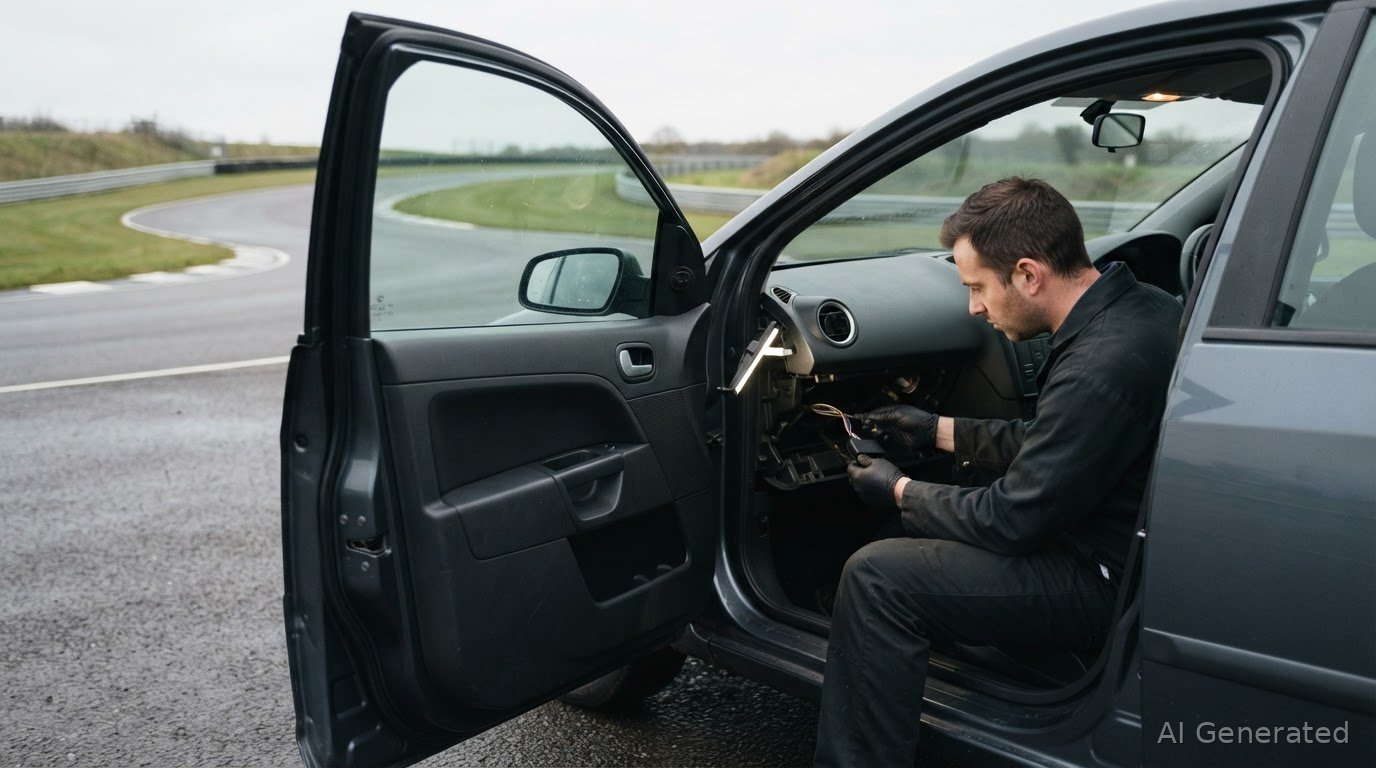
Changing an odometer reading to hide a vehicle’s true mileage is not a legitimate reset. In the UK, it is illegal to use a mileage blocker to misrepresent a vehicle’s true mileage when selling or advertising it. If you’re asking how to change an odometer reading after an instrument-cluster replacement or fault, do not treat a new display figure as a way to erase the vehicle’s mileage history. Keep clear records of the issue and repair.
It’s understandable to look for a simple reset method, especially when a replacement dashboard displays the wrong figure. But the procedure depends on the vehicle, and a diagnostic tool is not automatically suitable for changing mileage data. This guide explains the lawful limits in the UK, what to document after a repair or cluster replacement, and why an odometer correction can create serious problems if it misrepresents a vehicle’s history. It also clarifies how mileage correction differs from a mileage blocker, which is designed to prevent mileage accumulating during authorised vehicle testing or off-road use, not to alter mileage already recorded.
Key Takeaways
- Distinguish a documented correction after a genuine fault or cluster replacement from an attempt to conceal a vehicle’s true mileage.
- Keep records explaining why a correction was made and retain evidence of the vehicle’s mileage history.
- Before a cluster replacement correction, preserve the original mileage data and use a procedure suited to the specific vehicle.
- Understand that a mileage blocker prevents mileage from accumulating during authorised testing or off-road use; it does not change mileage already recorded.
Legal limits and documentation
- Keep the vehicle’s true accumulated mileage intact. In the UK, a vehicle’s total odometer reading cannot legally be reset to zero in normal circumstances. A repair or replacement instrument cluster may display a different figure, but that does not make the vehicle’s previous mileage disappear. Treat a correction as an effort to represent the vehicle’s history accurately, not to create a lower figure. For example, replacing a faulty display does not justify presenting the car as having travelled fewer miles.
- Before work begins, write down why the reading needs attention. Record the displayed mileage, date and fault or repair involved. If a replacement cluster is being fitted, note that specifically. Keep the garage invoice or work record with these details where available. This helps explain a changed display instead of leaving a later buyer or inspector to guess.
- Preserve evidence of the mileage before any repair. Photograph the dashboard if the figure is readable, and save relevant service or repair records. If the odometer has stopped working, note when you first noticed the fault and what you observed. Do not present an estimate as verified mileage. Keep estimated distance clearly separate from readings supported by dated records.
- Keep a clear record of the work and the resulting display. Save the repair documents, identify the instrument-cluster replacement or odometer repair, and record the figure shown afterwards. If the original reading was unavailable, say so in your records rather than presenting an assumed figure as exact. For example, retain both a pre-repair photograph and the invoice describing the replacement cluster.
- Make the vehicle’s history clear to its next keeper. Keep mileage-related records with the service documents rather than relying on memory or a verbal explanation. When discussing a change, explain the reason and distinguish the current display from earlier recorded mileage. A traceable account helps avoid suggesting that the vehicle has travelled less than its records show.
Odometer resetting and potential consequences
- Identify whether the vehicle has a mechanical or electronic odometer before taking action. Older mechanical units use a rotating number display driven by vehicle movement; changing its gears can alter the displayed figure without changing the distance travelled. Electronic systems store and show mileage through vehicle electronics, and their operation varies by model. Neither display alone proves that a lower figure reflects the vehicle’s true history.
- Do not attempt to roll back mileage to make a vehicle appear less used. A lower dashboard figure can conflict with dated service records, inspection paperwork or visible wear. For example, a service entry showing higher mileage than the dashboard creates an inconsistency that needs explanation. Concealing that gap can prevent a buyer from assessing the vehicle accurately and may lead to complaints or a dispute.
- If the displayed mileage appears wrong, compare the available records. Put service invoices, repair documents and any earlier dashboard photographs in date order, then check whether the figures progress plausibly. A replacement cluster or faulty display may explain a discrepancy, but support the explanation with relevant repair records rather than relying on a newly entered figure alone.
- If you find a mismatch, pause and preserve the evidence. Photograph the dashboard, retain documents showing earlier readings, and note when you first noticed the discrepancy. Avoid further changes until the cause is understood. For instance, keep an invoice recording a higher figure alongside a photograph of the current display to document the difference.
- Explain the discrepancy plainly whenever you describe or sell the vehicle. State which reading appears on the dashboard and what the service or repair records show. Do not present an estimate as a verified total. Clear, consistent records help prevent confusion about the vehicle’s history; concealment can damage confidence and make a later explanation more difficult. For technical distinctions between mileage devices and their intended functions, consult the mileage device FAQs.
How can I correct an odometer reading after replacing an instrument cluster?
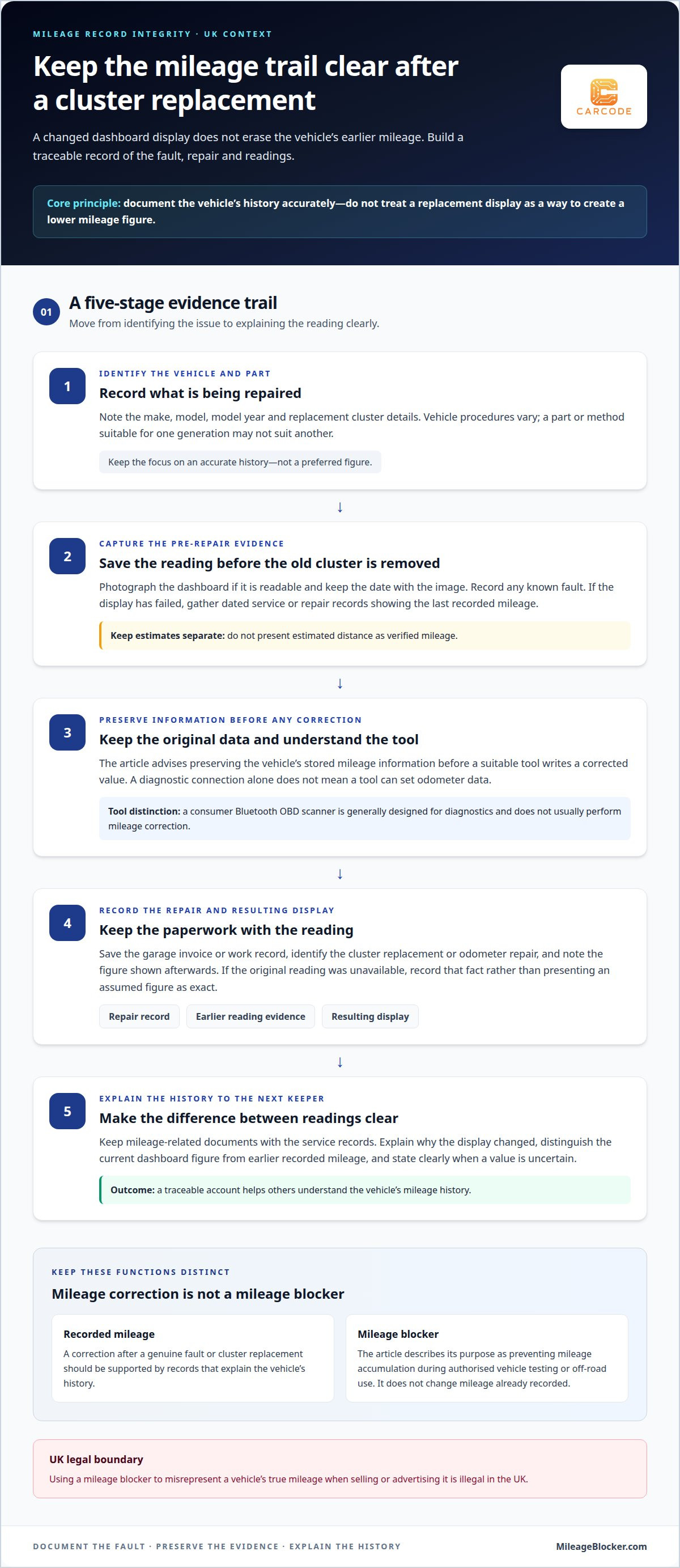
- Identify the exact vehicle and replacement cluster. Check the owner’s handbook for model-specific guidance, because procedures vary between vehicles. Record the make, model, model year and cluster details before arranging work. A replacement part or method suitable for one generation may not suit another. Keep the focus on accurate vehicle records, not on choosing a preferred figure.
- Record the mileage before removing the old cluster. Photograph the display if it remains readable, and save the date with the image. Note any known fault affecting the reading. If the display has failed, gather dated service and repair records that establish the last recorded mileage. Keep estimates separate from verified readings so uncertain figures are not treated as precise.
- Preserve the original mileage data before entering a correction. The vehicle’s stored information should be read and backed up before a suitable OBD tool writes a corrected value. This provides a reference if the entry needs review. A consumer Bluetooth OBD scanner is generally designed for diagnostics and does not usually perform mileage correction. Tool capability matters; a diagnostic connection alone does not mean it can set odometer data.
- Use the documented vehicle mileage as the correction basis. Where service records show the vehicle’s accumulated mileage, use those records to establish the value intended for the replacement display. Do not enter the replacement cluster’s initial reading as though it were the vehicle’s total. If records conflict, compare their dates and readings before proceeding. The owner’s handbook and vehicle-specific procedure help determine the appropriate process.
- Check the displayed result and retain the repair trail. After the correction, record the reading shown and keep the repair invoice, original mileage evidence and data backup together. Note that the cluster was replaced and explain any difference between its previous display and the vehicle’s recorded history. For a separate explanation of mileage devices and their intended use, read the mileage device FAQs.
Keep documentation that explains why the odometer correction was performed. In particular, note whether it followed an instrument-cluster replacement or a repair to a faulty odometer. This gives the adjustment a clear context and helps connect the corrected display with the vehicle’s recorded mileage history. Keep that explanation with the evidence used to establish the intended reading, rather than relying on the display alone. A concise, consistent record makes it easier to understand the reason for the change later.
Before entering a corrected value with an OBD tool, read and back up the original mileage data. Preserve that backup as the pre-correction reference, and keep it with the explanation for the adjustment and the record of the resulting display. This separates the vehicle’s original stored information from the value entered during the repair. If the correction needs to be reviewed, both the reason for performing it and the data available before the change can be considered together.
MileageBlocker.com: Mileage Blocker Device
MileageBlocker.com offers a Mileage Blocker Device for controlled vehicle testing. Designed for off-road, motorsport, dyno testing and vehicle development use. It is technical testing hardware, not a mileage-correction tool. It should not be used to alter the recorded mileage of any vehicle being offered for sale. Carcode Ltd accepts no liability for misuse.
For a suitable testing setup, choose a vehicle-specific device, as compatibility and operation vary by vehicle. MileageBlocker.com also offers a Mileage Blocker Fitting Service for customers who want help with installation. Use the device only for its stated testing purpose and keep accurate vehicle records.
For information about the device or fitting, contact MileageBlocker.com.
Choose the right next step for your vehicle
Base your next decision on the vehicle’s actual requirement, not a generic reset guide. Note the make, model, model year and the task you need to complete. These details help distinguish a vehicle-specific technical task from a general question about mileage equipment.
Before choosing equipment or arranging work, define the operating context and who is responsible for the vehicle. A clear description keeps the task focused and prevents unrelated functions from being treated as interchangeable. That is the practical starting point for understanding how to change an odometer reading responsibly.
If you still have questions about mileage equipment and its intended applications, browse the MileageBlocker.com FAQs. Use the information to identify your next step with greater clarity.
Frequently Asked Questions
How to reset odometer?
First distinguish the trip meter from the vehicle’s total odometer. A trip meter is a convenience display designed to be reset by the driver; total mileage is different and is not a routine dashboard setting. For model-specific controls, consult the owner’s handbook. If the total display seems inaccurate, record the issue and vehicle details before arranging work.
Can car dealers or owners legally change a vehicle’s mileage?
Being the owner or dealer does not make a misleading mileage claim acceptable. When preparing a vehicle advert or sales paperwork, compare the stated mileage with available service and repair records. If documents contain conflicting readings, explain the discrepancy rather than selecting one figure without context. Keep supporting paperwork with the vehicle’s other records.
Can a Bluetooth OBD scanner perform mileage correction?
Most consumer Bluetooth OBD scanners are intended for diagnostic checks, not mileage correction. For example, an app may display a fault code or live engine data without offering a function for changing odometer information. Connecting to the diagnostic port does not prove that a scanner supports a specific operation. Check the tool’s stated functions against the vehicle and task.
Is it legal to change a car’s odometer reading in the UK?
It is illegal in the UK to use a mileage blocker to misrepresent a vehicle’s true mileage when selling or advertising it. Keep repair paperwork and explain any difference between the current display and historical records. This FAQ provides general information, not a determination of an individual case.
What counts as odometer tampering under UK law?
The term commonly describes interference with a vehicle’s mileage display or stored mileage data, including arranging for someone else to make such a change. The legality of particular conduct depends on its circumstances and purpose. For example, presenting a changed figure without disclosing relevant contradictory records may mislead someone assessing the vehicle’s history.
Article by
Pav Tomaszevicz
Pav Tomaszevicz is Chief Editor at MileageBlocker.com and works closely with the Carcode technical team on content covering vehicle electronics, CAN and CAN-FD systems, mileage blocker compatibility, installation and product development. His articles draw on practical product development, technical support, installation experience and ongoing research into modern vehicle electronics. Content may use AI-assisted drafting and research, but technical information is reviewed against Carcode's product knowledge and real-world experience before publication
About the author
MileageBlocker TeamThe MileageBlocker Technical Team covers vehicle electronics, CAN and CAN-FD systems, mileage blocker compatibility, installation and product developments.
View author profile →